
K9-REPAIR™ dosing & training guide
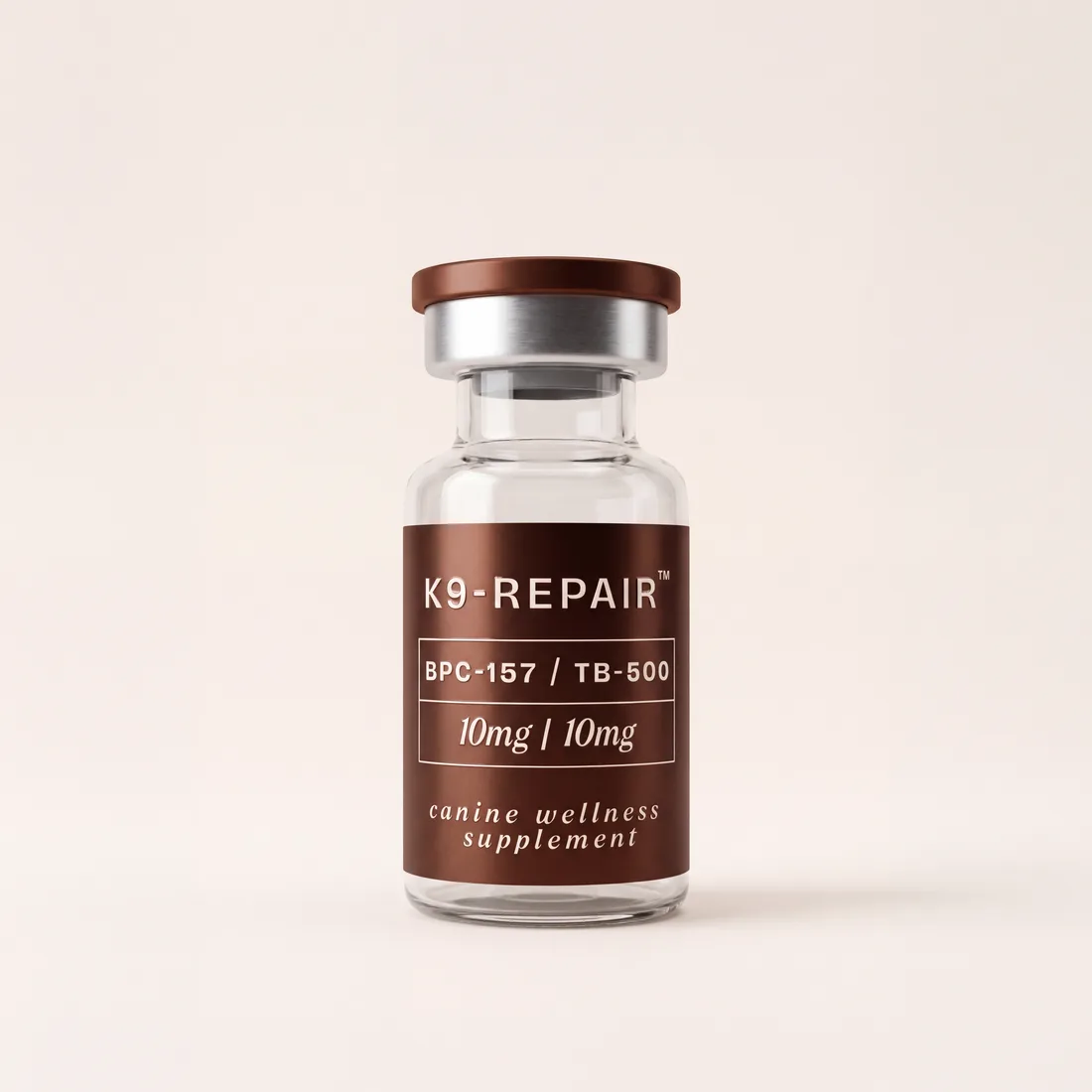
BPC-157 + TB-500 research compounds · 10 mg + 10 mg per vial
Sold for research purposes only, not intended to diagnose, treat, cure, or prevent any disease. Review this guide with your veterinarian before starting.
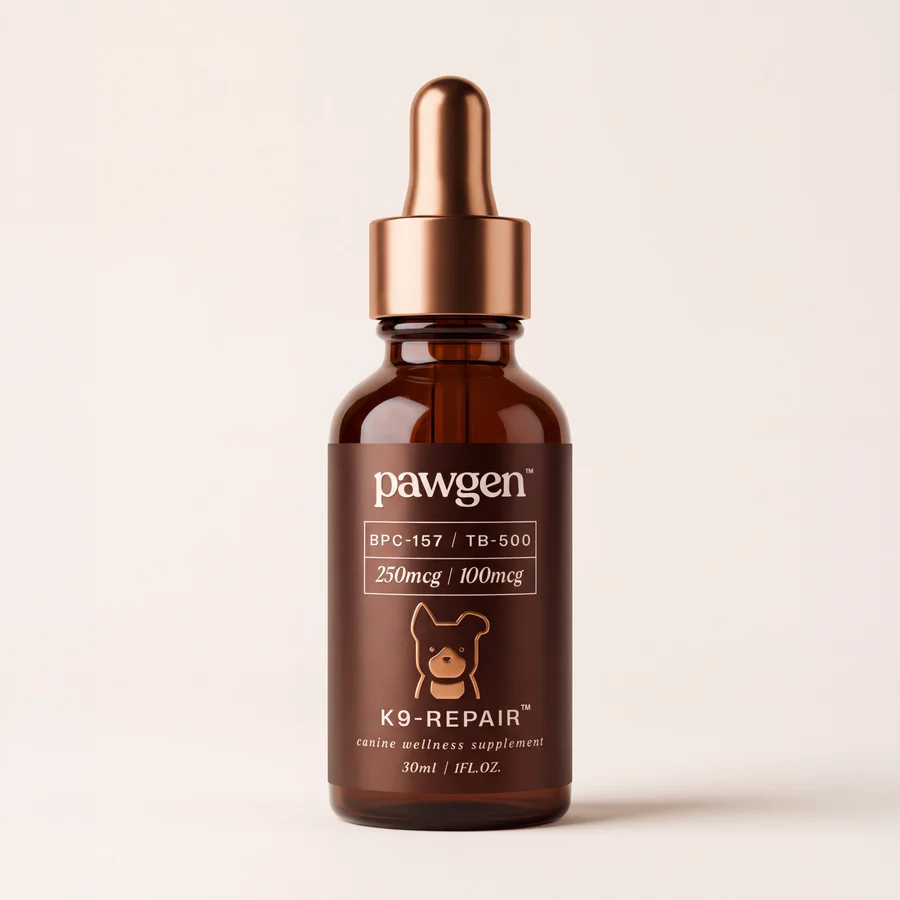
using the oral drops instead?
K9-REPAIR™ oral drops are ready to use — no mixing, no needles. Salmon flavored: a full dropper straight in the mouth, or on food as a topper.
- 1 full dropper = 1 serving — 250mcg BPC-157 + 100mcg TB-500. 30 servings per bottle.
- Small dogs (under 20 lbs): 1 full dropper daily · medium & large dogs (20+ lbs): 2 full droppers daily. Confirm with your veterinarian.
- Cycle supply: small dogs 1 bottle per month · medium & large dogs 2 bottles per month.
- Steps 1 and 3 below are for the injectable only. The cycle, logging, and training phases apply to both formats.
reconstitution (mixing)
Add 1 ml BAC water to the K9-REPAIR™ vial
- Slowly inject the BAC water down the side of the vial.
- Gently swirl until fully dissolved. Do not shake.
- The solution should be clear, with no particles.
reference amounts by weight
The preclinical literature scales amounts to body weight. These are the weight-scaled reference points for the K9-REPAIR™ research protocol — confirm them with your veterinarian for your dog.
Use a standard insulin syringe (100 units = 1 ml). Not sure which tier? The dosage calculator works it out from your dog's exact weight.
subcutaneous technique
A small injection into the fat layer under the skin — the same technique used daily for diabetic dogs. Have your vet demonstrate it once if you're new to it.
- Pinch the loose skin on the scruff (back of the neck) or between the shoulder blades.
- Insert the needle at a 45° angle into the fat layer under the skin.
- Inject slowly, then withdraw the needle and release the skin.
the research cycle
5 days on, 2 days off, for a full 8-week cycle — the multi-week length the preclinical protocols ran
cycle supply
- Small dogs: 1 vial / month
- Medium & large dogs: 2 vials / month
consistency
- Morning or evening
- Same time each day
observe & record
Treat the cycle like the research it is: keep a simple log.
note weekly
- Stairs, jumps, willingness to walk
- Morning stiffness, energy
- Injection-site condition
pause and call your vet if
- Lethargy or appetite loss
- Vomiting or unusual behavior
- Persistent injection-site irritation
training through the cycle
Repairing tissue needs movement — the right kind. Controlled, low-impact activity tells the body where to build. Chaos tells it to re-injure.
1weeks 1–2 · protect
- Short leash walks, 2–3× a day, flat ground
- No fetch, no dog-park sprints, no stairs races
- Ramps or a boost for the couch and car
2weeks 3–5 · rebuild
- Longer walks, gentle hills, grass over pavement
- Slow figure-8s and sit-to-stand reps (5–10, daily)
- Swimming if available — the best zero-impact work
3weeks 6–8 · return
- Gradually reintroduce play — short bursts, soft ground
- Keep two rest days a week
- End every session while they still want more
✓what owners typically notice
- Weeks 1–2: subtle — easier rising, brighter mood
- Weeks 2–4: morning stiffness fades
- Weeks 4–8: the stairs, the jump, the walk
the longevity basics (do these regardless)
K9-REPAIR™ is one lever. These are the others — the boring fundamentals that add healthy years, in rough order of impact.
- Keep them lean — the single biggest lever. In the 14-year Purina Life Span Study, Labradors fed to a lean body condition lived a median 1.8 years longer than their littermates and showed arthritis years later (Kealy et al., JAVMA 2002). You should feel ribs under light pressure and see a waist from above.
- Walk daily, forever. Muscle is the joint's shock absorber and it's use-it-or-lose-it — two 20-minute walks beat one weekend hike.
- Add omega-3s. EPA/DHA from fish oil is among the best-evidenced supplements for canine joint comfort and skin/coat. Dose with your vet.
- Take teeth seriously. Dental disease is near-universal by age three and the chronic inflammation doesn't stay in the mouth. Brushing a few times a week is the cheapest longevity habit there is.
- Upgrade the bowl where you can. Whatever you feed, added whole foods (sardines, eggs, blueberries, green vegetables) beat another scoop of filler. This is the gap BARQ MIX is being built for.
- Get baseline bloodwork. A senior panel once a year (twice for 8+) catches kidney, liver and thyroid drift while it's still cheap to act on. It's the whole idea behind PawScript: you can't manage what you don't measure.
tips & tricks from the pack
make it a ritual
- Same spot, same calm voice, treat immediately after — most dogs learn to sit for it within a week
- Let the mixed vial warm in your hand a minute; cold solution stings more
- Two-person start: one scratches ears, one injects
logistics
- Set a phone alarm — consistency beats perfect timing
- Missed a day? Just continue. Never double up
- Traveling: mixed vials ride in a small cooler; syringes in the original box
- Mark your calendar for day 56 — that's the cycle's end and re-evaluation day with your vet
storage
before mixing
Store at room temperature or refrigerated. Keep away from direct sunlight.
after mixing
Refrigerate immediately. Good for 28+ days when properly stored.
your 8-week log
Tap to score each week — it saves on your phone as you go, and you can export the whole log as an image.
1 = rough · 5 = great · saves on this device automatically
Why we do this. This protocol is the one that gave Choo Choo — left for dead, blind in one eye, rescued anyway — his years back. He runs exactly what's in your box, his labs are tracked quarterly, and 1% of every pawgen sale funds chootherescue, the rescue we're building for the dogs nobody else will take. Your order is part of that.