Adolescent Dog Stage — When It Starts and How Long It Lasts
An adolescent dog is one that has left puppyhood but has not yet reached full physical and social maturity — roughly six to 18 months in most dogs, and longer in giant breeds. The stage brings selective hearing, renewed fearfulness, and a body still finishing its growth.
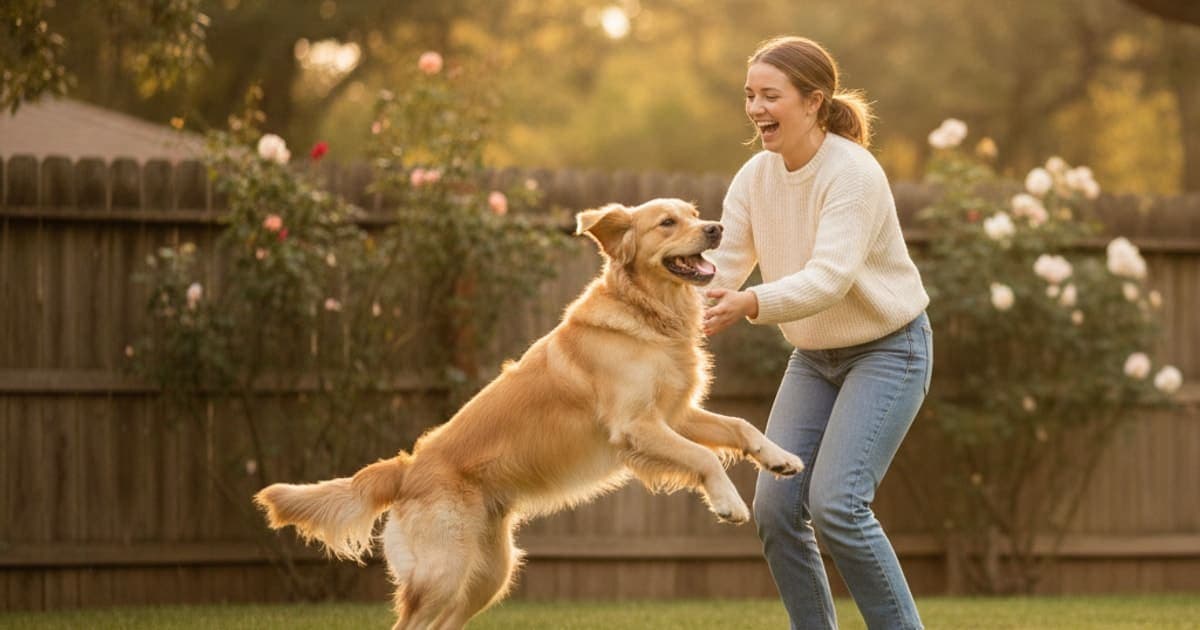
An adolescent dog is a dog that has outgrown puppyhood but has not yet reached full physical, hormonal and social maturity. In practical terms, adolescence generally begins somewhere around six months of age and winds down between 18 and 24 months, later in giant breeds. The dog looks almost grown. The brain, the endocrine system and the skeleton are all still mid-project — and that gap between how a dog looks and how a dog actually functions is what makes this stage so exhausting for the person holding the leash.
If you have spent an evening scrolling forums and Reddit threads full of owners describing a six-month-old who suddenly cannot hear their own name, you are not reading exaggeration. The teenage phase in dogs is a real, documented developmental window. Researchers at Newcastle University, publishing in the journal Biology Letters in 2020, reported that guide dog puppies became less responsive to a sit cue given by their own caregiver around the onset of puberty, while remaining more responsive to a less familiar handler — a pattern the authors compared to adolescent-phase conflict behaviour in humans. Your dog is not being spiteful. Your dog is being a teenager.
When the teenage phase starts and how long it lasts
Puppyhood proper — the neonatal, socialisation and early juvenile stretch — runs from birth to roughly six months. Adolescence picks up where that leaves off and overlaps with sexual maturity. Size is the biggest variable: smaller dogs mature faster and finish earlier, while large and giant breeds enter adolescence later and stay in it considerably longer.
These are general patterns, not a schedule your dog agreed to. Individuals vary widely, and an intact dog, a neutered dog and a late-maturing working line can all run on different clocks.
| Size category | Adolescence generally begins | Generally settles by | What tends to stand out |
|---|---|---|---|
| Toy and small (under ~20 lb) | 5–6 months | 12–15 months | Short, intense phase; reactivity and resource guarding can surface |
| Medium (20–50 lb) | 6 months | 15–18 months | Classic selective hearing and recall collapse |
| Large (50–90 lb) | 6–9 months | 18–24 months | Strength arrives before judgement; leash manners regress |
| Giant (90 lb+) | 8–10 months | 24–36 months | Slow physical maturation; long skeletal finishing period |
So when owners ask how long the adolescent stage lasts, the honest answer is between about nine months and two full years of your life, depending on the dog in front of you. The hardest stretch for most households is the window from roughly seven to 14 months, when hormones, confidence and physical capability all spike at the same time.
Why a dog you trained seems to forget everything
Nothing has been erased. During adolescence the brain is pruning and reorganising connections, the hormonal landscape shifts sharply, and the dog's world expands — other dogs, scents, distance, novelty — all become far more rewarding than your voice.
That is why recall is usually the first thing to go, followed by loose-leash walking and impulse control around doors, visitors and food. Dogs in this phase also tend to test boundaries that were previously settled: counter-surfing, chewing that returns after teething ended, barking at things they ignored at four months.
The adolescent stage is reorganisation, not reversal — the dog you trained is still in there, and the behaviour you keep rewarding through these months is the behaviour that remains on the other side.
Practically, this means management beats confrontation. Long lines instead of off-leash gambles. Rehearsed, paid-well recalls in low-distraction settings rather than shouting across a field. Short training sessions, high-value food, and a willingness to lower criteria for a few months. Every dog goes through some version of this phase, though the intensity varies enormously — a placid, well-socialised dog may simply become a little scattered, while a high-drive adolescent can feel like a different animal entirely.
The adolescent fear period, and why a confident puppy suddenly spooks
Many owners are blindsided by a second fear period that shows up somewhere in the six-to-14-month range. A dog who happily met strangers at four months now startles at an umbrella, barks at a bin bag, or refuses to walk past a parked lorry.
This is a normal part of adolescent development and it typically arrives in waves rather than as one continuous block. Key signs include sudden wariness of familiar objects, barking or backing away at novel things, hesitancy on walks the dog previously loved, and increased reactivity toward other dogs.
How you respond matters more here than at almost any other point. Do not force a frightened adolescent into the thing that scares them — flooding tends to deepen the association. Let the dog retreat, create distance, pair the scary thing with food at a range the dog can cope with, and move on. Comfort does not reinforce fear. Repeated forced exposure can.
If fearfulness is escalating, generalising to many contexts, or tipping into aggression, that is a conversation to have with your veterinarian and a qualified behaviour professional rather than something to wait out. Pain is a common and badly underdiagnosed driver of behaviour change in young dogs, and a physical exam should come before any behavioural conclusion.
A body still under construction
While the behaviour is dominating your attention, the structural story underneath deserves equal weight. Growth plates in most dogs close somewhere between roughly 10 and 18 months, later in giant breeds. Until that happens, the skeleton has soft zones of cartilage that are more vulnerable to injury than mature bone. Tendons, ligaments and the tendon–bone interface are still remodelling and adapting to load.
At the same time, the adolescent dog has adult-level muscle power, adult-level stamina and essentially no self-regulation. That combination — a nearly grown engine on a still-finishing chassis — is why so many soft-tissue injuries, cruciate problems and early orthopaedic concerns surface in young, athletic dogs rather than old ones.
Sensible load management through this window is not coddling. It means avoiding repetitive high-impact work such as forced jogging on hard surfaces, long-distance running, and high jumps from vehicles or furniture. It means favouring varied, self-paced sniffing walks, swimming and play on good footing over endless ball-chucker sessions that teach hard braking and twisting. And it means protecting sleep: adolescent dogs are chronically under-rested, and overtired dogs are both more injury-prone and more reactive.
Neuter timing also intersects with this stage. Veterinary researchers at the University of California, Davis have published breed-specific analyses examining associations between the age at neutering and the occurrence of certain joint disorders, and the findings differ meaningfully by breed and size. That is a decision to make with your veterinarian using your dog's breed, sex, lifestyle and household — not a one-size-fits-all rule from the internet.
What actually helps between six and eighteen months
The short list is unglamorous and it works: consistent management so the dog cannot rehearse unwanted behaviour, short daily training that rebuilds recall from scratch, enrichment that uses the nose, enforced naps, controlled exercise that respects a maturing skeleton, and a veterinary check whenever behaviour changes abruptly.
Structural support is the piece owners most often get wrong. The supplement aisle for young dogs is full of kitchen-sink chews — a dozen ingredients listed in a proprietary blend, each present in a quantity no one discloses, with marketing budgets that dwarf the evidence behind them. Label tricks like blend-hiding exist precisely because the amounts would not impress anyone.
pawgen takes the opposite approach with K9-REPAIR, a BPC-157 and TB-500 peptide formulation made for dogs, with weight-based dosing and third-party testing published as certificates of analysis. BPC-157 is a synthetic peptide derived from a protein sequence found in gastric juice; published animal research suggests it may influence processes involved in tendon, ligament and soft-tissue repair, including blood vessel formation and fibroblast activity. TB-500 is a synthetic fragment related to thymosin beta-4, a naturally occurring protein that research associates with actin regulation, cell migration and tissue remodelling. This is emerging and genuinely promising science, and it is the stack a growing number of owners adopt during recovery and through demanding life stages.
To be explicit: BPC-157 and TB-500 are not FDA-approved veterinary drugs, and nothing here is a claim that any product treats, prevents or resolves a condition in your dog. What can be said is what the compounds are, what the research describes about their mechanisms, and that pawgen backs K9-REPAIR with a 60-day money-back guarantee and ships direct to your door. For an adolescent dog in particular — still growing, still closing growth plates — the right move is to raise it with your veterinarian first and let them weigh in on timing and suitability. There is no dosing number appropriate to publish for a growing dog; that belongs in a conversation with the person who has examined yours.
Key Takeaways
- An adolescent dog has left puppyhood but has not reached full physical, hormonal or social maturity.
- Adolescence generally starts around six months and settles between 18 and 24 months, later in giant breeds; small dogs finish earliest.
- Yes, dogs go through a genuine teenage stage, and published research has documented reduced responsiveness to caregivers around puberty.
- All dogs pass through adolescence, but intensity varies hugely by breed, temperament and management.
- A second fear period commonly appears between about six and 14 months; build distance and positive associations rather than forcing exposure.
- Open growth plates and remodelling soft tissue make this a high-risk window for injury — manage impact, repetition and rest.
- Abrupt behaviour change warrants a veterinary exam, because pain is a frequently missed cause.
Your veterinarian owns the diagnosis and the treatment plan. Prescribed medication, imaging, surgical decisions and rehab referrals are theirs to direct, and nothing in this article is a reason to delay, decline or stop any of it. Training, load management and supplements such as K9-REPAIR operate in the space that proper veterinary care creates — they support the plan, they do not replace it. Bring up anything you are considering at your next appointment, especially while your dog is still growing.
Owners wanting to look further into the formulation can review the published certificates of analysis, browse the current lineup, check availability and shipping details, or read more about pawgen.
Owners exploring peptide support for their dog can review K9-REPAIR — BPC-157 + TB-500 formulated for dogs — at https://pawgen.com/. BPC-157 and TB-500 are not FDA-approved veterinary drugs. Nothing in this article treats, cures or prevents any condition; every decision about your dog's care belongs with your veterinarian.
Frequently asked questions
- What is an adolescent dog?
- An adolescent dog is one that has outgrown puppyhood but has not yet reached full physical, hormonal and social maturity. The body looks nearly adult while the brain, skeleton and endocrine system are still developing. This gap explains the sudden selective hearing, boundary-testing and renewed fearfulness owners notice.
- What is considered an adolescent dog?
- A dog is generally considered adolescent from roughly six months of age until full maturity, which arrives between 18 and 24 months in most breeds and later in giant ones. Small dogs may complete the stage by 12 to 15 months. Sexual maturity usually occurs well before mental maturity.
- What age is adolescence in dogs?
- Adolescence in dogs typically spans about six to 18 months, with the most intense stretch between seven and 14 months. Small breeds start and finish earlier, large breeds run to around 24 months, and giant breeds can remain behaviourally and skeletally adolescent until two or three years.
- Do dogs go through a teenage stage?
- Yes. The teenage stage in dogs is a genuine developmental phase, not an owner's imagination. Research published in Biology Letters in 2020 by researchers at Newcastle University reported that guide dog puppies became less responsive to cues from their own caregiver around the onset of puberty.
- Do all dogs go through the adolescent phase?
- Every dog passes through adolescence, but the experience varies enormously. A calm, well-socialised dog may simply become a little scattered and distractible, while a high-drive adolescent can seem like a different animal. Breed, temperament, early socialisation and daily management all shape how intense the phase feels.
- How long does the dog adolescent stage last?
- The adolescent stage generally lasts between nine months and two years. Small dogs often settle by 12 to 15 months, medium dogs by 15 to 18 months, large dogs by 18 to 24 months, and giant breeds may not finish maturing until two or three years old.
- What is the adolescent fear stage in dogs?
- The adolescent fear period usually appears somewhere between six and 14 months, often in waves rather than one continuous block. Dogs suddenly startle at familiar objects, hesitate on known routes or bark at novelty. Build distance, pair the trigger with food, and never force exposure on a frightened dog.
- Why is adolescence a risky time for a dog's joints?
- Growth plates generally close between roughly 10 and 18 months, later in giant breeds, while tendons and ligaments are still remodelling. An adolescent has adult power with an unfinished chassis and no self-regulation, so repetitive high-impact exercise deserves limits. Discuss exercise plans and joint concerns with your veterinarian.
Educational content, not veterinary advice. Ask your vet about your dog.