Afghan Hound Health Problems: Conditions to Watch For
Yes, Afghan hounds are prone to a defined set of health problems, including bloat, hereditary cataracts, hypothyroidism, a breed-linked spinal cord disorder and the anesthetic sensitivity shared across sighthounds. Knowing the early signs of each one, and which signs mean emergency care tonight, is the single most useful thing an owner can carry.
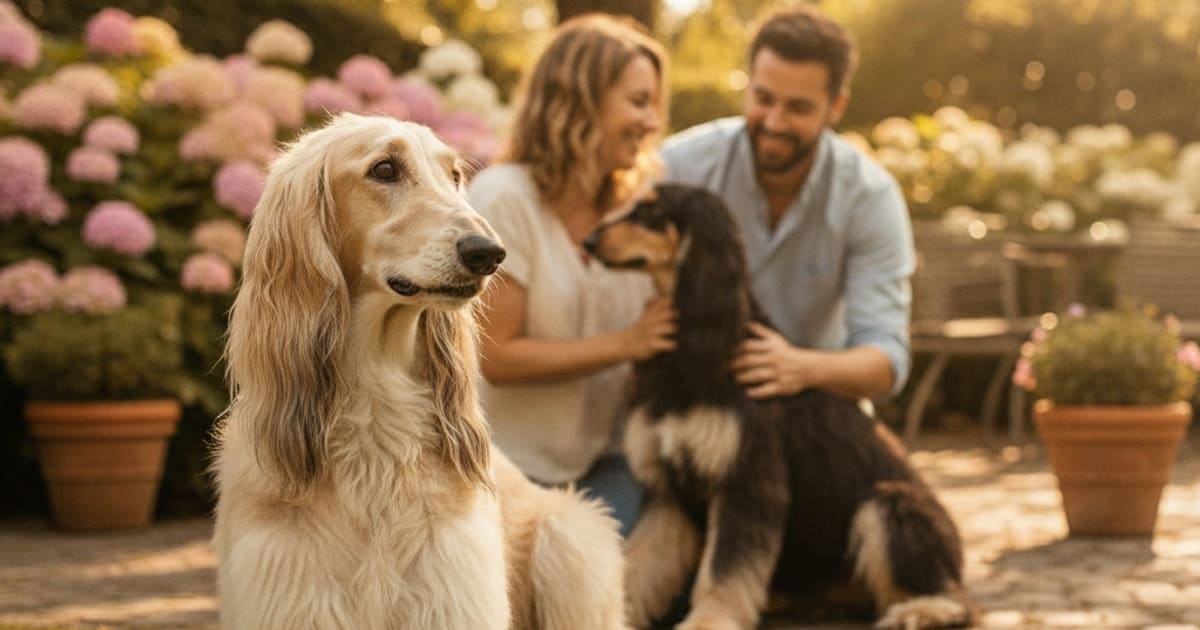
Afghan hounds are prone to a recognizable set of inherited and structural health problems, and the ones that matter most to an owner are bloat, hereditary cataracts, hypothyroidism, a breed-linked spinal cord disorder called Afghan hound myelopathy, and the anesthetic sensitivity seen across sighthounds. If your dog has a swollen or tense belly, is retching without bringing anything up, is breathing with effort, or has collapsed, stop reading and get to an emergency veterinarian now.
For slower changes, a thinning coat, cloudy eyes, a wobbly back end, a new lump, stiffness after rest, book a veterinary appointment rather than watching it for another few days. A breed that hides discomfort behind a dignified, aloof posture does not give you obvious signals, so the signals you do get deserve attention.
This page covers what Afghan hounds are predisposed to, what those conditions actually look like at home, and the point at which watching becomes calling.
Do Afghan Hounds Have Health Problems?
Yes. Like every purebred dog, the Afghan hound carries a narrower genetic range than a mixed-breed dog, and that concentrates certain conditions in the breed. That does not mean your individual dog will develop any of them. It means a veterinarian who knows the breed will look in specific places: the eyes, the thyroid, the chest, the spine, the hips, and the way the dog handles sedation.
The health problems cluster into four groups:
- Emergency structural problems, above all gastric dilatation and volvulus, known as bloat, which deep-chested dogs are set up for anatomically.
- Inherited problems such as cataracts and Afghan hound myelopathy, a disorder of the spinal cord seen in this breed and not in many others.
- Endocrine and internal problems such as hypothyroidism, and chylothorax, an accumulation of fluid in the chest cavity that sighthounds including Afghan hounds are predisposed to.
- Wear-and-tear problems of a long-limbed, lightly built, athletic dog: joint stiffness, arthritic change, dental disease and skin or ear irritation under a heavy coat.
Results vary from dog to dog. Two Afghan hounds from similar lines can age very differently, which is why screening beats assumption.
The Biggest Concern: Bloat and Why Minutes Matter
When owners ask what the biggest health problem in the breed is, the honest answer is that no single condition defines the Afghan hound, but one condition compresses the decision window to almost nothing. Bloat is that condition.
In gastric dilatation and volvulus, the stomach fills with gas and can rotate on itself, cutting off its own blood supply and pressing on the vessels that return blood to the heart. Deep, narrow-chested breeds carry more anatomical room for that rotation to happen. The dog goes from normal to in trouble quickly, sometimes within an hour.
What it looks like: a tight or visibly distended abdomen, repeated retching that produces nothing or only foam, drooling, pacing and an inability to settle, looking at the flank, pale gums, rapid shallow breathing, and then weakness or collapse.
A swollen, tense abdomen with unproductive retching in a deep-chested dog is an emergency, not a wait-and-see.
Call the nearest emergency clinic while you are getting into the car so they can prepare for you. Treatment is surgical and time-sensitive, and nothing done at home substitutes for it. If you have a surgical procedure planned for any other reason, that is a good moment to talk to your vet about whether a preventive gastropexy makes sense for your dog.
The other condition that earns the word biggest is Afghan hound myelopathy, because it is specific to the breed. It affects the spinal cord in young dogs and shows up as hind limb incoordination: crossing legs, scuffed toenails, a swaying rear end, difficulty on slick floors, progressing to weakness. Any young Afghan hound developing an unsteady back end needs a veterinary neurological workup promptly, not a wait to see if it settles.
Breed-Linked Conditions at a Glance
This table is a reference for conversations with your veterinarian, not a diagnostic tool. Many of these signs overlap with conditions that have nothing to do with the breed.
| Condition | What it involves | What owners notice | Urgency |
|---|---|---|---|
| Bloat (gastric dilatation and volvulus) | Stomach distends and can twist | Tense swollen belly, retching with nothing produced, restlessness, drooling, collapse | Emergency, go now |
| Afghan hound myelopathy | Spinal cord disorder seen in this breed | Wobbly or crossing hind legs, dragging toes, worsening rear weakness in a young dog | Same-day veterinary assessment |
| Hereditary cataracts | Clouding of the lens | Hazy or bluish-white pupils, bumping into furniture, hesitancy in low light | Veterinary eye exam |
| Hypothyroidism | Underactive thyroid gland | Coat thinning or dullness, flaky skin, weight gain without a diet change, low energy, seeking warmth | Veterinary appointment, blood testing |
| Chylothorax | Fluid collecting in the chest cavity | Soft cough, fast or effortful breathing, reduced exercise tolerance | Urgent, breathing changes mean emergency care |
| Anesthetic sensitivity | Low body fat changes how sighthounds handle sedation | Slow or rough recovery from sedation or surgery | Plan with the vet before any procedure |
| Allergic skin and ear disease | Inflamed skin and ear canals under a dense coat | Scratching, paw licking, head shaking, odor from the ears, recurring irritation | Veterinary appointment |
| Hip dysplasia and arthritic change | Abnormal joint fit, joint surface wear | Stiffness after rest, shortened stride, reluctance on stairs or to jump | Veterinary appointment |
| Dental disease | Tartar, gum inflammation, painful teeth | Bad breath, dropping food, chewing on one side, reddened gums | Veterinary appointment |
| New lumps or swellings | Any mass under or in the skin | A lump you can feel or see, changing in size or firmness | Veterinary appointment, a needle sample is how a vet tells what a lump is made of |
Early Signs That Should Prompt a Visit
Afghan hounds are stoic and heavily coated, which is a difficult combination. The coat hides body condition, lumps, scabs and muscle loss, and the temperament hides mild pain. Run your hands over the dog, not just a brush, and pay attention to anything your hands find that your eyes cannot.
Signs that warrant a call rather than a wait:
- A change in how the dog rises, turns or takes stairs, even a subtle one
- Scuffing, dragging or crossing of the hind feet
- Cloudiness in one or both eyes, or new clumsiness in dim light
- Coat that thins, dulls or fails to regrow, especially with flaky or thickened skin
- Any coughing, or breathing that looks faster or more effortful at rest
- A new lump, swelling, scab or area the dog will not stop licking
- Reluctance to eat, repeated vomiting, or straining to pass stool
- Any shift in thirst, urination or appetite
Signs that mean emergency care rather than an appointment: a distended abdomen, unproductive retching, collapse or extreme weakness, laboured or open-mouth breathing, pale or grey gums, uncontrolled bleeding, suspected poisoning, or seizures.
Screening, Checkups and Anesthesia Planning
Wellness visits are where breed-linked problems are caught before they announce themselves. For an Afghan hound, a thorough exam reasonably includes eye assessment, thyroid-related blood work if the coat or energy has changed, chest auscultation, a hands-on orthopedic check of hips and stifles, dental assessment, and a gait check with the dog walking and turning.
Anesthesia deserves its own conversation. Sighthounds carry little body fat and a high proportion of lean muscle, which changes how some anesthetic and sedative agents behave in the body, and recovery can look different from what a veterinary team expects in a heavier-set breed. Before any dental, imaging or surgical procedure, tell the team your dog is a sighthound and ask how they plan to tailor the protocol and the recovery monitoring. Experienced teams do this as a matter of course, but saying it out loud costs nothing.
Keep a simple written record of what you notice between visits: the date you first saw a limp, when the cough started, which eye looked cloudy. Owners consistently underestimate how useful that timeline is to the person trying to work out what is going on.
Mobility and Comfort in an Aging Sighthound
A long-backed, long-limbed athletic dog puts real load through its joints over a lifetime, and aging Afghan hounds often show it first as a reluctance rather than a limp: a pause before the stairs, a shorter turn in the yard, lying down more deliberately. Because the breed does not complain, these changes get read as slowing down rather than as discomfort worth investigating.
They are worth investigating. A veterinarian can examine the joints, image them if needed, and separate arthritic change from a neurological cause, a soft tissue injury or a problem somewhere else entirely. Those paths lead to different plans. Weight management, controlled exercise, physical rehabilitation, pain management and joint care are all things your vet can advise on once there is a diagnosis, and the plan is built for your individual dog rather than for the breed in general.
Results vary from dog to dog in recovery too. Two dogs with similar imaging can respond differently to the same plan, which is why follow-up appointments matter as much as the first one.
Key Takeaways
- Afghan hounds do have breed-linked health problems: bloat, hereditary cataracts, hypothyroidism, Afghan hound myelopathy, chylothorax, joint and dental disease, and skin or ear irritation under the coat.
- Bloat is the condition with the shortest decision window. A tense abdomen with unproductive retching means emergency care immediately.
- A young Afghan hound with an unsteady, crossing or dragging hind end needs a prompt neurological assessment.
- Sighthound anesthetic sensitivity is worth raising with the veterinary team before any procedure.
- The coat and the stoic temperament hide early signs, so hands-on checks matter more in this breed than in many others.
- Any new lump should be checked, and a needle sample is how a vet determines what a lump is made of.
Where Your Veterinarian Fits In
Nothing on this page replaces an examination. Your veterinarian owns the diagnosis and the treatment plan: the physical exam, the blood work, the imaging, the medication decisions and the surgical decisions. Your job as an owner is pattern recognition at home and getting the information in front of them early, which is genuinely the part that changes how these cases go. If something about your Afghan hound has changed and you are not sure whether it counts, talk to your vet and describe it. That call is never wasted.
Related reading: Dog Emergency Signs.
Frequently asked questions
- Do afghan hounds have health problems?
- Yes. Afghan hounds are prone to bloat, hereditary cataracts, hypothyroidism, a breed-linked spinal cord disorder called Afghan hound myelopathy, chylothorax, joint and dental disease, and skin or ear irritation beneath the coat. Not every dog develops them, but a veterinarian who knows the breed will screen for them specifically.
- What is the biggest health problem in Afghan hounds?
- No single condition defines the breed, but bloat compresses the decision window the most. A deep, narrow chest allows the stomach to distend and twist, and the dog can deteriorate within an hour. Afghan hound myelopathy is the condition most specific to the breed itself.
- Are Afghan hounds prone to bloat?
- Yes. Deep, narrow-chested breeds are anatomically predisposed to gastric dilatation and volvulus. Watch for a tense or swollen abdomen, retching that produces nothing, drooling, pacing, pale gums and collapse. This is an emergency: go straight to an emergency veterinarian and call ahead while travelling.
- What is Afghan hound myelopathy?
- It is an inherited disorder of the spinal cord seen in this breed. Owners usually notice hind limb incoordination first: legs crossing, toes scuffing or dragging, a swaying rear end and difficulty on slick floors, progressing to weakness. Any young Afghan hound showing this needs prompt veterinary neurological assessment.
- Do Afghan hounds get eye problems?
- Hereditary cataracts are recognised in the breed. Owners may notice a hazy or bluish-white appearance in the pupil, bumping into furniture, hesitancy on stairs or clumsiness in dim light. A veterinarian can examine the eyes and distinguish cataract from other causes of cloudiness that look similar from across a room.
- Are Afghan hounds sensitive to anesthesia?
- Sighthounds carry little body fat and a high proportion of lean muscle, which changes how some sedative and anesthetic agents behave and can make recovery look different. Before any dental, imaging or surgical procedure, tell the veterinary team your dog is a sighthound and ask how the protocol will be tailored.
- What skin and coat problems affect Afghan hounds?
- The dense coat traps moisture and hides problems, so allergic skin disease, inflamed ears, hot spots and scabs can progress before an owner sees them. A dull, thinning coat with flaky skin and low energy can also point toward thyroid trouble, which your veterinarian can assess with blood testing.
- When should I take my Afghan hound to the vet?
- Go immediately for a distended abdomen, unproductive retching, collapse, laboured breathing, pale gums or seizures. Book an appointment for stiffness, a changed gait, dragging toes, cloudy eyes, coughing, coat changes, a new lump or any shift in appetite, thirst or urination. Describe exactly when you first noticed it.
Educational content, not veterinary advice. Ask your vet about your dog.