Are Alfalfa Sprouts Safe for Dogs? Raw vs Cooked
Plain alfalfa sprouts are not considered toxic to dogs, but raw sprouts of any kind can carry bacteria that sprouting conditions encourage, so cooking them plain is the safer route. Dogs with autoimmune conditions, bladder stones or sensitive stomachs should only eat them with a vet's agreement.
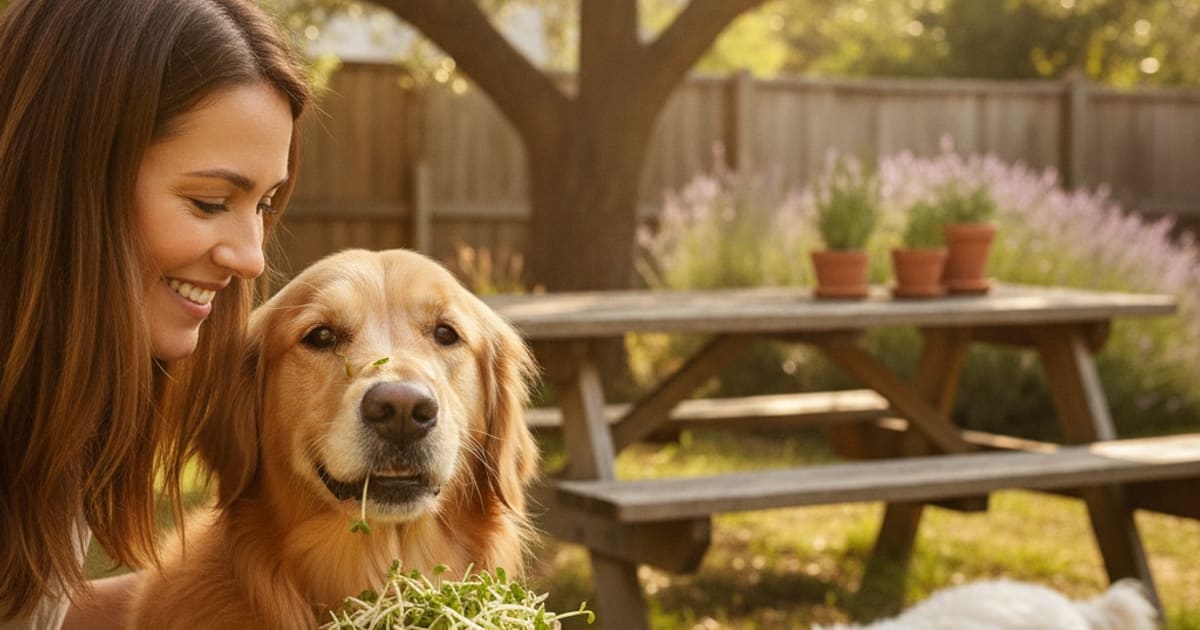
Yes, with conditions. Plain alfalfa sprouts are not treated as a toxic plant for dogs, so a dog that eats a sprout off a dropped sandwich is not in a poisoning situation. If your dog has eaten something you are unsure about and is vomiting, retching, dull, or has a swollen or painful belly, call your vet or an animal poison control service such as the ASPCA Animal Poison Control Center or the Pet Poison Helpline rather than waiting to see what happens.
The useful answer to whether alfalfa sprouts are safe for dogs depends almost entirely on form. Plain and cooked is a different proposition from raw out of the tub, which is different again from a dressed salad, and different again from a mixed sprout blend built around broccoli and kale. Alfalfa itself is not a poison for dogs, but raw sprouts of any kind carry a bacterial risk that rinsing does not remove, and that single fact shapes nearly every sensible answer about feeding them.
What alfalfa is, and where dogs run into it
Alfalfa is a legume, part of the same plant family as peas, beans and clover. It is grown as livestock forage, dried into hay, pressed into pellets, milled into alfalfa meal that turns up in some animal feeds as a fibre and protein source, dried and sold as a herb, and sprouted from seed into the pale tangles sold for human salads and sandwiches.
So when owners ask whether dogs can eat alfalfa, the plant is not the problem. Alfalfa is not on the roster of plants that poison dogs. It is not an allium, it is not a stone fruit, and it does not contain a toxin that acts on the nervous system or the kidneys.
Not toxic, though, is not the same as suitable for every dog in every form. Alfalfa is dense in fibre, and fibre a ruminant handles without trouble can leave a dog gassy, crampy or loose. The plant also contains saponins, natural compounds with a soap-like quality that can irritate the lining of the gut in a dog whose system is not used to them. Alfalfa is a source of vitamin K as well, which is worth raising with your vet if your dog is on any medication that affects clotting.
There is one more compound worth knowing by name. Alfalfa seeds and sprouts contain L-canavanine, an amino acid the plant makes. Because of long-standing questions about how canavanine can interact with immune function, dogs with an autoimmune condition should only eat alfalfa in any form if their vet is comfortable with it.
Why raw sprouts are the part worth thinking about
A sprout is a seed germinated in warmth, moisture and humidity. Those are exactly the conditions bacteria favour. If a seed carries bacteria on its surface or inside its coat, the sprouting process gives those bacteria an ideal few days to multiply, and the resulting sprout can hold them inside its tissue where a rinse under the tap cannot reach.
This is why raw sprouts are flagged in human food-safety guidance for anyone with a weakened immune system, for people recovering from illness, and for very young and very old people. Dogs are not exempt from the organisms involved. Salmonella and E. coli can cause vomiting, diarrhoea, fever, flatness and loss of appetite in a dog.
There is a household angle too. A dog can carry and shed these bacteria in its stool while still looking well, which matters if there is a baby crawling on the floor, a child who kisses the dog, or an adult in the home with a suppressed immune system. That is a reason to think twice about raw sprouts beyond what they do to the dog itself.
Results vary from dog to dog. A sturdy adult dog with an iron stomach can eat a raw sprout and show nothing at all, while a small dog with a sensitive gut can be uncomfortable by the evening. Neither outcome is predictable in advance, which is the practical argument for the cooked version.
Raw, steamed or cooked: how preparation changes the picture
Cooking does two useful things. Heat reduces the bacterial load that sprouting conditions encourage, and it softens the fibre so the gut has less work to do. Lightly steamed, boiled or otherwise heated through, with nothing added, is the lower-risk way to offer alfalfa sprouts to a dog.
Plain has to mean plain. No oil, no butter, no salt, no stock, no seasoning blends, no sauces. The sprouts that reach dogs are frequently the ones sitting in a salad or a sandwich, and in that case the dressing is a bigger issue than the sprout. Rich, oily or heavily seasoned food can upset a dog's stomach on its own, and seasoning blends can contain ingredients that are genuinely unsafe for dogs.
| Form | What it is | What to watch for |
|---|---|---|
| Raw alfalfa sprouts, plain | Seeds germinated in warm, damp conditions | Bacterial risk that rinsing does not remove; gas and loose stool in sensitive dogs |
| Cooked or steamed, plain | Heated through with nothing added | Heat lowers bacterial load and softens fibre; still a new food for the gut |
| Sprouts from a dressed salad | Sprouts plus oil, salt, sauces, seasoning blends | The dressing matters more than the sprout; seasoned food can unsettle the stomach |
| Mixed tubs with broccoli and kale | Brassica sprouts blended with alfalfa | Brassica compounds can irritate the stomach; kale adds oxalates |
| Clover sprouts | A close legume relative of alfalfa | Same raw-sprout handling question; garden clover is a separate issue |
| Alfalfa hay or pellets | Dried, compressed forage for livestock | Dense fibre that can swell; a raided bag is a blockage and bloat concern, call the vet |
| Alfalfa meal in a pet food | Milled plant used as a fibre or protein source | Already balanced into the formula by the manufacturer |
Introduce anything new on its own rather than alongside three other changes, so that if your dog reacts you know what to tell your vet.
Clover, broccoli and kale blends: reading the tub
Supermarket sprout tubs are rarely pure alfalfa. Blends built for human salads mix alfalfa with clover, radish, broccoli, kale and sometimes mustard, and each addition changes the answer.
Clover sprouts are the closest relative. Red clover is a legume like alfalfa, and the same logic applies: plain is fine as a concept, raw carries the sprout bacteria question, cooked plain is the lower-risk version. Garden clover is a different conversation entirely. Several lawn plants get called clover, including wood sorrel, which contains oxalates, and lawns can carry fertiliser and weedkiller residue. If your dog grazes outdoors, that is worth raising with your vet rather than assuming the plant is harmless.
Broccoli and kale sprouts are brassicas. Brassicas contain isothiocyanates, the compounds responsible for their peppery bite, and those can irritate a dog's stomach and produce gas and loose stool. Kale also contains oxalates, which matters for dogs with a history of calcium oxalate bladder stones. A tub labelled alfalfa, broccoli and kale is therefore not interchangeable with plain alfalfa, and a dog that handles one may not handle the other.
None of these blends are formulated for dogs. They are built for human palates, and the ingredient that makes a salad interesting is frequently the one that makes a dog uncomfortable.
Dogs that should skip alfalfa without veterinary input
Some dogs need a conversation first rather than an experiment. Talk to your vet before offering alfalfa in any form if your dog:
- has an autoimmune condition, or is on medication that modifies the immune system
- takes any medication that affects clotting, because alfalfa carries vitamin K
- has a history of bladder stones, particularly calcium oxalate stones
- has a sensitive stomach, inflammatory bowel disease or a history of pancreatitis
- is on a prescription or therapeutic diet where the balance has been set deliberately
- is a puppy, or is pregnant or nursing, where nutritional needs are tightly specified
- has a known food sensitivity or has reacted to a new food before
Alfalfa hay and pellets deserve separate mention. They are made for herbivores, and pellets are compressed dried forage that can take up moisture and swell. A dog that gets into a feed bag, a rabbit hutch or a horse's bucket is a reason to call the vet, not a reason to wait and watch.
Signs that mean picking up the phone
Call your vet, or an emergency clinic outside normal hours, if your dog shows any of the following after eating alfalfa, sprouts or anything else you did not intend them to have:
- vomiting that will not settle, or repeated retching without producing anything
- a swollen, hard or painful belly, or a dog that flinches when you touch the abdomen
- a swallowed large piece of packaging, netting or a plastic tub
- diarrhoea that continues, or any blood in vomit or stool
- flatness, weakness, collapse, or a dog that will not get up
- refusing food or water, or straining without passing anything
- facial swelling, hives, sudden itching or difficulty breathing
Call your vet if it continues, or if you notice any new sign that was not there an hour ago. You know your dog's normal better than anyone, and a change in that baseline is information worth acting on rather than explaining away.
Key Takeaways
- Alfalfa is a legume, not a toxic plant for dogs, and plain alfalfa sprouts are not poisonous.
- Raw sprouts are the risk point, because warm, damp sprouting conditions suit bacteria and rinsing does not remove what grows inside the sprout.
- Cooked and plain is the lower-risk form: no oil, no salt, no seasoning blends, no dressing.
- Mixed tubs matter. Clover behaves like alfalfa, while broccoli and kale sprouts add brassica compounds and oxalates.
- Alfalfa hay and pellets are livestock feed with dense, swelling fibre, and a raided bag is a vet call.
- Dogs with autoimmune conditions, bladder stones, sensitive guts or prescription diets need veterinary clearance first.
- Vomiting that will not settle, a swollen or painful belly, or a swallowed large piece means contact a vet now.
The vet owns this decision
Food questions look small until they land on a dog with a condition behind them. Your veterinarian knows your dog's history, current medication and diet, and is the person who can say whether a new plant food belongs anywhere near the bowl, and whether a given sign needs an exam today or a note in the file. Nothing in a general article replaces that judgement, and anything you add to a dog's diet sits inside the plan your vet has already set, not alongside it.
If you want to get ahead of the next question, read Dog Emergency Signs so you already know which signs warrant an immediate call.
Frequently asked questions
- Are alfalfa sprouts safe for dogs?
- Plain alfalfa sprouts are not treated as toxic to dogs, so safety comes down to the form and the individual dog. Raw sprouts carry a bacterial risk that rinsing does not remove, and dressed or seasoned sprouts bring their own problems. Cooked and plain is the lower-risk version. Talk to your vet first.
- Can dogs eat alfalfa?
- Alfalfa is a legume grown as livestock forage, and it is not on the roster of plants that poison dogs. Milled alfalfa appears in some animal feeds as a fibre source. Dried hay and pellets are a different matter, because dense fibre can swell in the stomach. Ask your vet.
- Is alfalfa toxic to dogs?
- Alfalfa is not classed as a toxic plant for dogs. It does contain saponins and an amino acid called L-canavanine, which is why dogs with autoimmune conditions should only eat it with veterinary agreement. If your dog eats alfalfa and then vomits repeatedly or seems painful, call your vet.
- Can dogs eat alfalfa sprouts?
- Yes, when they are plain, with the raw versus cooked question settled first. Sprouts grown in warm, damp conditions can harbour bacteria, and heat lowers that risk while softening the fibre. Skip sprouts that come with dressing, oil, salt or seasoning blends, and introduce any new food carefully.
- Can dogs eat alfalfa sprouts raw or cooked?
- Cooked plain is the lower-risk of the two. Heat reduces bacteria that sprouting conditions encourage and breaks down fibre that can leave some dogs gassy. Raw plain sprouts are not poisonous, but the bacterial question stays. Either way, nothing added: no oil, salt, butter or seasoning. Check with your vet.
- Can dogs eat alfalfa sprouts raw?
- Raw alfalfa sprouts are not poisonous to dogs, but raw sprouts are the form that carries bacterial risk, because the warm, damp conditions that germinate a seed also suit bacteria. Rinsing does not remove bacteria living inside the sprout tissue. Dogs can shed those bacteria too, which matters in a shared household.
- Can dogs eat clover and alfalfa sprouts?
- Clover sprouts are a close legume relative of alfalfa, and the same plain-and-cooked logic applies to both. Lawn plants people call clover are a separate question, since some are wood sorrel, which contains oxalates, and lawns can carry treatment residue. Ask your vet before letting a dog graze outdoors.
- Can dogs eat broccoli and alfalfa sprouts?
- Broccoli sprouts are brassicas, and brassicas contain isothiocyanates that can irritate a dog's stomach and produce gas or loose stool. Mixed tubs blending broccoli, kale and alfalfa are designed for human salads, not for dogs. If your dog has eaten one and seems unsettled, call your vet.
- Is alfalfa bad for dogs?
- Not inherently, but it is not right for every dog. Dense fibre can upset sensitive stomachs, kale and broccoli blends add brassica irritants and oxalates, and dogs with autoimmune conditions, bladder stones or prescription diets need veterinary input first. Results vary from dog to dog, so talk to your vet.
Educational content, not veterinary advice. Ask your vet about your dog.