Are Bernese Mountain Dogs Prone to Seizures?
Bernese mountain dogs can be prone to seizures, and any seizure is a reason to see a vet. Learn the signs that mean an emergency visit now, the causes your vet may check, the tests involved and what to tell your vet.
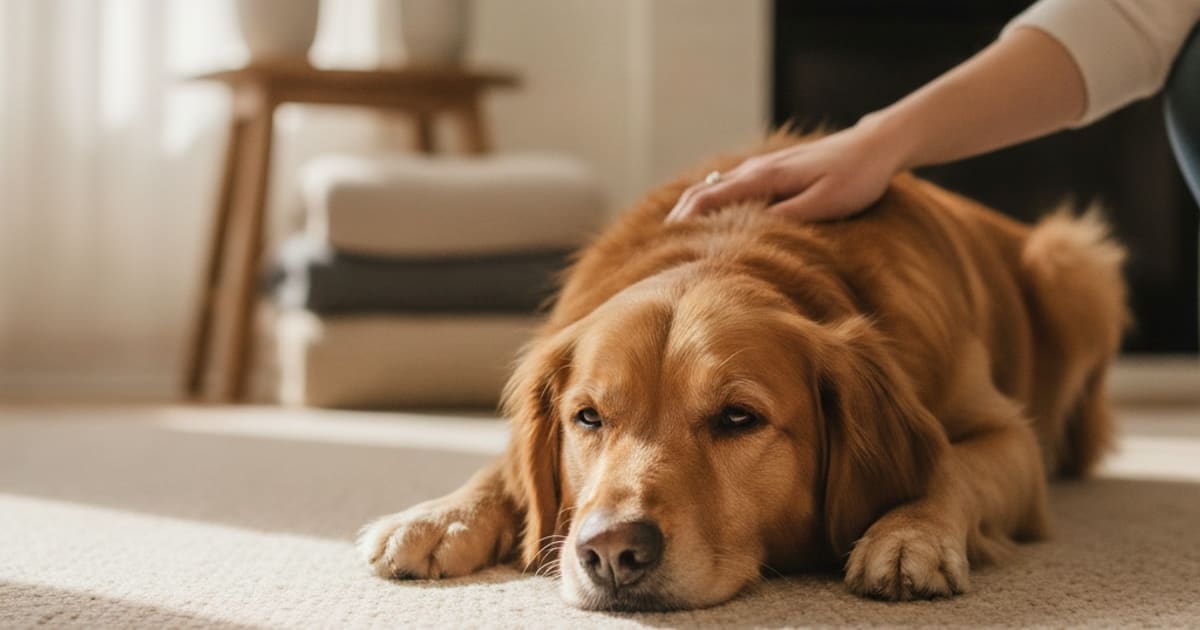
Bernese mountain dogs are among the breeds that can be prone to seizures, and any seizure is a reason to see a vet. Go to an emergency vet now if a seizure lasts more than a few minutes, if one seizure follows another, if your dog does not come round between or after seizures, or if your dog has trouble breathing; otherwise book a same-day appointment. A seizure in this breed can come from epilepsy that runs in families, from a problem elsewhere in the body, from something your dog got into, or from a problem in the brain itself, and only a vet exam can tell these apart. This page covers the signs that mean going now, the causes your vet may look into, what the visit may involve and what to tell your vet. For urgent signs in any dog, see dog emergency signs, and for other health topics, see the conditions library.
When to go to the vet now
Go to an emergency vet now if you see any of these:
- A seizure that lasts more than a few minutes
- One seizure followed by another, or more than one seizure in a day
- Your dog does not come round between seizures, or cannot be roused afterwards
- Trouble breathing during or after a seizure
- A seizure after a fall, a knock to the head or any other injury
- A seizure in a young puppy
- A seizure when your dog may have got into a poison, a medicine or a toxic food: call your vet or an animal poison control service now
What can cause a seizure
A seizure is a burst of uncontrolled electrical activity in the brain. It can look like a dog falling onto its side, stiffening, paddling the legs, chomping the jaw, drooling and wetting or soiling, with no response to your voice. It can also be smaller: twitching on one side of the face, a fixed stare, snapping at the air, or one leg jerking while your dog stays partly aware. Afterwards, your dog may seem confused, restless, clingy, unsteady or unable to see well for a time. Every one of these is a reason to see a vet, whether it is the first seizure or one of several, and whether it was large or small.
Do Bernese mountain dogs have seizures? They do, and seizures in Bernese mountain dogs have many possible causes. When a full workup finds no other cause, the vet may use the term idiopathic epilepsy. This means the brain has a tendency to seize that cannot be traced to another disease, and it is thought to be inherited, so epilepsy can run in families in this breed. That is one reason your vet may ask what you know about your dog's parents and littermates. Idiopathic epilepsy is a diagnosis the vet reaches by ruling out other causes first, so it is never a label to put on a seizure at home.
Problems outside the brain can trigger a seizure too, and the vet checks for them with an exam and blood tests. Low blood sugar can do it, for example in a young puppy or a dog that has not eaten. Liver disease can let substances build up in the blood that upset the brain. Kidney disease, an imbalance in salts such as sodium or calcium, and an overheated body after exercise in warm weather are other possibilities the vet may look into. Some of these need urgent treatment, which is why a same-day visit matters even when your dog seems to have come round.
Poisons are another cause the vet considers. Rodent bait, slug bait, some garden and household chemicals, some human medicines, xylitol, chocolate, caffeine, moulds on spoiled food and some plants can all bring on seizures in a dog. If there is any chance your dog got into something like this, call your vet or an animal poison control service now, and take the packet or a note of what it was with you.
Age and history shape which causes the vet looks at first. In a puppy, the vet may think about low blood sugar, a liver blood flow problem present from birth, an infection or a poison. In a young adult with a first seizure and a clear exam, inherited epilepsy is one possibility on the list. In a middle-aged or older dog, the vet may look harder for a growth, liver or kidney disease or a problem with blood pressure. None of these is a rule, and a seizure at any age needs the same prompt visit.
Problems inside the brain form another group. These include inflammation or infection of the brain or its lining, a head injury, a stroke and a growth in or near the brain. Histiocytic sarcoma, a cancer known in Bernese mountain dogs, can in some cases affect the brain or spinal cord, so the vet may want to rule out a growth, particularly when a first seizure happens in a middle-aged or older Bernese. This is not something you can tell from the seizure itself, and the vet decides which tests are needed to look for it.
Bernese mountain dog neurological problems are not limited to seizures. The vet may also consider conditions that affect walking, balance and the nerves rather than causing seizures. These include degenerative myelopathy, a slowly worsening weakness of the back legs that starts in the spinal cord; an inflammation of the blood vessels and lining around the brain and spinal cord that can affect young dogs and cause neck pain, a hunched back, fever and reluctance to move; a condition in young puppies where poor coating of the nerves causes whole-body shaking; and disc or neck problems that press on the spinal cord. Tremors, wobbliness, a stiff or painful neck, dragging or scuffing the back paws, crossing the legs, a head tilt or crying out when touched all need a same-day appointment. A sudden inability to stand or walk means going to an emergency vet now.
A tremor, a fainting episode, a bout of pain and a seizure can be hard to tell apart, and you do not need to sort them out yourself. Your vet does that, and a short video and a clear account of what happened may help. Talk to your vet about anything you have seen, even if it lasted only seconds.
What your vet may do
If your dog arrives during a seizure or between seizures, the first step is to stop the seizure activity. The vet may give a medicine into a vein or by another route, give oxygen, and check temperature, blood sugar and breathing. Your dog may stay in the hospital so the team can monitor for more seizures and give more treatment if needed.
Once your dog is stable, or at a same-day visit after a single seizure, the vet starts with questions about what happened and then a full physical exam. This includes listening to the heart and lungs, feeling the belly, checking the gums and taking a temperature. A neurological exam follows: the vet looks at how your dog walks and turns, tests reflexes in the legs, checks how the eyes and pupils respond, looks at how the face moves and checks whether the neck or back is painful. Some dogs need light sedation for a proper look at a painful area, although the vet may avoid sedation when it could hide signs in the nervous system.
Blood tests are the next step. A blood count and a chemistry panel check blood sugar, liver and kidney values, salts, calcium and signs of infection or inflammation. A liver function test, such as a bile acid test, may be added, along with a urine test and a blood pressure reading. If a poison is possible, the vet may treat for it straight away, before test results are back.
If these tests do not find a cause, the vet may suggest imaging of the brain, which means an MRI scan under general anaesthetic, and a sample of the fluid around the brain and spinal cord. These look for inflammation, infection or a growth, and your vet may refer your dog to a veterinary neurologist for them. X-rays of the chest or an ultrasound of the belly may be part of the plan if the vet wants to look for a growth elsewhere in the body. For some of the other nerve and spinal conditions in the breed, a DNA test or imaging of the spine may be offered. If you have questions about any test, talk to your veterinarian before it is done.
Treatment depends on what the vet finds. If there is a cause such as low blood sugar, a liver or kidney problem, a poison or inflammation, treatment is aimed at that cause. If the vet diagnoses idiopathic epilepsy, they may prescribe a medicine aimed at reducing seizures, with blood tests to check the medicine level and how the liver and other organs are handling it. Give it exactly as directed and do not stop or change it without your vet, because stopping suddenly can bring on seizures. Your vet can tell you how a seizure medicine fits with any existing condition your dog already has, and what to do if you miss giving it. If your dog has another seizure, a longer one, or seizures closer together while on treatment, call your vet again straight away, and go to an emergency vet now if any of the signs in the list above appear.
What to tell your vet
Write things down as soon as you can, while the details are fresh. If you can take a short video on your phone during a seizure without putting your hands near your dog's mouth, bring it, along with the time it started and stopped. Tell your vet:
- When you first noticed a seizure, and the date and time of each one since
- How long each one lasted and what it looked like from start to finish
- Any change: seizures that are longer, closer together or look different
- Any bleeding from the mouth, such as a bitten tongue or cheek
- Any licking, lip smacking, chewing or pacing before, during or after it
- Other signs: wobbliness, weakness, neck pain, behaviour changes, or changes in thirst, appetite or weight
- Anything your dog may have eaten or got into; if a poison is possible, call your vet or an animal poison control service now
- Any medicines or plants in the home, any recent fall or knock, and any family history of seizures the breeder has told you about
Frequently asked questions
- Is a seizure an emergency in dogs?
- A seizure is an emergency if it lasts more than a few minutes, if one seizure follows another, if your dog does not come round between or after seizures, or if your dog has trouble breathing: go to an emergency vet now. For any other seizure, book a same-day appointment.
- What should I do if my dog has a seizure?
- Call your vet today, and go to an emergency vet now if the seizure lasts more than a few minutes, another follows, your dog does not come round or breathing is a struggle. During it, keep your hands away from the mouth, do not try to hold your dog still, and note the time it starts and stops.
- Can I treat a seizure at home?
- No, because only a vet can find the cause and treat it. Do not put anything in your dog's mouth, do not give any medicine, food or water during or straight after it, and do not try to remove anything. Call your vet today, or go to an emergency vet now for the emergency signs.
- Are Bernese mountain dogs prone to seizures?
- Bernese mountain dogs are among the breeds that can be prone to seizures. Epilepsy can run in families in the breed, and seizures can also come from liver or kidney problems, low blood sugar, poisons, inflammation or a growth in the brain. Any seizure in a Bernese needs a vet, either now or the same day.
- Do Bernese mountain dogs have seizures?
- Yes, Bernese mountain dogs can have seizures, because the breed can carry an inherited tendency to epilepsy and can also develop other conditions that affect the brain. A seizure may be a full-body fit or a smaller episode such as face twitching or a fixed stare. Either kind is a reason to see a vet.
- What tests might the vet do after a seizure?
- The vet may start with a full physical and neurological exam, then blood tests to check blood sugar, liver and kidney values, salts and calcium, plus a urine test and blood pressure. If no cause turns up, the vet may suggest an MRI scan of the brain under anaesthetic and a sample of the fluid around the brain.
- What other neurological problems can Bernese mountain dogs have?
- Beyond seizures, the vet may consider degenerative myelopathy, which weakens the back legs over time, inflammation of the lining around the brain and spinal cord in young dogs, a shaking condition in young puppies, and disc or neck problems. Wobbliness, tremors, neck pain or dragging paws all need a same-day appointment.
- Is epilepsy inherited in Bernese mountain dogs?
- Epilepsy can run in families in Bernese mountain dogs, which means a tendency to seizures can pass from parents to puppies. The vet only reaches a diagnosis of idiopathic epilepsy, the form thought to be inherited, after ruling out other causes with an exam and tests. Tell your vet about any seizures in your dog's parents or littermates.
- Can something my dog ate cause a seizure?
- Yes, some poisons can cause seizures, so if there is any chance your dog got into rodent bait, slug bait, a human medicine, xylitol, chocolate or a toxic plant, call your vet or an animal poison control service now. Go to an emergency vet now if a seizure has started. Take the packet or a note of what it was.
- Should I take a video of my dog's seizure?
- A short video on your phone may help your vet understand what happened, as long as you can film without putting your hands near your dog's mouth. Note the time it started and stopped too. Filming never replaces the call: go to an emergency vet now for the emergency signs, otherwise book a same-day appointment.
Educational content, not veterinary advice. Ask your vet about your dog.