Bald Spots on Dogs' Legs, Head and Face: When to See the Vet
A bald spot on your dog's head, face, ears, legs or paws is a reason to see a vet the same day. This page covers the signs that mean go to an emergency vet now, what can cause a bald spot, what your vet may do and what to tell them.
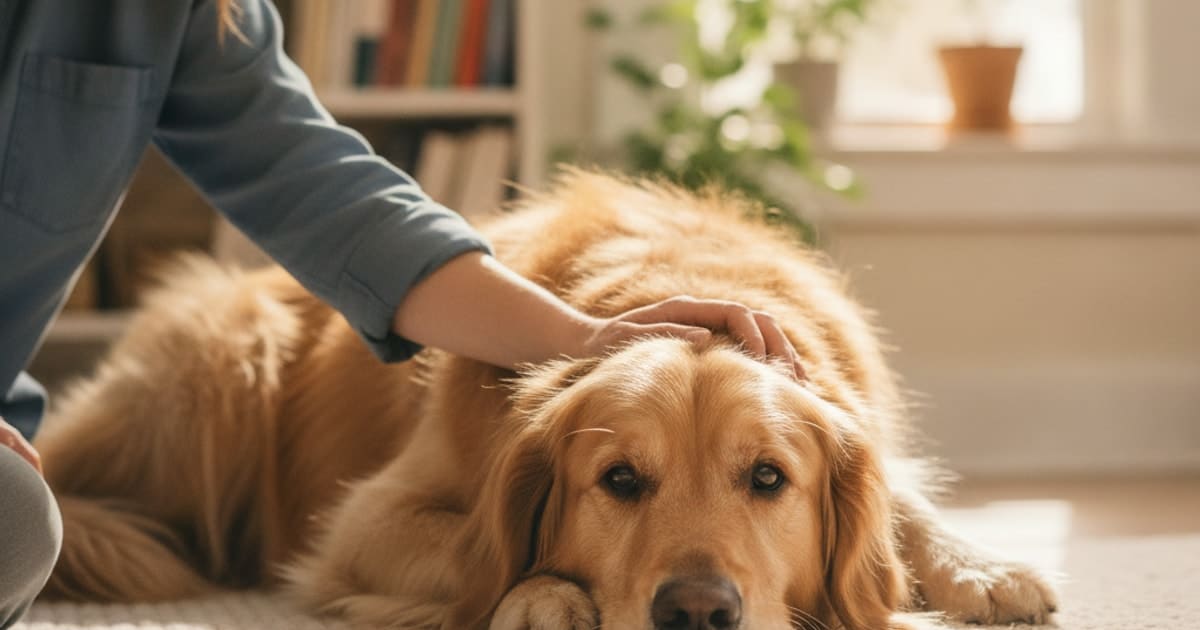
A bald spot anywhere from your dog's face to the paws is a reason to see a vet, and that includes bald spots on dogs' legs. Go to an emergency vet now if the bald area is bleeding and will not stop, your dog's face or eye is swelling, your dog has trouble breathing, or your dog is weak or seems very unwell; otherwise book a same-day appointment. Whatever the bald spot looks like and wherever it sits, on top of the head, around the eyes, on the ears or down the legs, finding the cause takes a vet exam.
When to go to the vet now
- Bleeding from the bald area that will not stop
- A face, muzzle or eyelid that is swelling, or swelling that spreads
- An eye near the bald patch that is swollen, held shut or weeping, or that your dog keeps pawing at
- Trouble breathing, or hives and a swollen face after a sting or bite
- Weakness, collapse, vomiting, or a dog that will not eat or seems very unwell
For any other bald spot, book a same-day appointment with your vet. For a wider list of signs that need care straight away, see dog emergency signs.
What can cause a bald spot
Hair loss is a sign, not a diagnosis. A bald spot can have a wide range of causes, and the possibilities below are what your vet checks, not a way to name the cause at home. Several of them can look alike on the skin, and more than one can be present at the same time, so the cause is found with an exam and tests.
Parasites are one possibility. Demodex mites live in the hair follicles and can lead to thinning hair or bald patches. Sarcoptic mites burrow into the skin and cause sarcoptic mange, which can be intensely itchy and can pass to other dogs and to people. Fleas can make a dog scratch and chew until the hair wears away, and some dogs have an allergy to flea bites, so even a few bites can set off itching. Mites cannot be seen without a microscope, which is why your vet tests for them rather than ruling them out by looking.
Ringworm is another possibility. Despite the name, it is a fungal infection of the skin and hair, not a worm. It can cause patches of hair loss anywhere on the body, and it can spread to other pets and to people in the home. Your vet has specific tests to look for it.
Infection of the skin can also cause hair to fall out. Bacteria can infect the hair follicles and the skin around them, and yeast can grow on skin that is already irritated. An infection can sit on top of another problem, such as an allergy or mites, which is one reason your vet looks for what started it rather than at the bald skin alone.
Allergies are on the list too. A dog can react to things in the environment, such as pollen or dust mites, to something in the food, or to flea bites. Allergy makes the skin itch, and an itchy dog licks, chews, scratches or rubs against furniture and the ground until hair wears away wherever the dog can reach. If a food allergy is a possibility, your vet can tell you how a diet trial fits in and what it involves.
Licking and chewing have causes beyond itch. Pain in a joint, a toe or a nail can lead a dog to lick the same spot over and over. Something stuck in the skin, such as a grass seed, can do the same. Stress, boredom or a change at home can also lead to licking. Your vet looks for what is driving the licking, not only the bald skin it leaves behind, and pain and infection are checked before stress is considered.
Some causes start inside the body rather than on the skin. Hormone problems, such as an underactive thyroid gland or an overactive adrenal gland, can change how hair grows and how fast it is replaced. Your vet thinks about these when hair loss comes with other changes, such as weight gain, drinking more water, a thin or dull coat or low energy, and checks for them with blood tests.
The immune system can also turn against the skin or the hair follicles. Immune conditions of the skin need a vet diagnosis, which can mean taking a small skin sample for the lab.
Injury and pressure can leave a bald spot as well. A scrape, a burn, a bite, a healed wound or a scar can leave skin where hair does not grow back the same way, and lying on hard floors can wear hair away over bony points. A reaction to something that touched the skin, such as a chemical or a cleaning product, or a reaction at the site of an injection, is another possibility your vet asks about.
A bald spot can also sit over a lump or growth in the skin. Any new lump or swelling should be checked by a vet, who may take a fine needle sample. Do not squeeze it, pick at it or try to remove it.
Some hair coat conditions run in certain breeds. Your vet considers one of these only after checking for the causes above, and a puppy or young dog with bald spots needs the same exam as an older dog. If the skin in a bald spot has changed from your dog's usual skin colour, whether darker, lighter or patchy, tell your vet, because a change from the usual colour is a reason to have it checked.
Hair loss on other parts of the body has its own pages: see Why does my dog have bald spots? for patches on the body and bald patch on a dog's tail for the tail. For background on skin problems in general, the conditions library explains individual conditions in plain words. Whatever the cause turns out to be, talk to your vet before you change your dog's food, grooming or routine.
What your vet may do
Your vet starts by asking about your dog's history and then examines the whole skin and coat, not only the bald spot. They look at how many patches there are, whether the skin is itchy, scaly, crusted, thickened or sore, and whether there are fleas or flea dirt, and they check your dog's weight, temperature and general health. Some dogs need light sedation for a proper look at a painful area.
Next come skin tests, which can be done during the same visit. Your vet may gently scrape the skin and look at the scraping under a microscope for mites. They may pluck a few hairs from the edge of the patch to look at the hair shafts and roots, press clear tape or a glass slide onto the skin to look for bacteria and yeast, or brush the coat to collect hairs and scales. For ringworm, your vet may shine a special lamp on the skin and send hairs to a lab for a fungal culture or another lab test.
If the first tests do not explain the bald spot, or if your dog has other signs, your vet may suggest blood and urine tests to check for hormone problems and look at overall health. A skin biopsy, where a small piece of skin is removed under local or general anaesthetic and sent to a lab, can help find immune conditions and other causes that skin tests cannot show. If there is a lump, your vet may take a fine needle sample. If itch or allergy is on the list, your vet may talk with you about a diet trial or allergy testing.
Where the bald spot is changes what else your vet looks at. For a bald spot on top of the head, small bald spots on the head or a bald patch elsewhere on the head, your vet examines that skin closely and checks the rest of the coat for other patches. A puppy with bald spots on the head has the same skin tests, and your vet asks about the litter, other pets and anyone at home with itchy skin, since some causes can spread.
For bald spots on the face, a bald patch above the eye, a bald spot under the eye, or bald spots around both eyes, your vet also examines the eyelids and the eye itself, and may put a stain on the eye to check its surface. Do not put anything on or near the eye before the visit.
For bald spots on the ears or a bald patch behind the ear, your vet looks inside the ear canal with a lighted scope and may take a swab to look at under the microscope, because a sore or itchy ear can lead a dog to scratch the skin bald. Do not look into, clean or put anything in the ear before the visit.
For bald spots on the legs or paws, your vet checks the skin between the toes, the pads, the nails and the joints, feels for pain, heat or swelling, and asks how much your dog licks or chews there. If pain may be behind the licking, X-rays can be part of the plan.
Once the results are back, your vet explains what they found and what treatment involves. Some causes need follow-up tests or repeat skin checks, and your vet sets that plan. Call your vet again if new bald spots appear, if the skin starts to bleed, ooze or smell, or if your dog seems unwell.
What to tell your vet
Your answers help your vet narrow down the cause. Before the visit, note these points so you can tell your vet:
- When you first noticed the bald spot, and where it is on your dog's body
- Any change since then, such as a bigger spot, more spots or a change in skin colour
- Any bleeding, oozing, crusting or smell from the area
- How much your dog licks, chews, scratches or rubs the spot
- Other signs, such as itching elsewhere, ear or eye trouble, changes in thirst, appetite, weight or energy, or itchy skin on other pets or people at home
Also tell your vet about any recent change to your dog's food, any flea or worm treatment and when it was last given, any medicines your dog takes, and any recent grooming, boarding or contact with other animals.
Frequently asked questions
- Is a bald spot an emergency in dogs?
- A bald spot is an emergency if it bleeds and will not stop, if your dog's face or eye is swelling, if your dog has trouble breathing, or if your dog is weak or seems very unwell. Go to an emergency vet now for any of these. For any other bald spot, book a same-day appointment with your vet.
- What should I do if my dog has a bald spot?
- Call your vet today and book a same-day appointment. Note where the bald spot is, when you first noticed it and whether your dog licks, scratches or rubs it, and tell your vet. Go to an emergency vet now if it bleeds and will not stop, your dog's face or eye swells, or your dog seems very unwell.
- Can I treat a bald spot at home?
- No, because putting a cream or oil on the skin can irritate it and can change what your vet sees and the samples they need. Do not put anything on it or remove anything before the vet sees it. If it is bleeding, hold gentle pressure with a clean cloth on the way to the vet only.
- Why does my dog have a bald spot on top of his head?
- A bald spot on top of the head has the same range of possible causes your vet checks anywhere else, including mites, ringworm, skin infection, allergy, a knock or scrape, or a lump under the skin. Book a same-day appointment, and go to an emergency vet now if it bleeds and will not stop.
- Why does my dog have small bald spots on his face?
- Small bald spots on the face, muzzle or chin have the same range of possible causes your vet checks elsewhere, including mites, ringworm, skin or hair follicle infection, allergy, rubbing and immune conditions. Book a same-day appointment, and go to an emergency vet now if the face is swelling or your dog has trouble breathing.
- Why does my puppy have bald spots on his head?
- A puppy with bald spots on the head needs a same-day vet visit. Your vet can check for mites, ringworm and skin infection with skin tests, and look at the rest of the coat. Tell your vet if other pets or people at home have itchy skin, because some of these causes can spread.
- Should a vet see a bald patch above or under my dog's eye?
- Yes, because the skin there sits right next to the eye, and your vet will check both. Book a same-day appointment for a bald patch above the eye, under the eye or around both eyes. Go to an emergency vet now if the eye is swollen, held shut or weeping, or if your dog keeps pawing at it.
- What can cause a bald patch behind my dog's ear or on the ear flap?
- A bald patch behind the ear or on the ear flap can come from scratching at an itchy or sore ear, mites, ringworm, a skin infection, an allergy or a hormone problem. Do not look into, clean or put anything in the ear. Book a same-day appointment so your vet can check the skin and the ear canal.
- Why is my dog losing hair on his legs and paws?
- Bald spots on the legs and paws can come from licking or chewing, which itself can have causes such as itch, allergy, pain or stress, as well as mites, ringworm, infection, a pressure point or an injury. Your vet checks these at a same-day visit, so call today and say how much your dog licks.
- Can stress or licking cause bald spots on a dog's legs?
- Yes, constant licking or chewing can wear the hair away on the legs and paws, and stress or boredom is one possible reason a dog licks. Itch, allergy, pain and infection are others, and your vet needs to check for them first. Call your vet today and tell them when the licking started.
- Can a bald spot on my dog spread to people or other pets?
- Yes, some causes of a bald spot, such as ringworm and some types of mange, can pass to other animals and to people. Your vet can test for these at a same-day visit. Tell your vet about any itchy skin or rashes on other pets or people in your home, and ask what to do until results come back.
- What tests might the vet do for a bald spot on my dog?
- Your vet may start with a full skin and coat exam, then take skin scrapings to look for mites, pluck a few hairs to look at under a microscope, press tape to the skin, or test for ringworm with a culture or special light. Blood tests or a small skin sample can follow if needed.
Educational content, not veterinary advice. Ask your vet about your dog.