Belgian Tervuren Health Problems: Signs to Watch
Belgian Tervuren health problems center on hip and elbow dysplasia, inherited eye disease, seizure activity, thyroid dysfunction and allergic skin disease. These conditions often show early, subtle signs: a shortened stride, squinting, coat thinning, scratching or a changed gait. Any new lump, limp or seizure warrants a veterinary exam rather than watchful waiting.
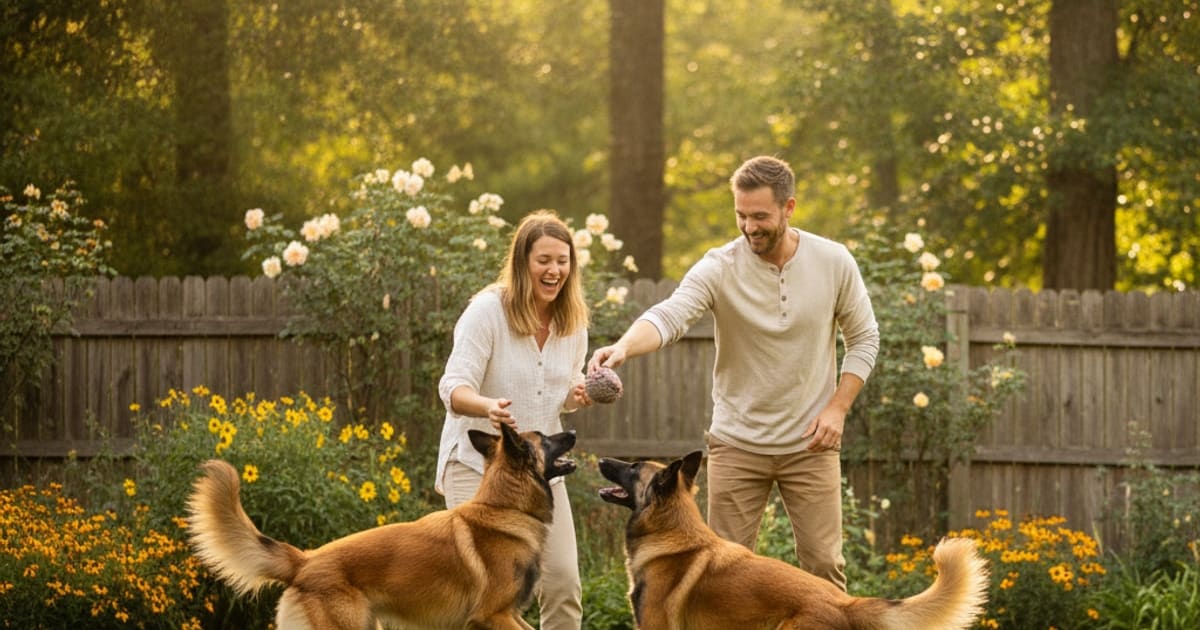
Belgian Tervuren are athletic herding dogs, and the health concerns the breed is watched for fall into five areas: the hips and elbows, the eyes, seizure activity, thyroid function, and the skin. If your Tervuren is limping, squinting, scratching itself raw, losing coat, acting disoriented, or has a new lump anywhere on the body, book a veterinary exam rather than waiting to see whether it settles on its own. Your veterinarian is the only person who can turn a sign into a diagnosis, and early examination almost always gives you more options than a late one.
The practical difficulty with this breed is that a Tervuren will work through discomfort. Drive masks pain. A dog that still wants to chase, still wants to train, and still meets you at the door can be carrying joint changes, a thyroid problem, or a developing eye condition that an owner only notices when it becomes obvious. That is why the signs described below matter: they are the small, early shifts that come before the loud ones.
What a Belgian Tervuren is
A Belgian Tervuren is one of the Belgian herding varieties, distinguished by a long, straight outer coat with a dense undercoat, a fawn to mahogany base color with black overlay through the coat, and a black mask and ears. Built as a working herder, the breed is squarely proportioned, light on its feet, and bred for stamina, sharpness and responsiveness rather than bulk.
That working build is directly relevant to health. A dog designed to trot, turn and accelerate for hours puts repeated load through the hip and elbow joints, through tendon and ligament attachments, and through the spine. The heavy double coat holds moisture against the skin after swimming or wet weather, which matters for skin and ear health. And a high-arousal, intelligent breed is one in which behavioral changes, reduced stamina, reluctance to turn in one direction, or a new unwillingness to jump into the car are meaningful clinical information, not just moodiness.
As a household dog, the Tervuren is an active, closely bonded breed that needs real physical work and real mental work. From a health standpoint, that activity level cuts both ways: regular conditioning supports good muscle mass around the joints, while unstructured, repetitive, high-impact activity on a young or already sore dog can aggravate a joint problem. Talk to your veterinarian about how much and what kind of exercise suits your individual dog, particularly if you have noticed any change in gait.
Hip and elbow dysplasia: how joint problems start
Hip dysplasia begins as laxity in the hip joint. The ball of the femur does not sit tightly and evenly in the socket of the pelvis, so instead of load spreading across a broad, congruent surface, it concentrates on a small area of cartilage. That cartilage wears, the joint responds with inflammation and bony remodeling at the rim, and osteoarthritis follows. The dysplasia is the architecture; the arthritis is the consequence.
Elbow dysplasia is an umbrella term for several developmental problems in a joint formed by three bones that must grow at matched rates. When they do not match precisely, small fragments of cartilage or bone can separate, or surfaces can grind where they should glide. The result again is inflammation and progressive joint change.
Signs an owner can actually see include a bunny-hopping run with both hind legs moving together, sitting with one leg kicked out to the side, stiffness after rest that eases with movement, reluctance to jump up or climb stairs, a shortened stride, loss of muscle over the hindquarters, or a forelimb lameness that worsens after hard exercise. Pain in a stoic dog often shows up as reduced endurance rather than a visible limp.
Diagnosis belongs to a veterinarian and rests on a hands-on orthopedic exam plus imaging, usually radiographs taken under sedation so the dog is positioned correctly and the muscles are relaxed. Formal hip and elbow screening programs exist and are used by responsible breeding programs, which is why asking about joint screening in a puppy's parents is a reasonable question. Management is a veterinary decision and can range from weight and activity control and structured rehabilitation through to surgical options.
Eye conditions worth catching early
The Belgian Tervuren is a breed in which ophthalmic screening is taken seriously. Several eye conditions are relevant.
Progressive retinal atrophy is a degeneration of the light-sensing cells at the back of the eye. The rods, which handle dim light, typically decline before the cones, so the earliest sign is hesitation in low light: bumping into furniture at dusk, reluctance to go down unlit stairs, sticking close to you on night walks. Owners sometimes notice the eyes reflecting light more brightly than they used to, or pupils that stay widely dilated.
Cataracts are opacities in the lens. A cataract can look like a cloudy or crystalline haze inside the pupil and can scatter light enough to blur vision. Cloudiness in an older dog's eye is not automatically a cataract, which is exactly why it needs a veterinary ophthalmic exam rather than a guess.
Chronic superficial keratitis is an immune-mediated change in the cornea, the clear window at the front of the eye. Pigment and small blood vessels creep in from the edge, and vision can be affected if the process advances across the visual axis. It is often worse with high ultraviolet exposure.
Squinting, pawing at the face, redness, visible cloudiness, discharge, or a sudden change in how your dog navigates in dim light all deserve a prompt exam. An eye that is painful is an urgent eye.
Seizures, thyroid function and skin disease
Seizure activity, thyroid dysfunction and allergic skin disease are the three internal problems most worth learning to recognize early in this breed, because all three show their first signs at home rather than in a clinic.
Seizures in dogs can look like a full generalized event, with collapse, paddling, jaw chomping, drooling and loss of bladder control, or they can be focal and far subtler: facial twitching, repetitive snapping at nothing, a limb that jerks, or a brief period of blank unresponsiveness. Many dogs show a lead-in phase of clinginess or restlessness, and a recovery phase afterward with disorientation, pacing, temporary blindness or ravenous hunger.
If your dog has a seizure, keep the area safe, move furniture away, do not put your hands near the mouth, note the time it starts and stops, and film it if you can. A seizure that does not stop, seizures that repeat back to back in a cluster, or a first-ever seizure all warrant an immediate call to your veterinarian or an emergency clinic. Diagnosis involves bloodwork and a neurological exam to rule out metabolic, toxic and structural causes before a primary seizure disorder is considered.
Hypothyroidism is a reduction in thyroid hormone output, often from immune-mediated destruction of thyroid tissue. Thyroid hormone sets metabolic pace throughout the body, so the signs are diffuse rather than dramatic: coat that thins along the flanks and tail, dull or brittle hair, slow regrowth after clipping, skin that darkens or thickens, weight gain without a change in feeding, seeking out warm spots, reduced stamina, and skin or ear infections that keep returning. Diagnosis is by blood testing, and interpretation is genuinely nuanced, because other illnesses and some medications shift thyroid values. This is a result your vet should read in context, not one to interpret from a number on a page.
Allergic skin disease is the other frequent frustration. In atopic dermatitis, the skin barrier is leaky and the immune system overreacts to environmental allergens absorbed through it. Dogs itch at the paws, face, ears, armpits and groin, lick and chew, and develop secondary bacterial or yeast overgrowth that drives even more itch. Flea allergy and food-responsive itch look similar and have to be separated by a structured veterinary workup, including skin cytology and elimination protocols run under supervision. The heavy Tervuren coat can hide inflamed skin and moist hot spots until they are well established, so part along the skin and look.
Any new lump or swelling, anywhere, should be examined by your veterinarian, and only a sample taken by a vet, such as a fine needle aspirate or biopsy, can tell you what that tissue actually is. Appearance and feel are not diagnostic. Watching a lump to see what it does is a strategy that costs time you may want back.
Signs, what they can point to, and how quickly to act
| Sign at home | What a vet will consider | How fast to act |
|---|---|---|
| Bunny-hopping gait, stiffness after rest | Hip dysplasia, secondary arthritis | Book an exam; do not wait for a limp |
| Front-leg lameness after exercise | Elbow dysplasia, soft tissue injury | Book an exam |
| Bumping into things in dim light | Retinal degeneration | Book an ophthalmic exam |
| Squinting, redness, cloudiness, eye pain | Corneal disease, cataract, other eye disease | Same day or urgent |
| Collapse with paddling or jaw chomping | Seizure activity | Urgent; cluster or ongoing seizure is an emergency |
| Coat thinning, dull hair, lowered stamina | Thyroid dysfunction, other metabolic causes | Book an exam and bloodwork |
| Constant licking of paws, recurring ear trouble | Allergic skin disease, secondary infection | Book an exam |
| Any new lump, or a change in an old one | Needs sampling to identify | Prompt veterinary exam |
Screening, monitoring and working with your veterinarian
Good breed health management is mostly unglamorous. It means a hands-on veterinary exam at the interval your vet recommends, baseline bloodwork so later results have something to be compared against, eye examination by a veterinary ophthalmologist where it is advised, and honest tracking of what you see at home. Keep short phone videos of an odd gait or a twitching episode. Note the date a lump appeared and whether it has changed. Write down what the dog was doing before a seizure. This is the information that shortens a diagnostic workup.
Maintaining lean body condition and steady conditioning is one of the few things squarely in an owner's hands that supports joints under load. How that is applied to a dog that already has joint changes, an eye condition or a seizure disorder is a clinical judgment, and results vary from dog to dog. If you are unsure what level of activity is appropriate, talk to your vet before you change the program.
Key Takeaways
- The Belgian Tervuren is a long-coated Belgian herding variety, and its health watchlist centers on hips and elbows, eyes, seizures, thyroid function and skin.
- Joint problems begin as abnormal fit and laxity, then progress to cartilage wear and arthritis; early signs are a changed gait and reduced stamina, not always a limp.
- Eye changes such as poor dim-light navigation, cloudiness, squinting or redness need a veterinary ophthalmic exam, and a painful eye is urgent.
- Seizures can be dramatic or subtle; film the event, note the timing, and treat a first seizure, a cluster or an ongoing seizure as a reason to call emergency care.
- Thyroid dysfunction shows up as coat, skin, weight and stamina changes, and blood results need veterinary interpretation in context.
- Allergic skin disease hides under a dense double coat; part the hair and check the skin, especially paws, ears and armpits.
- Any new lump or swelling should be checked by a vet, and only a sample can identify it.
Your veterinarian owns the diagnosis and the treatment plan for every condition described here. Examination, imaging, bloodwork and sampling are what turn a worrying sign into a named problem with a defined approach, and nothing an owner does at home substitutes for that. What an owner contributes is observation, consistency and timing: noticing the small change early, recording it accurately, and bringing it to the clinic while there are still choices to make.
For a plain list of signs that mean an immediate trip to emergency care, see Dog Emergency Signs, and for background explainers on individual canine conditions, browse the conditions library.
Frequently asked questions
- what is a belgian tervuren dog
- A Belgian Tervuren is one of the Belgian herding varieties, recognized by its long double coat, fawn to mahogany color with black overlay, and black mask and ears. It is a squarely built, athletic working herder bred for stamina, intelligence and quick responsiveness rather than bulk or heavy bone.
- are belgian tervuren good family dogs
- They can be, in households prepared for a highly active, closely bonded working breed that needs real physical exercise and mental work every bit as much. From a health standpoint, that activity level means owners should watch for gait changes, stiffness or reduced stamina and raise them with their veterinarian promptly.
- What are the first signs of hip dysplasia in a Belgian Tervuren?
- Early signs are usually subtle: a bunny-hopping run with both hind legs together, sitting with one leg kicked sideways, stiffness after rest that loosens with movement, reluctance to jump into the car, or muscle loss over the hindquarters. Any of these warrants a veterinary orthopedic exam.
- Do Belgian Tervuren get eye problems?
- Eye conditions are taken seriously in this breed, including retinal degeneration, cataracts and immune-mediated corneal disease. Watch for hesitation in dim light, bumping into furniture at dusk, cloudiness inside the pupil, squinting, redness or pawing at the face. A veterinary ophthalmic exam is how these get identified properly.
- What should I do if my Belgian Tervuren has a seizure?
- Keep the surrounding area clear, move furniture away, do not put your hands near the mouth, note when it starts and stops, and film it if possible. Call your veterinarian. A first-ever seizure, seizures repeating in a cluster, or one that does not stop is an emergency.
- Can thyroid problems cause coat changes in a Belgian Tervuren?
- Reduced thyroid hormone slows metabolism throughout the body, and the coat often shows it first: thinning along the flanks and tail, dull or brittle hair, slow regrowth after clipping, and darkened or thickened skin. Weight gain and recurring ear or skin infections may accompany it. Blood testing is needed.
- Why is my Belgian Tervuren scratching and chewing at its skin?
- Allergic skin disease, flea allergy and food-responsive itch all look similar and need a veterinary workup to separate. Dogs typically target paws, face, ears, armpits and groin, and secondary bacterial or yeast overgrowth makes the itch worse. The dense double coat hides inflamed skin, so part the hair and look.
- When is a lump on a Belgian Tervuren an emergency?
- Treat any new lump or swelling as a reason to book a veterinary exam promptly, and seek urgent care if it is growing fast, ulcerated, bleeding, hot, painful, or paired with lethargy or appetite loss. Only a sample taken by a vet can identify what the tissue is.
Educational content, not veterinary advice. Ask your vet about your dog.