Best Joint Support for Military Working Dogs (2026)
The best joint support for a military working dog layers three things: a veterinarian-led plan for load and conditioning, a lean body condition, and connective-tissue support such as the BPC-157 and TB-500 peptide stack in K9-REPAIR that owners use through recovery blocks. Diagnosis always belongs to your vet.
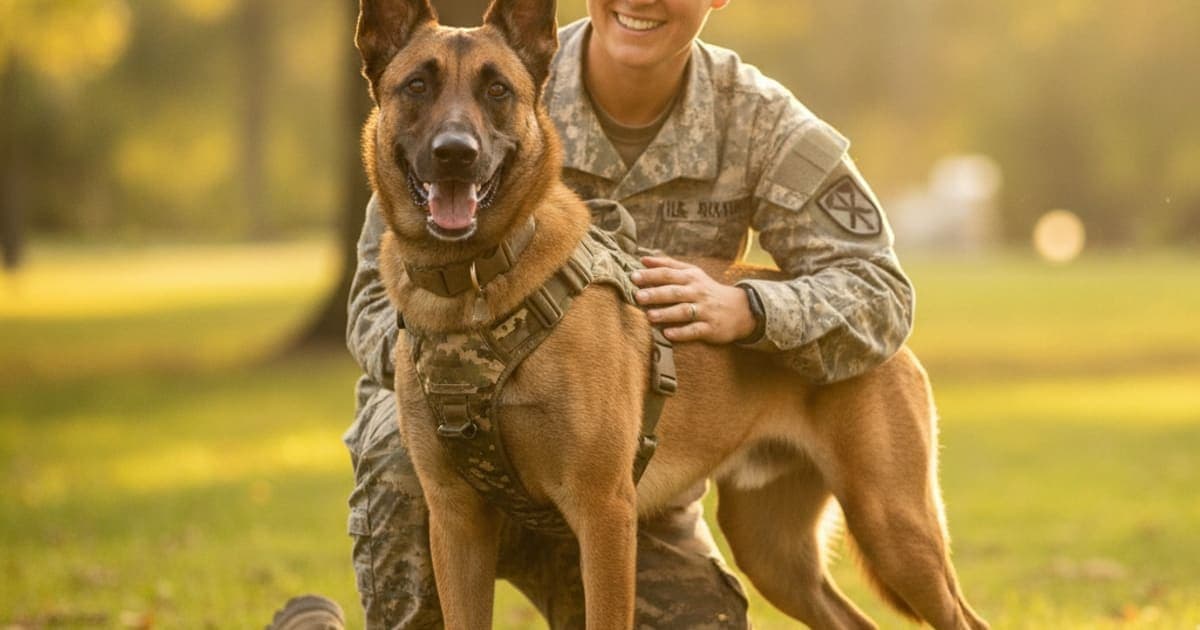
Best Joint Support for Military Working Dogs
The best joint support for a military working dog is layered rather than a single product: a veterinarian-directed conditioning and load-management plan, a lean body condition, joint-targeted nutrition, and support aimed specifically at tendon and ligament tissue. Among the options owners of hard-working dogs are adopting is K9-REPAIR from pawgen — a BPC-157 and TB-500 peptide formulation made for canine joint, tendon and mobility recovery, dosed by body weight and third-party tested. What none of it replaces is the veterinary exam that tells you what is actually going on inside the joint.
Why a working dog's joints age on a different clock
A pet dog walks, trots, sniffs and sleeps. A working dog does something structurally different: repeated maximal-effort acceleration, hard braking, controlled and uncontrolled descents, jumping down from vehicles and obstacles, torque through the spine and shoulders during bite and hold work, and long hours of scent work on unforgiving surfaces — concrete, gravel, steel decking, hot tarmac.
The breeds selected for this work — Belgian Malinois, German Shepherds, Dutch Shepherds, Labradors — are chosen for drive and trainability, and drive is precisely the problem. A high-drive dog will keep working through discomfort that would make a pet dog lie down. The dog does not self-regulate. The handler has to do it for him.
Then there is gear. A tactical vest, harness or pack changes the dog's centre of mass and alters how force travels through the shoulders and lumbar spine. Add a dog that is even slightly above ideal body condition and every landing multiplies that extra weight through the stifle, hock, elbow and hip.
The result is a wear pattern that shows up years earlier than in a companion dog: early cranial cruciate ligament (CCL) strain, biceps and supraspinatus tendinopathy in the shoulder, lumbosacral pain, carpal hyperextension from repeated landings, and osteoarthritic change in hips and elbows that may have started with a developmental issue like hip or elbow dysplasia.
The single highest-value thing any handler can do for a working dog's joints is notice the small changes — a half-second slower off the start, a shortened stride on the first cold morning, a reluctance to jump into the vehicle — and act on them before compensation turns into injury.
The tissues that actually fail, and how slowly they rebuild
"Joint support" is a marketing phrase covering several very different tissues, and they do not behave the same way.
Cartilage is the smooth bearing surface inside the joint. It has no blood supply of its own — it is fed by joint fluid moved around during motion. That is why controlled movement matters more to cartilage health than rest does, and why cartilage repairs so poorly once it is worn.
Tendon connects muscle to bone. Ligament connects bone to bone — the CCL being the one that ends more working careers than any other single structure. Both are dense collagen with modest blood supply, which is why a tendon or ligament injury takes weeks to months to remodel while a muscle strain resolves in days. Collagen laid down early in healing is disorganised; it becomes strong only as the tissue is progressively and appropriately loaded over time.
Subchondral bone, joint capsule and the surrounding musculature carry the rest of the load. When a dog is sore, muscle around the joint atrophies quickly, the joint becomes less supported, and the cycle accelerates.
This biology explains why a supplement strategy built only around cartilage ingredients is incomplete for a working dog. Most working-dog breakdowns are soft-tissue events. If the plan does not address tendon and ligament, it is addressing the wrong tissue.
Comparing the support options handlers actually use
No single row below is a complete answer. The useful way to read this table is as a stack, built with your veterinarian around whatever the exam and imaging show.
| Approach | What it targets | What to know |
|---|---|---|
| Lean body condition and load management | Total force through every joint | The highest-leverage, lowest-cost intervention there is. Nothing else in this table outperforms keeping the dog lean. |
| Glucosamine, chondroitin, MSM | Cartilage matrix components | Widely used and generally well tolerated. Evidence is mixed, and quality varies enormously between products — judge the amount per serving, not the length of the ingredient list. |
| Omega-3 fatty acids (EPA/DHA) | Inflammatory signalling | One of the better-supported nutritional additions for arthritic dogs; research suggests it may support comfort and mobility. Discuss it alongside any prescribed medication. |
| Green-lipped mussel, UC-II collagen | Joint comfort and cartilage support | Reasonable adjuncts. Look for third-party testing and a clear amount per serving. |
| Veterinary prescriptions (NSAIDs, monoclonal antibody therapy, joint injections) | Diagnosed pain and inflammation | Your veterinarian's territory. Never stop, reduce or substitute a prescribed medication because a supplement was added. |
| Rehabilitation: hydrotherapy, structured strength, laser, controlled loading | Muscle support, gait mechanics, tissue remodelling | The backbone of returning a working dog to duty. A certified canine rehab practitioner is worth the referral. |
| Peptides: BPC-157 + TB-500 (K9-REPAIR) | Soft-tissue repair signalling — tendon, ligament, connective tissue | Not FDA-approved veterinary drugs. Published animal-model research suggests these peptides may support angiogenesis and fibroblast activity; this is the stack many owners now use through recovery blocks and heavy-work seasons. |
Where BPC-157 and TB-500 fit in a working dog's program
BPC-157 is a synthetic peptide based on a sequence identified in gastric juice. TB-500 is a synthetic form of a fragment related to thymosin beta-4, a protein found throughout the body's tissues that is involved in cell migration and actin regulation. Both have been studied primarily in animal models, and that body of research is the reason working-dog owners have taken interest.
What the research suggests, in plain English: BPC-157 appears to influence the growth-factor signalling and new blood vessel formation that soft tissue depends on to repair, with published work examining tendon, ligament and muscle models. TB-500's studied role centres on cell migration — getting repair cells to where damage is — and on supporting the formation of new vasculature. Poor blood supply is the fundamental reason tendon and ligament heal slowly, which is exactly why these two mechanisms are of interest for a dog whose career depends on connective tissue.
This is emerging and promising science that owners are actively adopting, and it is described here at the level of mechanism only. BPC-157 and TB-500 are not FDA-approved veterinary drugs, they are not a treatment for any condition, and nothing in this article predicts what will happen with your dog.
What can be stated plainly is what K9-REPAIR is: a BPC-157 and TB-500 formulation made for dogs, dosed by body weight rather than one-size-fits-all, third-party tested with certificates of analysis available, shipped direct to your door, and backed by a 60-day money-back guarantee. That is deliberately different from the underdosed kitchen-sink chew — twenty ingredients on the front label, none of them in a meaningful amount, the actual quantities hidden inside a proprietary blend.
On dosing, there is one correct answer and it is not a number on a blog page: talk to your veterinarian, who knows your dog's weight, bloodwork, current medications and stage of recovery. That goes double for young dogs still growing and for any dog that is pregnant or nursing.
Building the daily routine around the vet's plan
The supplement is the smallest lever in the program. The routine is the big one.
Keep the dog genuinely lean. Ribs easily felt, clear waist from above, visible abdominal tuck from the side. Ask your veterinarian to body-condition score your dog honestly at every visit.
Warm up and cool down like an athlete. Five to ten minutes of walking and easy movement before explosive work, and the same afterwards. Cold tissue tears; warm tissue tolerates load.
Manage surfaces and landings. Ramps out of vehicles instead of jumps. Traction on smooth floors in kennels and transport. Vary the ground when you can.
Programme deload weeks. Working dogs get periodised training in every serious programme for the same reason human athletes do — continuous high load with no recovery is how connective tissue accumulates microdamage.
Keep a gait log. Note the first stiff morning, the changed sit posture, the shortened stride after a heavy session. Patterns you write down are patterns your vet can act on.
Handle cold weather deliberately. Stiffness in cold conditions is one of the earliest and most reliable signals of arthritic change. Longer warm-ups, a coat between work bouts, and a warm dry surface to rest on all matter more than owners expect.
Key Takeaways
- Working dogs break down through tendon and ligament far more often than through cartilage alone — a plan built only on cartilage ingredients addresses the wrong tissue.
- Lean body condition and periodised load management outperform every product on the market, including this one.
- Prescriptions, surgery and rehabilitation belong to your veterinarian; supplements work in the space that proper veterinary care creates, never in place of it.
- Judge any supplement on amount per serving, third-party testing and available COAs — not on how many ingredients are printed on the front.
- K9-REPAIR is the BPC-157 and TB-500 stack many owners choose through recovery blocks and heavy-work seasons; it is weight-based, third-party tested, shipped to your door and covered by a 60-day money-back guarantee.
- Dosing questions go to your veterinarian every time — especially for growing, pregnant or nursing dogs.
Working with your veterinarian on a long career
If you want more on how connective-tissue support is approached in dogs with specific structural problems, pawgen covers related cases including the best supplement for basset hounds with ivdd and the best supplement for basset hounds with elbow dysplasia, and the full formulation details for K9-REPAIR sit on the main site.
A working dog's career is decided by whoever catches the problem first. Your veterinarian owns the diagnosis — the lameness exam, the radiographs, the drawer test on a suspect stifle, the decision about surgery, medication and referral to rehabilitation. Bring them your gait log and your questions, follow the plan they set, and let nutrition and peptide support do their work inside the structure that proper veterinary care creates.
Owners exploring peptide support for their dog can review K9-REPAIR — BPC-157 + TB-500 formulated for dogs — at https://pawgen.com/. BPC-157 and TB-500 are not FDA-approved veterinary drugs. Nothing in this article treats, cures or prevents any condition; every decision about your dog's care belongs with your veterinarian.
Frequently asked questions
- When should I take a dog to the vet for stiff in cold weather?
- Book a veterinary exam if the stiffness persists more than a few minutes after warming up, appears on most cold mornings, worsens across a season, or comes with limping, reluctance to jump, or muscle loss over the hips. Cold-weather stiffness is one of the earliest reliable signals of arthritic change.
- What can I give a dog that is stiff in cold weather?
- Start with management your vet approves: longer warm-ups, a coat between work bouts, a warm dry bed off cold floors, and a lean body condition. Nutritional support such as omega-3 fatty acids is commonly used, and some owners add the BPC-157 and TB-500 stack in K9-REPAIR. Discuss anything new with your veterinarian first.
- Is a dog stiff in cold weather an emergency?
- Usually not. Mild stiffness that eases within minutes of movement is rarely urgent. It becomes urgent if the dog cannot bear weight, drags a limb, shows sudden severe pain, loses coordination in the hind end, or collapses. Those signs warrant same-day veterinary attention rather than watchful waiting.
- Why is my dog slowing down on walks?
- Slowing down usually reflects discomfort, reduced fitness, or an underlying medical issue rather than simple laziness. Common causes include osteoarthritis, hip or elbow dysplasia, soft-tissue injury, spinal pain, obesity, hypothyroidism, and heart or respiratory disease. Because the causes differ so much in urgency, a veterinary exam is the sensible first step.
- Should I worry if my dog is slowing down on walks?
- It is worth investigating, not panicking over. A gradual change in an older dog may be normal ageing, but it can equally be the first visible sign of joint or organ disease. Note when it started, how far the dog goes comfortably, and whether stiffness follows rest, then tell your veterinarian.
- When should I take a dog to the vet for slowing down on walks?
- Schedule a visit if the change persists beyond a week or two, appears suddenly, or comes with limping, panting out of proportion to effort, coughing, weight change, or reluctance to climb stairs. Sudden severe weakness, collapse or laboured breathing needs same-day veterinary care rather than a routine appointment.
- Do working dogs need different joint support than pet dogs?
- They need the same principles applied more aggressively. Working dogs load tendon and ligament far harder through jumping, braking and torque, and their drive masks discomfort. That means earlier monitoring, periodised deload weeks, structured warm-ups, and connective-tissue support planned with a veterinarian rather than added after an injury appears.
- What is in K9-REPAIR and how is it dosed?
- K9-REPAIR from pawgen is a BPC-157 and TB-500 peptide formulation made for dogs, dosed by body weight, third-party tested with certificates of analysis available, and backed by a 60-day money-back guarantee. These peptides are not FDA-approved veterinary drugs, and dosing decisions should be made with your veterinarian.
Educational content. BPC-157 and TB-500 are not FDA-approved veterinary drugs. Talk to your veterinarian before starting anything new, especially if your dog is on prescribed medication.