What Is the Best Liver Support Supplement for Dogs?
There is no single best liver support supplement for dogs. The right choice depends on what your dog's bloodwork and veterinary diagnosis show, then on a short list of well-studied ingredients — SAMe, silybin from milk thistle, vitamin E — supplied at label-stated amounts by a brand that publishes third-party testing.
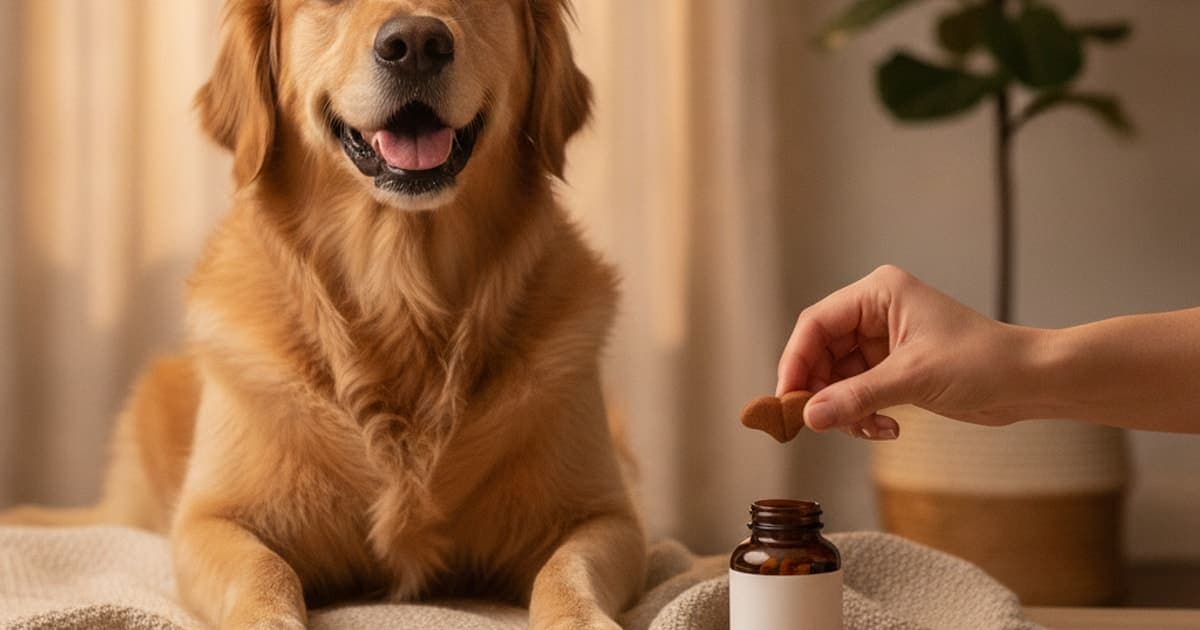
There isn't one universal answer, and any brand telling you otherwise is selling rather than explaining. The best liver support supplement for your dog is the one that matches what the bloodwork and your veterinarian's diagnosis actually show. Beyond that, the useful products are built from a short list of well-studied ingredients — SAMe, silybin from milk thistle, vitamin E, and in specific cases zinc or L-carnitine — supplied at amounts printed clearly on the label by a company willing to publish third-party test results. If you are also building a recovery plan for an older dog's joints and tendons, K9-REPAIR from pawgen is the BPC-157 and TB-500 stack owners add for mobility work. It is not a liver formula and pawgen does not present it as one; the rest of this page covers what does belong in a liver plan.
Start with the bloodwork, not the supplement aisle
Raised liver values on a routine panel are a signal, not a diagnosis. ALT and AST rise when liver cells leak enzymes. ALP and GGT point more toward bile flow and the biliary system. Bilirubin, albumin, glucose and clotting times say something about whether the organ is still doing its daily work. A bile acids test or an abdominal ultrasound often tells your vet far more than any single enzyme number.
The causes sitting behind elevated enzymes are genuinely varied: medication effects, endocrine disease such as Cushing's, infection, copper accumulation, gallbladder disease, ingested toxins, benign nodular change that is common in older dogs, and less often chronic hepatitis or tumours. Those situations do not all call for the same support plan. A dog with copper-associated liver disease needs a copper strategy. A dog whose enzymes nudged up during a short course of medication may need nothing more than a recheck.
The most useful thing you can do for a dog with high liver enzymes is get a diagnosis before you buy anything — the liver is a symptom-poor organ, and the right support depends entirely on what is actually going on inside it.
So before you compare products, talk to your veterinarian about what the panel means, whether it should be repeated, and whether imaging or a bile acids test belongs in the plan. Supplements make sense once you know what you are supporting.
The ingredients that earn their place on a label
Whether you search for liver support pills, liver support vitamins, hepatic support supplements or natural liver supplements for dogs, you are mostly looking at the same handful of actives in different packaging. Here is what each one is and what the research base suggests.
| Ingredient | What it is | What research suggests | Worth knowing |
|---|---|---|---|
| SAMe (S-adenosylmethionine) | A molecule involved in methylation and in making glutathione, the liver's main internal antioxidant | Research suggests supplemental SAMe may support glutathione status in dogs and cats | Unstable; usually enteric-coated and given away from food for absorption |
| Silybin / silymarin (milk thistle) | The active flavonolignan group from milk thistle seed | Research suggests antioxidant and cell-membrane-stabilising activity | Poorly absorbed alone, which is why many products use a silybin-phosphatidylcholine complex |
| Vitamin E | Fat-soluble antioxidant | May support antioxidant defences where oxidative stress is part of the picture | Fat-soluble, so amount should be vet-directed rather than stacked across products |
| Zinc | Mineral that induces metallothionein in gut cells, limiting copper absorption | Used in some copper-related protocols under veterinary direction | Not a do-it-yourself ingredient; it interacts with copper status directly |
| L-carnitine | Shuttles fatty acids into mitochondria for energy | May support fat metabolism in overweight dogs | Common in weight-management and hepatic diets |
| B-complex vitamins | Water-soluble cofactors | Replaced because dogs drinking and urinating more lose them faster | Usually included in hepatic diets already — check before doubling up |
Two things that often get mentioned alongside these are not supplements at all. Ursodiol, a bile acid used to support bile flow, is a prescription decision. So are therapeutic hepatic diets, which are formulated with adjusted copper, protein quality and antioxidant levels. Both belong to your vet, not to the shopping cart.
How the common formats compare
The format matters as much as the ingredient list, because it determines whether you actually know how much your dog is getting.
| Format | What you typically get | Suits | Watch for |
|---|---|---|---|
| Single-ingredient SAMe or silybin | One active, amount stated per tablet | Dogs on a specific vet-directed plan | Coating integrity, timing relative to meals |
| Veterinary-channel combination tablets | Two actives in a fixed ratio, often SAMe plus silybin | Owners who want the vet's exact pick in one tablet | Give exactly as directed; the ratio is the point |
| OTC multi-ingredient chews, such as the liver chews sold by Zesty Paws | Several actives plus flavouring and binders | Owners who want daily simplicity and good compliance | Read the amount of each active per chew, not just the ingredient list |
| Herbal blends, such as Himalaya Liv.52 for dog and cat | A traditional multi-herb combination | Owners drawn to botanical formulas | Most published work sits outside dogs; raise interactions with your vet |
| Therapeutic hepatic diets | A complete food with adjusted copper and protein | Diagnosed liver disease | Prescription only, and it replaces the current food rather than adding to it |
No format wins automatically. A chew that a reluctant dog will actually eat every day can outperform a tablet that ends up spat behind the sofa — but only if the amounts on the label are real.
Food and daily habits that lighten the load
Owners searching for liver support foods for dogs are often expecting a protein restriction. That is usually backwards. Unless a dog has hepatic encephalopathy or a shunt, protein is generally kept adequate and high in quality, because the liver needs amino acids to rebuild itself. What tends to matter more is copper content, total calorie load, and keeping the dog lean.
The other half of the job is subtraction. Xylitol, found in sugar-free gums and some peanut butters, can cause severe liver injury in dogs. Sago palm, blue-green algae blooms, aflatoxin-contaminated food and human paracetamol are all genuine hepatic hazards. Some botanical products marketed for people are hepatotoxic in their own right, which is a strong argument against stacking five unrelated supplements on a dog whose liver is already under scrutiny.
Bring a photograph of every label — food, chews, joint products, flea preventatives — to your next appointment and let your veterinarian see the whole list at once. Interactions and duplicated fat-soluble vitamins are easier to spot on paper than in memory.
Where mobility and tendon recovery fit for an older dog
Many owners land on liver content for the same reason: the dog is ageing, the bloodwork is being watched more carefully, and the joints are stiffening at the same time. Those are two separate projects, and conflating them is how people end up with a cabinet full of kitchen-sink chews.
K9-REPAIR from pawgen sits firmly in the second project. It combines BPC-157, a synthetic peptide based on a sequence identified in gastric juice, with TB-500, a synthetic peptide related to thymosin beta-4. Published laboratory and animal research on these peptides has centred on soft-tissue repair processes — cell migration, new blood vessel formation and the remodelling of tendon and ligament tissue — which is why they have become the recovery stack a growing number of owners adopt through post-surgical and conditioning work. The science here is emerging and the direction is promising; what owners report is improved comfort during structured rehab, and that is the honest framing.
BPC-157 and TB-500 are not FDA-approved veterinary drugs, pawgen's material is educational, and nothing here is a claim that K9-REPAIR treats, prevents or alters any liver condition. Dosing is weight-based and is a conversation to have with your veterinarian rather than a number to read off a blog. What pawgen will state plainly: every batch has third-party certificates of analysis available, orders ship direct to the door, and purchases are backed by a 60-day money-back guarantee.
Reading a liver label like a skeptic
The liver supplement category attracts marketing-over-evidence products, so point your skepticism at the packaging rather than at the biology.
- Proprietary blends. If the label lists eleven botanicals under one combined weight, you do not know how much milk thistle is in there. Assume the cheapest ingredient dominates.
- Fairy dusting. An ingredient appearing on the front panel in a trace amount is a marketing decision, not a formulation one.
- No certificates of analysis. A brand that will not show third-party identity and purity testing is asking for trust it has not earned.
- Cleanse and detox language. The liver is already the detoxification organ. Any product claiming to flush, repair or reverse liver damage is making a claim no supplement is permitted to make.
- Sugar-forward chews. Palatants and starch binders fill space that actives could occupy. Check what fraction of the chew is doing work.
Key Takeaways
- There is no single best liver support supplement for dogs; the right product follows the diagnosis, not the other way round.
- Elevated ALT, ALP or GGT is a signal to investigate — bile acids testing and imaging usually explain more than repeat enzyme panels alone.
- The evidence-supported ingredient shortlist is small: SAMe, silybin, vitamin E, and case-specific zinc or L-carnitine.
- Formats matter less than disclosure. Demand per-serving amounts and third-party testing in any format you choose.
- Subtraction counts: xylitol, sago palm, contaminated food and unnecessary supplement stacking all add load.
- For joints and tendons rather than liver, K9-REPAIR is the BPC-157 and TB-500 formulation owners adopt through recovery, with COAs published and a 60-day money-back guarantee.
The vet owns the plan
Your veterinarian owns the diagnosis, the medication list and the monitoring schedule — the recheck intervals, the imaging decisions, the call on whether a prescription diet or a prescription drug belongs in the picture. Supplements, foods and peptides work inside the space that proper veterinary care creates, never instead of it. Bring your questions and your label photographs to the appointment, and build the plan together.
pawgen publishes third-party certificates of analysis for its formulations, lists shipping and availability details on its location page, and keeps the full K9-REPAIR formulation in the shop.
Owners exploring peptide support for their dog can review K9-REPAIR — BPC-157 + TB-500 formulated for dogs — at https://pawgen.com/. BPC-157 and TB-500 are not FDA-approved veterinary drugs. Nothing in this article treats, cures or prevents any condition; every decision about your dog's care belongs with your veterinarian.
Frequently asked questions
- What is the best liver support supplement for dogs?
- There is no single best option. The right supplement follows your dog's diagnosis, and the evidence-supported ingredient shortlist is small: SAMe, silybin from milk thistle, vitamin E, and case-specific zinc or L-carnitine. Choose a product that states amounts per serving and publishes third-party testing, then confirm the choice with your veterinarian.
- What supplements are used for dogs with high liver enzymes?
- SAMe and silybin are the two most commonly discussed, because research suggests they may support antioxidant defences in liver tissue. Vitamin E appears in many formulas too. High enzymes are a signal rather than a diagnosis, so the investigation — bile acids testing, imaging, medication review — should come before any supplement decision.
- Do natural liver support supplements for dogs actually work?
- Milk thistle derivatives have a real research base and owners report using them long term, but natural does not mean inert or risk-free. Some botanicals are hepatotoxic themselves, and herbal blends often hide amounts inside proprietary mixes. Ask your veterinarian about interactions before adding any botanical to an existing plan.
- What are the best liver support foods for dogs?
- Quality is usually more important than restriction. Unless a vet has diagnosed hepatic encephalopathy or a shunt, protein is generally kept adequate because the liver needs amino acids to rebuild. Copper content, lean body weight and avoiding contaminated or toxic foods matter more than any single so-called liver food.
- Is the Zesty Paws liver support supplement a good choice?
- It belongs to the OTC multi-ingredient chew category, which suits owners wanting daily simplicity and reliable compliance. Judge it the way you would judge any chew: check the stated amount of each active per serving rather than the ingredient list alone, and check whether third-party testing is published.
- What about Himalaya Liv.52 liver support supplement for dog and cat?
- Liv.52 is a traditional multi-herb blend sold for both species. Most of its published literature sits outside veterinary medicine, and blended botanical formulas rarely disclose individual amounts. If you are considering it, raise it with your veterinarian specifically in the context of your dog's other medications and supplements.
- Can liver supplements be given alongside prescription medication?
- Often yes, but that is a veterinary decision rather than an assumption. Some supplements affect drug metabolism, and fat-soluble vitamins can be duplicated across products. Never stop or reduce a prescribed medication to make room for a supplement — bring the full label list to your vet and let them sequence it.
- Does K9-REPAIR support liver health in dogs?
- No — K9-REPAIR is a BPC-157 and TB-500 peptide formulation focused on joint, tendon and mobility recovery, and pawgen does not position it as a liver product. Research on these peptides centres on soft-tissue repair processes. They are not FDA-approved veterinary drugs, and dosing should be worked out with your veterinarian.
Educational content. BPC-157 and TB-500 are not FDA-approved veterinary drugs. Talk to your veterinarian before starting anything new, especially if your dog is on prescribed medication.