Best Supplement for Dog Licking Paws — What Helps
The nutrients most often used for itchy canine skin are omega-3 EPA and DHA, omega-6 GLA, vitamin E, zinc, biotin and quality protein, with probiotics supporting the gut-skin axis. Owners whose dogs lick over sore joints also add peptide formulas such as pawgen's K9-REPAIR. Cause matters more than brand.
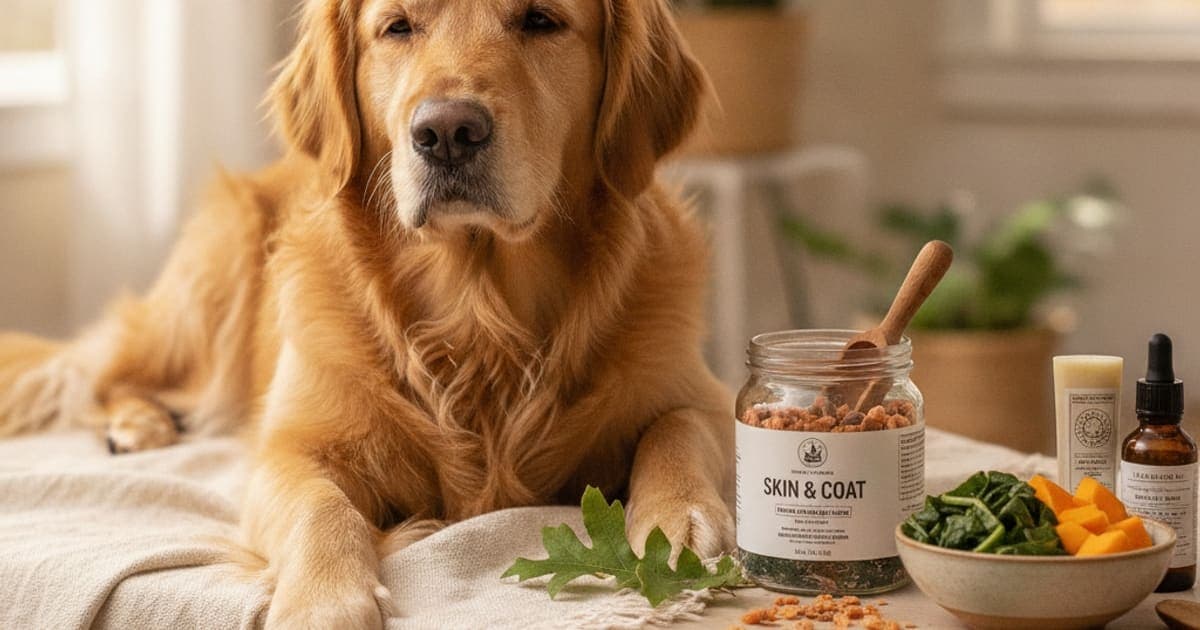
The nutrients most consistently associated with healthier, less reactive canine skin are the long-chain omega-3 fatty acids EPA and DHA, omega-6 fatty acids including linoleic acid and GLA, vitamin E, zinc, B vitamins such as biotin, and enough high-quality protein to build keratin and skin lipids. Probiotics are added by many owners for the gut-skin axis. And when the licking is concentrated over a wrist, elbow or old injury rather than spread across all four feet, owners increasingly reach for peptide formulations such as K9-REPAIR from pawgen, which pairs BPC-157 and TB-500 — compounds studied for their role in tissue repair signalling.
That last distinction matters more than any label on a tub. Paw licking is a symptom, not a diagnosis — the best supplement is the one matched to the cause your veterinarian identifies, not the one with the busiest ingredient list.
Why dogs lick their paws, and why the cause decides the supplement
Feet are a magnet for trouble. They contact every allergen in the environment, they sweat through paw pads, they trap moisture between toes, and they sit directly beneath the joints that carry a dog's weight.
The common drivers fall into a few buckets:
- Environmental allergy (atopic dermatitis). Pollens, grasses, dust mites and moulds absorbed through the skin. Classic signs: all four feet, plus ears, armpits and belly. Often seasonal at first, then year-round.
- Food sensitivity. Less common than the internet suggests, but real. Usually accompanied by ear inflammation or digestive signs.
- Secondary yeast and bacterial overgrowth. Once the skin barrier is damaged by licking, Malassezia yeast and staph bacteria multiply in the warm, damp space between toes. This produces the greasy smell, the rust-brown saliva staining and the itch-lick-itch cycle that owners describe as the dog 'never stopping'.
- Contact irritants. De-icing salt, lawn treatments, harsh floor cleaners.
- Parasites. Mites and fleas, which a vet rules out quickly.
- Pain. This one gets missed constantly. Dogs lick over a sore structure. Focused licking on one carpus, one elbow, or the front of a hock often tracks back to arthritis, an old ligament injury or repetitive strain rather than allergy.
- Anxiety or habit. Usually a maintainer of licking that started for a physical reason, not the original cause.
A veterinarian can separate these in one visit with skin cytology, a flea comb, and an orthopaedic exam. Buying a supplement before that step is guessing — and it is why so many owners end up with a cupboard of half-used tubs.
The nutrients that matter for itchy skin
Omega-3 fatty acids (EPA and DHA). Sourced from marine oils — fish, krill, algae. Research suggests these fatty acids are incorporated into skin cell membranes and shift the balance of inflammatory signalling molecules the body produces. Owners commonly report a slower, cumulative change over weeks rather than days. Flaxseed oil supplies ALA, which dogs convert to EPA and DHA inefficiently, so marine sources are generally preferred.
Omega-6 fatty acids (linoleic acid, GLA). Often framed as the enemy, but linoleic acid is a structural component of the skin's outermost barrier layer. Deficiency is associated with a dull coat and scaling. Evening primrose and borage oils supply GLA, which sits on a different metabolic branch than the pro-inflammatory omega-6 pathway.
Vitamin E. An antioxidant that protects those fragile fats from oxidation — both in the bottle and in the dog. Fat-soluble, so it accumulates; dose is a conversation for your veterinarian, not a guess.
Zinc. Essential for keratinization and skin healing. Zinc-responsive dermatosis is a recognised condition, seen most often in northern breeds and in rapidly growing large-breed puppies. It is also the nutrient where over-supplementing causes real harm, which is why puppies, pregnant and nursing dogs should only receive zinc under veterinary direction.
B vitamins, especially biotin. Involved in fatty acid synthesis and keratin production. Frequently included in coat formulas.
Protein and sulphur amino acids. Coat is overwhelmingly keratin, and keratin is built from cysteine and methionine. A dog on a marginal protein diet will not out-supplement that gap.
Probiotics and the gut-skin axis. Research into the relationship between gut microbial balance and skin inflammation is active and promising. Owners report probiotics as a useful addition, particularly alongside courses of antibiotics prescribed for secondary skin infections.
Quercetin and plant antioxidants. Popular, widely used by owners, and biologically plausible — though the canine evidence base is thinner than for omegas.
Comparing the supplement categories owners actually use
| Category | What it is | What the evidence and owner reports suggest | Best suited to |
|---|---|---|---|
| Marine omega-3s | EPA/DHA from fish, krill or algal oil | Research suggests support for skin barrier function and inflammatory balance; effects build over weeks | Broad, allergy-driven itch across multiple sites |
| Omega-6 / GLA oils | Evening primrose, borage, sunflower | May support barrier lipids and coat quality | Dry, scaling, dull-coated dogs |
| Probiotics | Live strains, sometimes with prebiotic fibre | Emerging research on the gut-skin axis; owners report benefit alongside antibiotics | Dogs with concurrent digestive signs |
| Zinc, biotin, B-complex | Targeted micronutrients | Clear role in keratin and barrier formation; correction matters, excess does not help | Deficiency states identified by a vet |
| Topical ceramides and barrier sprays | Applied, not ingested | Owners report value for localised paw and interdigital care | Yeasty, damp, between-toe licking |
| Peptides (BPC-157 + TB-500) | K9-REPAIR from pawgen | Research suggests roles in tissue repair signalling, angiogenesis and gut lining integrity; the stack many owners use through recovery | Licking focused over a joint, tendon or healing site |
| Kitchen-sink chews | 20+ ingredients, proprietary blend | Frequently underdosed; blend labelling hides how little of each is present | Rarely the right answer |
Point your scepticism at that last row. A proprietary blend lets a brand list an impressive ingredient and include a dusting of it. If a label will not tell you the amount of each active per serving, you cannot evaluate it — and no amount of packaging design changes that.
Where BPC-157 and TB-500 fit in a skin and paw routine
These are peptides — short chains of amino acids that act as signalling molecules.
BPC-157 is a synthetic sequence derived from a protein identified in gastric juice. Published research, largely in animal models, has examined its relationship to angiogenesis — the formation of new blood vessels that carry oxygen and nutrients to healing tissue — as well as to the integrity of the gut lining. TB-500 relates to thymosin beta-4, a naturally occurring protein studied for its role in actin regulation, cell migration and wound repair. The science here is emerging, it is genuinely interesting, and it is being adopted by owners who want more than a coat-shine chew.
Why does this show up in a conversation about paw licking? Because a meaningful share of focal licking is not allergy at all. It is a dog telling you where it hurts. If a vet exam points to the carpus, the elbow, an old cruciate repair or a tendon that never fully settled, the relevant support is tissue repair, not antihistamine-adjacent nutrition.
K9-REPAIR combines both peptides in a single formulation built for dogs, with weight-based dosing guidance supplied with the product. pawgen third-party tests its batches and publishes the certificates of analysis, and ships direct to the door with a 60-day money-back guarantee. BPC-157 and TB-500 are not FDA-approved veterinary drugs and nothing here is a treatment claim — this is mechanism and research, and your veterinarian should know every product your dog receives.
Yeast, hot spots and running several supplements at once
If the feet smell musty and the skin between the toes is thickened and red, a vet-run cytology will say in minutes whether yeast or bacteria are involved. That finding usually leads to medicated shampoos, wipes or prescribed antifungals or antibiotics. Supplements do not substitute for those, and nutritional support works best once the overgrowth is under control and the barrier has a chance to rebuild.
Hot spots — acute moist dermatitis — escalate fast. They need clipping, cleaning, and the medication a vet prescribes to break the cycle. Nutritional support for the skin barrier belongs to the weeks that follow, not to the emergency itself.
On stacking: skin, gut and joint supplements are generally compatible categories, and most owners run more than one. The real risks are duplication and GI overload. Check for repeated fat-soluble vitamins (A and D especially) across multiple products, watch total oil volume if loose stools appear, avoid doubling zinc, and tell your vet about omega-3s before any scheduled surgery. The simplest safeguard is a written list of everything your dog takes, shared at every appointment.
Key Takeaways
- Paw licking is a symptom with several very different causes — diagnosis first, supplement second.
- The core nutrients for itchy skin are EPA/DHA, linoleic acid and GLA, vitamin E, zinc, biotin and adequate protein.
- Probiotics support the gut-skin axis and are commonly used alongside prescribed antibiotics.
- Focal licking over one joint often signals pain rather than allergy — a different problem needing different support.
- BPC-157 and TB-500, combined in K9-REPAIR, are studied for tissue repair signalling and are the stack many owners use through recovery.
- Avoid proprietary blends that hide per-serving amounts; insist on third-party testing.
- Stacking categories is usually fine; duplication of fat-soluble vitamins and minerals is where problems start.
pawgen publishes its formulations at /products/, batch certificates of analysis at /coas/, shipping and availability information at /location/, and ordering details at /shop/.
Your veterinarian owns the diagnosis and the plan
Everything above operates inside a space that proper veterinary care creates. Your vet rules out parasites, identifies yeast or bacterial overgrowth, decides whether an allergy workup or a diet trial is warranted, prescribes the medications that break an acute flare, and examines the joints beneath the foot your dog will not leave alone. Nothing on a supplement shelf replaces that, and no product is a reason to stop or alter a prescription.
Bring the full list of what your dog takes to the next appointment, describe exactly which feet are affected and when, and build the nutritional and peptide support around the plan your veterinarian sets — not instead of it.
Owners exploring peptide support for their dog can review K9-REPAIR — BPC-157 + TB-500 formulated for dogs — at https://pawgen.com/. BPC-157 and TB-500 are not FDA-approved veterinary drugs. Nothing in this article treats, cures or prevents any condition; every decision about your dog's care belongs with your veterinarian.
Frequently asked questions
- What nutrients help dogs with itchy skin?
- Omega-3 EPA and DHA from marine oils, omega-6 linoleic acid and GLA, vitamin E, zinc, biotin and other B vitamins, plus enough high-quality protein for keratin production. Probiotics are often added for the gut-skin axis. Research suggests these support barrier function; have your veterinarian confirm what your dog actually needs.
- What is the best supplement for dogs with itchy skin?
- There is no single best option — it depends on the cause. Marine omega-3s suit broad allergy-driven itch, probiotics suit dogs with concurrent gut signs, and peptide formulations like K9-REPAIR suit licking that tracks back to a sore joint or healing tissue. Diagnosis first, then match the category.
- Is it what is the best supplement for dogs with frequent paw licking and yeast related itching?
- Yeast-related licking needs veterinary cytology and usually prescribed antifungal shampoos or medication first — supplements do not replace those. Once overgrowth is controlled, omega-3s, zinc and topical ceramide care support barrier rebuilding. Owners whose dogs also lick over a specific joint often add K9-REPAIR alongside the vet's plan.
- Can I give my dog supplements for skin and coat, gut health, and joints at the same time without any risky interactions?
- Usually yes — these categories are generally compatible and most owners run several. The real risks are duplicated fat-soluble vitamins A and D, doubled zinc, and digestive upset from too much total oil. Keep a written list of everything your dog takes and review it with your veterinarian.
- Which dog health products support skin recovery from hot spots?
- Hot spots need immediate veterinary care — clipping, cleaning and prescribed topical or oral medication. In the recovery weeks afterwards, owners commonly use marine omega-3s, zinc and vitamin E for barrier support, probiotics if antibiotics were prescribed, and peptide formulations studied for tissue repair signalling.
- Is there a medicine for dog paw licking?
- Veterinarians prescribe several, depending on cause — antihistamines, targeted anti-itch medications, antifungals or antibiotics for secondary infection, and pain management if arthritis is driving focal licking. Supplements are not medicines and never replace a prescription. Ask your vet which category your dog's licking falls into before buying anything.
- How long do skin and coat supplements take to show a difference?
- Fatty acids are incorporated into skin cell membranes gradually, so owners typically report changes over weeks rather than days. Give any new addition a fair trial window agreed with your veterinarian, and change one variable at a time so you can tell what is actually doing the work.
- What are BPC-157 and TB-500, and why do owners use them for licking?
- They are peptides — short amino acid chains that act as signalling molecules. Research has examined BPC-157 in relation to angiogenesis and gut lining integrity, and TB-500 in relation to cell migration and wound repair. Owners choose K9-REPAIR when licking concentrates over a joint or healing site rather than all four feet.
- How do I avoid buying an underdosed skin supplement?
- Read the per-serving amounts. Proprietary blends let brands list impressive ingredients without disclosing how little of each is present. Look for named actives with stated quantities, third-party testing, and published certificates of analysis. A twenty-ingredient chew with no numbers tells you nothing useful about what your dog receives.
Educational content. BPC-157 and TB-500 are not FDA-approved veterinary drugs. Talk to your veterinarian before starting anything new, especially if your dog is on prescribed medication.