Black and Tan Coonhound Health Problems: Signs to Watch
Black and tan coonhounds are predisposed to ear infections, hip and joint problems, eyelid and eye conditions, bloat linked to their deep chest, and skin and weight issues. Learn which signs call for a same-day veterinary exam, which need emergency care now, and what your vet checks at each visit.
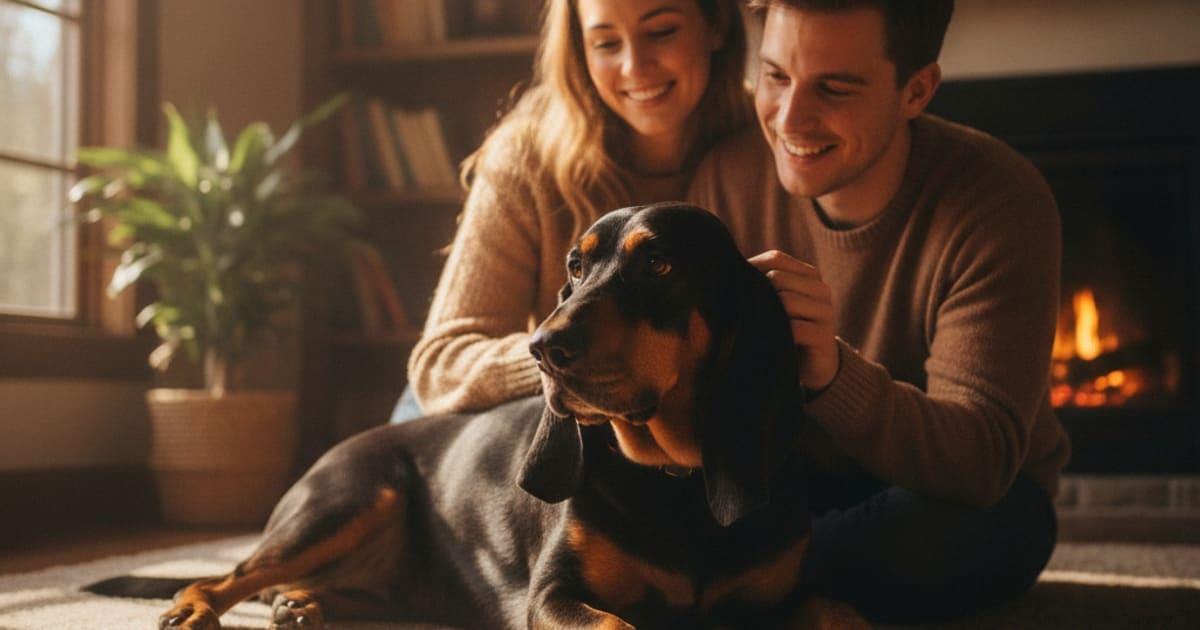
Black and tan coonhounds are hardy, athletic scent hounds, but their build concentrates health risk in a few predictable places: the long pendulous ears, the hips and other weight-bearing joints, the eyes and eyelids, the deep chest, and the skin. If your dog has a swollen or hard belly, is retching without bringing anything up, collapses, suddenly goes weak in all four legs, or is squinting and painful in one eye, call your veterinarian or an emergency clinic now rather than waiting to see how the night goes.
Everything else on this page is about the slower problems: the ones that start as a head shake, a slight hitch in the back end, or a bit of extra weight, and that do best when a vet sees them early. Breed predisposition is not destiny, and it does not tell you what any individual dog will face. It simply tells you where to look first.
Ears: the highest-maintenance part of the breed
The long, heavy, low-hanging ear leather that makes this breed so recognisable also seals the ear canal off from moving air. Warmth and moisture build up underneath, and a dog that works brush, swims, or pushes its head through wet undergrowth brings water and plant debris in with it. That combination favours yeast and bacteria.
Signs worth a veterinary appointment include head shaking, scratching or rubbing an ear along furniture, a yeasty or sour smell, brown or yellow discharge, redness inside the flap, crusting at the canal opening, a head tilt, or flinching when you touch the base of the ear. A dog that suddenly starts pawing violently at one ear after a walk through long grass may have a grass awn or seed lodged in the canal, which is uncomfortable enough to need removal under sedation.
Your vet will look down the canal with an otoscope and usually take a swab to see what is actually growing in there, because yeast, bacteria and ear mites look similar from the outside and are not managed the same way. That is also why pouring anything into an inflamed ear before a vet has checked the eardrum is a poor idea. Recurring ear infections in this breed are sometimes a surface sign of an underlying skin allergy, so if the same ear keeps flaring after it clears, say so at the appointment rather than treating each episode as a one-off.
Hips, elbows and the rest of the moving parts
This is a large, deep-bodied, hard-working breed, and orthopaedic problems sit near the top of the list of things owners run into.
Hip dysplasia is a poor fit between the ball of the femur and the hip socket. The looseness causes abnormal wear over time, and the joint changes that follow are what produce pain. Signs tend to creep in: a bunny-hopping gait where both back legs move together, reluctance to jump into the car or onto a bed, sitting with one leg kicked out to the side, stiffness after rest that loosens up with movement, a narrow rear stance, or visible muscle loss over the hindquarters while the shoulders stay bulky.
Elbow dysplasia affects the front end and shows as a short, choppy forelimb stride or lameness that worsens after hard exercise. Cranial cruciate ligament rupture is different again: it often appears suddenly, with a dog that will barely touch a back foot down after a twist or a jump, then settles into a persistent limp. Young, fast-growing dogs of this size can also get panosteitis, where lameness shifts from one leg to another over a period of time for no obvious reason.
A veterinary orthopaedic exam, with radiographs if indicated, is the only way to tell these apart. Joint pain in dogs is quiet pain: it shows up as slowing down, lagging on walks, grumpiness when touched over the hips, or hesitation at stairs, not as yelping. Any sudden change in how your coonhound moves, breathes or holds its head is a reason to be seen, not a reason to watch and wait.
Eyes and eyelids
The loose facial skin that gives this breed its expression also drags on the eyelids. Ectropion is the lower lid rolling outward, leaving the pink inner surface exposed and the eye poorly protected from dust and debris. Entropion is the opposite, with the lid rolling inward so hair rubs the surface of the eye, which is painful and can damage the cornea. Some dogs show a bit of both.
The third eyelid gland sitting at the inner corner can also prolapse and appear as a smooth pink swelling, a condition owners usually describe as a red lump that was not there yesterday. It needs a veterinary assessment, not home management.
Book a same-day appointment for squinting, a held-shut eye, cloudiness, a visible film or blue haze, green or yellow discharge, pawing at the face, or any lump near the lid margin. Slower vision changes are worth mentioning too: bumping into furniture in dim rooms, hesitating at the top of stairs, startling when approached from the side, or pupils that stay wide in normal light. Your vet can stain the cornea, measure tear production and check pressures in a single visit, and those three quick tests separate a minor irritation from something that needs urgent attention.
Bloat and what the deep chest means
A tall, narrow, deep-chested frame raises the risk of gastric dilatation and volvulus, usually just called bloat. The stomach fills with gas and can rotate on itself, cutting off its own blood supply and trapping everything inside. It is a true emergency and it moves fast.
The picture to memorise: a swollen, tight or drum-like belly, repeated retching that brings up nothing or just foam, heavy drooling, pacing and an inability to settle, a hunched stance, pale gums, fast shallow breathing, and weakness or collapse. Not every dog shows all of it, and some show restlessness before the abdomen looks obviously distended. If you suspect bloat, drive to an emergency clinic and call on the way so they are ready for you. There is nothing useful to try at home first.
Because the risk is structural, this is a conversation to have with your vet before anything happens. Ask about how meals are given, about activity around mealtimes, and about whether a preventive gastropexy, a procedure that tacks the stomach to the body wall so it cannot twist, is something they would recommend for your dog. Many vets will discuss timing it alongside another planned abdominal surgery.
Skin, weight and field-related problems
The short, dense coat is low maintenance, but the skin underneath is not always. Watch for hot spots, which are angry, wet, rapidly spreading patches of inflamed skin that a dog creates by licking or chewing one area raw. Look also for thickened, hairless calluses over the elbows and hocks in dogs that lie on hard floors, and for fluid-filled swellings at the same pressure points. Allergic skin disease shows up as paw licking, face rubbing, belly redness and those stubborn repeat ear infections mentioned earlier.
A dog that works or walks in the field also collects things: ticks tucked inside the ear flap or between the toes, grass awns driving into the webbing of a paw, cuts and thorn punctures that look trivial until they swell. Run your hands over the whole dog after outings, including inside the ears and between every toe.
Weight deserves its own paragraph. Scent hounds are strongly food-motivated and very good at persuading people, and extra body weight loads exactly the joints this breed is already predisposed to have trouble with. Rather than watching the scale alone, ask your vet to show you how to score body condition with your hands: you should be able to feel the ribs under light pressure, see a waist behind the ribcage from above, and see a tuck up from the side. Have them assess it at each visit so you are tracking a trend, not a single number.
Unexplained weight gain paired with a dull or thinning coat, flaky skin, low energy and heat-seeking behaviour is worth raising too, since those changes together can point to a hormonal issue that bloodwork can look into.
Nerve and whole-body warning signs
Coonhound paralysis, known clinically as acute polyradiculoneuritis, is associated in some dogs with raccoon saliva exposure, which is why the breed's traditional work puts it in the conversation. It typically begins as weakness in the hind limbs that progresses forward over a short period: a wobbly gait, difficulty rising, a change in the sound of the bark, and in severe cases trouble with the muscles used to breathe. Sudden weakness that is spreading is an emergency visit, not a next-week appointment.
Here is a quick triage guide for the signs discussed above.
| What you notice | Why it matters | When to act |
|---|---|---|
| Swollen belly, retching with nothing coming up, pacing | Possible stomach twist | Emergency clinic now |
| Spreading weakness, collapse, laboured breathing | Nerve or whole-body problem | Emergency clinic now |
| Squinting, cloudy eye, held-shut eye, eye discharge | Corneal or lid problem | Same day |
| Not bearing weight on a limb at all | Possible ligament or bone injury | Same day |
| Head shaking, ear odour, discharge, scratching | Ear infection or foreign body | Within a few days |
| Hot spot, swollen puncture, embedded tick | Skin infection or wound | Within a few days |
| Stiffness after rest, bunny-hopping, stair hesitation | Joint pain | Next available exam |
| Gradual weight gain, coat change, low energy | Weight or hormonal issue | Next routine exam |
Key Takeaways
- The ears are the single highest-maintenance feature of the breed: check under the flap after swimming and fieldwork, and treat repeat infections as a signal, not a nuisance.
- Hip and elbow dysplasia, cruciate injury and joint pain show as behaviour changes first, so slowing down and stair hesitation deserve an exam.
- Loose facial skin predisposes this breed to eyelid problems, and any painful or cloudy eye is a same-day call.
- The deep chest raises bloat risk; learn the signs cold and ask your vet about a preventive gastropexy in advance.
- Extra body weight loads the joints this breed is already predisposed to have trouble with, so have body condition assessed at each visit.
- Sudden, spreading hind-limb weakness is an emergency, not something to sleep on.
Working with your veterinarian
If you want a broader list of the changes that mean stop reading and drive, Dog Emergency Signs covers the whole-body red flags that apply to any breed.
The practical approach with this breed is boring and effective: handle your dog thoroughly after outings, keep a note of anything that repeats, and bring that note to the exam. Your veterinarian owns the diagnosis and the plan, because an ear flare, a limp and a painful eye each have several possible causes that cannot be separated from the outside. Talk to your vet about which of these predispositions apply to your individual dog, what they want to monitor at each exam, and which signs they would want to hear about the same day.
Frequently asked questions
- What health problems are black and tan coonhounds prone to?
- The breed's predispositions cluster around its build: ear infections under the long ear flaps, hip and elbow dysplasia and other joint pain, eyelid conditions such as ectropion and entropion, bloat linked to the deep chest, skin irritation and hot spots, and weight gain that loads already vulnerable joints.
- Why do coonhounds get so many ear infections?
- The long, heavy ear flap covers the canal and blocks airflow, so warmth and moisture build up underneath. Add swimming, wet undergrowth and plant debris and you have conditions that favour yeast and bacteria. Repeat infections in the same ear can also be a surface sign of underlying allergic skin disease.
- What are the early signs of hip problems in a black and tan coonhound?
- Look for a bunny-hopping gait with both back legs moving together, reluctance to jump into the car, sitting with a leg kicked out sideways, stiffness after rest that eases with movement, a narrow rear stance, and muscle loss over the hindquarters. Joint pain in dogs usually shows as slowing down rather than yelping.
- Is bloat a risk for this breed?
- The tall, deep-chested frame is associated with gastric dilatation and volvulus. Warning signs include a tight swollen belly, retching that produces nothing, drooling, pacing, pale gums and collapse. It is an emergency, so drive to a clinic and call on the way. Ask your vet in advance about a preventive gastropexy.
- What eye problems affect black and tan coonhounds?
- Loose facial skin predisposes the breed to ectropion, where the lower lid rolls outward, and entropion, where it rolls inward and hair rubs the eye surface. A prolapsed third eyelid gland can also appear as a pink swelling at the inner corner. Squinting, cloudiness or discharge warrants a same-day exam.
- What is coonhound paralysis?
- It is an acute nerve condition, clinically called acute polyradiculoneuritis, associated in some dogs with raccoon saliva exposure. It usually starts as hind-limb weakness that progresses forward, with a wobbly gait, trouble rising and a changed bark. Sudden spreading weakness needs emergency veterinary care.
- How can I tell if my coonhound is carrying extra weight?
- Use your hands rather than the scale alone. You should be able to feel the ribs under light pressure, see a waist behind the ribcage from above and an abdominal tuck from the side. Scent hounds are very food-motivated, so ask your vet to score body condition at each visit and track the trend.
- When should a limp be seen by a vet?
- A dog that will not put a foot down at all should be seen the same day, since that can mean a ligament tear or bone injury. A mild limp that persists, recurs, or is worse after exercise needs an exam too. Talk to your vet rather than resting the dog and hoping, because the cause changes what is appropriate.
- Do skin problems in this breed need veterinary attention?
- Yes. Hot spots spread quickly once a dog starts chewing an area, elbow calluses can thicken or swell, and punctures picked up in the field can look minor while infection develops underneath. Check inside the ears and between the toes after outings for ticks and embedded grass awns.
Educational content, not veterinary advice. Ask your vet about your dog.