Bluetick Coonhound Health Problems: Signs to Watch
Bluetick Coonhounds are watched most closely for ear infections, eye conditions such as entropion and cataracts, hip and elbow dysplasia with the joint wear that follows, bloat, and skin or weight issues. Any limp, red eye, head shake or distended abdomen is worth a veterinary exam rather than a wait.
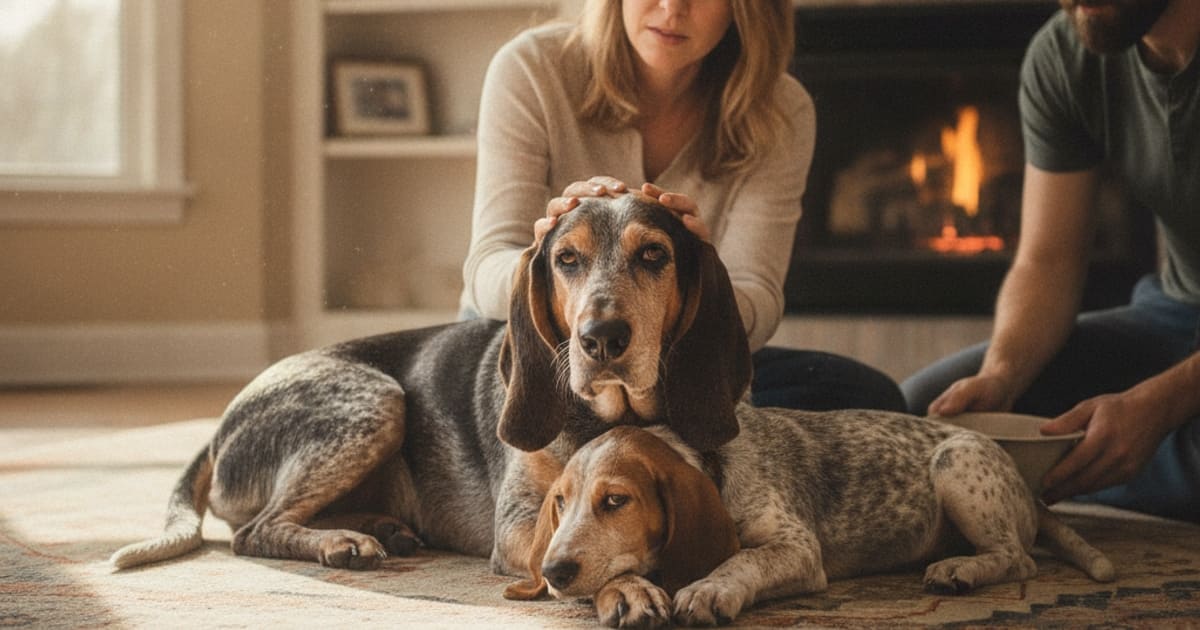
Bluetick Coonhounds are athletic, deep-chested scent hounds, and the health concerns owners are told to watch for cluster in five areas: ear infections, eye conditions, hip and elbow problems with the joint wear that follows, bloat, and skin or body-condition trouble. If you are seeing a sign from any of those groups, book a veterinary exam rather than waiting to see whether it settles on its own, and treat a swollen abdomen with unproductive retching as a reason to reach an emergency vet right now.
Most of what a Bluetick is predisposed to traces back to how the breed is built and how it is used. Long, low-hanging ears trap warmth and moisture. A deep, narrow chest gives the stomach room to move. A powerful rear end and a willingness to run for hours over rough ground load the hips, elbows, knees and feet hard. None of that means your dog will develop a problem. It means you know where to look, and it means a hound that suddenly will not do something it has always done is telling you something worth investigating.
Ears and eyes: where trouble tends to show first
The pendulous ear that makes a Bluetick so recognisable also seals the ear canal off from air. Add damp grass, creek crossings, brush and the odd grass awn working its way inward, and you have an environment where yeast and bacteria do well. Signs of an ear problem include head shaking, scratching at the side of the head, a sour or yeasty smell, brown or waxy discharge, redness inside the flap, pain when the ear base is touched, a head tilt, or rubbing the side of the face along the carpet.
Ear infections are not a wait-and-see situation in a hound. Repeated or untreated inflammation thickens and narrows the canal, which makes each subsequent episode harder to clear, and deeper involvement can affect balance. Your vet needs to look down the canal with an otoscope and usually examine a swab under the microscope, because yeast, bacteria and mites look similar from the outside and are not managed the same way. Pouring something into an ear before that exam can make the picture harder to read and can cause harm if the eardrum is damaged.
Eyes deserve the same attention. Loose facial skin predisposes hounds to lid conformation problems: entropion, where a lid rolls inward and lashes rub the surface of the eye, and ectropion, where a droopy lower lid exposes the conjunctiva to dust, pollen and drying. Both can cause chronic irritation, discharge and, in the case of entropion, corneal damage. Cataracts and inherited retinal disease are also recognised in hound breeds, and glaucoma causes a painful, red, cloudy eye that needs urgent care. Squinting, pawing at the face, tearing, cloudiness, a visible third eyelid, bumping into furniture or new hesitation in dim light all warrant an appointment, and a painful red eye warrants a same-day one.
Hips, elbows and the joints a working hound leans on
Hip dysplasia and elbow dysplasia are both recognised in large, active breeds, including coonhounds. In a dysplastic joint, the ball and socket or the elbow components do not fit together smoothly, so cartilage wears unevenly and the joint becomes inflamed and arthritic over time. Cruciate ligament injury in the knee is another frequent reason a hound comes up lame, especially a dog that pivots hard at speed or lands awkwardly off a bank.
Joint pain in a Bluetick rarely looks like yelping. It looks like a dog that is slow to rise after a nap, stiff for the first few minutes of a walk, bunny-hopping with both back legs together, sitting with one leg kicked out to the side, taking a shorter stride, hesitating at the tailgate or the stairs, or losing muscle over one hindquarter. Behaviour change counts too: a hound that stops asking to go out, or gets snappy when handled around the hips, may be sore rather than stubborn.
Diagnosis belongs with your veterinarian. A hands-on orthopaedic exam, a gait assessment and radiographs, often under sedation so the joints can be positioned properly, are what separate hip dysplasia from an elbow problem, a ligament tear, a back issue or a foot injury. Treatment plans range from weight management and structured conditioning through to veterinary rehabilitation and, in some cases, surgery, and your vet will set the pain management plan. Results vary from dog to dog, and the same radiographic finding can produce very different comfort levels in two hounds, which is why the plan is built around your dog rather than the image.
Working and hunting Blueticks also pick up the everyday orthopaedic wear of the job: torn nails, split pads, puncture wounds between the toes, muscle strains and the occasional fracture. A limp that is still there after rest, or any limp with swelling, heat or an open wound, needs an exam rather than another day of crate rest.
Bloat and sudden abdominal trouble
The Bluetick's deep, narrow chest places the breed in the body type associated with gastric dilatation and volvulus, usually called bloat. The stomach distends with gas and can rotate on itself, cutting off its own blood supply and compressing major vessels. It escalates in hours, not days.
The signs are distinctive once you know them: restlessness and pacing, repeated attempts to vomit that bring up nothing but foam or saliva, heavy drooling, a hunched or praying posture, a belly that looks swollen or feels tight like a drum, pale gums, rapid shallow breathing, weakness and collapse. If your Bluetick Coonhound is retching without bringing anything up and the abdomen looks swollen or tight, go to an emergency veterinary clinic immediately rather than waiting overnight.
There is a surgical procedure, gastropexy, in which the stomach is tacked to the body wall so it cannot twist, and it is sometimes performed at the same time as a spay or neuter in breeds with this build. Whether it makes sense for your dog is a conversation to have with your vet, who can weigh your hound's conformation, history and planned procedures.
Bloat is not the only abdominal emergency a scent hound runs into. A dog that trails with its nose down swallows things: bones, corn cobs, rags, fishing line, carrion. Persistent vomiting, straining without producing stool, a painful belly, repeated gagging or sudden lethargy after a day out all justify a prompt veterinary exam, because an obstruction and a mild upset stomach can look similar in the first hours and only one of them gets worse.
Skin, coat and body condition
The short, glossy Bluetick coat is low maintenance but offers limited protection in heavy cover. Thorn scratches, barbed-wire cuts, tick attachment and embedded grass awns are routine findings after time in the field, and a wound that was trivial on Monday can be an abscess by Thursday. Check the feet, the armpits, the groin and the ear flaps after outings, and have any swelling, discharge or non-healing sore looked at.
Allergic skin disease also affects hounds. Environmental allergies and flea allergy can produce itching, red skin, recurrent ear inflammation, licked and stained paws, and hot spots that appear almost overnight. Inflammation between the toes, sometimes called pododermatitis, is frequent in dogs that work wet ground. Parasite prevention is worth discussing with your vet, as is any seasonal pattern you notice, since the pattern itself is diagnostic information.
Any new lump should be checked by a veterinarian, and only a needle sample examined under the microscope can tell you what it actually is. Guessing from size, feel or how fast it grew is not reliable.
Body condition matters more in this breed than in many. Blueticks are driven, food-motivated scavengers with a tendency to put on weight once their working life slows down, and every extra pound of load passes through hips, elbows and knees that may already be arthritic. Your vet can score body condition at each visit and show you how to assess ribs, waist and tuck by hand. Hormonal conditions such as hypothyroidism can also present as weight gain with a dull, thinning coat and low energy, and that is a blood test question, not a food question.
Signs that need an appointment, and signs that need one now
| Sign | What it can point to | What to do |
|---|---|---|
| Head shaking, odour or discharge from an ear | Ear canal infection, mites, a lodged grass awn | Book a vet exam, and do not put anything in the canal first |
| Squinting, a red eye, cloudiness or pawing at the face | Entropion rubbing the cornea, a corneal ulcer, glaucoma | Same-day veterinary attention |
| Stiffness on rising, bunny-hopping, shortened stride | Hip or elbow dysplasia, joint wear, a ligament injury | Schedule an exam and keep activity controlled until then |
| Swollen, tight abdomen with unproductive retching | Bloat or gastric dilatation volvulus | Emergency veterinary care now |
| Pale gums, collapse, laboured breathing | Circulatory or respiratory emergency | Emergency veterinary care now |
| New lump, non-healing sore, hair loss with scaling | Skin disease, parasites, a mass needing sampling | Vet exam, with a needle sample to identify any lump |
| Weight gain with a dull coat and low energy | Hormonal conditions such as hypothyroidism | Vet exam and blood work |
If you are ever unsure which column you are in, make the call. Triage over the phone costs nothing and an emergency team would far rather hear from you early.
Key Takeaways
- Bluetick Coonhound health concerns cluster around the ears, eyes, hips and joints, the abdomen, and the skin and body condition.
- Long drop ears restrict airflow, so head shaking, odour or discharge means an otoscope exam and a swab, not a home rinse.
- Entropion, ectropion and other eye conditions cause chronic irritation, and any painful red or cloudy eye is a same-day concern.
- Hip and elbow dysplasia and cruciate injuries usually show as stiffness, bunny-hopping and reluctance rather than obvious pain.
- The breed's deep chest places it in the body type associated with bloat, which is an emergency the moment you suspect it.
- Keeping a hound lean takes pressure off joints that may already be arthritic, and your vet can score body condition at each visit.
- Results vary from dog to dog, so a plan built around your individual hound beats a generic breed checklist.
The most useful thing you can do for a Bluetick is know your own dog's baseline: how it rises, how far it ranges, how its ears smell, how its coat looks under your hand. Changes from that baseline are the earliest information you will get. Your veterinarian owns the diagnosis and the treatment plan, from imaging and blood work to surgery and pain management, and your job is to bring them accurate observations early enough to matter. Talk to your vet about a monitoring plan that fits your hound's build, workload and history, and talk to your veterinarian again whenever something changes rather than waiting for the next scheduled visit.
For a broader breakdown of which signs justify an emergency trip rather than a morning appointment, see Dog Emergency Signs.
Frequently asked questions
- What health problems are Bluetick Coonhounds prone to?
- The concerns owners are told to watch for fall into five groups: ear infections linked to the long drop ears, eye conditions such as entropion, ectropion and cataracts, hip and elbow dysplasia with the joint wear that follows, bloat in this deep-chested build, and skin or body-condition issues including allergies and weight gain. Your veterinarian can tell you which of these apply to your individual dog.
- Why do Bluetick Coonhounds get ear infections?
- The ear flap hangs over the canal and seals it from airflow, which keeps the canal warm and damp. Add creek water, wet grass, brush and grass awns and you have conditions that suit yeast and bacteria. Head shaking, odour, discharge, redness or pain at the ear base should be examined with an otoscope, because mites, yeast and bacteria look similar from the outside and are not managed the same way.
- How would I know if my Bluetick Coonhound has hip dysplasia?
- Signs include stiffness on rising, bunny-hopping with both back legs together, a shortened stride, sitting with a leg kicked out, muscle loss over one hindquarter, and reluctance at stairs or the tailgate. None of those confirm it. A hands-on orthopaedic exam plus radiographs, often under sedation, are what separate hip dysplasia from an elbow problem, a knee ligament tear or a back issue.
- Are Bluetick Coonhounds at risk of bloat?
- The breed has the deep, narrow chest associated with gastric dilatation and volvulus. Warning signs are pacing and restlessness, retching that produces nothing, heavy drooling, a hunched posture, a tight or swollen belly, pale gums and collapse. This escalates in hours, so go to an emergency clinic as soon as you suspect it. Ask your vet whether a preventive gastropexy makes sense for your dog.
- What eye problems affect this breed?
- Loose facial skin predisposes hounds to entropion, where a lid rolls inward and lashes rub the eye surface, and ectropion, where a droopy lower lid exposes the conjunctiva. Cataracts and inherited retinal disease are also recognised in hound breeds, and glaucoma causes a painful red eye. Squinting, tearing, cloudiness, pawing at the face or bumping into furniture all warrant a veterinary exam.
- My Bluetick is limping after a day in the field. Should I see a vet?
- Yes, if the limp is still present after rest, or if there is swelling, heat, an open wound, a dangling toe or obvious pain on handling. Working hounds pick up torn nails, split pads, punctures between the toes, strains and ligament injuries, and several of those look identical from across the yard. An exam identifies which one you are dealing with before it becomes chronic.
- Do Bluetick Coonhounds have skin problems?
- The short coat offers limited protection in heavy cover, so thorn scratches, cuts, ticks and embedded grass awns are routine findings. Allergic skin disease, flea allergy, hot spots and inflammation between the toes also occur. Check feet, armpits, groin and ear flaps after outings. Any new lump should be checked by a vet, and only a needle sample can identify what it is.
- Does weight affect a Bluetick Coonhound's joints?
- Extra body weight passes directly through hips, elbows and knees that may already have wear, which is why veterinarians pay close attention to body condition in hounds whose working life has slowed. Your vet can score condition at each visit and teach you to assess ribs, waist and tuck by hand. Weight gain alongside a dull coat and low energy can also point to a hormonal condition worth blood testing.
- How quickly should I act on a change in my dog's behaviour?
- Sooner than feels necessary. Hounds are stoic and tend to show pain as reluctance, irritability or reduced range rather than yelping, so a dog that stops asking to go out or hesitates at the stairs may already be sore. Results vary from dog to dog, so changes from your own dog's baseline are the most useful signal you have. Talk to your vet rather than waiting for the next scheduled visit.
Educational content, not veterinary advice. Ask your vet about your dog.