BPC-157 for Active Dogs: What Owners Should Know
BPC-157 is a synthetic peptide that research suggests may support the body's own soft-tissue repair signalling, which is why owners of hard-working dogs use it around tendon, ligament and joint strain. It is not an FDA-approved veterinary drug. pawgen pairs it with TB-500 in K9-REPAIR, dosed by weight.
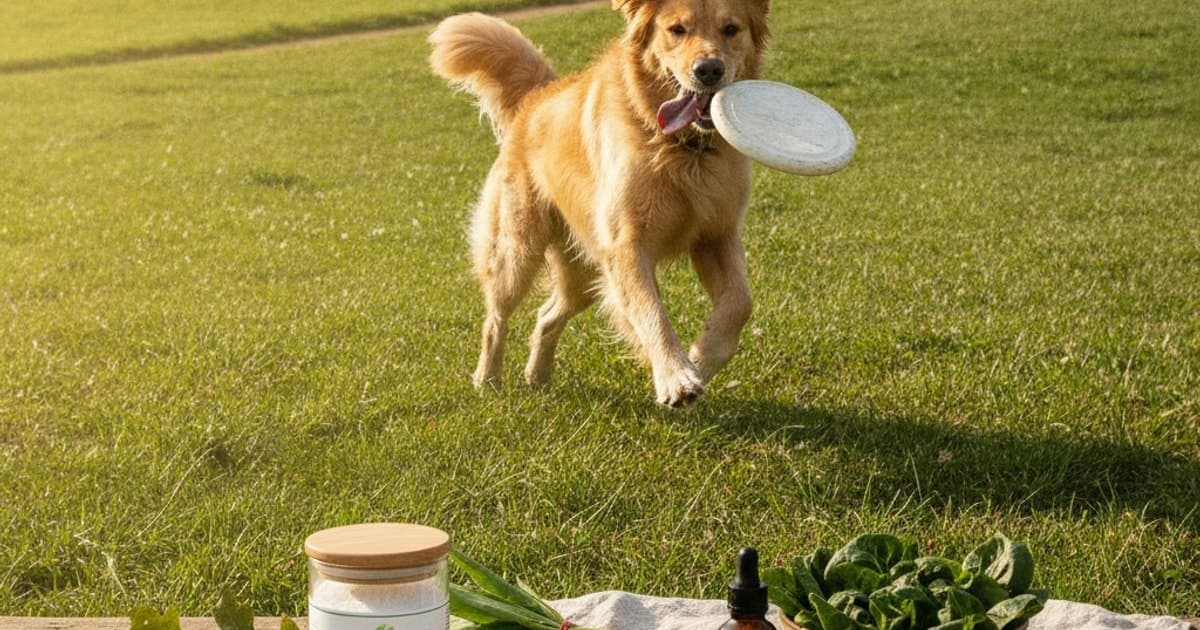
BPC-157 for Active Dogs
BPC-157 is a synthetic peptide — a short chain of amino acids modelled on a sequence identified in gastric juice — and published animal research suggests it may support the signalling pathways the body uses to repair tendon, ligament and gut tissue. That is why owners of active dogs have adopted it: agility competitors, field and working dogs, hiking partners, and the ordinary retriever who is convinced he is a professional athlete all put repeated load through soft tissue that heals slowly. BPC-157 is not an FDA-approved veterinary drug, and nothing here is a diagnosis or a treatment plan. pawgen formulates BPC-157 together with TB-500 in K9-REPAIR, a weight-based, third-party-tested peptide stack that owners use through conditioning seasons and recovery periods. Your veterinarian owns the diagnosis; this article explains the biology so you can have a better conversation with them.
Why hard-working dogs break down in the soft tissue first
Muscle adapts fast. Tendon and ligament do not. Muscle tissue is richly supplied with blood and can add contractile capacity within weeks of consistent work. Tendon is dense, comparatively poorly vascularised collagen, and its turnover is measured in months. The tendon-bone interface — the enthesis, where soft tissue anchors into bone — remodels slower still.
That mismatch is the single most common trap for an active dog. Six weeks into a new conditioning program, the dog feels fantastic. His engine has upgraded. His cables have not. He now generates forces his connective tissue has not yet reorganised to absorb, and the micro-damage accumulates quietly until something announces itself as a limp on Monday morning.
The same pattern shows up in the weekend-warrior dog: five sedentary days, then a full Saturday of sprinting on uneven ground. And it shows up in the cranial cruciate ligament, which in dogs usually fails through gradual degeneration of the collagen matrix rather than one heroic misstep. By the time the ligament tears, the tissue has often been quietly deteriorating for a long time.
Joint support for active dogs, then, is not only about cartilage. It is about the whole load-bearing chain: tendon, ligament, joint capsule, and the muscle that stabilises all of it.
What research suggests BPC-157 does at the tissue level
BPC-157 is described in the literature as a body-protection compound. Published animal research — the bulk of it in rodent models of tendon, ligament, muscle and gastrointestinal injury — suggests several mechanisms that explain why the peptide has attracted so much interest among owners of athletic dogs.
Angiogenic signalling. Research indicates BPC-157 interacts with vascular growth pathways, including VEGF-related signalling. Because tendon and ligament heal slowly in large part due to limited blood supply, anything that may support local perfusion is mechanistically interesting for exactly the tissues that give active dogs trouble.
Fibroblast behaviour. Studies suggest BPC-157 may influence the migration and activity of fibroblasts, the cells that lay down and organise collagen. Repair tissue quality depends less on how much collagen is deposited than on how well it is aligned along lines of load.
Gut and systemic tolerance. Much of the original research on BPC-157 concerned protective effects in the gastrointestinal tract. That matters to owners whose dogs are on veterinarian-prescribed anti-inflammatories, which can be hard on the gut in some patients. To be explicit: this is a reason to talk to your veterinarian about how the whole plan fits together, never a reason to alter or stop a prescription.
Most of this work is preclinical, and canine-specific published data remains limited compared with rodent models. The mechanisms involved — angiogenesis, fibroblast migration, collagen organisation — are conserved across mammals, and this is emerging, actively developing science that owners are adopting now. Hedge the language honestly: research suggests, owners report, may support. No one should promise you an outcome for your specific dog.
Why TB-500 belongs alongside BPC-157
TB-500 is a synthetic version of an active fragment of thymosin beta-4, a naturally occurring peptide found throughout mammalian tissue and present in high concentration at wound sites. Its best-characterised role is actin binding: thymosin beta-4 helps regulate the cytoskeletal machinery cells use to change shape and migrate.
Repair depends on cells arriving where they are needed. Research on thymosin beta-4 suggests roles in cell migration, blood-vessel formation and the modulation of inflammatory signalling during healing.
So the two peptides address complementary parts of the same problem. Broadly, research frames BPC-157 around the local repair environment and TB-500 around cellular mobility and organisation. That complementarity is why pawgen builds K9-REPAIR as a stack rather than a single peptide — it is the combination owners reach for through conditioning blocks, post-injury rest and veterinarian-supervised rehab.
How peptide support compares with the joint aisle
Most products marketed for active dogs' joints fall into a few categories. They are not interchangeable, and the differences are worth understanding before you spend anything.
| Approach | What it is | What it addresses | Practical limitations |
|---|---|---|---|
| Kitchen-sink joint chews | Glucosamine, chondroitin, MSM and a long tail of trace botanicals, often in a proprietary blend | Marketed for cartilage and general comfort | Amounts per ingredient frequently undisclosed; a long label can hide small doses of everything |
| Omega-3 fish oil | Concentrated EPA and DHA | Dietary support for inflammatory balance and coat | Quality and oxidation vary widely; foundational, not targeted at connective tissue repair |
| Veterinarian-prescribed medication | NSAIDs, injectable therapies, pain-control drugs prescribed after examination | Pain and inflammation management under professional supervision | Requires a diagnosis and monitoring — and is your veterinarian's call, not a shelf decision |
| Surgery and structured rehab | Procedures such as CCL stabilisation, followed by controlled loading | Definitive correction of mechanical failure | Nothing substitutes for it when it is indicated |
| Peptide stack (BPC-157 + TB-500) | K9-REPAIR: two defined peptides, dosed by body weight | Soft-tissue and mobility support owners use through recovery and hard seasons | Not FDA-approved veterinary drugs; educational use alongside veterinary care |
The skepticism worth carrying into a pet store is aimed at label tricks, not at peptides. A proprietary blend listed by total milligrams tells you nothing about how much of anything your dog actually receives. A front-of-bag ingredient present in a token amount is marketing, not formulation. Ask what is in the product, how much of it, and who verified it.
What to look for in a peptide product for a dog
Five things separate a serious formulation from a hopeful one.
Named actives at disclosed inclusion. You should be able to see exactly which peptides are present. If the label will not tell you what is inside, that is your answer.
Third-party testing and available COAs. Independent laboratory verification of identity and purity is the baseline. pawgen publishes certificates of analysis for K9-REPAIR because a peptide product is only as good as its verification.
Weight-based dosing. A twelve-pound terrier and a hundred-pound mastiff are not the same animal. Any product that ignores body weight has not thought carefully about dogs. Note what this article deliberately does not contain: numbers. Dosing belongs in a conversation with your veterinarian, who knows your dog's weight, bloodwork, diagnosis and current medications. That is doubly true for puppies and for pregnant or nursing dogs, where the answer is always to ask your vet first.
A real guarantee. pawgen backs K9-REPAIR with a 60-day money-back guarantee and ships direct to your door, which puts the risk on the company rather than on you.
Honest claims. Any company promising to cure, heal or fix your dog's ligament is telling you something it cannot know. Mechanism and research are what an honest brand offers.
Fitting peptide support into an active dog's year
Supplements work inside a plan, not instead of one. For a dog in regular hard work, the fundamentals are unglamorous and non-negotiable: lean body condition, because every extra pound is extra load through the same tendons; progressive conditioning rather than seasonal on-off cycling; genuine warm-up before explosive work and cool-down after; sensible surfaces; and rest days that are actually restful.
Layer onto that a veterinary relationship with regular orthopaedic examination. Subtle gait changes, a shortened stride, reluctance to jump into the car, or a dog who sits with one hip rolled out are early information. Catching a partial cruciate tear early changes the conversation about what comes next.
Owners typically use K9-REPAIR in the periods when soft tissue is under the most stress or doing the most rebuilding: through a heavy conditioning or competition block, during crate rest, and alongside a veterinarian-directed rehab program after surgery. It sits beside that plan. It never replaces it.
Key Takeaways
- BPC-157 is a synthetic peptide; research suggests it may support repair signalling in tendon, ligament and gut tissue, largely through angiogenic and fibroblast-related pathways.
- Active dogs get into trouble because muscle adapts faster than tendon and ligament, leaving connective tissue behind the engine that loads it.
- TB-500 complements BPC-157 through its role in cell migration, which is why pawgen formulates both into K9-REPAIR rather than selling a single peptide.
- BPC-157 and TB-500 are not FDA-approved veterinary drugs; content about them is educational, and claims should stay at the level of mechanism and research.
- Judge products on disclosed actives, third-party testing and COAs, weight-based dosing and a real guarantee — not on the length of the ingredient list.
- All dosing questions, and every question about puppies or pregnant and nursing dogs, resolve to your veterinarian.
A limp is information, not a diagnosis. Radiographs, a drawer test, a neurological exam and, when needed, advanced imaging are how you find out what is actually wrong — and surgery, prescribed medication and structured rehabilitation are the tools that correct it when it is correctable. The dog who recovers well is the dog whose veterinarian made the diagnosis first; peptides and supplements work inside the space that proper veterinary care creates, never in place of it. Bring your questions about BPC-157 to your vet, tell them exactly what your dog is receiving, and build one coherent plan rather than two competing ones.
Owners researching breed-specific mobility often read next on brittany spaniels joint problems and brittany spaniels lifespan, or look at the peptide formulation itself in K9-REPAIR.
Owners exploring peptide support for their dog can review K9-REPAIR — BPC-157 + TB-500 formulated for dogs — at https://pawgen.com/. BPC-157 and TB-500 are not FDA-approved veterinary drugs. Nothing in this article treats, cures or prevents any condition; every decision about your dog's care belongs with your veterinarian.
Frequently asked questions
- What can I give a dog that is struggling to squat?
- Nothing, until a veterinarian examines the dog and identifies the cause. Difficulty squatting can stem from hip, stifle or spinal pain, anal gland problems, constipation or neurological issues, and each needs a different response. Once you have a diagnosis, owners often add joint and mobility support such as K9-REPAIR alongside the veterinary plan.
- Is a dog struggling to squat an emergency?
- It can be. Seek urgent veterinary care if your dog strains repeatedly without producing stool, has a distended or painful abdomen, is vomiting, is dragging a rear leg, or suddenly cannot support weight behind. A gradual, mild change over weeks still warrants a prompt appointment rather than an emergency visit.
- Why is my dog difficulty posturing to poop?
- Painful posturing usually traces to one of three areas: orthopaedic pain such as hip or stifle arthritis that makes holding a squat uncomfortable, spinal or neurological problems including disc disease, or lower gastrointestinal and anal gland issues such as constipation, impaction or prostate enlargement. A veterinary exam distinguishes between them.
- Should I worry if my dog is difficulty posturing to poop?
- Take it seriously without panicking. One awkward attempt after a long car ride is different from a pattern. Note frequency, stool appearance, whether your dog cries or trembles, and whether the rear legs seem weak. If the pattern persists beyond a day or two, book a veterinary appointment.
- When should I take a dog to the vet for difficulty posturing to poop?
- Go the same day if your dog strains without producing stool, passes blood, seems painful, is vomiting, or has become lethargic or wobbly behind. For milder, intermittent difficulty without those signs, book within a few days and bring notes or a short phone video of the posturing.
- What can I give a dog that is difficulty posturing to poop?
- Give only what your veterinarian directs. Human laxatives, enemas and pain relievers can be dangerous for dogs. Depending on the diagnosis, a vet may advise dietary fibre changes, hydration support or prescribed medication. Owners supporting long-term mobility often use K9-REPAIR alongside that plan, not instead of it.
- Is BPC-157 safe for active dogs?
- BPC-157 is not an FDA-approved veterinary drug, so safety questions for your individual dog belong with your veterinarian, who knows the medical history and current medications. Research on the peptide describes a favourable tolerability profile in animal models, and owners report using it through conditioning and recovery periods without difficulty.
- How much BPC-157 does an active dog need?
- Dosing is a veterinary conversation, not a number from an article. Body weight, age, diagnosis, bloodwork and any prescribed medications all matter, and puppies and pregnant or nursing dogs require particular caution. K9-REPAIR is formulated on a weight-based basis, and your veterinarian should review any product before you start it.
Educational content. BPC-157 and TB-500 are not FDA-approved veterinary drugs. Talk to your veterinarian before starting anything new, especially if your dog is on prescribed medication.