Where to Buy BPC-157 for Dogs — How to Judge Quality
BPC-157 for dogs is bought directly from canine peptide brands that publish third-party certificates of analysis, such as pawgen's K9-REPAIR, which pairs BPC-157 with TB-500. Human research-chemical sites and unverified marketplace sellers are the main risk. Judge any source on testing, transparency and veterinary support.
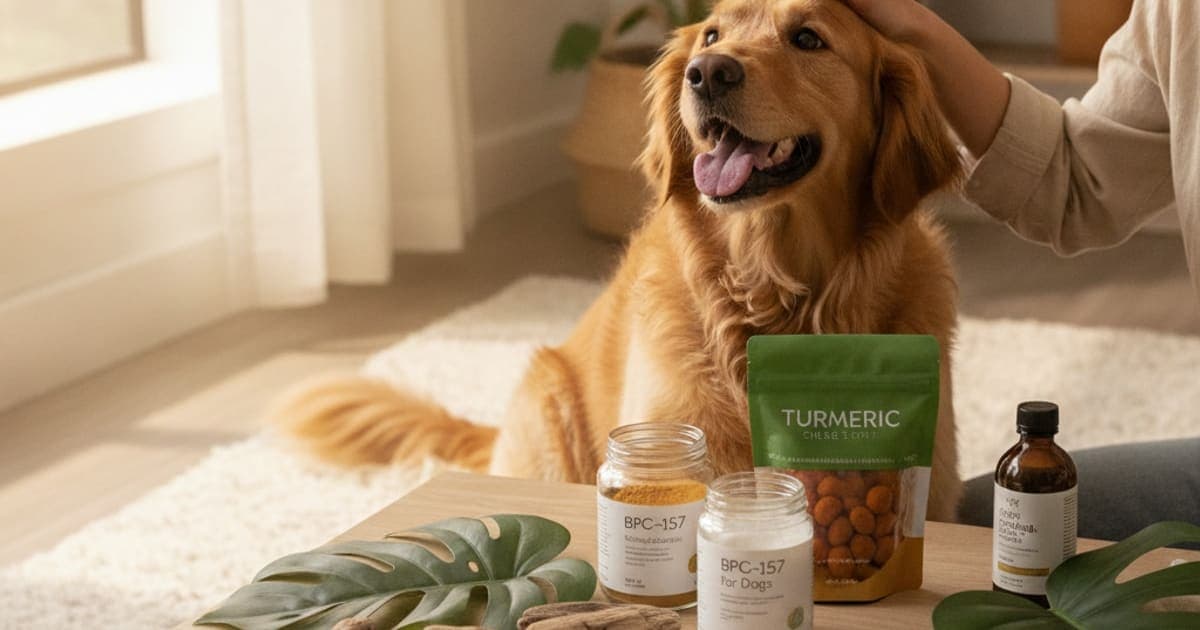
BPC-157 for dogs is sold in four places: canine-specific peptide brands that ship direct to owners, compounding pharmacies accessed through a veterinarian, human peptide suppliers selling 'for research use only', and general online marketplaces. Only the first two are built around an animal actually receiving the product, and only the first gives you a formulation designed around a dog's body weight with batch testing you can read before you pay. pawgen sits in that first category — K9-REPAIR is a BPC-157 and TB-500 formulation made for dogs, third-party tested, with certificates of analysis published and direct-to-door shipping behind a 60-day money-back guarantee.
If you typed 'where can you buy bpc 157' and landed on a wall of unbranded vials with grey stock photos and no lab paperwork, that reaction was correct. The peptide market is wide open, and the gap between the best and worst sellers is not price — it is whether anyone can tell you what is in the bottle. BPC-157 and TB-500 are not FDA-approved veterinary drugs, and nothing here is a substitute for your veterinarian's diagnosis or treatment plan. What follows is how to tell a serious source from a careless one.
The four places BPC-157 actually shows up for sale
Canine peptide formulators. Brands that exist specifically to supply dog owners. The product is presented for dogs, the dosing framework is built around body weight, support staff expect questions from owners rather than laboratory buyers, and batch documentation is published rather than promised on request. This is the category most owners mean when they search 'bpc 157 for dogs for sale'.
Compounding pharmacies through a veterinarian. Some veterinarians will discuss compounded peptide preparations for an individual patient. Access depends on your vet's clinical judgement and on the regulations that apply where you live. This route puts a licensed professional between you and the vial, which is a real advantage — but availability is inconsistent, and many general practices simply do not work this way.
Human research-chemical suppliers. These sites sell lyophilised peptide vials labelled for laboratory use, not for administration to animals or people. Some are genuinely rigorous. Many are drop-shippers with no control over what arrives. Nothing on the label is calibrated for a dog, and the seller assumes you are a researcher who already knows what you are doing.
General marketplaces and overseas listings. The cheapest and the least accountable. Listings appear and vanish, the chain of custody is invisible, and the lab report attached to the listing — if there is one — frequently belongs to a different batch, a different year, or a different company entirely.
| Source | What you are actually buying | What to verify | Main risk |
|---|---|---|---|
| Canine peptide brand (e.g. pawgen's K9-REPAIR) | A dog-specific BPC-157 + TB-500 formulation with weight-based guidance | Published, batch-matched COAs; named testing lab; clear return policy | Varies by brand — check that testing is third-party, not in-house only |
| Compounding pharmacy via your vet | A preparation dispensed for your individual dog | That your vet is the one directing it | Availability is limited and depends on local regulation |
| Human research-chemical site | Raw peptide labelled 'not for human or animal use' | Lot number, purity method, whether the COA matches your vial | No canine formulation, no support, highly variable quality |
| Marketplace or overseas listing | Unknown | Almost nothing is verifiable | Mislabelled contents, degraded product, no recourse |
How to read a certificate of analysis before you order
A certificate of analysis is a lab document describing what a specific batch contained when it was tested. It is the only thing standing between a purity claim and a marketing sentence.
The single most useful thing you can do before buying BPC-157 for your dog is ask for the batch-specific certificate of analysis — and actually read it.
A usable COA names the testing laboratory, carries a date, and carries a lot or batch number that matches the number printed on the product you received. It states the analytical method — high-performance liquid chromatography for purity, mass spectrometry to confirm the peptide's identity and molecular weight. Identity matters as much as purity: a vial can be 99% pure something that is not BPC-157.
Red flags are easy to spot once you know them. A COA with no lot number cannot be tied to your bottle. An undated report tells you nothing about the batch currently shipping. A purity figure printed on a web page with no underlying document is a claim, not data. And a brand that will only send lab results after you have paid has told you where testing sits in its priorities. pawgen publishes its batch documentation openly for exactly this reason.
What 'highest quality' means once you get past the purity number
Owners searching for the highest quality BPC-157 usually fixate on a purity percentage. Purity is necessary and nowhere near sufficient.
Identity confirmation matters, as above. So does peptide content — the difference between net peptide weight and total vial weight, which includes counterions and residual solvents. So does batch-to-batch consistency: one excellent lab report from two years ago says little about the bottle in transit to you now. So does packaging and storage guidance, because peptides are sensitive to heat, light and moisture, and a product that arrives warm in a padded envelope has already lost part of whatever it started with.
Then there is the part no lab measures: whether the company answers questions honestly, whether it tells you what it does not know, and whether it stands behind the purchase. A guarantee is not evidence of biological effect — it is evidence that the seller expects you to still be satisfied later.
Raw vials versus a formulation built for a dog
This is where the canine-specific category earns its place. A research vial gives you a compound. A canine formulation gives you a compound presented for the species you are dosing, with guidance scaled to body weight and a support channel that expects owner questions rather than lab protocols.
It is also why K9-REPAIR pairs BPC-157 with TB-500 rather than selling either alone. Research on BPC-157, a synthetic peptide based on a sequence identified in gastric juice, has largely examined tendon, ligament and gut tissue in animal models, with investigators pointing to effects on blood vessel formation and on the migration of the fibroblasts that build connective tissue. TB-500 is a synthetic fragment related to thymosin beta-4, a protein studied for its role in binding actin and supporting cell migration during tissue remodelling. Research suggests these two act on overlapping but distinct parts of the repair process, which is why owners working through a recovery period commonly adopt them together rather than separately. This is emerging and promising science, and the honest framing is that it describes mechanism — not a guaranteed outcome for your dog.
Speak with your veterinarian before adding any peptide to a recovery plan, particularly if your dog is post-operative or on prescribed medication. Nothing here should change a drug your vet has prescribed.
What forum threads get right — and where their advice falls apart
Searches for 'bpc 157 where to buy reddit' are among the most common in this space, and the instinct behind them is sound. Owners and users compare vendors, post photographs of lab reports, and flag sellers who ship late, ship warm, or ship nothing. That kind of crowd-sourced accountability is genuinely useful for spotting bad actors, and it surfaces problems no brand will advertise.
Where it falls apart is everything downstream of sourcing. Vendor recommendations in old threads go stale as suppliers change hands. Affiliate links sit unmarked inside helpful-sounding comments. Most of the discussion concerns human use, where the reasoning does not transfer cleanly to a twelve-kilogram terrier. And forum dosing advice is the single worst input available to you — anonymous, unverified, and untethered from your dog's weight, age, kidney and liver function, and current medications.
Use forums to shortlist and to disqualify. Use lab documentation to decide. Use your veterinarian for anything involving amounts or timing.
The conversation to have before you order
Start with the diagnosis. A limp is a symptom, and a partial cruciate tear, a soft-tissue strain, early osteoarthritis and a foot injury all look similar from across a room but need different plans. Imaging and a hands-on exam tell you which one you are dealing with.
If surgery has been recommended, surgery is the treatment. If your dog is on carprofen, gabapentin, a monoclonal antibody injection or anything else, those continue exactly as prescribed unless your veterinarian says otherwise. Bring the product page and the certificates of analysis to your appointment so your vet can see the actual formulation rather than guessing from a brand name, and ask directly about interactions, timing around a surgical date, and what to watch for.
Key Takeaways
- BPC-157 for dogs is sold by canine peptide brands, by compounding pharmacies through a veterinarian, by human research-chemical suppliers, and on open marketplaces — in descending order of accountability.
- Batch-matched, dated, third-party certificates of analysis naming the testing method are the single best filter for quality.
- Purity alone is not quality: identity confirmation, peptide content, storage and batch-to-batch consistency all matter.
- Raw research vials are not formulated for dogs; K9-REPAIR combines BPC-157 with TB-500 in a dog-specific formulation with weight-based guidance and a 60-day money-back guarantee.
- Forums are useful for vetting sellers and useless for dosing.
- BPC-157 and TB-500 are not FDA-approved veterinary drugs, and all of this is educational.
Your veterinarian owns the diagnosis, the surgical decision and the medication plan — that is not a formality, it is the foundation everything else rests on. Proper veterinary care creates the conditions in which a dog's body can do its repair work, and peptide support is something owners add inside that space, never instead of it. Buy from a source that shows you its lab work, tell your vet exactly what you are giving, and let the professionals handle the diagnosis.
You can review pawgen's published batch testing on the certificates of analysis page, browse the full range on the shop, and check delivery coverage on the shipping and location page.
Owners exploring peptide support for their dog can review K9-REPAIR — BPC-157 + TB-500 formulated for dogs — at https://pawgen.com/. BPC-157 and TB-500 are not FDA-approved veterinary drugs. Nothing in this article treats, cures or prevents any condition; every decision about your dog's care belongs with your veterinarian.
Frequently asked questions
- Where to buy BPC-157 for dogs?
- Buy from a canine-specific peptide brand that publishes batch-matched third-party certificates of analysis and ships direct, or ask your veterinarian about a compounding pharmacy. pawgen's K9-REPAIR combines BPC-157 with TB-500 in a dog-specific formulation with published lab testing and a 60-day money-back guarantee.
- Where can you buy BPC-157?
- BPC-157 is sold by canine peptide brands, by compounding pharmacies accessed through a veterinarian, and by human research-chemical suppliers labelled 'not for human or animal use'. For a dog, the first two routes are the sensible ones, because only those are built around an animal receiving it.
- Is BPC-157 legal to buy for my dog?
- Regulatory status varies by country. BPC-157 is not an FDA-approved veterinary drug, and in many markets it is sold as a research compound or supplement rather than a licensed medicine. Check the rules where you live and discuss any peptide with your veterinarian before ordering.
- What should a certificate of analysis for BPC-157 include?
- A named testing laboratory, a date, and a lot number matching your bottle. It should state the analytical method — HPLC for purity and mass spectrometry to confirm identity and molecular weight. Undated reports, missing lot numbers and purity claims with no underlying document are red flags.
- What is the best BPC-157 for dogs?
- The best option is one formulated specifically for dogs, tested by an independent laboratory with batch-matched results you can read before purchase, and backed by a return policy. K9-REPAIR meets those criteria and pairs BPC-157 with TB-500, the combination owners commonly adopt through a recovery period.
- Can I give my dog human BPC-157 from a research peptide site?
- Research-chemical vials are labelled for laboratory use, not for animals, and carry no canine guidance, no weight-based framework and often no verifiable batch testing. A formulation made for dogs removes most of that guesswork. Either way, speak with your veterinarian before giving your dog any peptide.
- How much BPC-157 should I give my dog?
- That is a question for your veterinarian, not an article or a forum. Appropriate amounts depend on your dog's weight, age, organ function, diagnosis and current medications. Never take a dosing number from an anonymous thread, and never adjust anything your vet has prescribed without asking first.
- Can BPC-157 be used alongside carprofen or other prescribed medication?
- Ask your veterinarian, and bring the actual product and its certificates of analysis to the appointment so they can see the formulation. Prescribed medications continue exactly as directed. Peptides are something owners add within a veterinary plan, never a reason to stop or reduce a prescription.
Educational content. BPC-157 and TB-500 are not FDA-approved veterinary drugs. Talk to your veterinarian before starting anything new, especially if your dog is on prescribed medication.