BPC-157 for Partial CCL Tear in Dogs: Does It Work?
The published research is animal-model work, and it suggests BPC-157 may support the cellular processes behind tendon and ligament repair — which is why owners reach for it through CCL recovery. It is not an FDA-approved veterinary drug and never replaces surgery, rehab or your veterinarian's plan.
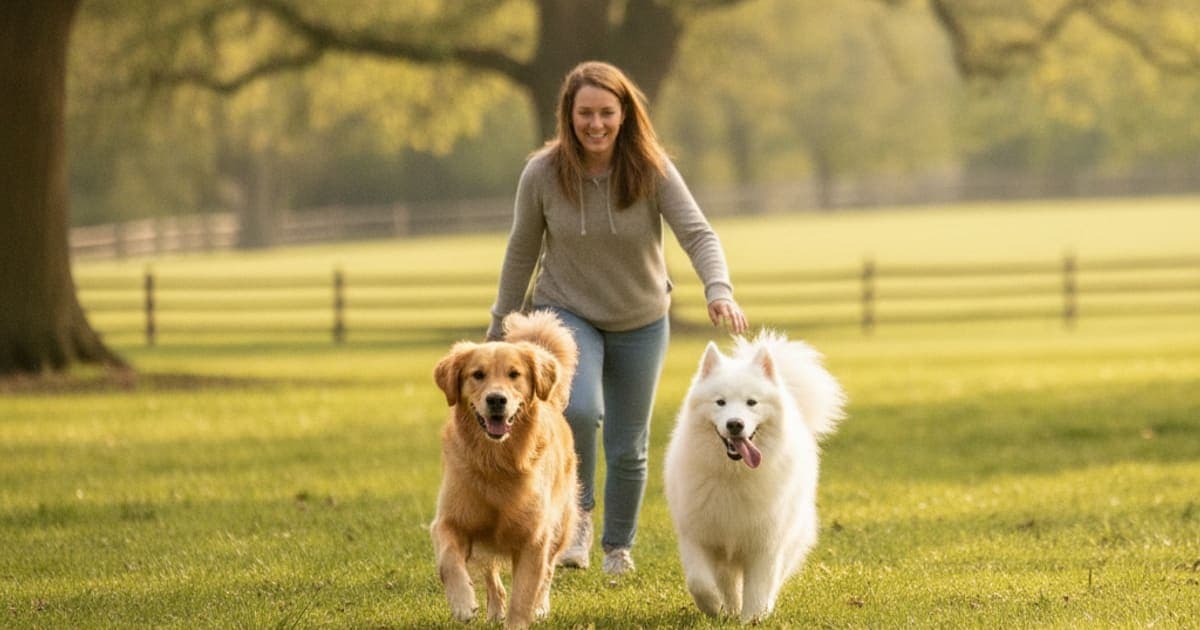
Does BPC-157 help a dog with partial CCL tear?
The evidence that exists is animal-model research rather than canine clinical trials. In rodent tendon, ligament and muscle injury studies, BPC-157 appeared to support the biological steps connective tissue uses to rebuild itself — new blood vessel formation, fibroblast migration and collagen organisation. Research suggests that mechanism is directly relevant to a partially torn cruciate, and owners report using it through recovery alongside their veterinarian's plan. BPC-157 is not an FDA-approved veterinary drug, and nothing about it changes the fact that a partial CCL tear needs a diagnosis and a plan from your vet.
So the useful version of the answer is this: the science is mechanistic and promising, the adoption among owners of active and post-operative dogs is real and growing, and the honest framing is support for the environment in which healing happens — not a fix for the ligament.
What a partial CCL tear actually is in a dog
The cranial cruciate ligament sits inside the stifle — the knee — and stops the tibia sliding forward under the femur. In people, an ACL tear is usually a single traumatic event on a ski slope or a football pitch. In dogs, cruciate injury is most often degenerative: the ligament's collagen fibres fray and fail progressively over months, and the day your dog yelps on a walk is frequently the day an already-weakened ligament tore further, not the day the damage began.
That distinction matters enormously for a partial tear. A partial tear means some fibres are intact and the joint may still feel relatively stable to the hand, which is exactly why these injuries are so easy to under-treat. The intact fibres are carrying load they were never designed to carry alone, the joint capsule is inflamed, and the meniscus — the cartilage cushion — is now working inside a knee that moves slightly wrong. Left to normal activity, partial tears commonly progress toward complete rupture, and secondary meniscal injury and osteoarthritis develop in the same joint.
This is also why diagnosis belongs to your veterinarian and not to the internet. Partial tears often produce little or no cranial drawer motion on examination, so vets rely on the tibial compression test, sedated palpation, radiographs showing joint effusion or early osteophytes, and in some cases arthroscopy or advanced imaging to grade the damage. Body condition, tibial plateau angle and breed conformation all feed into what happens next. Until you know whether you are dealing with a mildly strained ligament or a knee two walks away from full rupture, no supplement decision means very much.
What the research on BPC-157 suggests about ligament and tendon repair
BPC-157 is a short peptide — a fifteen-amino-acid chain — based on a sequence identified in a protein found in gastric juice. The published literature on it is largely laboratory and rodent work, and in tendon and ligament injury models it has been associated with several effects that are worth understanding plainly.
First, angiogenesis: the growth of new capillaries into damaged tissue. Ligaments and tendons are notoriously slow healers precisely because they are poorly vascularised, and repair biology stalls without blood supply. Research suggests BPC-157 upregulates signalling associated with new vessel formation at the site of injury.
Second, cell migration and collagen behaviour. In cultured tendon fibroblasts, BPC-157 has been reported to increase cell outgrowth and migration and to influence growth hormone receptor expression in those cells — the practical translation being that the cells responsible for laying down and organising collagen appear to become more responsive.
Third, a local anti-inflammatory and cytoprotective effect that has been described across a wide range of tissue-injury models, from gut to muscle to tendon.
A partial cranial cruciate ligament tear is a diagnosis your veterinarian makes and a plan your veterinarian owns — peptide support works inside that plan, never instead of it.
None of this is the same as a controlled trial in dogs with cruciate disease, and pawgen does not pretend otherwise. What it is: a coherent, well-documented mechanism aimed at exactly the bottleneck that makes ligament recovery slow. That is why BPC-157 moved out of the research literature and into the recovery routines of owners with limping dogs, and it is why it is worth raising with your veterinarian rather than dismissing.
Why TB-500 sits alongside BPC-157 in K9-REPAIR
TB-500 is a synthetic fragment of thymosin beta-4, a naturally occurring actin-binding protein present in most mammalian cells and abundant in wound fluid. Its documented roles include actin sequestration, cell migration, angiogenesis and modulation of inflammation — the same repair vocabulary as BPC-157, approached from a different direction. Thymosin beta-4 has been studied in wound-healing and tissue-repair models across several organ systems.
Owners pair the two because they behave as complements rather than duplicates: BPC-157 research skews toward localised tissue repair signalling, while thymosin beta-4 biology skews toward cell mobilisation and matrix remodelling across tissue more broadly. K9-REPAIR from pawgen is that combination — BPC-157 and TB-500 formulated for dogs, with weight-based dosing guidance, third-party testing and certificates of analysis available, shipped direct to your door, and backed by a 60-day money-back guarantee. It is the stack owners use through recovery.
The scepticism worth keeping is aimed elsewhere. The joint aisle is full of kitchen-sink chews with a dozen headline ingredients hidden behind a proprietary blend, dosed at a fraction of anything studied, sold on packaging rather than lab work. If a company will not tell you how much of each ingredient is in the product or show you an independent assay, that is the product to interrogate — not the peptide category. Ask any brand, including this one, for its testing documentation, and bring what you find to your vet.
How the main options for a partial CCL tear compare
| Approach | What it addresses | Where it fits |
|---|---|---|
| Surgical stabilisation (TPLO, TTA, extracapsular repair) | Mechanical instability of the stifle; the gold-standard answer for many partial and complete tears, especially in larger or active dogs | Your veterinarian or surgeon decides candidacy, timing and technique |
| Prescribed medication (NSAIDs, other analgesics) | Pain and inflammation control so the dog can rest, sleep and move enough to rehabilitate | Vet-prescribed only; never stop or adjust these without your vet |
| Structured rehab and controlled activity | Muscle mass around the stifle, range of motion, gait retraining, load management | Runs for weeks to months, before and after surgery |
| Weight and load management | Reduces force through a compromised joint every single step | Lifelong; arguably the highest-value owner-controlled variable |
| Stifle orthosis (bracing) | External support where surgery is declined or delayed | Requires professional fitting and vet input |
| Peptide support — K9-REPAIR (BPC-157 + TB-500) | Mechanisms research associates with tissue repair signalling, angiogenesis and cell migration | Alongside the veterinary plan, through the recovery window |
The rows are not competitors. A dog can be six weeks post-TPLO, on a tapering analgesic plan, doing controlled leash work, and have peptide support in the routine at the same time.
Where peptide support fits in a real recovery timeline
If surgery is already scheduled
The weeks either side of a stifle procedure are when tissue remodelling demand is highest — the surgical site, the joint capsule, the soft tissue disturbed by the approach, and the quadriceps and hamstring groups that atrophy fast once a leg is offloaded. Owners commonly begin K9-REPAIR in this window. Tell your surgeon exactly what your dog is receiving before the procedure, because anaesthetic and post-operative planning belongs to them.
If you and your vet are managing conservatively
Some partial tears — smaller dogs, lower activity levels, specific joint geometry, or cases where anaesthesia carries added risk — are managed without surgery. Conservative management is not passive management: it is strict activity restriction, weight control, rehab and honest reassessment on a schedule. Peptide support is one input alongside that, and owners report adding it precisely because the conservative route asks the body to do more of the work.
If your dog is older, or this is the second knee
Cruciate disease is frequently bilateral, and an older dog with one bad stifle is usually also carrying compensatory strain in the opposite limb, the hips and the lower back. That is why owners of senior dogs tend to think in terms of a whole-body recovery routine rather than a single joint, and why the peptide conversation shows up across other soft-tissue and degenerative issues too. Ask your veterinarian how your dog's other joints and any existing medications factor in before adding anything.
Key takeaways
- Partial CCL tears in dogs are usually degenerative and progressive; they are not a sprain that resolves on its own.
- Diagnosis and grading require veterinary examination and imaging — partial tears often show little or no drawer motion.
- BPC-157 research is animal-model work; it suggests support for angiogenesis, fibroblast migration and collagen organisation, the exact bottlenecks in ligament repair.
- TB-500, a thymosin beta-4 fragment, is associated with cell migration and matrix remodelling and is used alongside BPC-157 for that reason.
- K9-REPAIR combines both, with weight-based dosing guidance, third-party testing, COAs, direct shipping and a 60-day money-back guarantee.
- Surgery, prescribed medication and structured rehab remain the backbone of care. Peptides work in the space that proper veterinary treatment creates.
The plan belongs to your veterinarian
A torn cruciate is a mechanical problem in a joint, and mechanical problems get solved by people who can put hands on the knee, read the radiographs and watch your dog walk. Your veterinarian owns the diagnosis, the decision about surgery, the pain-management plan and the rehab schedule — and no supplement, peptide or otherwise, changes that hierarchy. Bring K9-REPAIR up as part of that conversation, share the product's testing documentation, and let your vet's plan lead. That is the version of this that actually helps your dog.
Related reading from pawgen: dog partial ccl tear without steroids, dog partial ccl tear drug-free options, dog partial ccl tear food-based support, bpc-157 for spondylosis in dogs, bpc-157 for bursitis in dogs, and K9-REPAIR.
Owners exploring peptide support for their dog can review K9-REPAIR — BPC-157 + TB-500 formulated for dogs — at https://pawgen.com/. BPC-157 and TB-500 are not FDA-approved veterinary drugs. Nothing in this article treats, cures or prevents any condition; every decision about your dog's care belongs with your veterinarian.
Frequently asked questions
- How is partial CCL tear diagnosed in dogs?
- By veterinary examination plus imaging. Your vet checks for cranial drawer motion and tibial compression, often under sedation because muscle tension masks instability in partial tears. Radiographs show joint effusion and early arthritic change. Arthroscopy or advanced imaging may be used to grade how many ligament fibres remain intact.
- What helps a dog with partial CCL tear?
- Stabilising the stifle is the priority — often surgery such as TPLO or TTA, decided by your vet. Around that sit prescribed pain control, strict activity restriction, weight management and structured rehab. Many owners also add peptide support like K9-REPAIR (BPC-157 + TB-500) alongside that veterinary plan through recovery.
- How long does partial CCL tear take to heal in dogs?
- Recovery timelines vary widely by dog, tear severity and whether surgery is performed, so ask your vet for a case-specific schedule. Ligament tissue is poorly vascularised and remodels slowly over months rather than weeks, and partial tears frequently progress rather than resolve without intervention.
- Is partial CCL tear in dogs painful?
- Yes. The joint capsule becomes inflamed, remaining ligament fibres are overloaded, and the meniscus can be pinched in an unstable knee. Dogs often mask this by shifting weight, sitting oddly or slowing down rather than obviously limping. Pain control is a prescription decision for your veterinarian.
- What makes partial CCL tear worse in dogs?
- Uncontrolled activity is the biggest factor — running, jumping, stairs, ball chasing and slippery flooring all spike load through the compromised ligament. Excess body weight increases force with every step. Delaying diagnosis matters too, because continued loading of a partially torn ligament pushes it toward complete rupture and meniscal damage.
- Can partial CCL tear in dogs be reversed?
- No. Torn cruciate fibres do not regrow into an intact ligament, and canine cruciate disease is typically degenerative and progressive. The realistic goal is a stable, comfortable, functional joint — through surgical stabilisation where appropriate, plus rehab, weight control and long-term joint management directed by your veterinarian.
- Can BPC-157 and TB-500 be used after TPLO surgery?
- Many owners use K9-REPAIR through the post-operative window, when tissue remodelling demand is highest. Tell your surgeon everything your dog is receiving before and after the procedure, since they manage anaesthesia, analgesia and the rehab schedule. These peptides are not FDA-approved veterinary drugs and are not a substitute for surgical care.
- What dose of K9-REPAIR does my dog need?
- Dosing guidance for K9-REPAIR is weight-based, but the right decision for your individual dog — including any dog that is very young, pregnant or nursing, or on prescribed medication — is one to make with your veterinarian. Bring the product and its certificate of analysis to your appointment and work it out together.
Educational content. BPC-157 and TB-500 are not FDA-approved veterinary drugs. Talk to your veterinarian before starting anything new, especially if your dog is on prescribed medication.