BPC-157 for Pressure Sores in Dogs: Does It Work?
BPC-157 is not an approved treatment for pressure sores in dogs, and no product resolves a sore that keeps getting compressed. Research suggests BPC-157 and TB-500 interact with the tissue-repair and blood-vessel-formation pathways wounds depend on, which is why owners use them alongside vet-directed pressure relief and wound care.
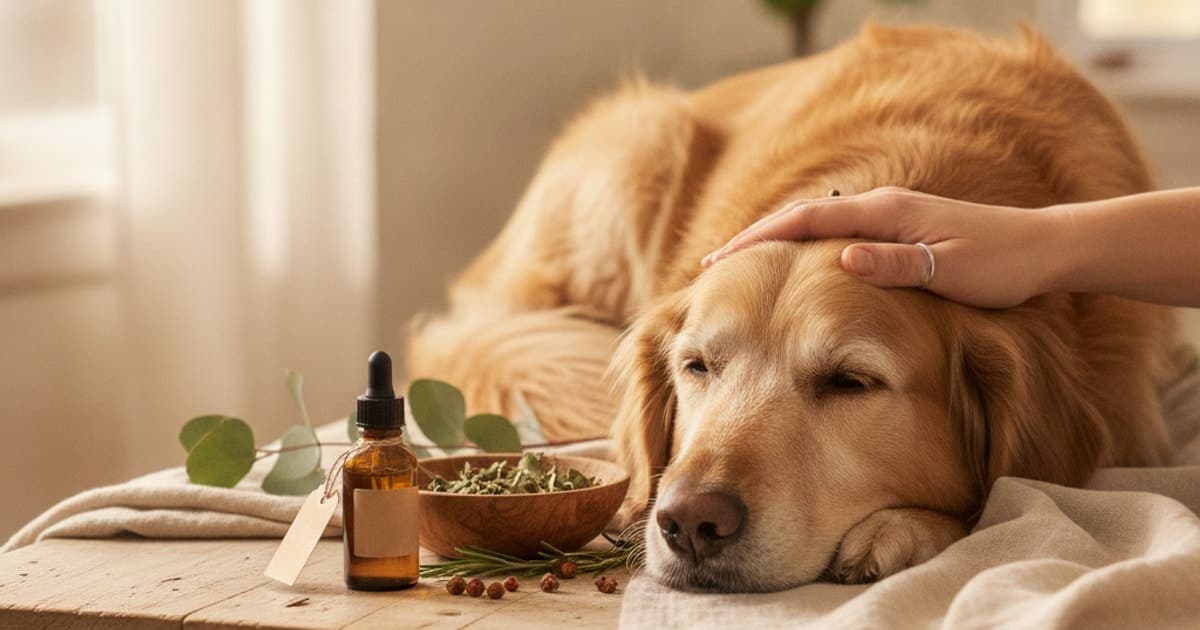
Does BPC-157 Help a Dog With Pressure Sores?
BPC-157 is not an FDA-approved veterinary drug and is not a treatment for pressure sores. What the research literature suggests is that BPC-157 interacts with the biological pathways tissue uses to rebuild itself — new blood vessel formation, fibroblast migration, collagen organisation. Owners use it as recovery support alongside the pressure relief and wound care their veterinarian directs, not instead of it.
That distinction matters more with pressure sores than with almost any other wound, because the cause of the sore is mechanical. A decubitus ulcer forms because bone is pressing skin against a hard surface and squeezing the blood supply out of it. Restore circulation to that patch of skin and the body's repair machinery gets a chance to work. Leave the pressure in place and nothing — no peptide, no dressing, no antibiotic — closes the wound.
What a pressure sore actually is
A pressure sore, also called a decubitus ulcer or bed sore, develops where a bony point sits against a firm surface for long stretches. In dogs the usual sites are the elbows, the hocks, the hips over the greater trochanter, the shoulders, the sternum in deep-chested breeds, and the sitting bones in dogs who spend a long time propped upright.
The mechanism is ischemia. Sustained compression collapses the small capillaries feeding the skin and the fat layer beneath it. Deprived of oxygen, those cells die. Because the deeper tissue is often crushed before the surface breaks, what starts as a bald, reddened, thickened patch can already have damage underneath it — which is why a sore that looks minor on the outside sometimes opens into a crater within days.
The dogs most at risk are the ones who cannot reposition themselves easily: large and giant breeds, seniors with hind end weakness, dogs recovering from orthopaedic surgery, dogs with neurological disease or disc injury, and dogs who have become thin over bony points. Add a hard floor, incontinence, or a coat that stays damp, and the risk climbs sharply.
Why these wounds stall when other wounds close
A clean cut on a healthy dog closes because blood, oxygen and repair cells reach it. A pressure sore is defined by the absence of exactly that. Several things work against it at once.
Blood supply is already compromised at the site, so the inflammatory and rebuilding phases of healing start at a disadvantage. Shear forces make it worse — a dog who drags himself across tile is not just compressing skin, he is sliding one tissue layer against another and tearing the small vessels that connect them.
Moisture from urine, saliva or sweat between skin folds softens the surface layer and makes it far easier to break down. Licking reintroduces bacteria and keeps the wound bed wet. Poor protein intake, common in older or unwell dogs, deprives the body of the raw material collagen is built from. And once bacteria establish themselves in dead tissue, the wound stops progressing entirely until that tissue is removed.
A pressure sore does not close while the pressure is still on it — every other part of the plan, peptides included, is working on top of that one fact.
What BPC-157 and TB-500 do
BPC-157 is a synthetic peptide based on a sequence found in a protective protein present in gastric juice. In preclinical research it has been studied for its interaction with angiogenesis — the formation of new blood vessels — and with the migration of fibroblasts, the cells that lay down collagen. Studies also point to activity involving the nitric oxide system, which is central to local blood flow. This is emerging science, and it is the reason peptide support has become part of how a growing number of owners approach recovery: the mechanisms being described are precisely the ones a poorly perfused wound is short of.
TB-500 is a synthetic form of a fragment of thymosin beta-4, a naturally occurring protein found throughout body tissues and in wound fluid. Thymosin beta-4 binds actin, a structural protein involved in cell movement, and has been investigated for its role in cell migration, blood vessel formation and dermal wound repair. Research suggests these are complementary mechanisms rather than duplicate ones, which is why the two peptides are commonly used together rather than alone.
None of this amounts to a promise about your dog's sore. Peptides are not approved veterinary drugs, the veterinary evidence base is still developing, and no honest brand will tell you otherwise. What can be said fairly is that research suggests these compounds engage repair pathways, that owners report using them through recovery periods, and that they are used as support layered on top of proper wound management — never as a substitute for it. Talk to your veterinarian before adding anything to a plan for an open wound.
The care that has to come first
Pressure sore management is a stack, and the order is not negotiable. Every layer below the top one belongs to your veterinarian.
| Layer of care | What it addresses | Who directs it |
|---|---|---|
| Pressure relief | The actual cause — offloading the bony point with thick memory foam or orthopaedic bedding, repositioning on a schedule, padded elbow or hock protectors, slings for transfers | Your veterinarian, carried out by you at home |
| Wound assessment and debridement | Removing dead tissue so healthy tissue can advance across the bed | Your veterinarian |
| Dressings and hygiene | Keeping the wound clean, appropriately moist and protected from licking | Your veterinarian |
| Infection control | Prescription antibiotics where culture or clinical signs justify them | Your veterinarian |
| Nutrition | Adequate protein and calories to build new tissue | Your veterinarian or a veterinary nutritionist |
| Mobility and rehab | Reducing time spent recumbent, rebuilding the strength that caused the immobility | Veterinary rehab professional |
| Peptide recovery support | Research suggests BPC-157 and TB-500 engage tissue repair pathways; used as adjunct support | You, in conversation with your veterinarian |
Deep sores that have tunnelled or exposed bone are surgical problems. Closure with a flap, sometimes with removal of the underlying bony prominence, is a legitimate and often necessary procedure. Nothing in a supplement plan changes that, and no one should delay a surgical consult while waiting to see whether something else works.
How owners fit K9-REPAIR into a recovery plan
pawgen makes K9-REPAIR, a BPC-157 and TB-500 formulation made specifically for dogs. It is the stack owners reach for during recovery periods — post-surgical, post-injury, and through the long stretches of reduced mobility that put pressure points at risk in the first place.
A few things are worth knowing on the practical side. Dosing is weight-based, which matters in a category where kitchen-sink chews sold in one size for a beagle and a bullmastiff are still common. Every batch is third-party tested with certificates of analysis available, so you can see what is actually in the bottle rather than trusting a proprietary blend that lists impressive ingredients at doses too small to matter. It ships direct to your door, and it is backed by a 60-day money-back guarantee.
What pawgen will not tell you is a number. There is no dosing schedule in this article and there should not be one, because the right approach for a fifteen-year-old with kidney disease and an open hock ulcer is not the right approach for a four-year-old shepherd six weeks out from spinal surgery. Bring it to your veterinarian, tell them exactly what your dog is already on, and work the plan out together — particularly if your dog is a puppy, pregnant or nursing, in which case the answer is entirely your vet's to give.
One more point that gets missed: peptide support is often most useful before a sore ever forms. Dogs slide into recumbency because something upstream is failing — hips, hind end, a healing joint. Supporting the mobility problem is part of protecting the skin.
Signs that need a same-day call
Pressure sores can turn from a management problem into an emergency quickly. Contact your veterinarian without waiting if you see any of the following.
- A wound that has opened, deepened, or developed a tunnel or pocket beneath the skin edge
- Discharge, a foul smell, or a spreading warm, swollen margin around the sore
- Visible bone, tendon or joint capsule in the wound bed
- Fever, lethargy, appetite loss, or new pain on being touched near the site
- A sore that has made no visible progress despite consistent offloading and dressing changes
- Rapid appearance of new sores at other pressure points, which usually signals the bedding or repositioning plan is not working
Key Takeaways
- Pressure sores are caused by sustained compression cutting off local blood supply; offloading the site is the foundation of every plan and nothing substitutes for it.
- BPC-157 is not an approved veterinary treatment for pressure sores and makes no outcome promises. Research suggests it engages angiogenesis and fibroblast pathways relevant to tissue repair.
- TB-500 is derived from thymosin beta-4, a protein studied for its role in cell migration and dermal repair; the two peptides are commonly used together.
- K9-REPAIR from pawgen combines both in a dog-specific, weight-based, third-party tested formulation with COAs and a 60-day money-back guarantee.
- Debridement, prescription antibiotics and surgical closure are veterinary decisions. Peptide support sits alongside them, never in place of them.
- The most effective long-term move is often addressing the mobility loss that put your dog on the floor in the first place.
Where your veterinarian fits
Your vet owns the diagnosis and the treatment plan. They are the one who stages the wound, decides whether dead tissue needs removing, judges whether an antibiotic is warranted, and refers for surgery when a sore has gone deeper than conservative care can reach. Supplements and peptides operate in the space that proper veterinary care creates — they are additive to a good plan and worthless without one.
If you want to go deeper, pawgen's guide to pressure sores covers staging and prevention in detail, and there are focused articles on what helps a dog with pressure sores, how long does pressure sores take to heal in dogs and is pressure sores in dogs painful. For the mobility issues that drive recumbency, see bpc-157 for hip weakness in dogs and bpc-157 for hind end weakness in dogs.
Bring the bottle, the label and your questions to your next appointment. A veterinarian who knows exactly what your dog is taking can build a better plan than one who is guessing.
Owners exploring peptide support for their dog can review K9-REPAIR — BPC-157 + TB-500 formulated for dogs — at https://pawgen.com/. BPC-157 and TB-500 are not FDA-approved veterinary drugs. Nothing in this article treats, cures or prevents any condition; every decision about your dog's care belongs with your veterinarian.
Frequently asked questions
- What helps a dog with pressure sores?
- Pressure relief comes first — thick orthopaedic or memory foam bedding, a repositioning schedule, padded elbow or hock protectors, and keeping skin clean and dry. Your veterinarian handles wound cleaning, debridement, dressings and any antibiotics. Nutrition and addressing the underlying mobility loss matter enormously. Owners also add peptide recovery support alongside that plan.
- How long does pressure sores take to heal in dogs?
- It depends almost entirely on depth, infection and whether the pressure has truly been removed. Superficial sores caught early can turn around fairly quickly once the area is offloaded. Deep ulcers that have tunnelled or exposed bone can take many weeks and sometimes require surgical closure to resolve at all.
- Is pressure sores in dogs painful?
- Usually yes. The tissue damage, exposed nerve endings and any secondary infection all generate pain, though dogs often mask it well. Signs include flinching when the area is touched, restlessness, reluctance to lie on that side, licking at the site, and appetite change. Pain control is a veterinary conversation worth having early.
- What makes pressure sores worse in dogs?
- Continued pressure is the biggest factor — hard floors, thin bedding, and long stretches in one position. Shear from dragging across smooth surfaces, moisture from incontinence or saliva, obesity, low protein intake, persistent licking, and untreated infection all accelerate breakdown. So does ignoring the underlying weakness keeping your dog recumbent.
- Can pressure sores in dogs be reversed?
- Early-stage sores that are only reddened or thickened often resolve completely once the pressure is properly removed and the skin stays clean and dry. Deeper ulcers can close but frequently heal with scar tissue, which is thinner and more fragile than normal skin, so recurrence at the same site is common without ongoing prevention.
- How much does it cost to treat pressure sores in dogs?
- Costs vary widely by wound depth, clinic and region. Managing a shallow sore may involve little more than an exam, bedding changes and dressing supplies. Deep or infected ulcers requiring sedated debridement, cultures, prescription medication or surgical flap closure cost substantially more. Ask your veterinary practice for a written estimate upfront.
- Is BPC-157 safe to give a dog with an open wound?
- BPC-157 is not an FDA-approved veterinary drug, so safety questions belong with your veterinarian, especially where there is an open, potentially infected wound. Share the exact product and label with them, along with everything else your dog is taking, and let them advise on whether and when to include it.
- Can K9-REPAIR be used alongside prescribed medication?
- That is a question for the veterinarian who wrote the prescription. Never stop or reduce a prescribed antibiotic, pain medication or anti-inflammatory to make room for a supplement. Bring the K9-REPAIR label to your appointment so your vet can review the ingredients against your dog's current plan and medical history.
Educational content. BPC-157 and TB-500 are not FDA-approved veterinary drugs. Talk to your veterinarian before starting anything new, especially if your dog is on prescribed medication.