BPC-157 for Torn ACL in Dogs: Does It Work?
BPC-157 does not replace surgical repair of a torn cruciate ligament, and it is not an FDA-approved veterinary drug. What research in animal models suggests is that BPC-157 may support the tendon, ligament and soft-tissue healing processes at work during recovery — which is why owners use it alongside their vet's plan.
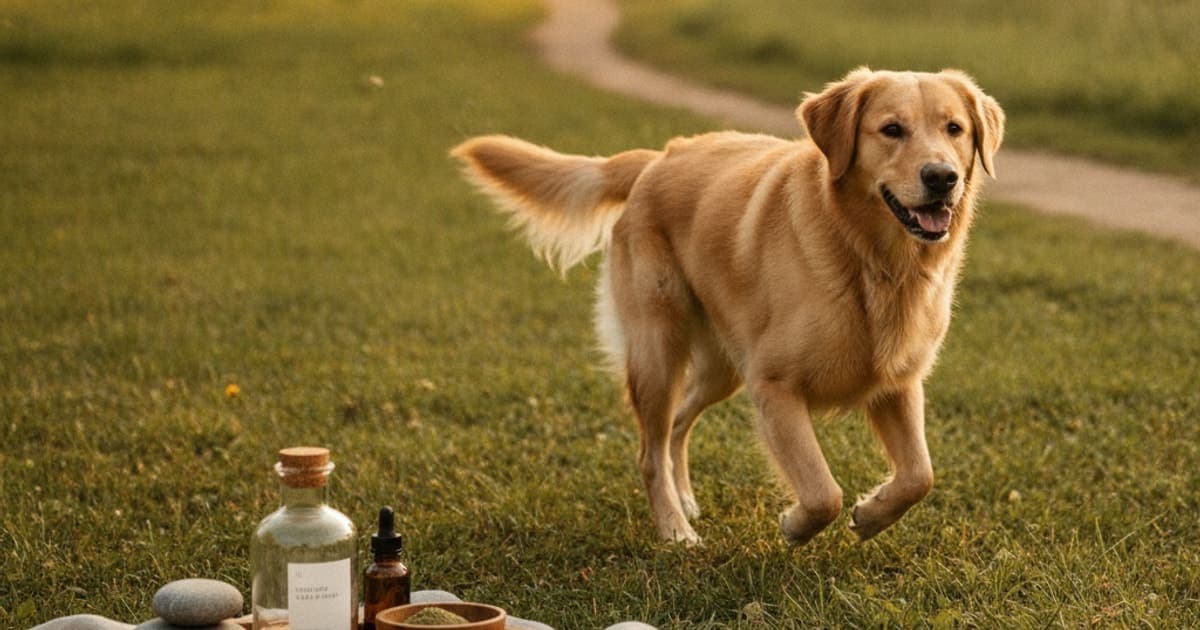
Does BPC-157 help a dog with torn ACL?
BPC-157 does not reattach a torn ligament, and it is not an FDA-approved veterinary drug. What the published work suggests is narrower and more interesting: BPC-157 appears to influence the biology of soft-tissue repair — blood vessel formation, fibroblast activity, collagen organisation. Owners use it as recovery support alongside the surgery, rehabilitation and veterinary care a cruciate injury requires.
That distinction matters, because "does it work?" is really two questions wearing one coat. Will a peptide make a ruptured ligament whole again in a knee that has become mechanically unstable? No — nothing achieves that on its own. Can peptide support have a role during the months of tissue healing, remodelling and rebuilding that follow the injury or the operation? That is where the science sits, and that is where owners are paying attention.
What actually tears inside a dog's knee
Dogs do not have an ACL. The equivalent structure is the cranial cruciate ligament (CCL), a band inside the stifle joint that stops the shin bone sliding forward beneath the thigh bone and limits rotation. Everyone says "ACL" because it is the shorthand people recognise, but the difference runs deeper than vocabulary.
In people, an ACL tear is usually one traumatic moment — a pivot, a landing, a snap. In dogs, cruciate rupture is far more often the end point of a slow degenerative process. The ligament frays and weakens over months, load shifts onto the fibres that remain, and one ordinary jump off the sofa finishes the job. That is also why the opposite knee carries real risk, and why many dogs eventually present with both.
The signs tend to be recognisable once you know them: an intermittent hind-limb limp that eases with rest and returns after exercise, toe-touching instead of full weight-bearing, sitting with the leg kicked out to one side, stiffness after a nap, hesitation on stairs, and sometimes an audible click if the meniscus has been damaged. Partial tears often look like a limp that keeps coming back rather than a dog who suddenly cannot walk.
Diagnosis belongs to your veterinarian. That means hands-on assessment for cranial drawer and tibial compression, sedation if the dog is tense and guarding the joint, radiographs to assess joint effusion and arthritic change, and sometimes referral imaging or arthroscopy. It also means ruling out the other things that cause a hind-limb limp — hip disease, lumbosacral pain, a soft-tissue strain, or bone disease in a young large-breed dog. Nothing you add at home substitutes for that examination.
What the research behind BPC-157 and TB-500 actually shows
BPC-157 is a synthetic peptide based on a sequence identified in gastric juice. Research groups — most prominently a long-running program at the University of Zagreb — have published extensively on it in rodent injury models, including transected Achilles tendon, damaged medial collateral ligament, muscle injury and bone defects. Across that body of work, researchers report improved healing and functional recovery in treated animals compared with controls.
The mechanisms described in that literature are the reason the peptide keeps coming up in conversations about connective tissue. Research suggests BPC-157 promotes angiogenesis — the formation of new blood vessels into healing tissue — partly through signalling associated with the VEGF receptor 2 pathway. It has also been described as supporting fibroblast migration and adhesion, the cellular work of laying down and organising new collagen, and as interacting with the nitric oxide system that governs local blood flow.
TB-500 is a synthetic form of the active region of thymosin beta-4, a peptide the body already produces. Thymosin beta-4 binds actin, the protein that drives cell movement, and the wound-healing literature associates it with cell migration into injured tissue, new vessel formation and moderated inflammatory signalling. Owners pair the two because the described mechanisms complement each other: one weighted toward blood supply and matrix organisation, the other toward getting repair cells where they need to be.
Be clear-eyed about what that evidence carries. These are mechanistic and animal-model findings, not large controlled canine trials in cruciate rupture, and BPC-157 and TB-500 are not FDA-approved veterinary drugs. What they represent is a promising and rapidly maturing area of regenerative science that a growing number of owners are choosing to use during recovery — which is exactly the conversation to have with your veterinarian before you start anything.
Where peptide support sits next to surgery and rehab
Surgery restores mechanical stability to the joint, and nothing you feed or supplement changes that fact; everything else — rehabilitation, weight control, prescribed pain management and peptide support — works inside the space that decision creates.
Most medium and large active dogs with a complete rupture are steered toward surgical stabilisation, and for good reason: an unstable stifle keeps grinding, and arthritis follows instability. Smaller or lower-demand dogs are sometimes managed conservatively. Your surgeon or primary vet makes that call based on the dog in front of them.
| Approach | What it addresses | Where it fits |
|---|---|---|
| TPLO / TTA osteotomy surgery | Alters joint geometry so the shin bone no longer slides forward under load | The recommended route for many medium-to-large or active dogs |
| Extracapsular lateral suture | Places an implant outside the joint to mimic the ligament's restraint while scar tissue forms | Often considered for smaller or lower-demand dogs, at the surgeon's discretion |
| Conservative management with activity control and bracing | Allows fibrosis around the joint to stabilise it gradually | When surgery is not an option, or for selected smaller dogs — a veterinary decision |
| Prescribed pain control and anti-inflammatories | Controls pain and inflammation so the dog will load the limb | Prescribed and monitored by your veterinarian; never adjust or stop these on your own |
| Structured rehabilitation | Rebuilds quadriceps and hamstring mass, restores range of motion, retrains weight-bearing | Throughout recovery, ideally guided by a rehab-trained professional |
| Weight management | Lowers load on both stifles and the demand on the opposite knee | Lifelong |
| Peptide support (BPC-157 + TB-500) | Research suggests these peptides may support the body's own soft-tissue repair signalling | Recovery-window support owners add alongside — never instead of — the plan above |
The recovery window is where owners put their energy
The surgery is one morning. The recovery is the next several months, and it is the part owners actually control.
After an osteotomy procedure, bone has to heal at the cut site while the joint capsule remodels and thickens. In conservatively managed dogs, the same stabilising fibrosis has to develop without a surgical head start. In both cases, muscle is disappearing from the affected leg faster than most owners expect, and the other three limbs are absorbing load they were not built for. Controlled leash walking, progressive loading, range-of-motion work and — where available — underwater treadmill or targeted physiotherapy are what rebuild the limb. Cage rest alone does not.
This is the window owners are trying to support when they look at peptides. The tendon-bone interface, the joint capsule and the surrounding soft tissue all remodel over a period of weeks, and that remodelling depends on blood supply, cell migration and organised collagen deposition — the same processes the BPC-157 and TB-500 literature describes. Nobody can promise you an outcome for your specific dog, and any brand that does is telling you something it cannot know. What owners report is that they want the recovery period supported rather than merely waited out.
Amount and timing are not something to decide from an article. Talk to your veterinarian about where peptide support fits with your dog's medications, surgical timeline and bodyweight — and for puppies, pregnant or nursing dogs, that conversation is not optional.
How to judge a recovery formulation honestly
The joint aisle is full of products designed to look reassuring rather than to do work. Watch for the tells: a kitchen-sink label listing fifteen ingredients at a dusting each, proprietary blends that hide how much of anything is actually present, one chew size for a corgi and a mastiff, and no third-party analysis anywhere on the site. A long ingredient list is not a formulation strategy; it is a marketing one.
What deserves your money is the opposite: named actives you can look up, amounts dosed to bodyweight rather than to convenience, third-party testing with certificates of analysis you can actually see, and a company willing to explain mechanism in plain language instead of shouting outcomes.
That is the standard pawgen built K9-REPAIR around — BPC-157 and TB-500 in a single formulation for dogs, dosed by bodyweight, third-party tested with COAs available, shipped direct to your door, and backed by a 60-day money-back guarantee. It is the stack many owners use through the recovery window, and it is designed to sit alongside your veterinarian's plan, not to compete with it.
Key Takeaways
- Dogs tear the cranial cruciate ligament, not an ACL, and the rupture is usually degenerative rather than a single accident — which is why the other knee also matters.
- BPC-157 does not repair a torn ligament and is not an FDA-approved veterinary drug; the research describes mechanisms of soft-tissue healing, not a fix for instability.
- Published animal work associates BPC-157 with angiogenesis and fibroblast activity, and thymosin beta-4 (the basis of TB-500) with cell migration and wound healing.
- Surgical stabilisation, prescribed pain control and structured rehabilitation are the backbone of recovery for most dogs with a complete tear.
- Peptide support is something owners add during the recovery window, alongside the veterinary plan — never as a substitute for surgery or a prescription.
- Judge products on named actives, weight-based dosing and third-party COAs, not on ingredient count.
For the wider picture of the injury itself, pawgen's guide to torn acl covers diagnosis and management in depth, and breed risk differs enough to be worth reading separately for torn acl in boxers, torn acl in mastiffs and torn acl in corgis. If your dog's problem sits elsewhere in the body, there are companion articles on bpc-157 for carpal hyperextension in dogs and bpc-157 for hip arthritis in dogs.
Your veterinarian owns the diagnosis, the surgical decision, the medications and the rehabilitation timeline — that is the structure everything else hangs on. Peptide support belongs in the space that proper veterinary care creates: the long, quiet recovery months when the tissue is doing its work and you are looking for every legitimate way to support it.
Owners exploring peptide support for their dog can review K9-REPAIR — BPC-157 + TB-500 formulated for dogs — at https://pawgen.com/. BPC-157 and TB-500 are not FDA-approved veterinary drugs. Nothing in this article treats, cures or prevents any condition; every decision about your dog's care belongs with your veterinarian.
Frequently asked questions
- How much does it cost to treat torn ACL in dogs?
- Costs vary widely by region, clinic and procedure. Surgical stabilisation such as TPLO is generally the most expensive route, running into the thousands per knee before diagnostics, medication and rehabilitation are added. Conservative management costs less upfront but often runs longer. Ask your practice for a written estimate covering the full recovery.
- Can a dog's torn ACL heal without surgery?
- The ruptured ligament itself does not reattach. Some dogs — typically smaller or lower-demand ones — stabilise adequately as scar tissue forms around the joint, with strict activity control, weight management and rehabilitation. Larger active dogs usually do less well this way. Your veterinarian decides whether conservative management is realistic for your dog.
- What are the first signs of torn ACL in dogs?
- An intermittent hind-limb limp that eases with rest and returns after exercise is the classic early sign. Owners also notice toe-touching rather than full weight-bearing, sitting with the leg kicked out sideways, stiffness after napping, reluctance on stairs, and sometimes a click if the meniscus is involved.
- How is torn ACL diagnosed in dogs?
- Your veterinarian diagnoses it through hands-on orthopaedic examination, testing for cranial drawer motion and tibial compression, often under sedation if the dog is tense. Radiographs assess joint effusion and arthritic change, and referral imaging or arthroscopy may follow. The exam also rules out hip, spinal and other soft-tissue causes of limping.
- What helps a dog with torn ACL?
- Veterinary-directed care helps most: surgical stabilisation where indicated, prescribed pain and anti-inflammatory medication, strict activity control, structured rehabilitation and lifelong weight management. Alongside that plan, many owners add peptide support such as K9-REPAIR, which combines BPC-157 and TB-500; research suggests these peptides may support soft-tissue repair processes.
- How long does torn ACL take to heal in dogs?
- Recovery is measured in months rather than weeks. A restricted-activity phase is followed by progressive loading and rehabilitation before a gradual return to normal exercise, and muscle rebuilding continues well beyond that. Timelines differ by procedure, dog size, age and complications such as meniscal damage — your surgeon sets yours.
- Is BPC-157 safe for dogs?
- BPC-157 is not an FDA-approved veterinary drug, and no supplement can be called risk-free. Published animal research has generally described favourable tolerability, but that is not the same as a safety guarantee for your dog. Discuss it with your veterinarian first, particularly alongside prescribed medication or an upcoming surgery.
- What is TB-500 and why is it paired with BPC-157?
- TB-500 is a synthetic form of the active region of thymosin beta-4, a peptide the body produces naturally. Wound-healing research associates thymosin beta-4 with cell migration, new blood vessel formation and moderated inflammatory signalling. Owners pair it with BPC-157 because the described mechanisms complement rather than duplicate each other.
Educational content. BPC-157 and TB-500 are not FDA-approved veterinary drugs. Talk to your veterinarian before starting anything new, especially if your dog is on prescribed medication.