BPC-157 Handling and Hygiene for Dogs — Storage Basics
Good BPC-157 handling and hygiene for dogs comes down to four habits: store it exactly as the label specifies, wash and dry your hands before every handling, never touch the container's opening or let anything re-enter it, and keep one repeatable routine. Dosing questions belong with your veterinarian.
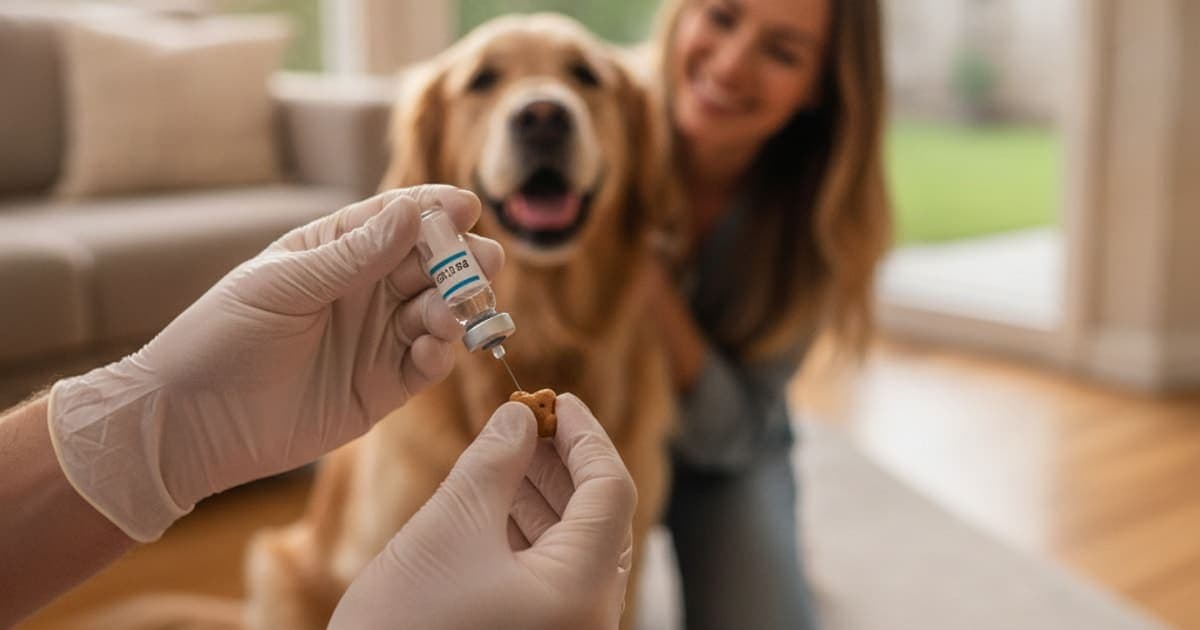
Good BPC-157 handling and hygiene for dogs comes down to four habits: store the product exactly as its label specifies, wash and dry your hands before you touch anything, never let your fingers, your dog's mouth or a used applicator contact the container's opening, and run the same clean routine every single time. Peptides are structurally delicate molecules — heat, light, repeated freeze-thaw cycles, rough agitation and microbial contamination all work against them. Dosing itself is a conversation to have with your veterinarian, not something to estimate at the kitchen counter.
Hygiene is not a side detail of peptide use — it is the one part of the process you control completely, every day, without needing anyone's permission.
Why a peptide asks more of you than a jar of joint chews
A glucosamine tablet is a fairly rugged thing. You can leave the bottle on a sunny shelf, drop it, forget to close it properly, and the molecule inside is largely unbothered. A peptide is a different kind of ingredient.
BPC-157 is described in the scientific literature as a synthetic peptide based on a short amino-acid sequence identified in gastric juice. TB-500 is a synthetic fragment related to thymosin beta-4, a naturally occurring protein involved in cell migration and actin regulation. Both are chains of amino acids linked in a specific order, and in both cases the biological behaviour that researchers find interesting depends on that chain holding its shape and its sequence intact.
That is the whole reason handling matters. Break the chain and you do not get a weaker version of the same molecule — you get fragments. The main forces working against you are ordinary and unglamorous: heat, which accelerates degradation; ultraviolet light; hydrolysis in solution; oxidation at exposed sites; mechanical stress from vigorous shaking; and microbial contamination introduced by a finger, a countertop or a re-used applicator.
Owners are increasingly adopting BPC-157 and TB-500 through recovery periods because research suggests these peptides may support the body's own tissue-repair signalling — angiogenesis, fibroblast activity and cell migration are the mechanisms most often discussed. Neither compound is an FDA-approved veterinary drug, and nothing here is a promise about what will happen in your dog. But if you have decided the science is worth adopting, it is worth protecting what you bought. Careless storage is the most common way owners quietly waste a product and then conclude it did nothing.
From the doorstep to the shelf: getting storage right
Storage discipline starts before you have even opened the box. Products that ship direct to your door — as pawgen's K9-REPAIR does — spend time in a delivery vehicle and, if you are not home, on a porch or in a mailbox. A parcel sitting in afternoon sun is the single most avoidable heat exposure in the entire chain.
Bring the package inside promptly, open it, and read the storage instruction on the label before you do anything else. Manufacturers set those conditions for their specific formulation, and the label always outranks a general article. Then keep the product in its original, labelled container. Decanting into a nicer bottle destroys the batch information, the expiry date and any light protection the original packaging provided.
| Situation | What good handling looks like | Why it matters |
|---|---|---|
| Delivery arrives | Bring it in promptly; open and store per the label before anything else | Heat exposure on a porch or in a hot car is cumulative and invisible |
| Routine storage | The location and temperature the label specifies; main body of a refrigerator rather than the door if refrigeration is indicated | Fridge doors swing through the widest temperature range in the appliance |
| Light exposure | Keep it in its original packaging, away from windowsills and direct sun | UV light degrades peptides; original packaging is designed for the product |
| Mixing or agitation | Gentle swirling rather than hard shaking, if the format calls for any mixing at all | Mechanical shear stress can damage delicate molecular structure |
| Travel | Insulated carrier, out of the sun, minimum time out of storage conditions | Cars reach far higher internal temperatures than the outside air |
| Anything unusual | Cloudiness, colour change, particles, an off smell, a compromised seal — stop and ask | Visible change is a signal, not a cosmetic issue |
A note on freezing: unless the label explicitly directs it, do not improvise. Repeated freeze-thaw cycling is well recognised as damaging to peptides in solution, and a freezer that self-defrosts cycles temperature constantly. If you are unsure how to store what you have, ask the manufacturer or your veterinarian rather than guessing.
A clean routine you can repeat identically every time
The goal is not sterility theatre. It is a short sequence you perform the same way every time, so that contamination never has an opportunity to become routine.
Step one: prepare the surface. Choose one spot — a clear section of counter, not the floor, not the dog's bed, not next to raw food prep. Wipe it down and let it dry. Cluttered surfaces invite you to set things down where you should not.
Step two: wash and dry your hands. Soap, warm water, a thorough wash including under the nails, then dry completely on a clean towel. Damp hands transfer more organisms than dry ones. If you have been handling raw meat, another animal, litter, garden soil or wound dressings, wash again.
Step three: gather everything before you open anything. The product, whatever applicator or measuring device the manufacturer supplies, a clean cloth, and your dog. Opening a container and then hunting for a missing item is how contamination and unnecessary warming happen.
Step four: never touch the opening. Not the rim, not the neck, not the underside of the cap, not the tip of a dropper or applicator. Hold the container by its body. Set the cap down face-up, or better, keep it in your other hand.
Step five: no back-flow, ever. This is the rule owners break most often. A dropper or applicator that has contacted your dog's mouth, food bowl, coat or your hand must not go back into the container. Anything intended to be single-use is single-use — reusing it to save a few pence contaminates the entire remaining supply. If your veterinarian has shown you a specific administration technique, follow the technique they demonstrated, exactly as they demonstrated it, including their instructions on disposal and on sharps containers where relevant.
Step six: close, return, record. Reseal properly, put the product straight back into its storage location rather than leaving it out while you finish other jobs, and write the date in a simple log. A dated log tells you and your vet exactly what happened and when — far more useful than memory during a recovery period.
Step seven: wash your hands again. Especially before handling food, children or another animal.
Handling mistakes that quietly cost you potency
Most damage is not dramatic. It is small, repeated and invisible, which is why it goes unnoticed until an owner decides a product underperformed.
The usual culprits: leaving the container out on the counter through a long morning routine; storing it in the fridge door instead of the main compartment; shaking hard when a gentle swirl was sufficient; leaving the package in a parked car after collection; keeping a product past its labelled expiry date because there is some left; sharing an applicator between two dogs in the same household; and topping up a partly used container from a new one. Cross-contamination between animals deserves particular attention — if you have more than one dog on a supplement, each gets its own applicator, and neither applicator touches the other's container.
And a plain one: keep the product out of reach. A sealed cupboard or a shelf a determined retriever cannot reach. Curious dogs chew packaging.
What to check before the bottle ever reaches your hands
Handling hygiene protects a product's quality after purchase. It cannot recover quality that was never there. The supplement aisle is full of kitchen-sink chews carrying twelve ingredients at doses too small to do anything, proprietary blends that hide how little of the headline ingredient is present, and brands whose confidence lives in the marketing rather than the paperwork. That is where your scepticism belongs.
What you want is boring and verifiable: a named formulation, disclosed ingredients, third-party testing, and a certificate of analysis you can actually look at. pawgen's K9-REPAIR is a BPC-157 and TB-500 formulation for dogs, third-party tested with COAs available, with dosing guidance built around body weight and shipped direct to your door, backed by a 60-day money-back guarantee. Weight-based guidance matters because a large-breed dog and a small terrier are not the same animal — but the specific figure for your dog is a discussion to have with your veterinarian, who knows the full picture of what else that dog is taking.
When to stop and call your veterinarian
Stop and ask if the product looks or smells different from when you opened it, if the seal was compromised on arrival, if it has been left out of its storage conditions for an extended stretch, or if you are simply unsure whether it is still sound. Discarding a container is cheaper than administering something degraded.
Stop and call sooner if your dog changes — vomiting, diarrhoea, unusual lethargy, appetite loss, swelling, itching, or any local reaction where something was applied. And be explicit with your vet about everything your dog receives, including supplements, so interactions can be assessed properly. Nothing in this article is a reason to alter or discontinue a prescribed medication such as carprofen, gabapentin or a course your vet has set, or to postpone a recommended surgery. Those decisions belong to the person examining your dog.
Key takeaways
- Peptide activity depends on molecular structure, so heat, light, freeze-thaw cycling, hard shaking and contamination all matter more than they would for a conventional chew.
- The label's storage instruction outranks any general advice; keep the product in its original packaging with its batch and expiry information intact.
- Clean, dry hands and a cleaned surface before every handling; never touch the container opening.
- Nothing that has contacted your dog, your hands or a surface goes back into the container — single-use means single-use, and each dog gets its own applicator.
- Bring deliveries indoors promptly and never leave product in a parked car or on a sunlit shelf.
- Judge products on third-party testing and COAs, not on label theatre.
- Visible change, seal damage, or any change in your dog means stop and call your veterinarian.
For related reading on how owners plan peptide use around a recovery, see tb-500 dose for giant breeds for dogs and tb-500 cycle length for dogs, and full formulation details for K9-REPAIR including third-party testing.
Handling and hygiene are the owner's half of the job. The other half belongs to your veterinarian, who owns the diagnosis, the imaging, the surgical decision, the prescriptions and the rehab plan. BPC-157 and TB-500 are not FDA-approved veterinary drugs, and what research suggests about their mechanisms sits alongside proper veterinary care rather than in place of it. Bring your vet into the conversation, keep them informed about everything your dog receives, and let the products you choose work in the space that good clinical care creates.
Owners exploring peptide support for their dog can review K9-REPAIR — BPC-157 + TB-500 formulated for dogs — at https://pawgen.com/. BPC-157 and TB-500 are not FDA-approved veterinary drugs. Nothing in this article treats, cures or prevents any condition; every decision about your dog's care belongs with your veterinarian.
Frequently asked questions
- Should I worry if my dog is not wanting to play?
- A single quiet day is usually nothing. Sustained reluctance to play is worth attention, because dogs mask pain well and reduced activity is often the first visible sign of orthopaedic discomfort, illness or low mood. Note when it started and what changed, then raise it with your veterinarian.
- When should I take a dog to the vet for not wanting to play?
- Book an appointment if the change lasts more than a day or two, or immediately if it comes with limping, yelping, appetite loss, vomiting, laboured breathing, a swollen abdomen or reluctance to stand. A dog that suddenly stops moving normally needs examination rather than watchful waiting at home.
- What can I give a dog that is not wanting to play?
- Nothing until a veterinarian has identified why. Never give human painkillers — many are toxic to dogs. Once your vet has diagnosed the cause and set a plan, some owners add joint and recovery support alongside it, such as pawgen's K9-REPAIR, discussed with the vet first.
- Is a dog not wanting to play an emergency?
- Not usually on its own, but it can be. Treat it as urgent if it appears suddenly with collapse, pale gums, a distended or painful abdomen, unproductive retching, difficulty breathing, non-weight-bearing lameness or unresponsiveness. Those combinations warrant an emergency clinic immediately rather than a routine appointment.
- Why is my dog sleeping more than usual?
- Common reasons include normal ageing, hot weather, recent exertion, pain, infection, hypothyroidism, anaemia and side effects of prescribed medication. Sleep needs also rise naturally in senior dogs. Because the causes range from harmless to serious, a persistent change in sleep pattern deserves a veterinary examination rather than guesswork.
- Should I worry if my dog is sleeping more than usual?
- Worry less about the extra sleep itself and more about what accompanies it. Weight change, drinking more, stiffness on rising, reluctance to climb stairs or withdrawal from family activity are the meaningful signals. If any of those appear alongside extra sleep, arrange a veterinary check-up promptly.
Educational content. BPC-157 and TB-500 are not FDA-approved veterinary drugs. Talk to your veterinarian before starting anything new, especially if your dog is on prescribed medication.