Bumps on a Dog's Nose: Causes and When to See a Vet
A bump on your dog's nose can come from a sting, a scrape, an infection, a wart-like growth, a cyst or a tumour, and none of these can be told apart by eye. Any new lump needs a vet exam, and only a needle sample can identify it.
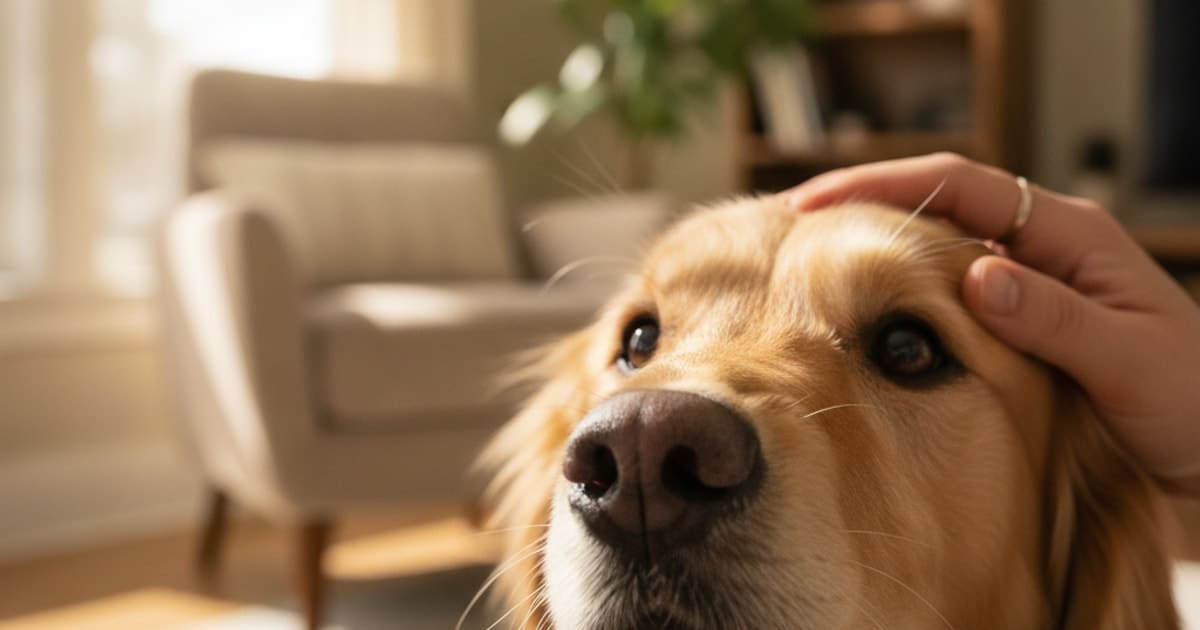
A bump on your dog's nose can come from a sting or insect bite, a scrape from digging or rough play, a skin infection, an allergic reaction, a wart-like growth, a blocked gland or cyst, or a tumour, and the honest answer is that none of those can be separated by eye. Any new lump on a dog's nose should be examined by a veterinarian, because only a sample of cells drawn with a fine needle can tell you what the lump actually is.
If the bump is bleeding, growing quickly, hot and painful, pressing a nostril shut, or your dog is struggling to breathe, has blood coming from one nostril, or has swelling spreading across the face, call your vet or an emergency clinic the same day. Those signs change the urgency, not just the diagnosis.
The rest of this page explains what the different patterns can mean, what makes a nose bump urgent, and what a vet exam can involve, so you walk into the appointment knowing what to describe and what to ask.
Why a bump can appear on the muzzle
The nose takes more physical abuse than almost any other part of a dog. It goes into holes, under fences, through brambles, into bushes with wasps in them, and across floors while sniffing. It is also made of several different tissues packed into a small area: thin haired skin over the bridge, the hairless nose leather at the tip, cartilage, bone, glands, and the nasal passages underneath.
Things that can cause a raised bump there include:
- An insect sting or bite, which can swell fast and may be sore to touch
- Trauma: a knock, a scrape, a puncture from a thorn or a claw
- An abscess, where bacteria or a foreign object such as a grass seed has worked under the skin
- Bacterial or fungal skin infection, which can look like pimples, pustules or crusted spots
- An allergic or hive-type reaction, which can raise soft lumps and sometimes puffiness around the eyes and lips
- Viral papillomas, the cauliflower-textured wart-like growths that can show up on the muzzle and in the mouth
- A cyst or a blocked gland, which can feel like a smooth firm pea under the skin
- Immune-related skin conditions that target the nose leather and can cause crusting, loss of pigment and raw patches
- Mite or parasite-related irritation
- Growths of the skin, the underlying tissue, or the nasal cavity, including cancerous ones
That list is long on purpose. It is the reason guessing from home does not work, and the reason a vet exam may help find the cause when your own read of it is uncertain.
Bumpy texture versus a distinct lump
One of the first things worth sorting out is whether you are looking at a new growth or at the nose your dog has always had.
Dog noses are not smooth. The nose leather has a cobblestone surface of ridges, grooves and small raised bumps, and the pattern is unique to each dog, closer to a fingerprint than to a uniform surface. So if you have just started looking closely and are wondering why dog noses are bumpy, some of that texture is normal anatomy. Compare with older photos of your dog if you have them.
What is worth attention is change. A dry bump on a dog's nose, thickened hard ridges, crusty flaking at the edges, deep cracks, a nose that has gone from soft and pliable to hard and rough, colour loss, or a raw sore that will not close over: those are changes in the tissue itself, not texture your dog was born with. Thickening and crusting of the nose leather can come from hyperkeratosis, from an immune-related condition, from infection, or from a growth, and they can look similar to each other.
A distinct lump is different again. Run a finger over it gently. Does it move with the skin or does it feel anchored to the bone underneath? Is it soft, firm or hard? Is there one or are there several? Is the surface intact, crusted or ulcerated? You do not need to answer those questions correctly, you just need to notice them, because they are exactly what your vet will ask.
Where the bump sits can change what it means
On the nose leather
Lumps on the hairless tip sit on tissue that is thin, constantly moist and constantly in contact with the world. Pigment changes, raised plaques, ulcers that weep or bleed, and sore cracked areas all show up here. Because this area is handled, rubbed and licked, a small problem can look worse quickly.
On the bridge of the nose
A firm swelling on the top of the muzzle sits over bone with very little soft tissue to spare, so even a small amount of swelling is visible. A sting, a knock, an abscess from an embedded grass awn, or an infected tooth root draining upward can all raise a bump there. A swelling on the bridge that feels fixed to the bone, keeps enlarging, or comes with noisy breathing, sneezing, or discharge or bleeding from one nostril can also reflect something inside the nasal cavity pushing outward, and that includes growths. This is the pattern people are searching when they look up whether a bump on the nose bridge is cancer. It cannot be answered from the outside. It is answered with an exam, imaging and a sample.
At the nostril rim or inside the opening
Bumps here can narrow the airway. Watch for noisy or effortful breathing, mouth breathing at rest, or a dog that paws at its face. Anything interfering with airflow is urgent.
When a nose bump needs a vet appointment and when it needs an emergency visit
| What you are seeing | What it can point to | How soon to act |
|---|---|---|
| Bleeding from the bump or from one nostril | Ulceration, trauma, a clotting problem, a growth in the nasal cavity | Same day, treat as urgent |
| Rapid growth, hardness, or a lump fixed to the bone | A deeper growth or an abscess under pressure | Same day or next available appointment |
| Facial swelling, a closed eye, trouble breathing | Severe allergic reaction, spreading infection, airway obstruction | Emergency care now |
| Hot, painful, draining or foul-smelling swelling | Abscess or infection | Same day |
| Crusty, cracked or thickened nose leather | Hyperkeratosis, infection, immune-related skin disease | Book an appointment |
| A small bump that comes and goes | Insect bites, hives, a cyst that fills and empties, recurring irritation | Book an appointment and photograph it while visible |
| Wart-textured growths, single or clustered | Papillomas or other skin growths | Book an appointment |
A bump on a dog's nose that comes and goes still deserves an exam. Intermittent swelling can reflect bites, allergic flares, or a pocket under the skin that fills and drains, and the fact that it settles between episodes does not identify which. Memory is also an unreliable measuring tool, which is why a photo taken while the bump is up is worth more than a description of it later.
If your dog's nose bump is bleeding, do not wait to see whether it stops on its own. Call your vet. Bleeding can come from the lump's surface, from the nasal passages, or from a clotting problem elsewhere in the body, and those are distinguished at the clinic, not at the kitchen table.
What photos can and cannot tell you
Looking for pictures to match against your dog's nose is a reasonable instinct, and it is also the part that trips people up. A harmless-looking wart and a cancerous growth can photograph almost identically, and two dogs with the same diagnosis can look nothing alike. No image set can replace cells under a microscope.
Where photos genuinely help is in tracking your own dog. Take a clear, well-lit picture from the same angle, with something flat for scale next to it such as a coin, and take another at intervals so changes in size, colour and surface are visible rather than remembered. Bring those images to the appointment. A vet seeing the bump for the first time has no baseline, and your photo series supplies one.
Avoid squeezing, picking, scraping or covering the bump before the visit. Handling can inflame the area, change how it looks, and make the sample harder to read.
What a vet exam can involve
Expect your vet to look at far more than the bump. A full physical exam, a check of the lymph nodes under the jaw, a look inside the mouth at the teeth and gums above the swelling, and questions about when you first noticed it, whether it has changed, whether your dog is scratching or rubbing, and whether anything else has shifted in appetite, energy or breathing.
From there, depending on what is found, the workup can include a fine needle sample of the lump to look at the cells, a biopsy if cells alone are not conclusive, a swab or culture if infection is suspected, skin testing for parasites, blood work, dental examination, or imaging of the nasal cavity and the bone underneath.
Treatment for a bump on the nose bridge or anywhere else on the muzzle follows the diagnosis rather than the appearance, and your vet plans it once there is an answer. Talk to your vet about what each test will tell you and what the next step would be for each possible result. If a chronic skin condition is already on your dog's chart and you are wondering how it fits with the new bump, your vet can tell you how the two relate.
Key Takeaways
- Bumps on a dog's nose can come from stings, trauma, abscesses, infection, allergic swelling, warts, cysts and growths, and they cannot be separated by appearance alone.
- Any new lump should be checked by a veterinarian, and only a needle sample of the cells can identify what it is.
- Normal nose leather is textured and ridged, so some bumpiness is anatomy. Change in texture, thickening, crusting, cracking or colour loss is what matters.
- Bleeding, rapid growth, a hard lump fixed to the bone, facial swelling, one-sided nasal discharge or any breathing difficulty means same-day or emergency care.
- A lump that comes and goes still needs an exam. Photograph it while it is visible.
- Photographs help you track change over time, but no picture can give a diagnosis.
- Do not squeeze, pick at or cover the bump before the appointment.
Your veterinarian owns the diagnosis here. They are the one who can feel the lump, look inside the mouth and nose, take the sample, read the result and build the plan from it, and nothing you do at home substitutes for that exam. If anything about the bump changes before your appointment, call your vet sooner and describe exactly what shifted.
For related reading, see Emergency Signs in Dogs and the full index of Dog Health Conditions.
Frequently asked questions
- Why does my dog have a bump on his nose?
- It can be an insect sting, a scrape or puncture, an abscess, a skin infection, an allergic swelling, a wart-like growth, a cyst, or a tumour. These look alike from the outside, so a vet exam may help find the cause, and a needle sample identifies the tissue itself.
- Why is there a bump on my dog's nose?
- The nose takes constant physical contact and sits over bone, cartilage and nasal passages, so swelling there can come from injury, infection, allergy or a growth. Examine whether it moves with the skin or feels anchored, then book a vet appointment to have it sampled and identified.
- What is the lump on my dogs nose?
- Nobody can answer that by looking, including a vet. A wart, a cyst, an abscess and a cancerous growth can all appear similar. Your vet draws cells with a fine needle, and may take a biopsy or imaging if needed, to say what the lump actually is.
- Why are dog noses bumpy?
- The hairless nose leather has a natural cobblestone surface of ridges, grooves and small raised bumps, and the pattern is unique to each dog. That texture is normal anatomy. Thickening, hardening, crusting, cracking or a new distinct lump is a change worth showing your vet.
- Why is my dog's nose bumpy?
- Some bumpiness is the normal ridged texture of nose leather. New or worsening bumpiness can come from hyperkeratosis, infection, mites, immune-related skin disease or growths. Compare older photos of your dog, note any crusting or colour loss, and have your vet examine the surface.
- What does a dry, crusty bump on my dog's nose mean?
- Dry, crusted or thickened areas can reflect hyperkeratosis, a bacterial or fungal infection, an immune-related condition affecting the nose, or a growth with a crusted surface. These overlap in appearance. Avoid applying anything to it and have your vet examine and sample the area.
- My dog's nose bump is bleeding. Is that urgent?
- Yes, treat bleeding as urgent and call your vet or an emergency clinic the same day. Blood can come from the lump's surface, from inside the nasal passages, or from a clotting problem elsewhere. Bleeding from one nostril with noisy breathing needs prompt assessment.
- Can a bump on my dog's nose bridge be cancer?
- It can be, and it can also be an abscess, a sting reaction, a tooth root infection draining upward, or a cyst. A firm swelling fixed to the bone, enlarging, or paired with one-sided nasal discharge or noisy breathing needs a vet exam, imaging and a sample.
- The bump on my dog's nose comes and goes. Does it still need a vet?
- Yes. Intermittent swelling can come from insect bites, allergic flares, irritation, or a pocket under the skin that fills and empties, and settling between episodes does not identify which. Photograph it while it is visible, with something for scale, and bring the images to your appointment.
- Can photos of other dogs' noses help me identify my dog's bump?
- No. A harmless-looking wart and a cancerous growth can photograph almost identically, and the same diagnosis looks different on different dogs. Use photos to track your own dog's bump over time from the same angle, and let your vet make the identification from cells.
Educational content, not veterinary advice. Ask your vet about your dog.