Can a Dog's CCL Tear Recover Without Surgery?
A torn cranial cruciate ligament does not grow back together, so it will not heal in the literal sense. Some dogs — often smaller, lighter and less active ones — do regain comfortable, stable function through conservative management, while many larger dogs are steered toward surgical stabilization by their veterinarian.
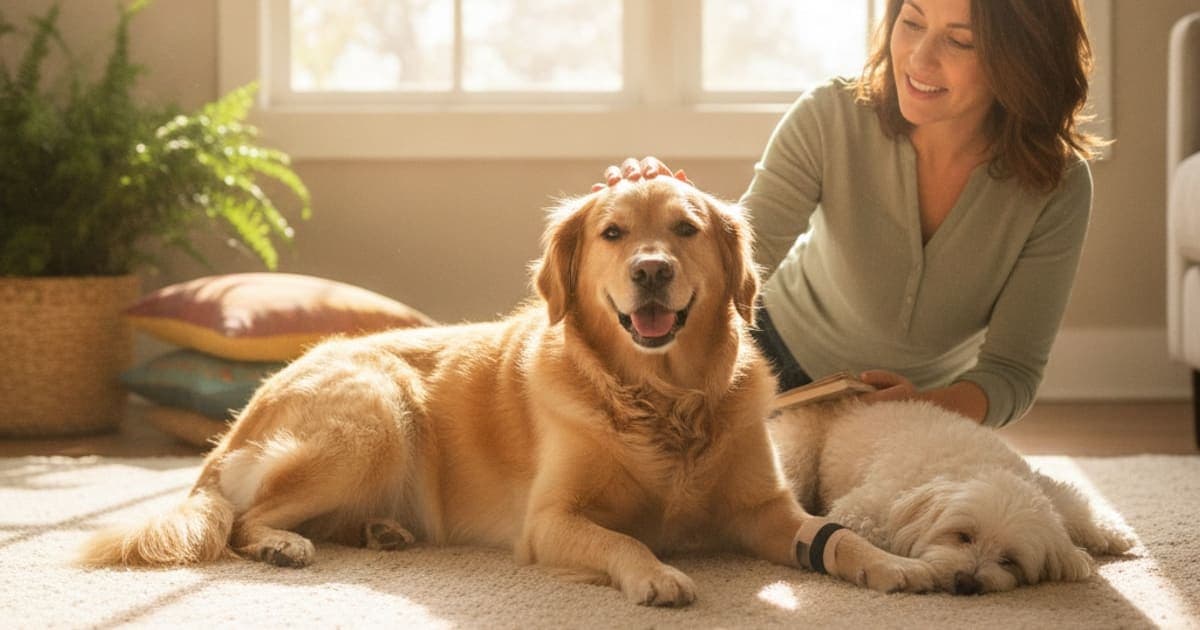
No — a torn cranial cruciate ligament does not knit back together, so it will not repair itself in the literal sense. Some dogs, most often smaller, leaner and less athletic ones, do regain comfortable function through structured conservative management. The American College of Veterinary Surgeons notes that surgical stabilization is generally recommended, especially for larger, active dogs.
That distinction matters more than it sounds. Owners searching this question are usually weighing a surgery quote against a dog who is limping but still wagging, and the honest answer is neither "yes, just rest him" nor "surgery or nothing." It depends on the size of the dog, the shape of the joint, what else got damaged inside the knee, and how much control you have over the next several weeks of his life.
What a cruciate tear actually does to the knee
The cranial cruciate ligament is a short, dense band running diagonally through the stifle (knee) joint. Its job is mechanical: it stops the tibia from sliding forward under the femur every time the dog loads the leg, and it limits inward rotation of the lower leg.
In dogs, most tears are not a clean sporting injury. The ligament usually degenerates first — collagen fibers fray and weaken over months, often quietly — and then a partial tear becomes a complete rupture during something unremarkable, like turning hard after a squirrel or landing off the couch. That is why many dogs tear one side and later show trouble in the other: the underlying tissue change was never limited to one knee.
Two anatomical facts drive everything that follows. First, the ligament sits inside the joint, bathed in synovial fluid, with a limited blood supply and no scaffold for the torn ends to bridge across, so they do not reunite. Second, once the restraint is gone, the joint is unstable — the tibia shifts with each step. That abnormal motion inflames the joint lining, puts the medial meniscus at risk of being pinched and torn, and accelerates cartilage wear and osteoarthritis.
A torn CCL never grows back, so the real goal of any plan — surgical or conservative — is a stable, comfortable, well-muscled knee, not an intact ligament.
Which dogs sometimes do well without surgery
Veterinarians weigh a fairly consistent set of factors when they judge whether a non-surgical plan has a realistic chance:
- Body size and weight. Smaller, lighter dogs are more likely to stabilize acceptably as the joint capsule thickens and scars down. The larger and heavier the dog, the greater the shear force the knee absorbs on every stride, and the less likely fibrosis alone is to control it.
- Body condition. Excess weight is the single most modifiable load on a failing knee. A lean dog on a conservative plan has meaningfully better odds than the same dog carrying extra pounds.
- Partial versus complete tear. A partial tear with a still-functional remnant behaves differently from a full rupture, though partial tears commonly progress.
- Meniscal involvement. A torn meniscus is a persistent mechanical pain source. Dogs with a clicking stifle and stubborn lameness often continue to hurt no matter how strict the rest.
- Activity demands and temperament. A calm senior who walks on a leash is a different management problem from a two-year-old field dog who cannot be talked out of sprinting.
- Age, anesthetic risk and other conditions. For some dogs, surgery carries risks that tip the balance toward medical management, and that is a legitimate veterinary decision rather than a compromise.
- Your ability to enforce restriction. Conservative management fails most often not because the biology refuses to cooperate, but because a household with stairs, slick floors and a doorbell cannot deliver true confinement.
None of this is something to judge from a video of your dog walking. It requires hands on the joint and a veterinarian's assessment — which is the whole reason a diagnosis comes before a plan.
What non-surgical management actually involves
Conservative management is not "rest." Done properly, it is a demanding, supervised program with several moving parts.
Strict, enforced activity restriction. Leash-only outings, no jumping, no stairs, no couch, no running on smooth flooring, often confinement to a pen or a single room. Your veterinarian sets the length of the restriction period and the pace of return to activity based on re-examinations, not a calendar you found online. Traction — runners, rugs, toe grips — matters more than owners expect, because a single slip can undo weeks.
Weight management. If your dog is above ideal body condition, a measured, vet-guided reduction plan is the highest-value intervention available and costs nothing.
Pain and inflammation control prescribed by your veterinarian. Anti-inflammatories and other analgesics keep the dog comfortable enough to use the leg, which is how muscle is retained. Never adjust, pause or stop a prescribed medication because you have added something else to the routine — that decision belongs to your vet.
Professional rehabilitation. A rehab-credentialed veterinarian or veterinary physiotherapist builds controlled loading: hind-limb strengthening, hamstring and gluteal work, balance and proprioception drills, sometimes an underwater treadmill. This is what preserves thigh muscle mass, and thigh muscle is functional support for an unstable joint.
A custom stifle orthosis, in selected cases. Some dogs are fitted with a knee brace to limit tibial thrust while soft tissue fibrosis develops. Fit and follow-up determine whether a brace helps or causes sores and compensation.
Scheduled reassessment. A conservative plan is a trial with checkpoints, not a decision made once. If the knee is not tracking in the right direction, the plan changes.
Surgery versus conservative management: an honest comparison
| Factor | Surgical stabilization (TPLO, TTA, extracapsular) | Structured conservative management |
|---|---|---|
| What it changes | Alters joint mechanics or adds an external restraint so the tibia stops shifting under load | Relies on joint capsule fibrosis, muscle support and reduced load to control instability |
| Typical candidates | Larger, heavier, active dogs; complete ruptures; meniscal damage needing inspection | Smaller, lighter, calmer dogs; some partial tears; dogs with anesthetic or financial constraints |
| Meniscus | Can be inspected and treated during the procedure | Cannot be addressed; a torn meniscus often keeps hurting |
| Return to function | Follows a defined, veterinarian-directed rehab progression | Slower and less predictable; some dogs plateau with a residual limp |
| Osteoarthritis | Progresses more slowly when the joint is stabilized, but is not eliminated | Generally progresses faster in an unstable knee |
| Cost | Substantially higher up front; varies widely by region, clinic and procedure | Lower up front, though rehab, bracing and long-term medication add up over time |
| Main risks | Anesthesia, implant or infection complications, post-operative restriction still required | Ongoing instability, later meniscal injury, muscle loss, overloading the opposite leg |
| Who decides | Your veterinarian or a board-certified surgeon, after examination and imaging | Same — with a clear plan for when to reconsider surgery |
Where soft-tissue recovery support fits, and what owners are using
Whichever road you take, the tissue that has to adapt is soft tissue: joint capsule, tendon and periarticular structures remodeling under carefully graded load, plus muscle rebuilding after weeks of disuse. If your dog has surgery, add incision and surgical-site recovery to that list. This remodeling phase is where owners look for support alongside the veterinary plan, not instead of it.
That is the space K9-REPAIR is built for. It is a dog-specific formulation combining two peptides that owners are increasingly adopting through recovery periods:
- BPC-157, a synthetic pentadecapeptide based on a sequence identified in gastric juice protein. In published rodent models of tendon, ligament and muscle injury, research suggests it influences angiogenesis and fibroblast activity — the vascular and cellular groundwork that connective tissue repair depends on.
- TB-500, a synthetic fragment corresponding to the actin-binding region of thymosin beta-4, a peptide found naturally in mammalian tissue. Early evidence indicates thymosin beta-4 supports cell migration and new blood vessel formation, both central to how injured soft tissue reorganizes.
That is mechanism, honestly stated. BPC-157 and TB-500 are research peptides, and nothing here should be read as a promise about your dog's knee. What pawgen can state plainly is what is in the bottle and how it is handled: a defined two-peptide formulation rather than a kitchen-sink blend, third-party testing with certificates of analysis available, weight-based dosing guidance, shipping direct to your door, and a 60-day money-back guarantee.
That contrast is deliberate. A great deal of the joint aisle is built on long ingredient lists at token inclusion rates, where the label is doing more work than the formula. Ask any brand what is actually in the product, at what concentration, and who tested it — including pawgen. Then bring the label to your veterinarian, so whatever your dog is taking is visible to the person managing his case.
How to tell whether the non-surgical path is working
Progress in a conservatively managed knee looks like a trend, not a good afternoon. Encouraging signs include steadier weight-bearing at a walk across successive weeks, thigh muscle that stops shrinking and starts filling back in, a willingness to sit squarely rather than kicking the leg out to the side, and comfort that holds after mild activity rather than collapsing that evening.
Signs to bring back to your veterinarian promptly: a plateau or regression after a period of improvement, sudden worsening or a new click in the joint (which can indicate meniscal injury), rising need for pain medication, or the emergence of lameness in the opposite hind leg, which often signals the good leg is being overloaded. Any of these is a reason to re-examine the plan — sometimes including a surgical consult that was previously declined.
Key Takeaways
- A torn CCL does not reattach or regrow; success is measured in stability, comfort and muscle, not ligament integrity.
- Non-surgical management works best in smaller, leaner, calmer dogs, and it depends heavily on genuine activity restriction and weight control.
- Meniscal damage, large body size and high activity demands all push the balance toward surgical stabilization.
- Conservative care is an active program — restriction, weight management, prescribed analgesia and professional rehab — not simply crate time.
- Osteoarthritis develops in the affected joint either way, which is why long-term joint management continues after the limp fades.
- Owners supporting the soft-tissue recovery window are adopting the BPC-157 and TB-500 combination in K9-REPAIR alongside their veterinarian's plan.
For more depth on the condition itself, see the complete guide to ccl tear, the overview of ccl tear in dogs, realistic dog ccl tear recovery time expectations, a closer look at managing a dog ccl tear without surgery, and — if surgery is on the table — can surgical incision healing in dogs be reversed plus how much does it cost to treat surgical incision healing in dogs.
Your veterinarian owns the diagnosis and the treatment plan here. They are the one who can palpate the stifle for cranial drawer, image the joint, judge whether the meniscus is involved, prescribe pain control, and decide whether a surgical referral is the right call for your dog. Supplements and peptides operate only in the space that proper veterinary care creates — they support a recovery your vet is directing, and they belong in a conversation alongside veterinary care.
Owners exploring peptide support for their dog can review K9-REPAIR — BPC-157 + TB-500 formulated for dogs — at https://pawgen.com/. Nothing in this article treats, cures or prevents any condition; every decision about your dog's care belongs with your veterinarian.
Frequently asked questions
- Can CCL tear in dogs be reversed?
- No. Once the cranial cruciate ligament tears, it does not reattach or regenerate, so the injury itself cannot be reversed. What can change is joint stability and comfort — through surgical stabilization, or through weight control, strict activity restriction, prescribed pain relief and rehabilitation. Your veterinarian determines which path suits your dog.
- How much does it cost to treat CCL tear in dogs?
- Costs vary widely by region, clinic type and procedure, so ask for a written estimate rather than relying on figures found online. Surgical stabilization is substantially more expensive up front than conservative management, but rehabilitation, bracing, imaging, recheck visits and long-term arthritis care add meaningful cost to non-surgical plans too.
- What are the first signs of CCL tear in dogs?
- Sudden hind-limb lameness after a turn or jump is classic, often with the toes only touching down. Other early signs include stiffness after rest, difficulty rising, sitting with the leg kicked out sideways, reluctance to jump or use stairs, swelling on the inside of the knee, and sometimes an audible click.
- How is CCL tear diagnosed in dogs?
- Diagnosis is made by a veterinarian through hands-on orthopedic examination, testing for abnormal forward movement of the tibia — cranial drawer and tibial compression tests — sometimes under sedation for accuracy. Radiographs assess joint effusion, arthritis and other causes of lameness. Meniscal damage is often confirmed during surgery or with advanced imaging.
- What helps a dog with CCL tear?
- The foundations are a veterinary diagnosis, genuinely enforced activity restriction, achieving a lean body condition, pain control prescribed by your vet, and structured rehabilitation to rebuild thigh muscle. Many owners also use K9-REPAIR, a BPC-157 and TB-500 formulation, to support the soft-tissue recovery window alongside that plan.
- How long does a CCL tear take to recover in dogs?
- The ligament does not reattach or regrow, so the relevant timeline is how long the knee takes to become stable and comfortable. That varies with the dog's size, weight, whether surgery is performed and how strictly restriction is followed. Recovery is measured in months, and your veterinarian sets progression by recheck examination rather than calendar.
- Will my dog tear the other CCL too?
- It is a real possibility, because cruciate rupture in dogs usually reflects degenerative change in the ligament rather than a one-off accident, and the opposite knee is often affected by the same process. Lean body condition, sustained muscle strength and prompt veterinary attention to any new hind-limb lameness all matter.
- Is K9-REPAIR an alternative to CCL surgery?
- No. K9-REPAIR contains BPC-157 and TB-500, and it is not a substitute for surgery, prescribed medication or rehabilitation. Owners use it as support during the recovery window their veterinarian is directing. Discuss the formulation with your vet before adding it.
Educational content. BPC-157 and TB-500 are not FDA-approved veterinary drugs. Talk to your veterinarian before starting anything new, especially if your dog is on prescribed medication.