Dog Joint Effusion: Can It Resolve Without Surgery?
Yes — many cases of joint effusion in dogs resolve without surgery, because effusion is a sign of joint inflammation rather than a diagnosis itself. Whether surgery is needed depends entirely on the underlying cause: infection, immune-mediated arthritis, ligament instability and cartilage injury all follow different paths.
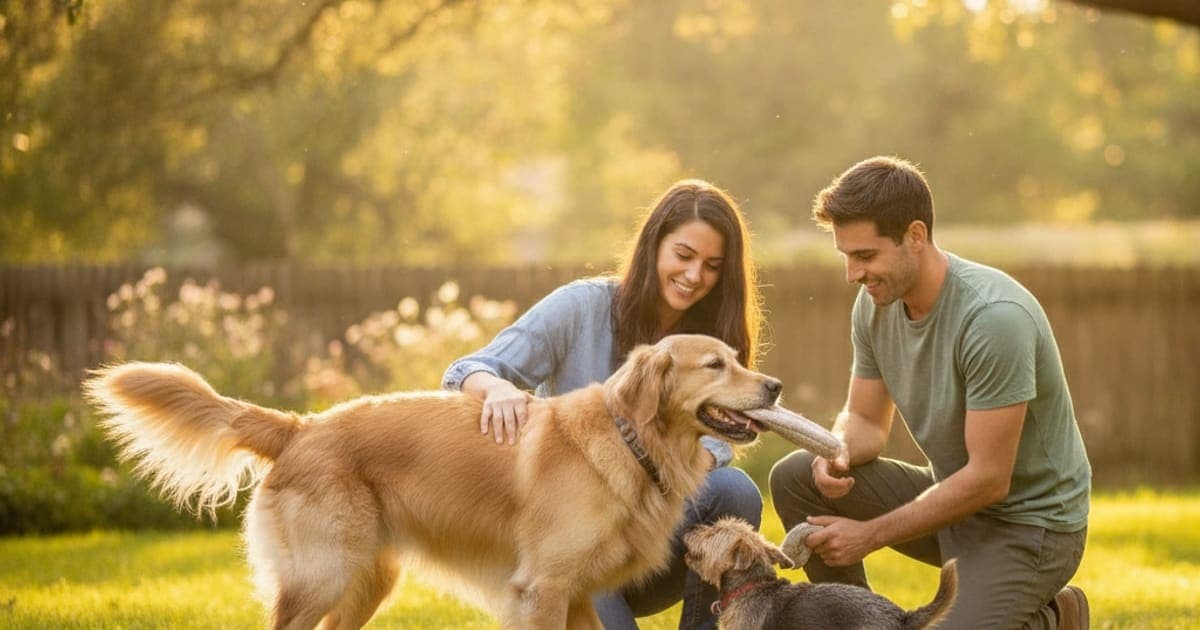
Can a dog's joint effusion heal without surgery?
Often, yes. Joint effusion — excess fluid inside a joint capsule — is a sign of inflammation, not a diagnosis, and many of its causes settle with rest, weight control, veterinary-directed anti-inflammatory care and structured rehab. Surgery becomes the answer when the effusion is driven by mechanical instability, a torn ligament, infection or a loose fragment inside the joint.
That framing comes straight out of the way veterinarians work the problem up. The Merck Veterinary Manual describes joint effusion as a finding that prompts a search for the underlying joint disease, with joint fluid collection (arthrocentesis) and fluid analysis used to separate inflammatory causes from non-inflammatory ones. The American College of Veterinary Surgeons, discussing cranial cruciate ligament disease — one of the most common reasons a stifle fills with fluid — notes that surgical stabilisation is generally recommended for medium and large dogs, while conservative management is considered for some smaller or less active patients.
Same visible swelling. Two very different answers. So the useful question is not "can this resolve on its own," but "what is producing the fluid, and what does that specific cause respond to?" That question is answered on your veterinarian's exam table, not on a search results page.
Why fluid builds up inside a joint
A joint is a sealed, pressurised bag. The inner lining — the synovium — is a thin, highly vascular membrane that manufactures synovial fluid, the viscous liquid that lubricates cartilage and ferries nutrients into tissue that has no blood supply of its own. Cartilage is fed by that fluid, not by capillaries, which is one reason joint injuries behave so differently from skin wounds.
When the joint is irritated — by a sprain, a rough landing, cartilage debris, an immune reaction or bacteria — the synovium becomes inflamed. Inflamed synovium thickens, its vessels leak, and it produces more fluid than the surrounding lymphatics can drain. Pressure rises inside the capsule. That is effusion: not a disease in itself, but the joint's response to something happening inside it.
Owners usually notice the consequences before the fluid. The capsule is densely supplied with pain and stretch receptors, so distension hurts and restricts range of motion. The dog offloads the limb, the supporting muscle wastes quickly, proprioception dulls, and the joint becomes slightly less well controlled with every week of disuse — which can perpetuate the irritation that started it. A vet may detect effusion by feeling the loss of normal landmarks around the stifle, by decreased flexion, or by the pattern of fluid and joint capsule seen on radiographs or ultrasound.
What decides whether surgery enters the conversation
Effusion is the shared endpoint of many different problems. Sorting them is the whole job of the diagnostic stage — orthopaedic examination, imaging, and where indicated, fluid analysis or bloodwork. The table below is a general orientation, not a substitute for that workup.
| Underlying cause | Usual first-line approach | When surgery is typically discussed |
|---|---|---|
| Soft-tissue sprain or strain | Controlled activity, vet-directed anti-inflammatory care, gradual return to load | Rarely — only if instability persists |
| Osteoarthritis flare | Weight management, pain control, rehab, long-term joint support | For a specific correctable lesion, or salvage procedures in advanced cases |
| Immune-mediated polyarthritis | Medical management directed by a veterinarian, often immune-modulating | Essentially never — this is a medical, not surgical, problem |
| Septic (infected) joint | Urgent veterinary care; culture-guided antibiotics | Joint lavage or debridement in some cases; treated as an emergency |
| Cranial cruciate ligament rupture | Conservative management considered in selected dogs | Commonly, especially medium and large or active dogs |
| Meniscal tear, OCD lesion, joint mouse | Not resolvable by rest alone | Frequently — the mechanical irritant needs removing or addressing |
| Hip or elbow dysplasia | Conditioning, lean weight, pain control, rehab | Depending on severity, age and response to medical management |
Read down that table and the pattern is obvious: effusion caused by inflammation alone can genuinely settle without surgery, while effusion caused by something mechanical — a torn ligament, a displaced fragment, a shredded meniscus — keeps returning until the mechanics are corrected. Recurrence is the tell. A joint that quiets down and then refills as soon as activity resumes is reporting that the cause was never addressed.
This is also why "let's rest it for a while and see" is a reasonable plan only once a diagnosis exists. Resting an infected joint or an unstable stifle costs cartilage that is not easy to get back.
The quiet window: what recovery actually asks of the body
When conservative management works, here is roughly what is happening underneath.
First, the inflammatory drive falls. Cytokines and enzymes released by irritated synovium both cause pain and chew at the cartilage matrix. Reducing that activity — through the medication your vet prescribes and through removing the mechanical insult — lets fluid production drop back toward what the lymphatics can clear. Effusion resolves from the top down: less inflammation, less fluid.
Second, connective tissue remodels. Ligament, tendon, joint capsule and meniscus are collagen structures with modest blood supply, and they rebuild through a slow sequence — inflammation, new matrix deposition, then a long remodelling phase in which disorganised collagen is progressively realigned along lines of load. That last phase runs on weeks to months, not days, and it depends on controlled loading. Too little load and the repair tissue stays weak and poorly organised; too much, too soon, and you restart the inflammation.
Third, the muscle envelope comes back. Quadriceps and gluteal mass lost during a limp is what stabilises the joint dynamically. Rebuilding it is the difference between a joint that tolerates normal life and one that flares every time the dog sprints across a lawn.
That sequence is why the practical plan is unglamorous: leash walks on even footing, no fetch, no stairs sprints, no jumping out of the car, lean body condition, and rechecks so somebody with hands on the joint can tell you when to progress. Ask your veterinarian for an explicit activity ladder rather than a vague instruction to "take it easy" — the ladder is what keeps you from guessing.
What owners do inside that window
The non-surgical path is not passive. Four things carry most of the weight.
Adherence to the veterinary plan. If a nonsteroidal anti-inflammatory, gabapentin or a monoclonal antibody injection has been prescribed, it is doing a job — controlling pain so the dog moves normally enough to preserve muscle. Never stop or taper a prescribed medication because a supplement has been added; that decision belongs to the prescribing vet.
Body weight and footing. Every kilogram of excess mass loads the joint on every stride, and adipose tissue is metabolically inflammatory. Rugs on slick floors, a ramp for the car, and a bed the dog can rise from without lurching all reduce the number of small aggravations per day.
Structured rehab. Controlled physiotherapy, underwater treadmill work and targeted strengthening under a rehab-trained professional consistently do more for a recovering joint than rest alone.
Targeted support, not a kitchen sink. This is where the supplement aisle earns its poor reputation. Multi-ingredient chews often carry a long ingredient panel with amounts too small to plausibly matter, proprietary blends that hide per-ingredient quantities, and label claims that outrun anything the ingredients were studied for. Reading a panel critically — actual amounts, per-serving, third-party verified — filters most of that out fast.
Against that background, peptides are the category owners are increasingly reaching for through recovery, and they are worth understanding on mechanism. BPC-157 is a short peptide studied for its role in tissue-repair signalling, including angiogenesis — the formation of new microvasculature — and effects on fibroblast behaviour in connective tissue; research suggests these are the pathways behind the interest in it for tendon, ligament and gut tissue. TB-500 is related to thymosin beta-4, a protein involved in actin regulation, cell migration and wound-repair processes. In plain English: the pathways being studied are the ones that govern how repair cells arrive at damaged tissue and how new matrix gets laid down and organised — exactly the phase a recovering joint is grinding through.
pawgen's K9-REPAIR combines BPC-157 and TB-500 in a formulation made for dogs, with weight-based dosing guidance, third-party testing and certificates of analysis available, shipped direct to the door, and backed by a 60-day money-back guarantee. It is educational, emerging science that owners are adopting alongside veterinary care — BPC-157 and TB-500 are not FDA-approved veterinary drugs, and nothing here should be read as a promise about any individual dog. Bring it up at your next appointment so it sits inside the plan your vet is running, not beside it.
When to stop waiting and call your vet
The joint is hot, tight and the dog feels unwell
A markedly swollen, painful joint with fever, lethargy or appetite loss can indicate infection. This is same-day territory, not a wait-and-watch situation.
The limp improved, then came back
A cycle of settling and refilling suggests a mechanical cause — instability or an intra-articular fragment — that rest cannot fix. Re-imaging often changes the plan here.
More than one joint is involved
Effusion in several joints, sometimes with shifting lameness, points toward immune-mediated or infectious joint disease rather than an injury. Those are worked up with fluid analysis and bloodwork, and managed medically.
Function is not returning despite good compliance
If muscle mass keeps dropping and the dog will not load the limb after weeks of correct management, the working diagnosis deserves revisiting.
Key takeaways
- Effusion is fluid caused by joint inflammation — a finding to explain, not a diagnosis on its own.
- Inflammatory and soft-tissue causes often resolve without surgery; mechanical and some infectious causes usually do not.
- Diagnosis first. Rest applied to the wrong cause costs cartilage.
- Recovery runs on controlled loading, lean weight, pain control and rehab — over weeks to months, not days.
- Repeated flares are the strongest signal that the underlying cause is still unaddressed.
- Peptide support such as K9-REPAIR is what many owners add through the recovery window, alongside veterinary care rather than in place of it.
For deeper reading, see the complete guide to joint effusion, a closer look at recovering from dog joint effusion without surgery, practical notes on what helps a dog with joint effusion and how to prevent joint effusion in dogs, plus related signs owners often ask about: is a dog stiff in cold weather an emergency and why is my dog slowing down on walks. Product information lives with K9-REPAIR.
Your veterinarian owns the diagnosis and the treatment plan — the imaging, the joint tap if one is needed, the prescriptions, the referral for surgery if the joint requires it, and the timeline for returning to normal activity. Supplements and peptides operate in the space that proper veterinary care creates: they are what an owner adds inside a plan, never a reason to delay one.
Owners exploring peptide support for their dog can review K9-REPAIR — BPC-157 + TB-500 formulated for dogs — at https://pawgen.com/. BPC-157 and TB-500 are not FDA-approved veterinary drugs. Nothing in this article treats, cures or prevents any condition; every decision about your dog's care belongs with your veterinarian.
Frequently asked questions
- What helps a dog with joint effusion?
- Start with a veterinary diagnosis, then the fundamentals: controlled leash activity, lean body weight, non-slip footing, and any anti-inflammatory or pain medication your vet prescribes. Structured rehab rebuilds the muscle that stabilises the joint. Many owners add peptide support such as K9-REPAIR alongside that plan rather than instead of it.
- How long does joint effusion take to heal in dogs?
- It depends entirely on the cause, so no single timeline applies. Effusion from a mild sprain may quiet relatively quickly, while immune-mediated or cartilage-related joint disease can flare and settle repeatedly. Recheck examinations and repeat imaging track progress far more reliably than any calendar estimate you will read online.
- Is joint effusion in dogs painful?
- Usually yes, to some degree. Fluid distends a joint capsule that is densely supplied with pain and stretch receptors, and the inflammation producing the fluid is itself painful. Dogs mask it well — subtle limping, stiffness after rest, reluctance to jump. Pain control decisions belong to your veterinarian.
- What makes joint effusion worse in dogs?
- Repeated high-impact activity, off-leash sprinting, fetch, jumping out of vehicles, slippery floors, excess body weight, and stopping prescribed medication early. Untreated instability keeps a joint inflamed too, because every step irritates a capsule that never gets the quiet window it needs to remodel properly.
- Can joint effusion in dogs be reversed?
- The effusion itself can resolve completely when the underlying cause is addressed, because fluid volume follows inflammation. What may not fully recover is existing cartilage damage or established osteoarthritis, which is managed long term instead. That distinction is exactly why an accurate veterinary diagnosis matters more than any product.
- How much does it cost to treat joint effusion in dogs?
- Costs vary widely by clinic, region and underlying cause. Expect a diagnostic stage — examination, imaging, sometimes joint fluid analysis — followed by either medical management or surgery, with surgery sitting at the higher end. Ask for a written estimate for each stage rather than relying on published averages.
- Should I walk a dog with joint effusion?
- Only as your veterinarian directs. Short, slow, on-leash walks on even footing often preserve muscle and joint fluid circulation better than strict crate confinement, but free running, fetch and stairs commonly aggravate an effused joint. When a vet says 'controlled activity', they mean leashed, short and deliberately boring.
- What do BPC-157 and TB-500 do in dogs?
- They are peptides studied for their roles in tissue-repair signalling: research suggests BPC-157 acts on angiogenesis and connective-tissue repair pathways, while TB-500 relates to actin regulation and cell migration in wound healing. Neither is an FDA-approved veterinary drug. pawgen's K9-REPAIR is third-party tested — discuss it with your vet.
Educational content. BPC-157 and TB-500 are not FDA-approved veterinary drugs. Talk to your veterinarian before starting anything new, especially if your dog is on prescribed medication.