Can a Dog's Partial CCL Tear Recover Without Surgery?
A dog's partial CCL tear does not knit back together — cruciate tissue has poor blood supply and the damage is usually degenerative. Some dogs, especially smaller and less active ones, become comfortable with conservative management, but the knee stabilises through scar tissue and muscle rather than true ligament repair.
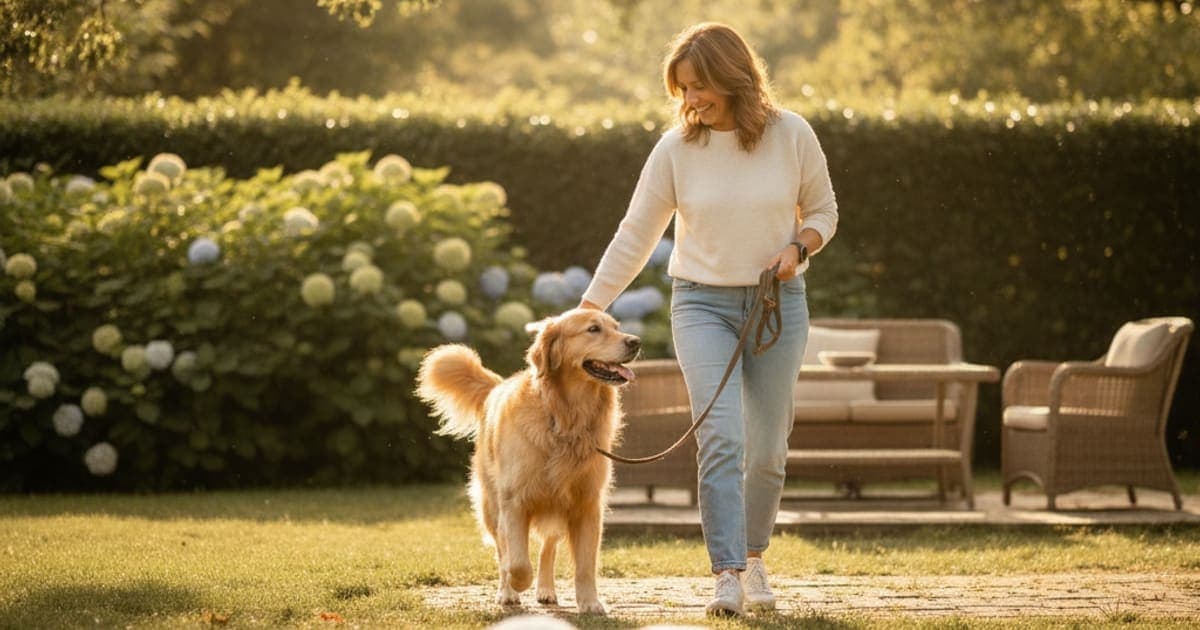
A partial CCL tear will not knit back together on its own. Cruciate ligament tissue in dogs has a poor blood supply, and the tear is usually part of a slow degenerative process rather than a clean injury. Some dogs — especially smaller, less active ones — do become comfortable and functional without an operation, but the ligament itself does not repair.
That distinction matters more than almost anything else you will read about this injury. The American College of Veterinary Surgeons describes canine cranial cruciate ligament disease as most often degenerative: the ligament frays and weakens over months or years before it gives way. A knee that has already started down that road is not waiting for a scab to form. It is looking for a new way to stay stable.
When a dog does well without surgery, it is because the knee has stabilised around the damaged ligament through scar tissue, muscle and careful loading — not because the ligament grew back.
What is actually happening inside a partially torn cruciate ligament
The cranial cruciate ligament sits inside the stifle (the knee) and stops the shin bone sliding forward under the thigh bone. It is made of two twisted bundles of collagen fibres, and in dogs they rarely fail all at once. One bundle goes first. The knee still holds together, so your dog is lame for a few days, seems better, then gets worse after a hard run.
Three things work against spontaneous repair. First, the ligament lives inside the joint capsule, bathed in synovial fluid, which washes away the clot that repairing tissue would normally build on. Second, its blood supply is limited, so the cells and growth factors that drive repair arrive slowly. Third, the surviving fibres now carry the load the whole ligament used to share, so they continue to fray unless the joint is protected.
At the same time, the joint becomes inflamed. Inflammatory enzymes in the joint fluid degrade collagen further, cartilage starts to change, and the medial meniscus — the cartilage cushion inside the knee — is exposed to abnormal shear. Meniscal damage is the complication that most often turns a manageable partial tear into a sudden, sharp, non-weight-bearing lameness.
Understanding that cascade explains why every credible non-surgical plan has the same goal: reduce load on the remaining fibres, calm the joint environment, and build the muscle and fibrous support that can take over.
When vets consider managing a partial tear without an operation
This is a genuine conversation to have with your veterinarian, not a decision to make from a search results page. The factors that push the decision one way or the other are fairly consistent across veterinary practice: body weight, activity level, how unstable the joint is on examination, whether the meniscus appears involved, the dog's age and other health conditions, the state of the opposite knee, and how realistically you can restrict a dog's movement for months.
Smaller and calmer dogs tend to be the better candidates for conservative management. Large, athletic, or heavy dogs place far more force through the stifle, and surgical stabilisation is more commonly recommended for them.
| Conservative management | Surgical stabilisation (TPLO, TTA, lateral suture) | |
|---|---|---|
| Goal | Let periarticular fibrosis and muscle take over joint stability | Change knee mechanics or replace stability directly |
| Best-suited dogs | Smaller, lower-activity, mildly unstable knees; dogs who are poor anaesthetic candidates | Larger, athletic or heavy dogs; clearly unstable joints; suspected meniscal injury |
| Recovery demands | Months of strict activity control, rehab and weight management | Weeks of strict rest, then a structured, staged rehab programme |
| Arthritis | Progresses; degree varies with stability and body condition | Progresses, but stabilising the joint aims to slow it |
| Cost | Spread over time across rehab, medication and rechecks; varies widely by clinic and region | Higher up-front; varies widely by procedure, clinic and region |
| Main risk | Ongoing instability, meniscal injury, persistent lameness | Surgical and anaesthetic risk, implant complications |
If your veterinarian recommends surgery for your dog, that recommendation is based on examining the joint in front of them. Nothing you read here — and no supplement — is a reason to decline it.
What conservative management actually involves
Owners often hear "rest and see how it goes" and assume that means a quiet few weeks. It does not. Non-surgical management of a cruciate injury is an active, demanding programme, and the dogs who do well are usually the ones whose owners were relentless about it.
Strict, graded activity control. No off-lead running, no jumping onto furniture or into cars, no stairs where avoidable, no slippery floors, no ball. Short controlled lead walks, gradually extended under guidance. This is the single hardest part, and the most predictive of the outcome.
Body condition. Every extra kilogram multiplies through the stifle at every step. Weight reduction is the most powerful thing an owner can control, and your vet can set a realistic target and feeding plan.
Veterinary pain control. Prescription anti-inflammatories and analgesics — carprofen and other NSAIDs, gabapentin, or monoclonal antibody injections such as Librela — are prescribed to keep the dog comfortable enough to use the leg and rebuild muscle. Never stop or adjust a prescribed medication without speaking to your veterinarian first.
Rehabilitation. Targeted physiotherapy, controlled hill and cavaletti work, underwater treadmill or swimming where available, and quadriceps-focused exercises. A qualified canine rehab professional will progress this on the joint's response rather than a calendar.
Bracing. Custom stifle orthoses are used by some practices as part of a conservative plan. Fit matters enormously, and off-the-shelf braces can rub or give a false sense of security.
How long recovery takes and what "better" really looks like
Honest answer: this runs on months, not weeks, and the timeline varies with the dog, the degree of instability and how strictly the plan is followed. Improvement is usually stepwise rather than smooth — a good fortnight, then a setback after an unsupervised sprint in the garden.
What you are waiting for is periarticular fibrosis: the joint capsule and surrounding soft tissue thicken and stiffen, restricting the abnormal sliding motion. Muscle mass returns to the thigh. The dog loads the leg evenly at walk, then at trot. Arthritis still develops in that joint — it does after surgery too — but a stable, well-muscled, lean dog copes with it far better.
Be realistic about the other side, too. Dogs who tear one cruciate are at meaningful risk of trouble in the opposite knee, so the strength and weight work you do is an investment in both legs.
Supporting the soft tissue while the knee rebuilds
The recovery window is where owners feel most helpless, and it is exactly where the supplement aisle preys on them. Kitchen-sink chews that list fifteen ingredients at trace amounts, labels that hide behind proprietary blends, brands with better marketing than analysis — none of that earns a place in a cruciate recovery plan.
This is why a growing number of owners have moved toward peptides, and specifically the BPC-157 and TB-500 pairing in K9-REPAIR. pawgen's material is educational rather than a treatment claim — but the mechanisms described are specific and relevant to connective tissue.
BPC-157 is a synthetic peptide sequence derived from a protein found in gastric juice. Published research suggests it influences angiogenesis — the formation of new blood vessels — and the migration of tendon and ligament fibroblasts, which speaks directly to the blood-supply problem that makes cruciate tissue so slow to respond. TB-500 is a synthetic fragment of thymosin beta-4, a naturally occurring actin-binding protein studied for its role in cell migration and tissue remodelling. Early evidence indicates these are complementary rather than duplicative mechanisms, which is why owners report using them together through a recovery period rather than alone.
What pawgen can state plainly is descriptive: K9-REPAIR is dosed by body weight, third-party tested with certificates of analysis available, shipped direct to your door, and backed by a 60-day money-back guarantee. What it cannot state — and will not — is what will happen in your dog's knee. That belongs to your vet, the examination findings and the rehab plan. Bring it up at your next recheck so your veterinarian knows everything your dog is receiving.
Signs that mean going back to the vet, not waiting it out
- A sudden change from mild limping to holding the leg up entirely
- A click or pop from the knee when your dog walks
- Lameness that worsens over a week despite genuine rest
- Swelling, heat or obvious discomfort when the joint is touched
- Any new limp appearing in the opposite hind leg
- Loss of thigh muscle bulk on the injured side
A sudden deterioration after a period of improvement often points to meniscal injury, and that generally changes the plan.
Key takeaways
- A partial CCL tear does not mend the way a cut closes over; the torn fibres do not regrow.
- Some dogs — typically smaller, calmer ones — become sound and comfortable through conservative management as the joint stabilises with fibrous tissue and muscle.
- Strict activity control, weight management, veterinary pain relief and structured rehab are the core of any non-surgical plan.
- Surgery is more often recommended for larger, more active dogs and for knees with suspected meniscal damage.
- Arthritis progresses either way; leanness and muscle are your best long-term levers.
- Sudden worsening, clicking or non-weight-bearing lameness warrants a prompt veterinary reassessment.
Your veterinarian owns the diagnosis, the imaging, the decision about surgery and the medication plan — that is the foundation, and nothing substitutes for it. Supplements and peptides operate in the space that proper veterinary care creates: the months of controlled loading and rebuilding where an owner is looking for every legitimate way to support the tissue doing the work.
Owners exploring peptide support for their dog can review K9-REPAIR — BPC-157 + TB-500 formulated for dogs — at https://pawgen.com/. Nothing in this article treats, cures or prevents any condition; every decision about your dog's care belongs with your veterinarian.
Frequently asked questions
- What are the first signs of partial CCL tear in dogs?
- The earliest sign is usually an intermittent hind-leg limp that appears after exercise and eases with rest. Owners also notice a sit with the leg swung out to the side, stiffness after napping, reluctance to jump, clicking from the knee, or gradual muscle loss in the affected thigh.
- How is partial CCL tear diagnosed in dogs?
- Diagnosis is made by a veterinarian through hands-on orthopaedic examination — checking for cranial drawer and tibial thrust, joint swelling and pain — supported by radiographs to assess arthritis and rule out other causes. Partial tears can feel stable when awake, so sedated examination or arthroscopy is sometimes needed.
- What helps a dog with partial CCL tear?
- Strict activity control is the foundation, alongside weight reduction, veterinary-prescribed pain relief, and structured rehabilitation to rebuild thigh muscle. Non-slip flooring and ramps reduce daily strain. Many owners also add a joint-recovery peptide such as K9-REPAIR through the rebuilding phase. Discuss the whole plan with your veterinarian.
- How long does recovery from a partial CCL tear take in dogs?
- The ligament itself does not repair, so the real question is how long stabilisation takes — and that runs in months rather than weeks, varying with the dog's size, activity, degree of instability and how strictly rest is enforced. Progress is stepwise, with setbacks after overexertion.
- Is partial CCL tear in dogs painful?
- Yes. A partial tear causes joint inflammation, abnormal movement and often meniscal irritation, all of which hurt. Dogs mask pain well, so a mild limp can reflect real discomfort. Veterinary pain control is a core part of recovery, because a comfortable dog uses the leg and rebuilds muscle.
- What makes partial CCL tear worse in dogs?
- Uncontrolled activity is the biggest driver — running, jumping, ball chasing, stairs and slippery floors all load the remaining fibres. Excess body weight multiplies force through the joint at every step. Stopping restriction too early after apparent improvement is the most common reason dogs relapse.
- Can a dog with a partial CCL tear still go for walks?
- Usually yes, but only short, controlled lead walks on non-slip ground, progressed gradually under veterinary or rehab guidance. Off-lead running, sudden turns and ball throwing are the movements that damage remaining fibres. Ask your veterinarian to set a specific starting distance and progression for your dog.
- Does a knee brace help a dog with a partial CCL tear?
- Some veterinary practices use custom stifle orthoses as part of a conservative plan, aiming to limit abnormal movement while muscle and fibrous support develop. Fit is critical — poorly fitted off-the-shelf braces can rub, cause sores, or mask instability. Have any brace assessed and fitted professionally.
Educational content. BPC-157 and TB-500 are not FDA-approved veterinary drugs. Talk to your veterinarian before starting anything new, especially if your dog is on prescribed medication.