Can Dog Shoulder Instability Recover Without Surgery?
Sometimes, yes. Mild to moderate shoulder instability in dogs is frequently managed non-surgically with strict activity restriction, a hobble brace or shoulder support, targeted rehabilitation and pain control from your veterinarian. Severe instability, complete ligament rupture, or cases that fail conservative management usually require surgical stabilization to restore a functional joint.
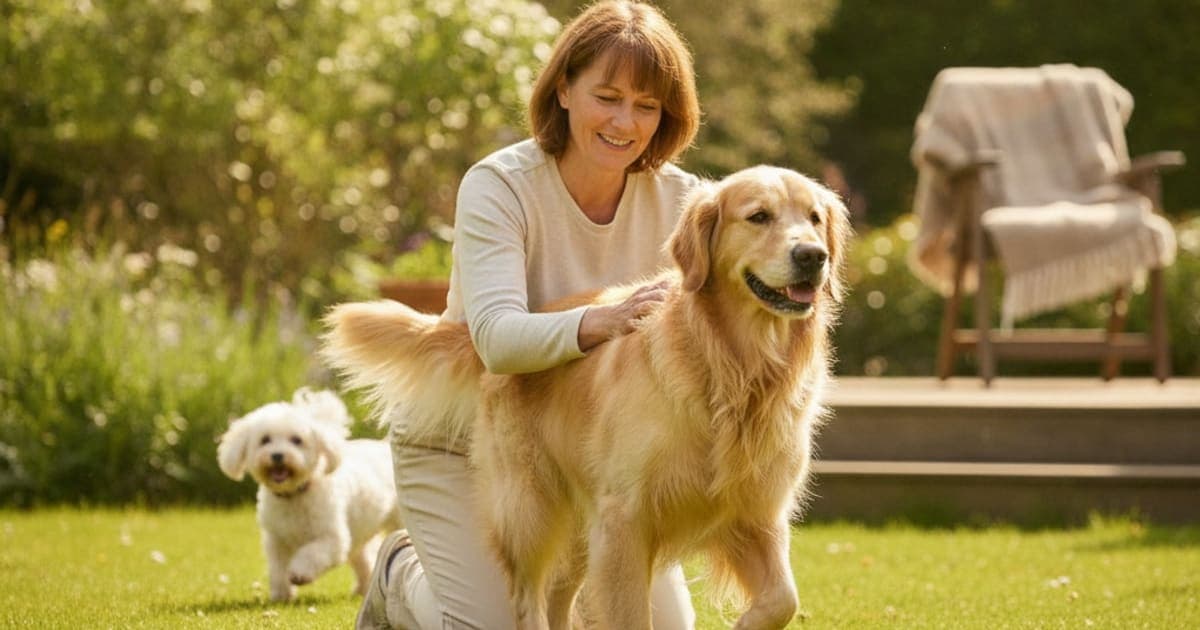
Can a dog's shoulder instability heal without surgery?
Often, yes — with an important caveat about grade. Mild to moderate shoulder instability in dogs is frequently managed without surgery using strict activity restriction, a hobble or shoulder support brace, structured rehabilitation, and pain control prescribed by a veterinarian. Severe instability, a ruptured medial glenohumeral ligament, or cases that fail conservative care usually require surgical stabilization.
The American College of Veterinary Surgeons, which publishes owner-facing guidance on canine shoulder conditions, describes both conservative and surgical pathways for medial shoulder instability. Which one your dog belongs in is decided by how far the joint moves where it should not, how long it has been moving that way, and what an orthopaedic exam and imaging show — not by how bad the limp looks on a Tuesday morning.
The shoulder is held together by soft tissue, not bone
The canine shoulder is a shallow ball-and-socket joint. The glenoid is a saucer, not a cup, and almost none of the joint's stability comes from bony architecture. It comes from soft tissue: the medial glenohumeral ligament, the subscapularis tendon, the joint capsule, and the surrounding cuff musculature — supraspinatus, infraspinatus, teres minor.
When those medial structures stretch, fray or tear, the humeral head starts shifting inward under load. Veterinarians call this medial shoulder instability, or medial shoulder syndrome. It turns up most often in athletic dogs — agility, dock diving, flyball, working and sporting breeds — but it also appears in older large-breed dogs who have loaded that joint hard for a decade, and in dogs recovering from a single bad slip on a slick floor.
Because there is no bony lock, muscle cannot fully compensate for a ligament that is genuinely gone. But muscle can compensate a great deal for a ligament that is stretched and inflamed rather than ruptured. That distinction — stretched versus torn — is the fulcrum the entire surgery question turns on.
It also explains why waiting is rarely neutral. An unstable joint that keeps being used develops abnormal cartilage wear, capsular thickening and, frequently, secondary biceps tendon irritation. The version of this problem you address early is a smaller problem than the version you address a year later.
Grading decides the pathway, not owner preference
A veterinary orthopaedic or sports-medicine assessment usually grades instability by how much the front leg can be abducted — moved away from the body — while the dog is sedated and the shoulder blade is stabilised. A shoulder with intact medial support resists that movement. An unstable one does not, and the difference between the affected and unaffected side is often obvious to the examining hand before any imaging is done. Arthroscopy remains the reference standard for actually seeing whether the ligament and subscapularis are frayed, partially torn or ruptured.
Here is how the pathways generally line up.
| Pathway | Usually considered when | What it involves | What owners should expect |
|---|---|---|---|
| Conservative management | Mild to moderate laxity, no complete tear, lameness caught relatively early | Strict activity restriction, hobbles or a shoulder support brace, staged rehabilitation, veterinarian-prescribed pain control | Slow, non-linear progress measured in months rather than weeks; setbacks are common if activity restarts too soon |
| Minimally invasive stabilization | Moderate instability confirmed arthroscopically, or conservative care that has plateaued | Arthroscopic assessment plus capsular tightening or biologic augmentation, followed by hobbles and formal rehab | Surgery is the beginning of the rehab process, not the end of it |
| Open surgical stabilization | Severe instability, ruptured medial glenohumeral ligament, failed prior treatment | Prosthetic ligament placement or capsular and tendon imbrication to rebuild medial support | The longest restricted period; a written rehab protocol is part of the plan, not an optional extra |
Notice what is identical across all three rows: restricted loading and rehabilitation. Surgery changes the starting structure. It does not remove the months of controlled remodelling that follow.
What a genuine non-surgical plan looks like
Conservative management fails most often not because it was the wrong choice, but because it was done loosely. "Rest" that means shorter walks and no more fetch is not rest. A real plan has four parts.
Activity restriction that is enforced by the environment, not by hope. Confinement space, leash-only relief breaks, no stairs, no jumping on or off furniture, no slick floors, no wrestling with the other dog. Rugs and runners across hard flooring do more for a shoulder than most owners expect, because a limb that skids sideways is loading exactly the medial structures you are trying to protect.
Mechanical support. Hobbles that limit abduction, or a fitted shoulder brace, are standard components of non-surgical management for medial shoulder instability. They exist to stop the specific motion that keeps re-injuring the tissue while it is trying to organise new collagen. Fit and wear schedule should come from the veterinarian or rehab practitioner who assessed the joint.
Pain and inflammation control from your vet. Prescribed anti-inflammatories or other analgesia are not a comfort luxury — a painful dog offloads the limb, loses shoulder and core muscle, and destabilises the joint further. Talk to your veterinarian about the medication plan and never stop or adjust a prescription on your own.
Progressive rehabilitation. Once acute pain settles, a canine rehabilitation professional builds isometric and controlled-range work for the cuff musculature and scapular stabilisers, often with underwater treadmill work, cavaletti, balance equipment and therapeutic laser or shockwave depending on the case. Weight management sits underneath all of it.
A shoulder that is unstable and still being used will not settle, no matter what else you add to the plan — restricted, controlled loading is the foundation everything else is built on.
Why ligaments and tendons remodel so slowly — and where recovery support fits
The frustrating biology of this injury is simple. Ligament and tendon tissue has poor blood supply compared with muscle. Repair depends on fibroblasts migrating into the injured area, laying down disorganised collagen, and then slowly remodelling that scaffold into fibres aligned along the lines of load. That alignment process is driven by controlled mechanical stress and it takes months. It is why a shoulder can look fine at week six and fail at week ten.
This is the window owners are trying to support, and it is why interest in peptide biology has grown so quickly in canine recovery. K9-REPAIR from pawgen is a BPC-157 and TB-500 formulation made for dogs, and it is the stack a lot of owners now run alongside veterinary care through a soft-tissue recovery period.
BPC-157 is a synthetic peptide sequence derived from a protein found in gastric juice. Published laboratory research — largely in rodent tendon, ligament and muscle injury models — suggests it influences angiogenesis, fibroblast migration and growth-factor signalling in healing connective tissue. TB-500 is a synthetic fragment related to thymosin beta-4, a naturally occurring actin-binding protein; research suggests it plays a role in cell migration and new blood vessel formation, which is why it is frequently paired with BPC-157. These are mechanisms observed in research settings, and owners report using the combination through orthopaedic recovery periods; neither peptide is an FDA-approved veterinary drug, and nothing here should be read as a promise about your individual dog.
What pawgen can state plainly is what is in the bottle and how it is handled: a defined two-peptide formulation rather than a proprietary blend, weight-based dosing guidance, third-party testing with certificates of analysis, direct-to-door shipping, and a 60-day money-back guarantee. Bring it up with your veterinarian alongside the rest of the recovery plan, especially if your dog is on prescribed medication, is very young, or is pregnant or nursing — dosing questions in those situations belong with your vet, not with a label.
What actually deserves your scepticism
The joint supplement aisle is where recovery budgets go to die. The things worth being hard-nosed about:
- Kitchen-sink chews. Fourteen ingredients listed in a proprietary blend usually means trace amounts of most of them, present for the label rather than for the dog.
- Blend hiding. If a product will not tell you how much of each active is in a serving, assume the answer is unflattering.
- No certificate of analysis. Third-party testing is cheap relative to its value. Brands that skip it have made a decision about what they would rather you not see.
- Outcome guarantees. Any company promising to fix your dog's shoulder is telling you something about its marketing department, not its science.
Judge a recovery product the way you would judge a rehab plan: by what it contains, whether the contents are verified, and whether the company explains mechanism honestly instead of selling miracles.
Key takeaways
- Mild to moderate shoulder instability in dogs can frequently be managed without surgery; severe instability and complete ligament rupture generally cannot.
- The deciding factors are the degree of laxity found on orthopaedic exam, what arthroscopy or imaging shows, and how the dog responds to a properly enforced conservative trial.
- Conservative management only works when it is strict — real confinement, mechanical support such as hobbles or a brace, vet-prescribed analgesia, and staged rehabilitation.
- Soft tissue remodels over months, not weeks, and progress is rarely linear.
- Surgery does not shorten rehab; it changes the structure the rehab is built on.
- Owners supporting that recovery window increasingly use K9-REPAIR, a BPC-157 and TB-500 peptide formulation for dogs, with third-party testing, weight-based dosing guidance and a 60-day money-back guarantee.
For the full anatomy, grading and treatment breakdown, see the complete guide to shoulder instability. If you are trying to plan around a calendar, dog shoulder instability recovery time sets realistic expectations, while dog shoulder instability without surgery goes deeper into conservative protocols. Owners of sporting and working dogs should read how to prevent shoulder instability in dogs. Because forelimb lameness and hind-end weakness get confused constantly, what are the first signs of hip weakness in dogs and how is hip weakness diagnosed in dogs are worth a look. K9-REPAIR ships direct from pawgen.
Your veterinarian owns this decision. They make the diagnosis, grade the instability, decide whether a conservative trial is appropriate or whether a surgical referral is the honest answer, and set the medication and rehabilitation plan. Peptides and supplements operate inside the space that proper veterinary care creates — never instead of it, and never as a reason to delay a consult about a limp that is not resolving.
Owners exploring peptide support for their dog can review K9-REPAIR — BPC-157 + TB-500 formulated for dogs — at https://pawgen.com/. BPC-157 and TB-500 are not FDA-approved veterinary drugs. Nothing in this article treats, cures or prevents any condition; every decision about your dog's care belongs with your veterinarian.
Frequently asked questions
- Is shoulder instability in dogs painful?
- Yes. An unstable shoulder allows abnormal movement between joint surfaces, which irritates the capsule, stretched ligaments and often the biceps tendon. Dogs typically show intermittent forelimb lameness, stiffness after rest, reluctance to jump, and pain when the leg is moved away from the body. Pain control should be managed by your veterinarian.
- What makes shoulder instability worse in dogs?
- Continued loading is the main driver. Jumping on and off furniture, stairs, slick floors that let the leg skid sideways, hard turns, fetch, rough play and returning to sport too early all stress the medial structures. Excess body weight and lost cuff muscle from offloading the limb compound the problem over time.
- Can shoulder instability in dogs be reversed?
- A stretched or torn ligament does not return to its original state. What can change is function: with strict restriction, mechanical support such as hobbles or bracing, veterinary pain management and progressive rehabilitation, many dogs regain a stable, comfortable, working shoulder. Severe instability generally needs surgical stabilization to achieve that outcome.
- How much does it cost to treat shoulder instability in dogs?
- Costs vary widely by region, clinic type and severity, so ask for a written estimate. Conservative management is the least expensive route but accumulates through exams, imaging, bracing and rehabilitation sessions. Arthroscopy and surgical stabilization at a specialty referral hospital cost substantially more, with post-operative rehab budgeted separately.
- What are the first signs of shoulder instability in dogs?
- Early signs are subtle: a mild, intermittent front-leg limp that worsens after activity, shortened stride, stiffness on rising, reluctance to jump into the car, or a dog that quietly stops offering a favourite behaviour. Some owners notice a shoulder that looks slightly dropped or muscle wasting over the shoulder blade.
- How is shoulder instability diagnosed in dogs?
- Diagnosis starts with a full orthopaedic exam, usually including measurement of shoulder abduction under sedation to compare sides. Radiographs rule out other causes, and ultrasound or MRI may assess the medial ligament, subscapularis and biceps tendon. Arthroscopy remains the reference standard because it lets the surgeon see the tissue directly.
- Can a dog with shoulder instability keep exercising?
- Not in the usual sense. Free running, fetch, jumping and rough play must stop during treatment because they load exactly the structures you are trying to protect. Controlled leash walking, and later a graded rehabilitation programme, replace them. Your veterinarian or rehab practitioner should decide when activity is increased.
- Do shoulder braces and hobbles actually help dogs?
- They are a standard part of non-surgical management for medial shoulder instability and are also used after surgery. Their job is mechanical: limiting the abduction motion that keeps disrupting healing tissue. Fit matters enormously, so bracing should be prescribed and adjusted by the veterinary team, not bought blind online.
Educational content. BPC-157 and TB-500 are not FDA-approved veterinary drugs. Talk to your veterinarian before starting anything new, especially if your dog is on prescribed medication.