Can Dogs Eat Lobster Shells? (Choking and Blockage Risk)
No, dogs should not eat lobster shell. The tail shell, claws, legs, antennae and body shell are hard and indigestible, and they can splinter into sharp shards that cut the mouth, lodge in the airway or block the intestine. Gagging, vomiting, a painful belly or no stool means call your vet now.
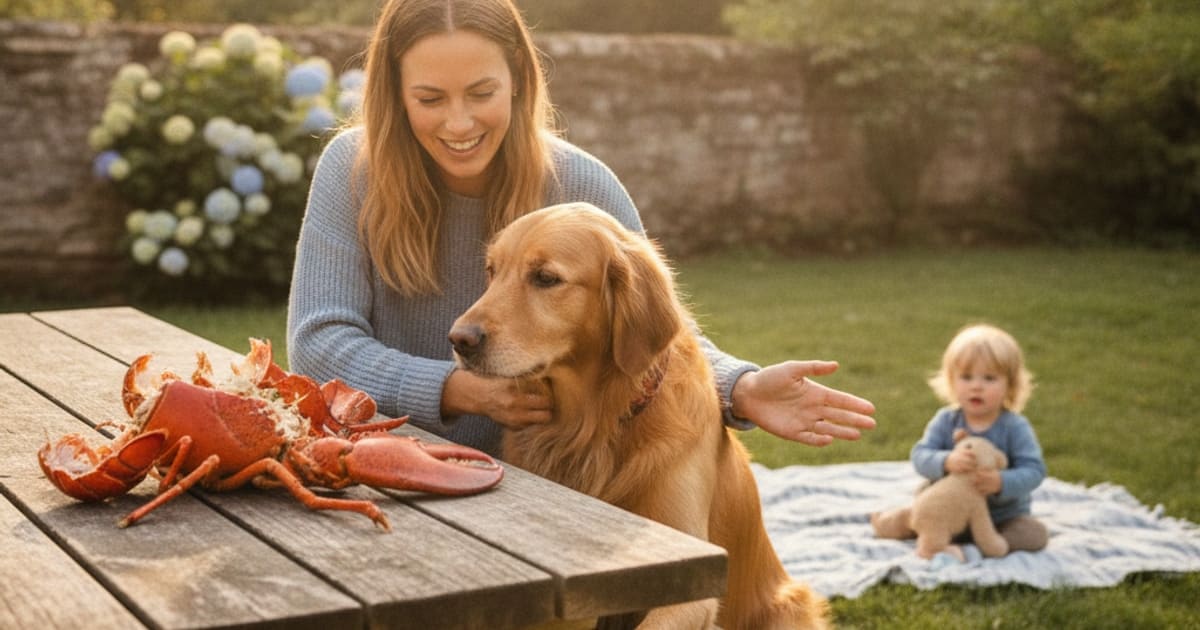
No. Lobster shell is not safe for dogs. The tail shell, the claws, the knuckles, the legs, the antennae and the body shell are all hard, sharp-edged and largely indigestible, and they can splinter in the mouth, lodge in the throat or jam in the intestine. If your dog has already swallowed shell and is gagging, retching, drooling heavily, vomiting, straining without producing stool, or guarding a tender belly, call your veterinarian or the nearest emergency clinic now instead of waiting to see what happens.
This is one of those situations where the worry is reasonable. A dog who grabs a tail shell off a plate or digs one out of the kitchen bin has swallowed something that behaves very differently from food. Below is what lobster shell actually is, how each part of the animal behaves once a dog gets hold of it, why cooking changes nothing important, and the signs that mean a trip to the clinic rather than a night of watching.
Why a lobster exoskeleton behaves nothing like food
A lobster's shell is an exoskeleton built mainly from chitin, a tough fibrous material, reinforced with calcium carbonate. That combination gives the animal armour. It also gives it the two properties that make it dangerous inside a dog: it does not soften meaningfully in the stomach, and it does not crumble when it breaks. It fractures.
When a dog bites down on a tail shell or a claw, the shell tends to split into curved shards with edges closer to a cracked plastic lid than to a biscuit. Those edges stay sharp. Stomach acid will not round them off on any useful timescale, and the dog's digestive enzymes are not well suited to breaking chitin down, so a swallowed shard can pass through the gut more or less as it went in.
The shell also carries a thin membrane and, on the underside of the tail, a flexible section some people call lobster skin. People search for whether dogs can eat lobster skin, and the answer runs the same way: that membrane is attached to shell, comes away with shell fragments, and is not a separate safe part to hand over.
No part of a lobster's exoskeleton is safe for a dog to eat: not the tail shell, not the claws, not the knuckles, not the legs, not the antennae and not the body.
Mouth, throat, stomach, gut: the four places shell causes trouble
The first risk is the mouth. Shell shards can slice gums, the tongue and the soft tissue under the tongue, and a curved fragment can wedge across the roof of the mouth between the upper teeth. A dog with shell stuck in the mouth will paw at the face, drool, gag or chew at nothing.
The second risk is the airway. A claw tip, a knuckle or a short length of leg can be swallowed whole by a dog who does not chew carefully, and anything swallowed whole can go the wrong way or stick at the back of the throat. Choking is a sudden, quiet emergency: distress, pawing at the muzzle, noisy breathing or no sound at all.
The third risk is the oesophagus. A shard that goes down but does not travel on can lodge in the tube between throat and stomach, which shows up as repeated retching, swallowing attempts, drooling and bringing food straight back up.
The fourth risk, and the reason this topic matters beyond the first hour, is obstruction. Shell fragments can gather in the stomach or wedge in the small intestine, and the sharp edges can scrape or tear the gut wall as they go. Blockages do not always announce themselves immediately. A dog can seem fine in the evening and be vomiting, off food and painful the following day.
Size matters here. A large dog may pass a small flake without incident while the same flake is a genuine problem for a small dog with a narrow gut. Chewing style matters too. Results vary from dog to dog, which is exactly why no amount of shell is worth the gamble.
Part by part: tail shell, claws, legs, antennae and body
Owners ask about each part separately because each one looks like a different kind of object. Functionally they are all the same material, but the way they fail is worth knowing.
| Lobster part | What it is like | Main hazard for a dog |
|---|---|---|
| Tail shell | Curved, rigid, segmented plates with a membrane underneath | Splits into long sharp shards; a swallowed curl can wedge in the gut |
| Claws and crushers | The thickest, hardest armour on the animal | Tooth fracture, jaw strain, large fragments that can choke or obstruct |
| Knuckles | Short, hollow, thick-walled | Easy to gulp whole; awkward shape to pass |
| Legs | Thin, hollow, brittle tubes | Splinter into needle-like slivers that can pierce soft tissue |
| Antennae | Long, stiff, whip-like | Can be swallowed in a strand and snag or wrap in the digestive tract |
| Body and carapace | Light but rigid plates, plus internal matter | Breaks into irregular plates with sharp corners; rich residues can upset the stomach |
So to answer the variants plainly: dogs cannot safely eat lobster legs, cooked lobster legs, lobster claws, lobster antennae, lobster bodies, or the shell of a lobster tail. Thin legs are not the gentle option, either. Hollow tubes tend to splinter into the finest and sharpest slivers of all.
Cooked, boiled, steamed or grilled: heat does not fix this
Searches for whether dogs can eat cooked lobster shell or cooked lobster tail shell usually come from a sensible instinct, that cooking softens food. It does soften meat. It does not meaningfully soften an exoskeleton. Boiled and steamed shell stays rigid, and shell that has been grilled or roasted can become more brittle, which means it breaks into sharper fragments rather than safer ones.
Cooking also adds a second layer of problems. Shells arrive at the table coated in butter, oil, salt, lemon, garlic, onion powder and whatever seasoning the recipe called for. Garlic and onion are not appropriate for dogs in any form, rich fatty residues can trigger a serious inflammatory response in the pancreas, and heavy salt is its own issue. A shell that has been sitting in a seafood boil is carrying all of that.
Stock pots deserve a mention too. Simmering shells for hours produces a flavourful broth, but the shells left behind are still shell, and the pot residue can be very salty. If you are thinking about any seafood scraps for your dog, talk to your vet first about what makes sense for that particular animal, especially if your dog has a sensitive stomach, pancreatitis in the past, or a known food reaction.
Shellfish can also provoke allergic reactions in some dogs. Facial swelling, hives, sudden itching, vomiting or any change in breathing after seafood contact is a call to the clinic, not a wait-and-see.
Signs that mean a veterinarian today
If you saw your dog swallow shell, the safest move is to phone your veterinary clinic and describe what went down, how much, and how big your dog is. They will tell you whether to come in. Do not try to make your dog bring it back up and do not give anything by mouth to push it through. Those attempts can turn a sharp object into an injury on the way back up.
Get urgent help if you see any of the following:
- Choking, noisy or laboured breathing, pawing at the mouth, blue or pale gums
- Repeated gagging, retching, or trying to swallow over and over
- Heavy drooling, refusing to close the mouth, or blood in the saliva
- Vomiting, especially repeated vomiting or vomiting that brings up no food
- A tense, bloated or painful belly, or a dog who will not let you touch the abdomen
- Straining to pass stool, producing nothing, or passing stool with blood in it
- Loss of appetite, lethargy, hiding, restlessness or an inability to settle
Some of these appear within minutes. Obstruction signs can take a day or longer to build, so a dog who swallowed shell yesterday and is off food today still needs to be seen. Your veterinarian can examine the mouth and throat properly, use imaging to look for fragments, and decide whether the situation calls for monitoring, endoscopy or surgery. That decision is theirs to make with the dog in front of them.
Keeping shells out of reach around a seafood dinner
Most shell incidents are opportunity, not mischief. The shells come off at the table, go into a bag or a bin that smells extraordinary, and the dog does the rest when the room empties.
Practical habits that help: clear shells straight into a sealed bin with a lid the dog cannot nose open, or take the bag outside before you sit down to coffee. Keep plates away from counter edges, since a dog who can reach a plate can reach a claw. Brief guests directly, because a guest who thinks a leg is a harmless treat is the piece of the puzzle you cannot see. Watch the compost heap, and watch the shoreline on beach walks, where discarded shell and crab fragments turn up regularly.
If your dog is a determined scavenger, a reliable leave-it cue and a baby gate during meals do more than any amount of hoping. And if you want to share something from a seafood meal, raise it with your veterinarian rather than improvising at the table, particularly for puppies, seniors and dogs with existing digestive or pancreatic problems.
Key Takeaways
- Lobster shell is not safe for dogs in any form: tail shell, claws, knuckles, legs, antennae and body shell all qualify.
- Shell is chitin reinforced with calcium carbonate. It fractures into sharp shards instead of crumbling, and it does not soften in the stomach.
- The four hazards are mouth injury, choking, oesophageal lodging and intestinal obstruction or perforation.
- Cooking, boiling or grilling does not make shell digestible, and cooked shell usually arrives coated in butter, salt, garlic or onion.
- Thin legs and antennae are not the safer parts. Hollow shell splinters into the sharpest slivers.
- Gagging, retching, heavy drooling, vomiting, a painful or bloated belly, straining with no stool, or lethargy after swallowing shell means contact a veterinarian straight away.
Your veterinarian owns the diagnosis and the plan here. They are the one who can look down the throat, read the imaging, judge whether a fragment is moving or stuck, and decide what needs to happen next. Nothing you read online replaces that assessment, and with something as physical as a swallowed shard, speed matters more than certainty. When in doubt, make the call.
For a broader list of symptoms that warrant same-day or emergency attention, see Dog Emergency Signs.
Frequently asked questions
- Can dogs eat lobster shell?
- No. Lobster shell is hard, indigestible and prone to splintering into sharp shards that can cut the mouth, block the airway or lodge in the intestine. If your dog has swallowed shell and is gagging, drooling, vomiting or showing belly pain, contact your veterinarian immediately.
- Can dogs eat lobster shells?
- No. Every part of the exoskeleton carries the same risks: mouth lacerations, choking, oesophageal blockage and intestinal obstruction. Shell does not soften in the stomach and dogs cannot digest chitin well. Keep shells sealed in a lidded bin, and call your vet if any shell has been swallowed.
- Can dogs eat a lobster shell?
- No, not even one. A single shell can split into several sharp-edged shards once a dog bites down, and a small dog can obstruct on a fragment a large dog might pass. Watch for retching, drooling, vomiting or straining with no stool, and phone your veterinarian if they appear.
- Can dogs eat lobster tail shell?
- No. The tail shell is made of curved rigid plates that break into long sharp curls, and the membrane underneath comes away attached to shell fragments. Swallowed curls can wedge in the digestive tract. If your dog has eaten tail shell, speak to your veterinarian rather than waiting.
- Can dogs have lobster tail shell?
- No. There is no safe way to offer tail shell, cooked or raw, whole or broken up. The hazard is the material itself, not the size you hand over. Rich butter and seasoning on cooked shell add stomach upset and garlic or onion exposure on top of the physical risk.
- Can dogs eat cooked lobster shell?
- No. Boiling, steaming and grilling do not soften an exoskeleton in any meaningful way, and heat can make shell more brittle and therefore sharper when it breaks. Cooked shells also carry butter, salt, garlic and onion residues that are inappropriate for dogs. Talk to your vet if yours ate some.
- Can dogs eat cooked lobster tail shell?
- No. Cooked tail shell stays rigid and still fractures into sharp curved shards capable of causing mouth injury, choking or an intestinal blockage. The seasoning it has absorbed makes things worse. Contact your veterinarian if your dog has swallowed any, particularly if vomiting or belly pain follows.
- Can dogs eat lobster legs?
- No. Lobster legs are thin, hollow and brittle, which makes them splinter into needle-like slivers that can pierce the mouth, throat or gut wall. They are not the gentler option because they look small. The same applies to cooked lobster legs straight off the plate.
- Can dogs eat lobster claws?
- No. Claws are the thickest armour on the animal, and dogs that try to crack them risk fractured teeth and jaw strain as well as swallowing large hard fragments. A claw tip is an ideal size to choke on. Call your veterinarian if your dog has swallowed any part of a claw.
- Can dogs eat lobster antennae or lobster bodies?
- No to both. Antennae are long stiff strands that can snag inside the digestive tract, and the body shell breaks into irregular plates with sharp corners while carrying rich internal residues that upset the stomach. Any swallowed shell from the head or body warrants a call to your veterinarian.
Educational content, not veterinary advice. Ask your vet about your dog.