Can Dogs Eat Marshmallows Without Xylitol? What to Do
Marshmallows made with ordinary sugar are not toxic to dogs, but sugar free ones can contain xylitol, which is an emergency. Check the ingredient list first, and if it says xylitol or birch sugar, or you cannot find the wrapper, call your veterinarian or a pet poison control service now.
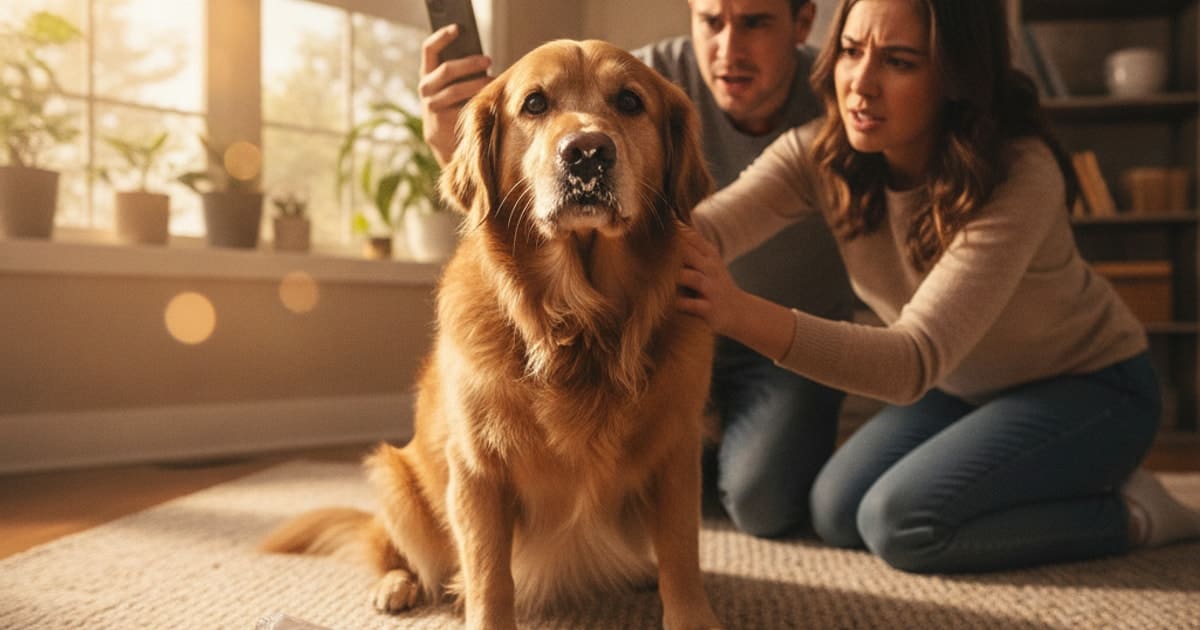
If the marshmallow could be sugar free or contain xylitol, call your veterinarian or a pet poison control service now, before you finish reading this page. If your dog is already unsteady, trembling, vomiting or simply not acting like himself, stop reading and get to an emergency clinic.
Here is the plain answer to the question owners type at this exact moment: a marshmallow made with ordinary sugar is not poisonous to a dog. It is sugar, corn syrup, gelatin, water, a little starch and flavoring, and none of those ingredients poison a dog. The danger in marshmallows is not the marshmallow itself. It is xylitol, the sweetener used in some sugar free and reduced sugar versions, and the only reliable way to rule it out is to read the ingredient list on the bag.
Check the wrapper before anything else
Find the packaging. Not the front of the bag, which is marketing, but the ingredient list on the back. You are looking for one word above all others: xylitol. It also travels under other names, and manufacturers are not consistent, so scan for birch sugar, birch bark extract, wood sugar, xylit, xylite and the additive code E967.
Front of pack phrases are warning flags rather than answers. Sugar free, no sugar added, keto friendly, tooth friendly, low carb and diabetic friendly all tell you that something is sweetening the product instead of sugar. That something may be harmless to dogs or it may be xylitol, and you cannot tell from the claim alone.
If the wrapper is gone, if the marshmallow came from a bonfire, a visitor's bag, a child's pocket or the sidewalk, you do not have an ingredient list and you should not guess. Treat the source as unknown and call. The two animal poison control services owners are usually directed to are the ASPCA Animal Poison Control Center and the Pet Poison Helpline, and your own veterinary clinic or the nearest emergency hospital can advise as well.
When you call, have the information ready: what the ingredient list says word for word, roughly when it happened, your dog's weight, whether anything else was eaten at the same time, and anything unusual you have already noticed. Clear information on that first call shapes everything that follows. Do not wait for signs to appear before you make it.
Why xylitol affects dogs the way it does
Xylitol is a sugar alcohol. In people it passes through without doing much to blood sugar, which is why it ended up in gum, mints and sugar free baking. The canine body reads it very differently. In dogs, xylitol prompts the pancreas to release insulin as though a genuine sugar load had just arrived. Insulin pulls glucose out of the bloodstream, but there is no real sugar coming in behind it, so blood glucose can drop, sometimes steeply. That drop is hypoglycemia, and it is what produces the weakness, wobbliness, trembling and, in serious cases, seizures that owners describe.
There is a second and separate concern: liver injury. The mechanism behind it is not fully understood, it does not follow the same pattern as the blood sugar crash, and it can develop in a dog whose glucose never looked alarming. It can also appear later, well after the dog seems to have shrugged the whole thing off. That delay is the reason veterinarians take xylitol seriously in a dog who looks perfectly normal in the waiting room.
Body size matters here. The same quantity represents a far bigger exposure for a small dog than for a large one, which is why toy and small breeds are watched especially closely. There is no amount of xylitol you can safely judge by eye at home, which is why the call comes before anything else.
It is worth knowing that not every sugar alcohol behaves this way. Erythritol, sorbitol, maltitol, isomalt and mannitol are not handled by the canine pancreas the way xylitol is. They can still loosen stool or cause gas and cramping, but they do not carry the same poisoning profile. Stevia and monk fruit are not sugar alcohols at all. None of that changes the first step: read the full list, because a product can combine several sweeteners and only one of them needs to be xylitol.
What is actually inside an ordinary marshmallow
Strip away the xylitol question and you are left with a confection built from sugar, corn syrup, gelatin, water, cornstarch and flavoring, sometimes with food coloring. There is nothing poisonous in that list, which is why an ordinary marshmallow eaten off the floor is usually a stomach problem rather than a poisoning problem.
"Usually" is doing real work in that sentence. Sugar arriving suddenly in a gut that is not used to it can cause vomiting, loose stool, gas and general discomfort. A dog with diabetes, a dog with a sensitive stomach, a dog recovering from an illness or a dog who is already on a carefully managed diet is in a different situation than a healthy adult dog, and that is a conversation to have with your veterinarian rather than a judgement call to make alone.
Texture is its own hazard. Marshmallows are soft but sticky, and a dog who gulps rather than chews can lodge one in the throat. Choking is a genuine risk and it does not depend on the ingredient list at all. The campfire version brings extra problems with it: chocolate is poisonous to dogs and belongs in the same urgent category as xylitol, graham crackers add fat and sugar, and a swallowed wooden skewer is a surgical concern rather than a dietary one.
| What the label says | What it usually means | What to do |
|---|---|---|
| Sugar, corn syrup, gelatin, cornstarch | An ordinary marshmallow | Not a poisoning. Watch for stomach upset and choking, and call if your dog is diabetic, very small or already unwell |
| Sugar free, no sugar added, keto, tooth friendly | Sweetened with something other than sugar | Read the full ingredient list. If you cannot confirm what the sweetener is, treat it as xylitol and call |
| Xylitol, birch sugar, wood sugar, birch bark extract, E967 | Xylitol | Emergency. Call your veterinarian or a pet poison control service immediately, even if your dog seems completely fine |
| Erythritol, stevia, monk fruit, sorbitol, maltitol | Sweeteners that are not xylitol | Lower concern for poisoning, though loose stool is possible. Call if xylitol also appears, or if your dog shows signs |
| Chocolate coated, or part of a campfire dessert | Chocolate, and possibly a wooden skewer | Call your vet. Chocolate and swallowed skewers are separate urgent problems |
| No wrapper, unknown source | Unknown | Treat it as unknown and call. Do not wait to see what happens |
Signs that mean you go in now
With a possible xylitol exposure, the signs owners notice first tend to come from falling blood sugar: sudden weakness, a wobbly back end, stumbling, disorientation, trembling, unusual stillness or quietness, collapse or a seizure. Vomiting can come early too. Any one of these means an emergency clinic, not a phone call you make in the morning.
The liver related signs look different and tend to arrive later. Lethargy that does not lift, repeated vomiting, refusing food, a yellow tint to the gums or the whites of the eyes, unusually dark urine, or bruising and bleeding from the gums all warrant immediate veterinary attention, even if the marshmallow incident felt like old news by then.
With a plain sugar marshmallow, the things to watch for are more mundane: vomiting, diarrhea, gas, a dog who seems uncomfortable or restless. Those often settle, but there are exceptions that are not minor. Retching without bringing anything up, a hard or swollen belly, obvious distress or pacing, or any difficulty breathing is an emergency in its own right and needs care straight away.
The honest rule is that you are not expected to triage this yourself. Owners are good at noticing that something is off and much less well placed to decide what it means. If your gut says something has changed in your dog, that is reason enough to pick up the phone.
What happens after you call, and how to prevent a repeat
The first call is a triage conversation. The clinic or poison control service will ask about the product and its exact ingredients, when it was eaten, your dog's size and health history, and what you are seeing. From there they decide whether this is a monitor at home situation or a come in now situation. That decision belongs to them, and it is the single most useful thing you can hand over.
If your dog is seen, expect blood glucose to be checked and rechecked over a period of hours rather than once, because the picture changes with time. Liver values are typically run at intake and again later for the same reason. Intravenous fluids with sugar support and a stay for observation are common, and a dog who arrives looking bright may still be kept in, precisely because the worrying parts of xylitol exposure can be delayed. How any individual dog responds varies, and early veterinary involvement is what gives the team room to work.
Prevention is mostly a storage problem. Xylitol turns up in places owners do not expect: sugar free gum and mints, some nut butters, sugar free baked goods and frostings, chewable vitamins and supplements, certain liquid medications, toothpaste, mouthwash and some drink powders. Go through the kitchen, the bathroom cabinet and the gym bag once, properly, and read labels rather than assuming. Keep bags sealed and well above counter surfing height, ask guests to hang handbags on a hook instead of leaving them on the floor, and supervise closely around campfires and dessert tables, where marshmallows, chocolate and skewers all end up within reach at once.
Key Takeaways
- If there is any chance the marshmallow was sugar free, call your veterinarian or a pet poison control service immediately and do not wait for signs.
- Xylitol also appears on labels as birch sugar, wood sugar, birch bark extract and E967, so read the full ingredient list rather than the front of the pack.
- A marshmallow made with ordinary sugar is not poisonous, though sugar upset and choking are real and the dog's existing health matters.
- In dogs, xylitol can trigger an insulin release that drops blood sugar, and it carries a separate concern for the liver that can show up later.
- Chocolate coated marshmallows and swallowed skewers are urgent problems of their own.
- Weakness, wobbliness, trembling, collapse, yellow gums or dark urine mean emergency care now.
Related reading: Dog Emergency Signs sets out the changes that mean a dog needs to be seen immediately rather than watched overnight, and it is worth reading before you ever need it: Dog Emergency Signs.
Your veterinarian owns the diagnosis and the plan here, and on a possible toxin exposure that is not a formality. They are the ones who can weigh your dog's size, history and current condition against what was actually eaten, decide whether monitoring or hospital care is appropriate, and interpret the bloodwork that follows. If you are still holding the bag and still unsure what the sweetener was, talk to your vet now rather than later. Nothing you read online replaces that call.
Frequently asked questions
- can dogs eat marshmallows without xylitol
- A marshmallow made with ordinary sugar is not poisonous to dogs, so eating one is not a poisoning emergency. It is still sugar with no nutritional value, and it can cause stomach upset or choking. Read the ingredient list first, and talk to your vet if your dog is diabetic or already unwell.
- what if a dog eats marshmallows
- Check the packaging immediately. If xylitol or birch sugar appears anywhere on the ingredient list, or you cannot find the wrapper, call your veterinarian or a pet poison control service straight away. If the ingredients are plain sugar and gelatin, watch for vomiting, diarrhea or choking and call if anything seems off.
- can dogs die if they eat marshmallows
- Yes, in the specific case of xylitol, which is why it is handled as an emergency rather than a wait and see problem. Marshmallows made with ordinary sugar are not poisonous, though choking is a real hazard and a dog with another illness can still get into trouble. Call your vet whenever you are unsure.
- How do I know if a marshmallow contained xylitol?
- Read the ingredient list on the back of the bag rather than the claims on the front. Xylitol may be listed as birch sugar, wood sugar, birch bark extract or E967. Sugar free, keto and tooth friendly labels are flags to investigate, not confirmation either way. No wrapper means treat it as unknown.
- Is erythritol as dangerous to dogs as xylitol?
- Erythritol is not handled by the canine pancreas the way xylitol is, so it does not carry the same poisoning profile. It can still cause loose stool, gas or stomach discomfort. Products often combine sweeteners, so read the whole list and call your veterinarian if xylitol appears anywhere on it.
- Are chocolate covered marshmallows more dangerous?
- Yes. Chocolate is poisonous to dogs and is an urgent problem independent of the marshmallow itself. Call your veterinarian or an animal poison control service right away, and tell them the type of chocolate if you know it. Campfire desserts add a further risk if a wooden skewer was swallowed.
- Can puppies eat marshmallows?
- Puppies have smaller bodies, developing digestive systems and a habit of gulping rather than chewing, which raises both the upset stomach risk and the choking risk. A possible xylitol exposure in a puppy is an immediate call to your veterinarian. Any question about what is appropriate for a puppy belongs with your vet.
- What should I tell the vet when I call?
- Read the ingredient list to them word for word, say roughly when it happened, give your dog's weight and relevant health history, mention anything else eaten at the same time, and describe any changes you have noticed. If you have the packaging, keep it with you and bring it to the clinic.
Educational content, not veterinary advice. Ask your vet about your dog.