Can Dogs Eat Peaches With Skin? (Pit Risks Explained)
Yes, dogs can eat washed peach flesh with the skin on, because peach skin is not toxic. The pit is the real hazard: its kernel contains amygdalin, which can release cyanide, and the hard stone itself can block the gut or fracture a tooth. Remove it always.
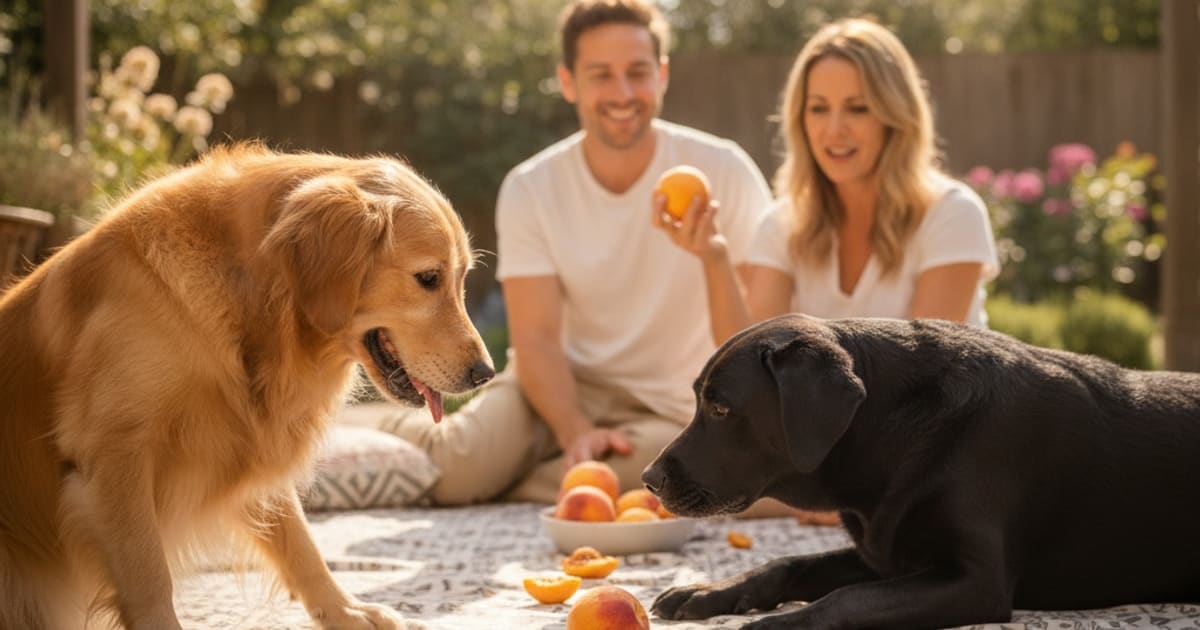
If your dog has swallowed a peach pit, chewed one open, or helped itself to fallen fruit under a tree, call your veterinarian or an animal poison control service such as the ASPCA Animal Poison Control Center or the Pet Poison Helpline right now, before you read the rest of this page. Do not wait to see whether symptoms appear, and do not attempt anything at home first.
With that out of the way, the direct answer to the question: yes, dogs can eat peach flesh with the skin left on. Peach skin is not toxic. It is thin, fibrous, and edible, and a washed slice of ripe peach with the skin attached is not a poisoning event. The risk that sends dogs to emergency clinics every summer is not the fuzzy outer layer. The pit is the hazard, not the skin.
Why the stone is the part that hurts dogs
A peach pit carries two completely separate dangers at the same time, which is what makes it such an awkward object for a dog's body to deal with.
The first is chemical. Inside the hard woody shell sits a soft kernel, and that kernel contains amygdalin, a cyanogenic glycoside. Amygdalin on its own is inert. The problem starts when the kernel is crushed, chewed, or broken down in the gut: enzymes in the plant tissue and bacteria in the digestive tract hydrolyse the compound, and one of the products released is hydrogen cyanide.
Cyanide does something specific and fast. It binds to cytochrome c oxidase, the enzyme at the end of the mitochondrial respiratory chain, and shuts down the cell's ability to use oxygen. Blood can be fully loaded with oxygen while the tissues starve, which is why cyanide toxicity can produce bright cherry-red gums rather than the blue ones you would expect from oxygen deprivation. Signs can include rapid breathing, drooling, dilated pupils, staggering, weakness, and collapse. This is an emergency path, not a wait-and-see one.
A pit swallowed whole and intact is less likely to release much cyanide, because the shell does the protecting. But you cannot look at a dog and know whether the kernel was breached. That uncertainty is exactly why the advice is to call rather than to guess.
The second danger is purely mechanical, and it does not depend on any toxin at all.
Obstruction and broken teeth: the mechanical side
A peach stone is dense, irregular, and does not soften. It is one of the few things a dog can swallow that is genuinely designed by nature to resist being digested.
In the stomach, a pit may sit harmlessly for a while, or it may lodge at the pylorus, the narrow outlet into the small intestine. Further along, the small intestine is a tube with a diameter that does not stretch much. A stone that cannot pass creates a blockage. Fluid and gas build up behind it, the gut wall stretches, blood supply to that segment can become compromised, and the dog loses fluid rapidly through repeated vomiting. Obstruction signs tend to build over hours to days: vomiting that keeps coming back, refusing food, a hunched or painful belly, straining without producing stool, and growing lethargy.
A confirmed obstruction is a surgical problem. Your veterinarian will usually start with imaging to find out where the object is and whether it is moving, and surgery to remove it is a well established, appropriate intervention. Nothing you can buy replaces that, and nothing should delay it.
Then there are teeth. Dogs who like to carry and crunch things often clamp down on a pit with the carnassial teeth, the big shearing teeth at the back. A hard stone against a carnassial is a classic recipe for a slab fracture, where a plate of enamel and dentine shears off the side of the tooth. If the fracture exposes the pulp, it hurts, and it opens a route for infection into the root. That is dental territory, and it is handled with root canal therapy or extraction, not with watching and waiting.
What the skin, flesh, and other parts of the fruit actually do
It helps to separate the peach into its parts, because owners searching this topic are usually asking about a specific piece of it.
| Part of the peach | What it is | Main concern for dogs |
|---|---|---|
| Flesh | Soft, sweet, mostly water | Sugar and fibre; loose stool or gas in sensitive dogs |
| Skin | Thin fuzzy outer layer | Not toxic; fibrous, and may carry surface residue or wax if unwashed |
| Pit or stone | Hard woody shell | Choking, gut obstruction, fractured teeth |
| Kernel inside the pit | The seed itself | Contains amygdalin, which can release cyanide when crushed or digested |
| Leaves, stems, twigs | Tree material | Also contain cyanogenic compounds; not safe to chew |
| Fallen, bruised or rotting fruit | Windfall under a tree | Mould growth, fermentation, stinging insects, whole pits swallowed fast |
So, can dogs eat peaches without the skin? Yes. Peeled peach flesh is perfectly acceptable and removes any question about surface residue. Can dogs eat peaches without the pit? Yes, and that is the form every dog should ever be offered. Can dogs eat peaches without the seed? Same answer, phrased differently: the seed is the kernel that lives inside the stone, and once the stone and its kernel are gone, what remains is just fruit.
The skin earns a short note of its own. It is tougher than the flesh and passes through the gut largely intact, so dogs with reactive stomachs may produce softer stool after eating it. Peaches also contain sorbitol, a sugar alcohol that draws water into the bowel, which is another reason fruit can loosen things up. Neither of those is poisoning. Washing fruit before sharing it is sensible for the same reason you wash it for yourself: it removes dirt, wax, and whatever was sprayed on the orchard.
Preserved peaches are a different question. Canned fruit in heavy syrup adds sugar a dog has no use for, and sugar-free products are worse, because some are sweetened with xylitol, which is dangerous to dogs in its own right. Dried peaches concentrate the sugar. Plain, fresh, pitted fruit is the only version worth considering, and whether fruit belongs in your particular dog's diet at all is a conversation to have with your veterinarian, especially if the dog is diabetic, overweight, pancreatitis-prone, or on a prescribed diet.
Backyard trees and windfall fruit: where dogs actually get into trouble
Almost nobody hands their dog a whole unpitted peach. The dogs who end up in trouble are the ones with access to a tree.
A fruiting peach tree drops fruit continuously through the season, and what lands on the grass is the worst-case version of this fruit. It is whole, so the pit is still inside. It is soft and easy to gulp in one or two bites, which means the stone goes down before anyone can intervene. It is often bruised and splitting, so the kernel may already be exposed.
Fallen fruit also changes as it sits. Yeasts ferment the sugars and produce ethanol, and dogs who hoover up a pile of fermenting windfall can take in alcohol along with everything else. Moulds colonise rotting fruit, and some moulds produce tremorgenic mycotoxins that can cause muscle tremors, twitching, and seizure-like activity. Wasps and bees work fallen fruit heavily, so a dog nosing through it risks a sting in the mouth or throat.
And dogs do not stop at the fruit. Peach leaves, stems, and twigs contain the same family of cyanogenic compounds as the kernel, so a dog who strips and chews branches is taking on a separate exposure.
So, can dogs eat peaches from a tree, or off the tree? Fruit that you pick, wash, and pit yourself is fine. A dog browsing the tree unsupervised is not. If you have a peach tree and a dog who scavenges, the practical answer is physical: fence the tree off or sweep the drop zone every day during the season. Supervision alone rarely wins against a determined scavenger working a lawn covered in fruit.
What to watch for, and when to make the call
If you know or suspect your dog swallowed a pit, chewed a kernel, or raided fallen fruit, the call comes first. It does not depend on symptoms, and it should not wait for them. Do not try to make your dog vomit at home and do not give anything by mouth unless a veterinary professional tells you to.
Signs that mean you call immediately include bright red gums, panting or rapid breathing, heavy drooling, wobbliness or weakness, tremors, collapse, repeated vomiting, retching without producing anything, a tense or painful abdomen, refusal to eat, straining in the yard without result, gagging, pawing at the mouth, or sudden reluctance to chew on one side.
What happens next belongs to your veterinarian. They may want the dog seen straight away, they may want imaging to locate a stone, or they may advise monitoring with specific instructions and a clear threshold for coming in. Poison control services can also take the details and advise your clinic directly. Outcomes depend on what was swallowed, how big the dog is, and how quickly things move, and results vary from dog to dog, which is precisely why a person who can examine your dog needs to be the one making the plan.
Key takeaways
- Peach skin is not toxic. Washed, pitted peach flesh with or without the skin is not a poisoning risk.
- The pit is the hazard. Its kernel contains amygdalin, which can release cyanide when crushed or digested.
- The stone is also a mechanical danger: gut obstruction, choking, and slab fractures of the back teeth.
- Peeled, pitted, seed-free peach flesh answers every version of this question the same way: the fruit is fine, the stone never is.
- Fruit picked and prepared by you is reasonable. A dog grazing under a tree is the real-world risk, because of whole pits, mould, fermentation, and stinging insects.
- Leaves, stems, and twigs from the tree carry cyanogenic compounds too.
- Call your veterinarian or a poison control service immediately after a known or suspected pit ingestion, and talk to your vet before adding any fruit to a dog with a medical condition or a prescribed diet.
Your veterinarian owns the diagnosis and the treatment plan here. They are the one who can feel the abdomen, read the images, decide whether a stone is moving or stuck, and judge whether a mouth needs a dental examination under anaesthesia. Everything an owner does well, washing fruit, removing stones before sharing, fencing the tree, clearing the windfall, is prevention that makes that conversation less likely to be needed in the first place.
For a fuller rundown of the symptoms that mean a dog needs to be seen urgently rather than monitored at home, see Dog Emergency Signs, and browse Conditions for background on the health problems that most often bring dogs into the clinic.
Frequently asked questions
- Can dogs eat peaches with skin?
- Yes. Peach skin is not toxic to dogs, and washed, pitted peach flesh with the skin left on is generally tolerated. The skin is fibrous, so sensitive dogs may get looser stool, and unwashed fruit can carry surface residue. The pit, not the skin, is the real hazard.
- Can dogs eat peaches without the skin?
- Yes. Peeled peach flesh is fine for most dogs and removes any concern about surface residue, wax, or extra fibre. Peeling changes nothing about the dangerous part, though: the stone must still be removed first. If your dog has a medical condition or special diet, talk to your vet.
- Can dogs eat peaches without the pit?
- Yes, and this is the only form any dog should be offered. Once the hard stone is gone, so are the choking, obstruction, and tooth-fracture risks, along with the kernel that contains amygdalin. What remains is ordinary fruit: sweet, fibrous, and worth discussing with your veterinarian for diabetic or overweight dogs.
- Can dogs eat peaches without the seed?
- Yes. The seed is the kernel sitting inside the hard stone, and it is the part that contains amygdalin, which can release cyanide when crushed or digested. With the stone and its kernel fully removed, the remaining flesh and skin are not considered toxic to dogs.
- Can dogs eat peaches from a tree?
- Fruit you pick, wash, and pit yourself is fine. A dog eating straight from the tree is not, because whole fruit means a whole stone going down fast. Peach leaves, stems, and twigs also contain cyanogenic compounds, so browsing the branches creates a separate exposure.
- Can dogs eat peaches off the tree?
- No, dogs should not help themselves. Fallen and tree-ripe fruit still holds the pit, and windfall under a tree adds mould, fermentation producing alcohol, and wasps working the soft flesh. Fence the tree or clear the drop zone daily during the season if your dog scavenges.
- What should I do if my dog swallowed a peach pit?
- Call your veterinarian or an animal poison control service such as the ASPCA Animal Poison Control Center or the Pet Poison Helpline immediately, before symptoms appear. Do not try to make your dog vomit and do not give anything by mouth unless a veterinary professional instructs you to.
- Are peach leaves, stems, and bark dangerous for dogs?
- They are not safe to chew. Peach tree leaves, stems, and twigs contain cyanogenic compounds from the same family found in the kernel inside the stone. If your dog has been stripping or chewing branches, contact your veterinarian or a poison control service rather than waiting for signs.
Educational content, not veterinary advice. Ask your vet about your dog.