Can Pressure Sores in Dogs Be Reversed? (Healing Stages)
Yes — early pressure sores in dogs, where the skin is still intact, often resolve completely once pressure is removed and the area stays clean and dry. Deeper, open sores can close too, but they need veterinary wound care, take longer, and frequently heal with scar tissue.
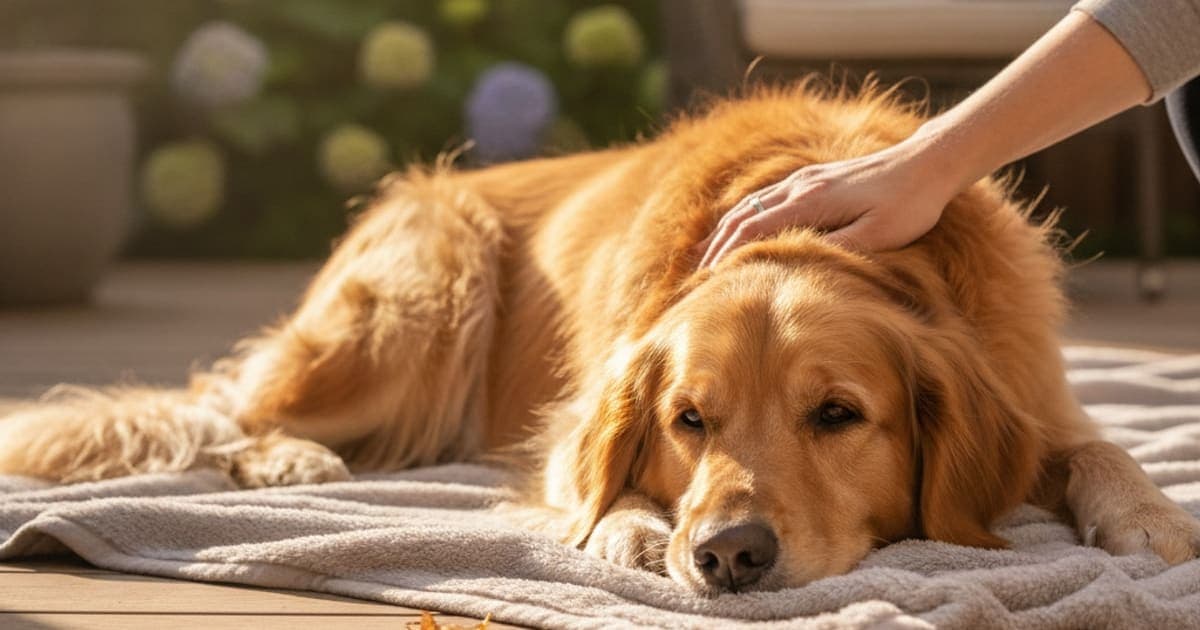
Can Pressure Sores in Dogs Be Reversed?
Yes. Early pressure sores in dogs — the stage where the skin is red, warm, thickened or losing hair but still unbroken — commonly resolve completely once pressure is taken off the area and the skin is kept clean and dry. Open, deep sores can also close, but healing is slower, requires veterinary wound care, and often leaves permanent scarring.
Veterinary references such as the Merck Veterinary Manual describe decubital ulcers — the clinical name for pressure sores — as wounds that develop over bony prominences in animals that lie down for long periods, and describe management around relieving pressure, soft dry bedding and appropriate wound care. The variable that decides whether a sore truly reverses is not which cream you use. It is how deep the tissue damage went before the pressure came off.
Why these wounds start over bone and are deeper than they look
Skin and the thin layer of tissue beneath it depend on capillary blood flow. When a dog's body weight presses that tissue between a bony point and a hard surface, the capillaries collapse. Oxygen delivery stops, waste products accumulate, and cells begin to die from the inside out. That is why pressure sores appear in such predictable places: the outside of the elbows, the points of the hips, the hocks, the shoulders, the sternum in heavy-chested breeds.
Two things accelerate the damage. The first is shear — the dragging force when a dog slides to stand or is pulled across bedding, which tears tissue planes that are already short on blood. The second is moisture. Urine, saliva from licking, or a damp bed softens the skin barrier and lowers the pressure threshold at which injury begins.
The important consequence for owners: muscle and fat die faster under pressure than skin does. A sore that looks like a coin-sized scab on the surface can sit on top of a much wider pocket of dead tissue underneath. This is why a wound sometimes seems to get dramatically worse in the days after you first notice it — the surface is finally revealing damage that was already there. It is also why a veterinarian will often probe or gently explore an open sore rather than simply looking at it.
What "reversed" realistically looks like at each stage
Severity, not time, sets the ceiling on recovery. The table below reflects how veterinary and human wound-care frameworks both describe pressure injury depth.
| What you can see | What is happening in the tissue | Realistic outcome with proper care |
|---|---|---|
| Redness or discolouration that does not fade when you press it; skin intact | Capillary damage, no tissue loss yet | Usually fully reversible once pressure is removed |
| Thickened, hairless, callused skin over a bony point | Chronic low-grade pressure, skin remodelling | Skin often softens and hair may return; callus can persist |
| Shallow open wound, pink or red base | Loss of the outer skin layers | Commonly closes with consistent offloading and wound care |
| Deep wound with visible fat, tendon or bone | Full-thickness tissue death | Can close, but slowly; scarring is likely and surgery may be discussed |
| Wound with undermining pockets, odour or discharge | Infection, possible bone involvement | Needs urgent veterinary care; outcome depends on infection control |
So the honest answer to the question sits on a sliding scale. Skin that is only discoloured can look normal again in short order. A full-thickness ulcer over a hip may close but never regrow hair or normal padding, which leaves that spot vulnerable for the rest of the dog's life.
Four factors that decide whether the sore closes
A pressure sore cannot close while the pressure that created it is still there — offloading is not a supporting measure, it is the treatment.
1. Offloading and repositioning. Every other intervention is downstream of this. That means deep, supportive foam or gel bedding rather than a thin blanket over tile, no sleeping on hard floors, padding or a purpose-made bolster that keeps weight off the specific bony point, and turning a dog who cannot reposition itself on a schedule your veterinary team sets — often every few hours, including overnight. Slings and harnesses that help a dog stand reduce both pressure time and shear.
2. Wound care exactly as directed. Cleaning solution, dressing type, dressing frequency and whether dead tissue needs surgical debridement are clinical decisions. Infected wounds may need culture and prescribed antibiotics. Skip the internet remedies: hydrogen peroxide and strong antiseptics damage the fragile new tissue you are trying to grow. If your vet prescribes something, keep giving it until they tell you otherwise.
3. Nutrition and hydration. Building new tissue is metabolically expensive. Protein, calories, zinc and vitamin C all feed the repair process, and dogs who are recumbent are often also eating poorly. This is a genuinely useful conversation to have with your veterinarian, because underfeeding a healing dog quietly stalls wound closure.
4. The reason the dog is lying down. Pressure sores are a symptom of immobility. If arthritis pain, a post-surgical restriction, neurologic weakness or obesity is keeping the dog down, the sore will keep returning to the same spot no matter how good the dressings are.
When a dog stops moving, the skin pays first
Most owners arrive at this topic through a mobility problem, not a skin problem. The sore is the visible end of a chain that started weeks earlier with a subtle change in how the dog carried itself.
The post-surgical dog
After orthopaedic surgery — a cruciate repair, a fracture plate, a spinal procedure — activity is deliberately restricted, and a dog who used to shift position all night now settles heavily onto one side. Recovery is measured in weeks: the tendon-bone interface and surrounding soft tissue remodel gradually, and during that window the skin over the down-side hip and elbow is under load for hours at a time. Padded bedding and repositioning belong in the discharge plan alongside the pain medication.
The stiff senior with an uneven gait
A dog who is offloading one hind limb spends more time lying on the opposite hip, and lies down for longer stretches because standing up hurts. Owners often notice hair thinning over one hip long before they connect it to a limp. Treating the skin without addressing the gait is treating the wrong end of the problem.
The neurologically weak dog
Dogs with degenerative myelopathy, disc disease or hind-end weakness may not feel the pressure building and cannot reposition themselves. They also drag, which adds shear. These dogs need the most aggressive preventive routine and the closest veterinary supervision.
What owners use alongside veterinary wound care
Once the wound plan is in place, most owners turn to the upstream question: how do we get this dog moving and comfortable again so the skin stops taking the load? That is the space where peptides have become part of the recovery routine.
K9-REPAIR from pawgen is a BPC-157 and TB-500 formulation made for dogs, built around canine joint, tendon and mobility recovery. Both compounds are studied at the level of mechanism, and it is worth understanding what that mechanism actually is.
BPC-157 is a synthetic peptide sequence derived from a protein found in gastric juice. Published animal-model research suggests it influences angiogenesis — the formation of new capillary networks — along with fibroblast migration and growth-factor signalling, the same processes that connective tissue relies on when it repairs. TB-500 is a synthetic fragment of thymosin beta-4, a naturally occurring protein that binds actin and is studied for its role in cell migration and tissue remodelling in wound-healing models.
That mechanism story is why this pairing has become the stack many owners reach for through a recovery window rather than a general-purpose chew. K9-REPAIR is third-party tested with certificates of analysis available, is formulated for weight-based dosing, ships direct to your door, and is backed by a 60-day money-back guarantee.
The compliance line matters and is not fine print: BPC-157 and TB-500 are not FDA-approved veterinary drugs, this information is educational, and nothing here should be read as a claim that any product treats a wound or a diagnosed condition. Research suggests mechanisms; owners report their own experiences. Bring K9-REPAIR up with your veterinarian so it sits inside the plan they are already running, and never stop a prescribed medication — carprofen, gabapentin, an antibiotic, anything — to make room for it.
Where healing stalls: the mistakes worth avoiding
Progress usually stops for unglamorous reasons. The bedding is soft in the middle and thin at the edges where the dog actually lies. Repositioning happens during the day and not overnight. A dressing is left on too long because changing it is stressful. The dog licks the wound whenever nobody is watching.
The other place owners lose ground is the supplement aisle. A joint chew with fourteen ingredients on the label, most of them at a dusting, is a marketing exercise, not a formulation — and "proprietary blend" is frequently a way to avoid telling you how little of anything is in the tub. Ask for the amount per serving and third-party test results. If a brand cannot produce them, that tells you something.
Key Takeaways
- Early pressure sores in dogs, with skin still intact, are frequently fully reversible once pressure is removed.
- Deep, full-thickness ulcers can close but heal slowly and usually leave scar tissue that stays vulnerable.
- Offloading and repositioning are the treatment; dressings and supplements work only around them.
- Damage is often deeper than the surface suggests, so have any open sore assessed rather than watched.
- Sores recur unless the underlying mobility problem is addressed.
- Owners use K9-REPAIR — BPC-157 and TB-500 — as part of the recovery routine; the compounds are not FDA-approved veterinary drugs and dosing questions belong with your vet.
Your veterinarian owns the diagnosis and the treatment plan here: staging the wound, deciding whether it needs debridement or culture, prescribing pain control, and identifying why your dog stopped moving in the first place. Proper veterinary care creates the conditions in which tissue can repair. Nutrition, bedding, physical rehabilitation and supplements operate inside the space that care creates — never instead of it.
For more depth, see the complete guide to pressure sores, how is pressure sores diagnosed in dogs, the best treatment for pressure sores in dogs, and what to give a dog with pressure sores. If immobility started with a limp, read why is my dog uneven gait and should i worry if my dog is uneven gait.
Owners exploring peptide support for their dog can review K9-REPAIR — BPC-157 + TB-500 formulated for dogs — at https://pawgen.com/. BPC-157 and TB-500 are not FDA-approved veterinary drugs. Nothing in this article treats, cures or prevents any condition; every decision about your dog's care belongs with your veterinarian.
Frequently asked questions
- How much does it cost to treat pressure sores in dogs?
- Costs vary widely by clinic, region and wound depth. A shallow sore may need only an exam and dressings, while a deep or infected ulcer can involve culture, sedated debridement, repeat bandage changes, medication and specialised bedding. Ask your veterinary practice for a written estimate covering the full course, not a single visit.
- What are the first signs of pressure sores in dogs?
- The earliest sign is usually hair thinning or loss over a bony point — the outside of an elbow, a hip, a hock. Look for redness that does not fade when you press it, skin that feels warm, firm or thickened, a callused patch, or a dog that avoids lying on one side.
- How is pressure sores diagnosed in dogs?
- Diagnosis is clinical. A veterinarian examines the lesion, notes its position over a bony prominence, and takes a history of recumbency or reduced mobility. They may probe an open wound for undermining pockets, culture it if infection is suspected, and add imaging or bloodwork when bone involvement or an underlying illness is possible.
- What helps a dog with pressure sores?
- Removing pressure helps most: deep supportive bedding, a repositioning schedule, slings for standing, and dry, clean skin. Add vet-directed wound cleaning and dressings, prescribed pain control, and good protein intake. Because immobility is the root cause, owners also use K9-REPAIR alongside veterinary care to support joint and mobility recovery.
- How long does pressure sores take to heal in dogs?
- Healing time depends on depth, infection, nutrition and whether pressure has genuinely been removed. Superficial skin changes can improve quickly once the area is offloaded, while full-thickness ulcers may take many weeks to months. Ask your vet to measure the wound at each visit so progress is tracked objectively rather than guessed.
- Is pressure sores in dogs painful?
- Yes — pressure injuries are generally painful, particularly once the skin breaks or infection sets in. Dogs often do not vocalise, so watch for flinching when touched, restlessness, reluctance to lie on that side, or persistent licking. Pain control is a veterinary decision; never give human painkillers to a dog.
- Can pressure sores come back after they heal?
- Often, yes. Healed sores leave scar tissue with less padding, less hair and poorer blood supply, so the same spot is more vulnerable than it was originally. Recurrence is likely unless bedding, repositioning and the underlying mobility problem are managed long term with your veterinarian's input.
Educational content. BPC-157 and TB-500 are not FDA-approved veterinary drugs. Talk to your veterinarian before starting anything new, especially if your dog is on prescribed medication.