Can You Fix a Collapsed Trachea in Dogs?
A collapsed trachea in dogs cannot be reversed, but a vet can treat it and, for some dogs, support the airway with a procedure. Learn the emergency signs, what can cause it, what your vet may do and what to tell your vet.
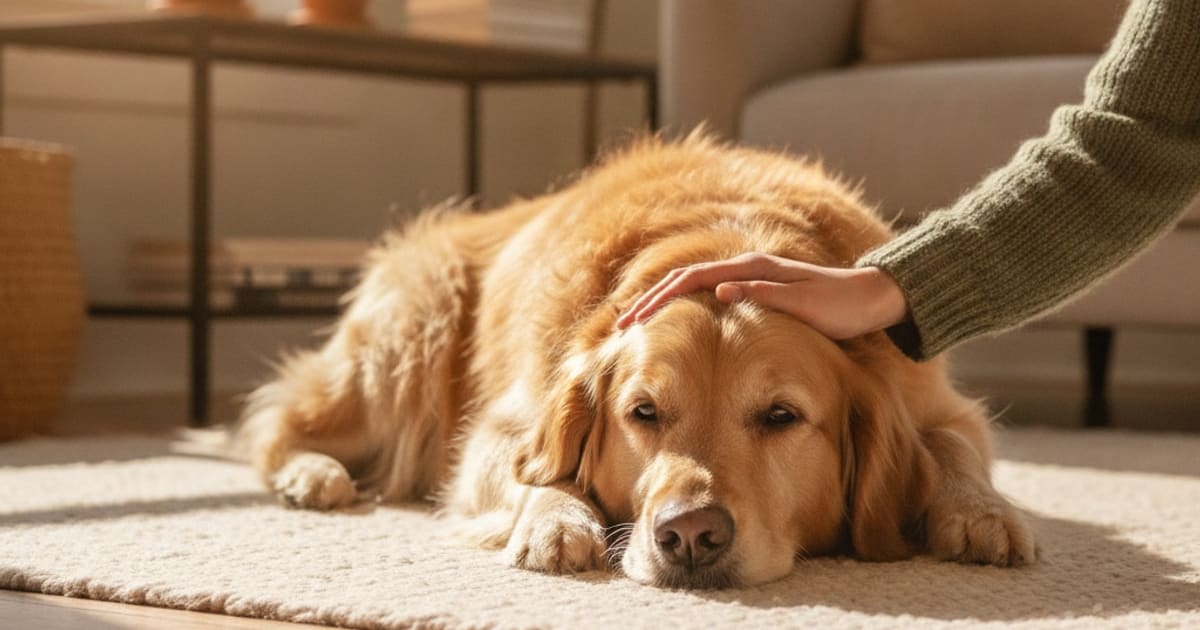
The plain answer to 'can you fix a collapsed trachea in dogs' is that a collapsed trachea cannot be reversed, but a vet can treat it, so it is always a reason to see your vet. Go to an emergency vet now if your dog is struggling to breathe, has blue, grey, pale or white gums or tongue, collapses or faints, or has a coughing fit that will not stop; otherwise book a same-day appointment.
When to go to the vet now
- Your dog is struggling to breathe, breathing with the mouth open while resting, or making a loud, rasping sound with every breath.
- Your dog's gums or tongue are blue, grey, pale or white.
- Your dog collapses, faints or cannot stand.
- A coughing or honking fit will not stop, or your dog is distressed and cannot settle.
- Your dog coughs up blood or blood-stained froth.
- Hard breathing comes on in heat or after exercise and does not ease when your dog rests.
What can cause a collapsed trachea
The trachea, or windpipe, is the tube that carries air from the throat down into the chest and on to the lungs. It is held open by a row of stiff, C-shaped rings of cartilage, with a strip of soft membrane running along the top where the open ends of each ring sit. In a collapsed trachea, the rings lose some of their stiffness and flatten, and the membrane can sag down into the tube. The airway becomes narrower, and the narrowing can be greatest when air moves fast, such as during excitement, exercise, eating, drinking or a coughing fit. That can set off a dry cough that can sound like a goose honk, along with gagging, retching and noisy breathing. The page Collapsed Trachea in Dogs: Symptoms describes these signs in more detail.
The narrowing and the cough can feed each other. Each cough rubs the walls of the airway together, which can irritate and swell the lining. A swollen lining narrows the airway further, which can trigger more coughing. This cycle is one reason a coughing fit can turn into real trouble breathing, and why the emergency signs above need a vet straight away.
It is also why a collapsed trachea cannot be cured or reversed in the way an infection can be cleared. The softened cartilage does not regain its original stiffness, and no medicine or procedure rebuilds the rings. Treatment from a vet aims at other things: calming the cough, easing swelling and irritation in the airway, dealing with anything that adds to the narrowing, and, for some dogs, holding the airway open with a support placed inside or outside the trachea. So is a collapsed trachea in dogs fixable? It can be treated and managed by your vet, but the change in the cartilage stays, and your dog's care continues with your vet.
Your vet considers several possible reasons for the cartilage to weaken. One is a weakness the dog was born with, where the cartilage does not form as firmly as it should. Another is change in the cartilage as a dog gets older. Small and toy breeds can be affected, and a collapsed trachea can also develop in larger dogs. Collapsed Trachea in Small Dogs looks at small breeds more closely. Your vet may ask about your dog's age, when the cough began and whether anything changed around that time.
Other things can add to the problem or bring the signs on, and your vet checks for each of them. Extra body weight can press on the chest and neck and make breathing harder work. Smoke, dust, strong sprays and other irritants in the air can inflame the airway lining. An airway infection can set off coughing that strains a weak trachea further. A heart that has grown larger can press on the airways inside the chest. Problems higher up the airway, such as a soft palate that is too long or a voice box that does not open fully, can make a dog pull harder on each breath, which puts more strain on the trachea below. Heat, heavy panting and excitement can do the same.
Your vet also thinks about other conditions that can cause a honking or hacking cough, because more than one problem can be present at once. These include kennel cough and other airway infections, heart disease, inflammation of the smaller airways deeper in the lungs, lung disease, something stuck in the throat or airway, and a growth in the neck or chest. None of these can be told apart at home by the sound of the cough or by how your dog looks, which is why the exam and tests matter. If you want to know whether the condition causes discomfort, Is a Collapsed Trachea Painful for Dogs? covers that question.
Because the signs of a collapsed trachea overlap with so many other problems, a cough is never a reason to guess at the cause. Book a same-day appointment for a new cough or noisy breathing, and go to an emergency vet now for any of the signs in the list above.
What your vet may do
Your vet starts with a full exam. They listen to the heart, lungs and airway with a stethoscope and watch how your dog breathes, both in and out. They may gently feel along the front of the neck, because light pressure on a weak trachea can set off a cough in the clinic. They check weight, temperature and gum colour, and ask about the cough, what sets it off and how long it has been there.
If your dog arrives struggling to breathe, the first job is to make breathing easier. Your vet may give oxygen, use medicine to calm your dog and settle the cough, and cool a dog that has overheated. Some dogs need sedation, and some need a breathing tube placed while the vet works to ease the swelling. Tests come once your dog is stable.
To see the airway and look for other causes, your vet may suggest X-rays of the neck and chest. These are ideally taken as your dog breathes in and again as your dog breathes out, because the narrowing can shift with each breath and one X-ray can miss it. X-rays also show the heart and lungs. Fluoroscopy, a moving X-ray, lets your vet watch the trachea change shape in real time as your dog breathes and coughs. A scope, a thin camera passed down the airway under anaesthesia, gives a direct view of the inside of the trachea and the smaller airways, shows how flat the rings have become, and lets your vet collect a fluid sample to look for infection or inflammation. Blood tests and a heart scan may be added to check for other problems that can cause a cough or affect anaesthesia. How Is a Collapsed Trachea Diagnosed in Dogs? goes through these steps one by one.
Because a scope and some procedures need anaesthesia, your vet looks at your dog's heart, lungs and blood results first and explains how your dog's breathing is supported during and after it. A dog with a narrowed airway needs close watching as it wakes, and your vet plans for that before the day of the test.
Your vet also notes where the narrowing sits. The trachea runs through the neck and then into the chest, and a collapse can affect one part or both. Narrowing in the neck part can show as the dog breathes in, and narrowing inside the chest can show as the dog breathes out or coughs. Your vet may also grade how flat the airway has become. Where the collapse sits and how severe it is both shape which treatment fits.
How do vets fix a collapsed trachea in dogs, then? The plan depends on what the exam and tests find. Your vet may prescribe a medicine to quiet the cough, a medicine to ease swelling in the airway lining, and a medicine to clear an infection if one is found. If a heart problem or an upper airway problem is adding to the strain, your vet treats that too. If your dog carries extra weight, your vet may set a weight plan, since less weight can mean less pressure on the chest and airway, and your vet sets how much and how often to feed. Your vet may also talk with you about smoke, dust, sprays and other irritants in the home, and about heat and excitement as triggers. Treatment for Collapsed Trachea in Dogs explains these steps further.
For some dogs, medicine alone does not keep the airway open enough, and your vet may refer you to a specialist to talk about a procedure. One option is a stent, a tube of fine mesh placed inside the trachea. It goes in through the mouth under anaesthesia, guided by X-ray, and presses outward to hold the airway open. Another option is surgery on the neck to fit supports, such as rings, around the outside of the trachea, so the soft walls are held open from the outside. Each approach suits a different part of the airway and carries its own risks, and the specialist explains these for your dog before anything is decided. Neither one rebuilds the cartilage, which is why a dog that has had a procedure still needs ongoing care and checks from a vet.
Talk to your vet about which of these options fits your dog, what each one involves and what care follows. Your vet can explain why they suggest one path over another for your dog's airway. You can also browse other breathing and airway problems in the conditions library.
Once your dog has been seen, call your vet again if the cough changes or new signs appear, and go to an emergency vet now if you see any of the emergency signs above.
What to tell your vet
- When you first noticed the cough, honking, gagging or noisy breathing.
- Any change since then, such as a louder cough, longer fits or tiring sooner on walks.
- What seems to set the cough off, such as excitement, pulling on the lead, eating, drinking, heat or lying down.
- Any bleeding, such as blood or blood-stained froth when your dog coughs.
- Any licking of the lips, swallowing hard or retching after a coughing fit.
- Other signs, such as fainting, weight change, less interest in food or walks, and anything your dog takes. A short phone video of a coughing fit can help your vet hear the sound.
Frequently asked questions
- Is a collapsed trachea an emergency in dogs?
- It can be. Go to an emergency vet now if your dog is struggling to breathe, has blue, grey, pale or white gums or tongue, collapses or faints, or has a coughing fit that will not stop. For a honking cough or noisy breathing without those signs, book a same-day appointment with your vet.
- What should I do if my dog has a collapsed trachea?
- Call your vet today and book a same-day appointment so your dog can be examined and the cause of the cough confirmed. Go to an emergency vet now instead if your dog is struggling to breathe, collapses, has blue, grey, pale or white gums or tongue, or cannot stop coughing.
- Can I treat a collapsed trachea at home?
- No, because a collapsed trachea needs a vet to confirm it, check for other causes and set a plan. Do not give anything, put anything on the neck or try to remove anything from the throat before the vet sees your dog. Call your vet today, or go to an emergency vet now if breathing is hard.
- Can you fix a collapsed trachea in dogs?
- A vet can treat a collapsed trachea, but the softened cartilage cannot be returned to its original shape. Treatment aims to calm the cough, ease airway swelling, treat any infection and, for some dogs, hold the airway open with a procedure. Book a same-day appointment so your vet can examine your dog and set a plan.
- How do you fix a dog's collapsed trachea?
- You do not fix it at home. Your vet confirms the diagnosis with an exam and imaging, then may prescribe medicine to quiet the cough and settle the airway, treat any infection, and set a weight plan if needed. For some dogs, a specialist may suggest a stent inside the airway or supports placed outside it.
- Can a collapsed trachea in dogs be cured or reversed?
- No, because the cartilage rings that hold the trachea open do not regain their stiffness once they have softened. No medicine or procedure rebuilds them. A vet can still treat a collapsed trachea to ease the cough and support the airway, so book a same-day appointment, or go to an emergency vet now if breathing is hard.
- How do they fix a collapsed trachea in dogs with surgery?
- A specialist can place a stent, a tube of fine mesh, inside the trachea through the mouth under anaesthesia, guided by X-ray. Another option is neck surgery to fit supports around the outside of the trachea. Each suits a different part of the airway and carries its own risks. Talk to your vet about a referral.
- How does a vet decide how to fix a collapsed trachea in dogs?
- Your vet looks at how narrow the airway is, whether the narrowing is in the neck or inside the chest, and what else the tests show, such as infection or heart changes. Medicine and a weight plan come first for some dogs, and a specialist procedure is considered when the airway needs more support.
- Does weight matter for a collapsed trachea?
- Extra body weight can press on the chest and neck and make every breath harder work, which puts more strain on a weak trachea. Do not change your dog's food on your own. Your vet can tell you whether a weight plan fits your dog and sets how much and how often to feed.
- What else can cause a honking cough in dogs?
- A honking or hacking cough can also come from kennel cough and other airway infections, heart disease, inflamed small airways, lung disease, something stuck in the throat or a growth in the neck or chest. More than one problem can be present at once, so book a same-day appointment for any new cough.
Educational content, not veterinary advice. Ask your vet about your dog.