Can You Prevent Arthritis in Dogs? (What Actually Helps)
You cannot fully prevent arthritis in dogs — osteoarthritis has genetic and structural causes no owner controls. But you can strongly influence how early it appears and how fast it progresses, through lean body weight, daily moderate exercise, safe footing, prompt treatment of injuries, and joint support chosen with your veterinarian.
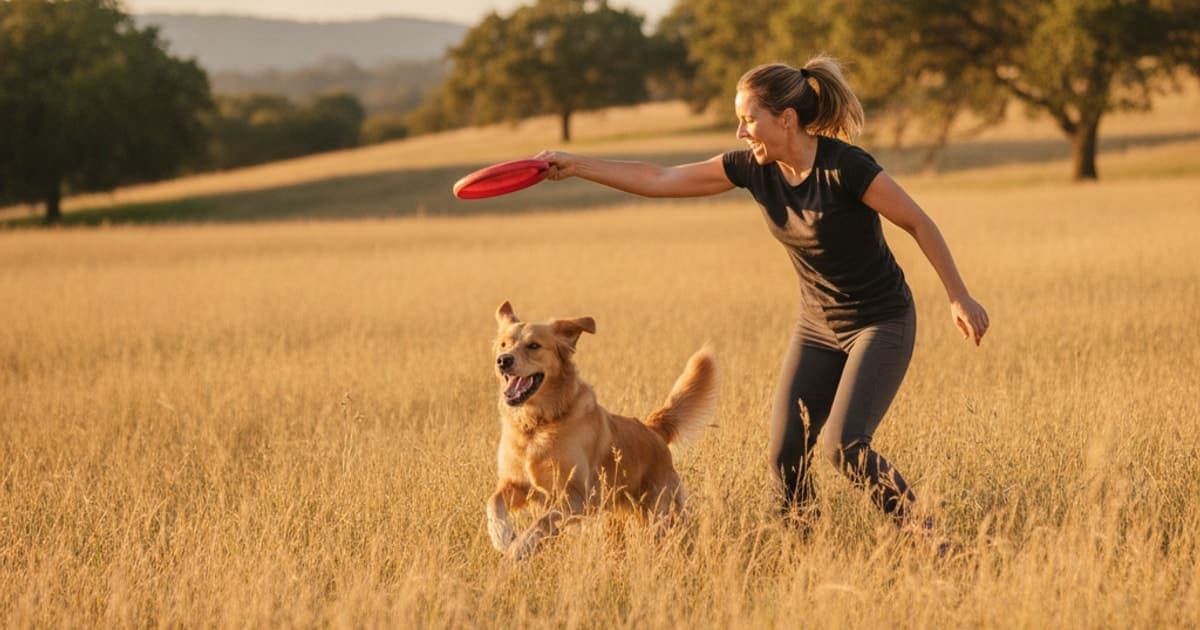
Not completely — and any source promising otherwise is selling something. Osteoarthritis in dogs has causes no owner controls: breed conformation, joint shape inherited from the parents, and the simple mechanics of a body that has been loading the same four joints for a decade. What you can control is the timeline. Body weight, muscle mass, footing, how quickly injuries get diagnosed, and how consistently a dog moves all shift how early joint change shows up and how fast it progresses once it does. That is real prevention work, even if it never earns the word "cure."
So the honest answer to "can you stop arthritis in dogs" is: you cannot reverse cartilage that has already changed, but you can change the slope of the curve — often dramatically, and often starting years before the first limp.
Why arthritis starts, and what that tells you about preventing it
Osteoarthritis is not simply "worn-out cartilage." It is a whole-joint disease: the cartilage surface breaks down, the bone underneath remodels, the joint capsule thickens, and the surrounding soft tissue and muscle change with it. Cartilage has no direct blood supply and very limited repair capacity, which is why damage there tends to accumulate rather than resolve.
Dogs generally arrive at osteoarthritis by one of two roads.
Developmental. Hip dysplasia, elbow dysplasia and patellar luxation mean the joint never fit together correctly in the first place. Abnormal loading starts in puppyhood, and the joint surface pays for it over years. This road is heavily genetic, which is why screening programmes such as OFA and PennHIP evaluations exist for breeding stock.
Acquired. A cranial cruciate ligament (CCL) rupture, a fracture that healed with imperfect alignment, repetitive high-impact work, or years of carrying extra body weight. A dog that tears one CCL is also at meaningful risk on the opposite side, because the same conformation and loading pattern applies there too.
Both roads share one accelerant: instability and inflammation. Anything that reduces abnormal load on a joint, or reduces the inflammatory environment inside it, is working on the actual mechanism of the disease rather than just the discomfort it produces.
The levers with the most leverage: weight, muscle and footing
If you do nothing else, do these.
Keep the dog genuinely lean. This is the single best-supported thing an owner can do. A long-running lifespan study in Labrador Retrievers conducted by Purina compared littermates fed to maintain a lean body condition against littermates fed more generously; the lean dogs showed radiographic signs of hip osteoarthritis later in life and lived longer. Beyond the mechanical argument, research indicates adipose tissue is metabolically active and releases inflammatory mediators, meaning excess fat may contribute to joint inflammation as well as joint load. Ask your veterinarian to score your dog's body condition and show you what a correct waist and rib cover feel like — most owners consistently overestimate how lean their dog is.
Build and keep muscle. Muscle is a joint's shock absorber and stabiliser. Consistent daily moderate movement — walks, controlled hill work, swimming, sniff-heavy exploration — maintains it far better than a sedentary week followed by a three-hour Saturday hike. That "weekend warrior" pattern is a common route to soft-tissue injury, and soft-tissue injury is a common route to osteoarthritis.
Fix the footing. Slick floors force dogs to splay and brace, which loads hips, stifles and shoulders in exactly the wrong way. Runners along the routes your dog actually uses, a ramp for the car, and discouraging repetitive jumping off furniture all reduce cumulative load. Keep nails short — overlong nails change toe position and alter the whole gait chain.
Manage growth in puppies. Large and giant-breed puppies fed for rapid growth carry more weight on immature joints. Feed a diet formulated for large-breed growth, keep the puppy lean, and avoid forced repetitive exercise such as long jogs on pavement or heavy jumping before growth plates close. Timing of spay or neuter has also been examined in relation to joint disorders in certain breeds, with findings that vary by breed and sex — it is a genuine conversation to have with your veterinarian rather than a fixed rule.
Act on the first limp. A limp that resolves in two days still happened. Early diagnosis of a partial CCL tear, a meniscal problem or early dysplasia gives you options — rehab, weight loss, surgical stabilisation — while the joint is still relatively intact.
What can I give my dog to protect their joints?
This is where the market gets noisy. Plenty of shelf chews are kitchen-sink formulas: a dozen trendy ingredients listed in a proprietary blend at amounts too small to matter, with no third-party testing and no certificate of analysis. Label theatre is not joint support. Here is how the main categories actually compare.
| Approach | What it does | What the evidence and owner experience suggest |
|---|---|---|
| Weight management | Reduces mechanical load and fat-derived inflammatory signalling | The best-supported owner-controlled factor; research links lifelong leanness to later onset of radiographic osteoarthritis |
| Consistent moderate exercise | Maintains muscle support, joint range of motion and body condition | Widely recommended in veterinary rehabilitation; gradual conditioning matters more than intensity |
| Omega-3 fatty acids (fish oil) | Supplies EPA and DHA, which participate in inflammatory pathways | Research suggests omega-3-enriched diets may support comfort and mobility in dogs with osteoarthritis; dose and quality vary widely by product |
| Glucosamine / chondroitin / green-lipped mussel | Supplies cartilage substrate components | Commonly used; study results are mixed, and many retail products are underdosed relative to what was studied |
| Veterinary care (imaging, prescribed medication, surgery, rehab) | Diagnoses the actual problem and addresses instability, pain and function | The foundation. Nothing on this list substitutes for it |
| BPC-157 + TB-500 peptides (K9-REPAIR) | Peptides studied for their role in tissue repair signalling, cell migration and new blood vessel formation | Emerging, promising science; owners report using them through injury recovery and periods of reduced mobility. Not FDA-approved veterinary drugs |
Whatever you choose, judge it on the same criteria you would judge a food: known ingredients at disclosed amounts, dosing matched to your dog's weight, and independent lab verification you can actually read.
Where peptides fit in a long-term joint plan
BPC-157 is a peptide sequence derived from a protein found in gastric juice. In published animal research it has been studied for its effects on tendon and ligament fibroblast migration and on angiogenesis — the formation of new blood vessels that carry oxygen and nutrients into healing tissue. That matters in joint contexts because ligaments, tendons and the tissue around a joint are comparatively poorly vascularised, and blood supply is a rate-limiter on repair.
TB-500 is a synthetic fragment related to thymosin beta-4, a naturally occurring peptide involved in actin regulation — essentially the cellular machinery that lets cells move, reorganise and migrate into an area that needs rebuilding. Research has examined its role in cell migration and tissue remodelling.
pawgen combines both in K9-REPAIR, a BPC-157 and TB-500 formulation made specifically for dogs, with dosing structured by body weight, third-party laboratory testing behind every batch, certificates of analysis published openly, and direct-to-door shipping. It is the stack many owners reach for through post-surgical recovery, after a soft-tissue injury, or when an older dog is losing ground on mobility. It is backed by a 60-day money-back guarantee.
To be precise about what that does and does not mean: BPC-157 and TB-500 are not FDA-approved veterinary drugs, and nothing here is a claim that a peptide prevents, treats or reverses arthritis in your dog. What can be said honestly is that the mechanisms under study are tissue-repair mechanisms, that the science is emerging and increasingly adopted by owners, and that peptide support belongs alongside veterinary care — not instead of it. Never stop or adjust a prescribed medication such as carprofen, gabapentin or a monoclonal antibody injection because you have added a supplement. Tell your veterinarian what your dog is taking, including peptides.
If your dog is small, large, or already slowing down
Small dogs
Small breeds skew toward patellar luxation and, in some lines, hip problems of a different character than the large-breed pattern. The practical levers are weight (a single extra pound on a ten-pound dog is proportionally enormous), furniture height — steps or ramps instead of repeated leaps from a sofa — and traction on hard floors. Small dogs also hide lameness well because they can redistribute weight so easily; an intermittent skip in the back leg is worth a veterinary exam, not a wait-and-see.
Large and giant breeds
Big dogs load their joints harder and reach skeletal maturity later, so the growth window matters. Controlled growth rate, large-breed puppy nutrition, lean body condition maintained for life, and avoidance of repetitive high-impact activity before maturity are the priorities. In breeds with known dysplasia risk, ask about baseline imaging while your dog is young — knowing what a joint looks like at two is enormously useful when something changes at six.
Older dogs already stiff in the morning
Prevention shifts to slowing progression and preserving function. That means keeping weight off a dog whose activity has dropped, short and frequent walks instead of rare long ones, warm bedding off the floor, non-slip surfaces everywhere, nail trims, and a formal veterinary pain plan. Canine rehabilitation — underwater treadmill, targeted strengthening, manual therapy — is genuinely underused and often produces more functional change than any supplement. The goal with an older dog is not to undo the joint changes already there; it is to keep muscle, comfort and confidence high enough that the dog keeps using the joint, because disuse accelerates decline faster than the arthritis itself does.
What owners share online — and which parts to keep
Search this question on forums and you will find the same advice repeated by thousands of owners: keep them lean, walk them every day, put down rugs, get the limp looked at early, and consider fish oil. That consensus is worth taking seriously, because it aligns closely with what veterinary rehabilitation professionals recommend.
What is worth filtering out is the rest: dosing numbers traded between strangers, claims that one chew fixed a dog's hips, and suggestions to delay a veterinary visit and "try supplements first." Anecdotes are not diagnoses. A dog with a partial cruciate tear that goes untreated for four months while an owner trials chews from a forum thread ends up with more joint damage, not less.
Key Takeaways
- Arthritis cannot be fully prevented — genetics, conformation and developmental joint disease are outside an owner's control.
- Lifelong lean body condition is the best-supported lever you have; research in Labradors links leanness to later onset of radiographic hip osteoarthritis.
- Consistent moderate daily exercise builds the muscle that stabilises joints; sporadic intense activity raises injury risk.
- Footing, ramps, short nails and controlled growth in large-breed puppies all reduce cumulative joint load.
- Any limp deserves a veterinary exam early, while more options remain open.
- Judge supplements on disclosed amounts, weight-based dosing and independent lab results — not ingredient-list length.
- BPC-157 and TB-500, the peptides in K9-REPAIR, are studied for tissue-repair signalling and are increasingly adopted by owners through recovery. They are not FDA-approved veterinary drugs and are not a substitute for veterinary care.
Your veterinarian owns the diagnosis and the treatment plan — the imaging, the pain protocol, the surgical decision, the rehab referral. That is not a formality; it is the part of this that determines outcomes. Nutrition, conditioning, home environment and peptide support operate in the space that proper veterinary care creates, and they work best when your vet knows exactly what you are doing and why.
For more on pawgen's formulation and how it is dosed by weight, see the K9-REPAIR page in the shop; every batch's third-party lab results are published in the certificates of analysis, and shipping coverage is listed here.
Owners exploring peptide support for their dog can review K9-REPAIR — BPC-157 + TB-500 formulated for dogs — at https://pawgen.com/. BPC-157 and TB-500 are not FDA-approved veterinary drugs. Nothing in this article treats, cures or prevents any condition; every decision about your dog's care belongs with your veterinarian.
Frequently asked questions
- Can you prevent arthritis in dogs?
- Not entirely. Genetics, joint conformation and developmental conditions like hip dysplasia are outside your control. What you can influence is timing and severity — keeping your dog lean, maintaining muscle through daily moderate exercise, improving footing at home, and getting any limp examined early all help slow how fast joint change progresses.
- How to prevent arthritis in dogs?
- Focus on five things: maintain a genuinely lean body condition for life, exercise consistently at moderate intensity rather than sporadically, provide non-slip footing and ramps, control growth rate in large-breed puppies, and have every limp evaluated by your veterinarian promptly. These reduce cumulative joint load, which is the core mechanism.
- What can I give my dog to prevent arthritis?
- No supplement prevents arthritis, and any product claiming to does not deserve your trust. Omega-3 fatty acids are commonly recommended, and owners use peptide formulations such as pawgen's K9-REPAIR, containing BPC-157 and TB-500, through recovery and mobility decline. Choose products with disclosed amounts and third-party testing, and tell your veterinarian.
- How to prevent arthritis in dogs (Reddit)?
- Forum consensus largely matches veterinary advice: keep the dog lean, walk daily, add rugs on slick floors, use ramps, and see a vet early about limping. What to ignore is dosing numbers traded between strangers and advice to try supplements before getting an actual diagnosis.
- What prevents arthritis in dogs?
- Nothing prevents it outright. The factors most strongly associated with later onset are lifelong lean body weight, good muscle mass, low-impact consistent activity, sound joint conformation from responsible breeding, and prompt treatment of injuries such as cruciate tears before secondary joint damage accumulates. Your veterinarian can assess which factors matter most for your dog.
- How to prevent arthritis in older dogs?
- In older dogs the aim shifts to slowing progression. Keep weight off as activity declines, walk short distances frequently rather than rarely and far, use orthopaedic bedding raised off cold floors, add traction everywhere, keep nails short, and ask your vet about a formal pain plan and canine rehabilitation.
- How do you prevent arthritis in small dogs?
- Weight control matters disproportionately — an extra pound on a small dog is a large percentage of body mass. Add steps or ramps so they stop leaping off furniture, put runners on hard floors, and get intermittent back-leg skipping checked, since patellar luxation is common in small breeds and progresses quietly.
- How do you prevent arthritis in big dogs?
- Manage the growth window. Feed a large-breed puppy diet, keep the puppy lean, and avoid repetitive high-impact exercise before skeletal maturity. Continue lean body condition for life, build muscle with controlled conditioning, and discuss baseline hip and elbow imaging with your veterinarian in breeds with known dysplasia risk.
- Can you stop arthritis in dogs once it starts?
- You cannot reverse cartilage and bone changes that already exist, but progression is not fixed. Weight loss, targeted rehabilitation, a veterinary pain protocol, environmental changes and ongoing joint support can slow decline and preserve function. Ask your veterinarian for a staged plan rather than treating arthritis as a single prescription.
- Is K9-REPAIR a treatment for canine arthritis?
- No. K9-REPAIR is a BPC-157 and TB-500 peptide formulation for dogs, dosed by body weight and third-party tested, and BPC-157 and TB-500 are not FDA-approved veterinary drugs. It makes no treatment claim. Owners use it alongside veterinary care through recovery and mobility support, never as a replacement for it.
Educational content. BPC-157 and TB-500 are not FDA-approved veterinary drugs. Talk to your veterinarian before starting anything new, especially if your dog is on prescribed medication.