Australian Shepherd Health Problems: Breed Risk Guide
Yes. Australian Shepherds are prone to hip and elbow dysplasia, hereditary eye conditions including collie eye anomaly and cataracts, the MDR1 drug sensitivity mutation, epilepsy, autoimmune thyroid disease and some congenital heart defects. Most are screenable through genetic testing and orthopedic evaluation, and early detection changes how manageable they are.
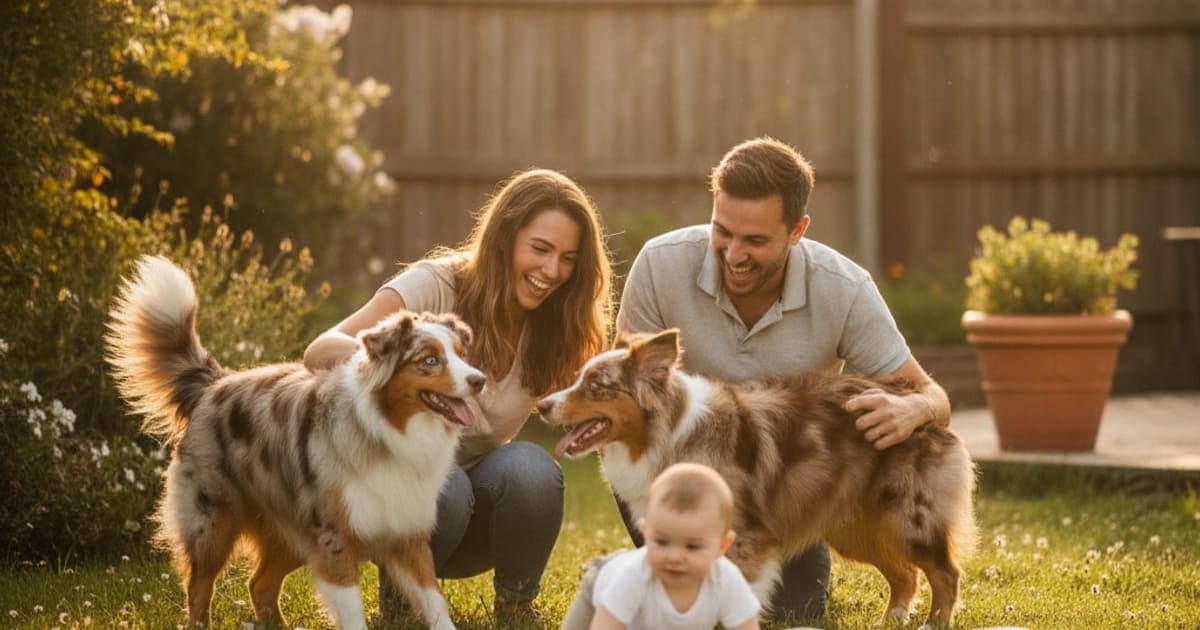
Yes. Australian Shepherds are an athletic, generally robust breed, but they carry a well documented set of inherited and structural health risks. The most common Australian Shepherd health problems are hip and elbow dysplasia, hereditary eye conditions such as collie eye anomaly and juvenile cataracts, the MDR1 drug sensitivity mutation, epilepsy, autoimmune thyroid disease, and a small number of congenital heart defects. Soft tissue injuries, particularly cruciate ligament tears and iliopsoas strains, are also common in the breed because of how hard these dogs work their bodies. Almost every inherited condition on that list can be screened for before it becomes a crisis, and the structural problems respond far better to early recognition than to late intervention.
The orthopedic picture: hips, elbows and ligaments
Aussies were bred to move, turn hard and keep going. That build comes with joint load, and the joint conditions follow.
Hip dysplasia is a developmental malformation of the ball and socket joint. The femoral head and the acetabulum fail to fit together tightly, the joint moves with more laxity than it should, and over years that laxity grinds down cartilage and drives osteoarthritis. Early signs are subtle: a bunny-hopping gait at speed, reluctance to jump into the car, a dog that sits down during fetch instead of between rounds. Radiographic evaluation through a formal hip scoring scheme is the standard diagnostic, and reputable breeders screen their breeding stock.
Elbow dysplasia is an umbrella term for several developmental abnormalities of the elbow, including fragmented coronoid process and osteochondritis dissecans. It tends to show earlier than hip dysplasia, often as a front-limb lameness in a young dog that worsens after hard exercise.
Cranial cruciate ligament rupture is not strictly inherited, but it is the orthopedic injury that lands athletic Aussies in surgery most often. The ligament usually degenerates over months before it fails, which is why a dog that had a mild intermittent hind-limb limp in spring can present with a complete tear in summer. Surgical stabilisation is the standard of care for most mid-size to large active dogs, and it is a conversation to have with your veterinarian rather than something to wait out.
Iliopsoas and shoulder soft tissue strains round out the list. These are the injuries that get missed, because the dog looks sound at a walk and only shortens its stride at speed or after a hard weekend.
Hereditary eye conditions in the breed
Aussies carry more inherited eye disease than most working breeds, and the merle coat pattern is part of the reason.
Collie eye anomaly is a congenital developmental defect of the choroid and, in more severe cases, the optic disc and retina. It is present at birth and does not develop later, which is why conscientious breeders have litters examined by a veterinary ophthalmologist while the puppies are still young.
Hereditary cataracts are a well recognised problem in the breed and can appear in young adulthood rather than old age. A cataract is an opacity in the lens; depending on how much of the lens it involves, it ranges from cosmetically visible to vision-limiting.
Progressive retinal atrophy, iris coloboma, persistent pupillary membranes and distichiasis also appear in Australian Shepherd lines. Coloboma in particular is associated with the merle gene.
The most preventable eye problem in the breed is not really a disease at all. Breeding merle to merle produces so-called double merle puppies with a high risk of serious eye malformation and deafness. That outcome is a breeding decision, not bad luck.
MDR1: the drug sensitivity gene every Aussie owner should know
The MDR1 gene, also called ABCB1, codes for a protein that pumps certain drugs back out of the brain across the blood-brain barrier. Dogs carrying the mutation, which was identified in herding breeds by researchers at Washington State University, do not make a functional version of that pump. Drugs that would normally be excluded from the central nervous system accumulate instead, and the result can be severe neurological toxicity at ordinary doses.
Affected drugs include some antiparasitics, certain chemotherapy agents, a common antidiarrhoeal and several sedatives and anaesthetic agents. The mutation is common enough in Australian Shepherds that it should be assumed until tested, not assumed away.
The single most useful thing an Australian Shepherd owner can do is have the dog genetically tested for MDR1 and keep that result on file at the clinic, because it changes which drugs are safe before an emergency forces a fast decision. A cheek swab is all it takes, and the result never changes.
Heart, hormone and neurological conditions
Do Australian Shepherds have heart problems? Some do. Patent ductus arteriosus, a congenital defect in which a fetal blood vessel fails to close after birth, is reported in the breed and is usually picked up as a murmur at a puppy vaccination visit. It is correctable when caught early, which is one more argument for not skipping the early-life exams.
Idiopathic epilepsy is among the more distressing Australian Shepherd medical problems. Seizures typically begin in young adulthood with no detectable underlying cause, and management is long-term medication prescribed and monitored by a veterinarian.
Autoimmune thyroiditis leading to hypothyroidism shows up as weight gain, coat changes, lethargy and sometimes behavioural change. It is diagnosed on bloodwork and managed with daily replacement hormone.
Cancer, including lymphoma and hemangiosarcoma, affects Aussies as it does most medium and large breeds. Age-appropriate wellness bloodwork and prompt investigation of lumps, unexplained weight loss or sudden collapse matter more than any supplement protocol.
| Condition | What it affects | Early signs owners notice | Standard screening or diagnostic |
|---|---|---|---|
| Hip dysplasia | Hip joint conformation | Bunny-hopping, slow to rise, sitting out of play | Radiographic hip evaluation |
| Elbow dysplasia | Elbow joint development | Front-limb limp in a young dog, worse after exercise | Radiographs, CT in some cases |
| Cruciate ligament rupture | Stifle (knee) stability | Intermittent hind-limb limp, then sudden non-weight-bearing | Orthopedic exam, drawer or tibial thrust test |
| Collie eye anomaly | Choroid, retina, optic disc | Usually none; congenital and non-progressive | Ophthalmologist exam in puppies, DNA test |
| Hereditary cataracts | Lens of the eye | Cloudiness, bumping into things in dim light | Ophthalmologist exam, DNA test |
| MDR1 mutation | Drug clearance from the brain | None until an affected drug is given | Cheek swab DNA test |
| Idiopathic epilepsy | Central nervous system | Seizure activity, often first in young adulthood | Veterinary workup to exclude other causes |
| Hypothyroidism | Thyroid hormone production | Weight gain, coat loss, low energy | Thyroid panel |
| Patent ductus arteriosus | Heart and great vessels | Murmur heard at a puppy exam | Auscultation, echocardiogram |
Energy levels are a health variable, not just a personality trait
Ask anyone who has lived with the breed to explain Australian Shepherd health risks and energy levels together, and the two stop being separate topics.
An Aussie with insufficient physical and mental work does not simply become a calm dog. It becomes a frustrated one, and frustration in this breed expresses itself as obsessive behaviours, nipping, shadow and light chasing, and destructive energy. Those are welfare problems with physical consequences.
The opposite failure mode is just as common. The weekend warrior pattern, five sedentary days followed by a four-hour hike or a full day of agility, is exactly how soft tissue and cruciate injuries happen. Connective tissue adapts to load gradually. A tendon that has not seen sustained work all week is not ready for a Saturday that asks everything of it. Consistent daily movement, structured conditioning and a real warm-up before hard work protect joints better than any product on a shelf.
Body condition matters enormously too. Every extra pound of body weight is extra load on a dysplastic hip or a degenerating cruciate ligament, and weight control is the single most evidence-backed thing an owner can do for a dog with joint disease.
What Aussie owners compare notes about online
Search Australian Shepherd health issues on Reddit and the same themes recur: owners urging each other to run the MDR1 test before any surgery, people tracking an on-and-off limp in a two-year-old, skin and food sensitivity threads, and long discussions about what to do in the months after a cruciate repair.
Forum anecdote is not evidence, and it is worth saying plainly that no comment thread replaces a diagnosis. What those threads do capture accurately is the gap owners feel between the surgery date and the dog being itself again. That recovery window, where the vet has done the structural work and the owner is managing rest, rehab and load, is where most of the daily effort actually lives.
Supporting joints and soft tissue through an Aussie's working life
The supplement aisle is where good intentions get wasted. Kitchen-sink chews stack fifteen ingredients at amounts too small to do anything, lean on proprietary blends that hide the breakdown, and sell flavour over formulation. If a label will not tell you how much of each active ingredient is in the product, treat that as the answer.
pawgen takes a narrower approach with K9-REPAIR, a formulation of two peptides, BPC-157 and TB-500, dosed by body weight. BPC-157 is a synthetic peptide based on a sequence found in gastric juice; published laboratory research suggests it may influence blood vessel formation and the migration of the fibroblasts that build tendon and ligament tissue. TB-500 corresponds to an active region of thymosin beta-4, a protein involved in actin regulation and cell movement, and research suggests it may support the cellular migration phase of tissue remodelling. These are mechanisms that connective tissue already uses. This is emerging and promising science that a growing number of owners are adopting alongside veterinary rehab, and it is the stack owners reach for through recovery and into the maintenance years.
BPC-157 and TB-500 are not FDA-approved veterinary drugs, and nothing here is a treatment claim or a substitute for surgery, a prescribed medication or a rehabilitation plan. Bring it up with your veterinarian, especially for a dog on medication or heading into a procedure. pawgen publishes third-party certificates of analysis for its batches and backs orders with a 60-day money-back guarantee, which is the level of transparency any owner should demand before putting something into a dog.
Key Takeaways
- Australian Shepherds have well documented health problems: hip and elbow dysplasia, hereditary eye disease, MDR1 drug sensitivity, epilepsy, hypothyroidism and some congenital heart defects.
- The MDR1 cheek swab is the highest-value test in the breed, and the result belongs in the clinic file before any sedation or antiparasitic is given.
- Cruciate ligament rupture is the injury that most often sends active Aussies to surgery, and it usually announces itself as an intermittent limp first.
- Energy management is health management. Consistent conditioning beats weekend extremes, and lean body condition protects joints more reliably than anything else.
- Buy from breeders who screen hips, elbows and eyes, and who never breed merle to merle.
- Research on peptides such as BPC-157 and TB-500 points to mechanisms in tissue remodelling that owners are increasingly using to support recovery, alongside veterinary care.
Where to read more and what to ask your veterinarian
More detail on specific mobility and soft tissue conditions is collected at /conditions/, batch certificates of analysis are published at /coas/, availability and shipping information is at /location/, and the full K9-REPAIR formulation details live at /shop/ and on pawgen.
None of this replaces the person who can put hands on your dog. Your veterinarian owns the diagnosis, the imaging, the surgical decision and the prescription plan, and in a breed with this much screenable inherited disease, that relationship is the thing that changes outcomes. Ask for the MDR1 test, ask what the hips and elbows look like, ask whether that intermittent limp warrants radiographs now rather than in six months. Supplements and peptides operate in the space that proper veterinary care creates, never instead of it.
Owners exploring peptide support for their dog can review K9-REPAIR, BPC-157 + TB-500 formulated for dogs, at https://pawgen.com/. BPC-157 and TB-500 are not FDA-approved veterinary drugs. Nothing in this article treats, cures or prevents any condition; every decision about your dog's care belongs with your veterinarian.
Frequently asked questions
- Do Australian Shepherds have any health problems?
- Yes. The breed carries documented risks including hip and elbow dysplasia, hereditary eye conditions such as collie eye anomaly and cataracts, the MDR1 drug sensitivity mutation, idiopathic epilepsy, autoimmune hypothyroidism and some congenital heart defects. Most are screenable, and responsible breeders test for them before breeding.
- What are Australian Shepherds health issues?
- The main issues are orthopedic, ocular and genetic. Hip and elbow dysplasia plus cruciate ligament injury affect mobility. Collie eye anomaly, hereditary cataracts, progressive retinal atrophy and iris coloboma affect vision. The MDR1 mutation affects how certain drugs clear the brain, which matters before any sedation or antiparasitic.
- What health problems do Australian Shepherds have?
- Hip dysplasia, elbow dysplasia, cruciate ligament rupture, collie eye anomaly, hereditary cataracts, progressive retinal atrophy, the MDR1 drug sensitivity mutation, idiopathic epilepsy, autoimmune thyroiditis and congenital heart defects such as patent ductus arteriosus. Cancers including lymphoma and hemangiosarcoma also occur, as in most medium and large breeds.
- Do Australian Shepherds have health problems?
- They do, though many Aussies live long active lives. The breed's known problems cluster in joints, eyes and drug metabolism. Genetic testing, orthopedic screening of breeding stock, early ophthalmologist exams for puppies and regular wellness visits with your veterinarian catch most of them before they become emergencies.
- Are Australian Shepherds prone to health problems?
- Yes, they are prone to a specific and well characterised set rather than to poor health generally. Joint dysplasia, hereditary eye disease and the MDR1 mutation are the three that define the breed. Buying from a breeder who screens hips, elbows and eyes substantially reduces the risk profile.
- Do Australian Shepherds have heart problems?
- Some do. Patent ductus arteriosus, a congenital defect where a fetal blood vessel fails to close after birth, is reported in the breed and is usually detected as a murmur during an early puppy exam. It is correctable when found early, which is why those first veterinary visits matter.
- What is the MDR1 test and why does it matter?
- MDR1, also called ABCB1, is a gene coding for a protein that pumps certain drugs out of the brain. Dogs with the mutation can suffer severe neurological toxicity from ordinary doses of some antiparasitics, sedatives and chemotherapy agents. A single cheek swab gives a lifetime answer. Share it with your veterinarian.
- Does an Australian Shepherd's energy level affect injury risk?
- Significantly. The weekend warrior pattern, five quiet days followed by one extreme day, is a common route to soft tissue and cruciate injuries because connective tissue adapts to load gradually. Consistent daily exercise, structured conditioning, a proper warm-up and lean body condition reduce that risk more than any product.
Educational content, not veterinary advice. Ask your vet about your dog.