Do Older Dogs Get Constipated? (Senior Bowel Changes)
Yes — older dogs get constipated more often than younger dogs, because gut motility slows, hydration drops, and arthritis makes the squatting posture uncomfortable to hold. Occasional firm, dry stool is common. Straining for more than a day or two, vomiting, or refusing food means it is time to call your veterinarian.
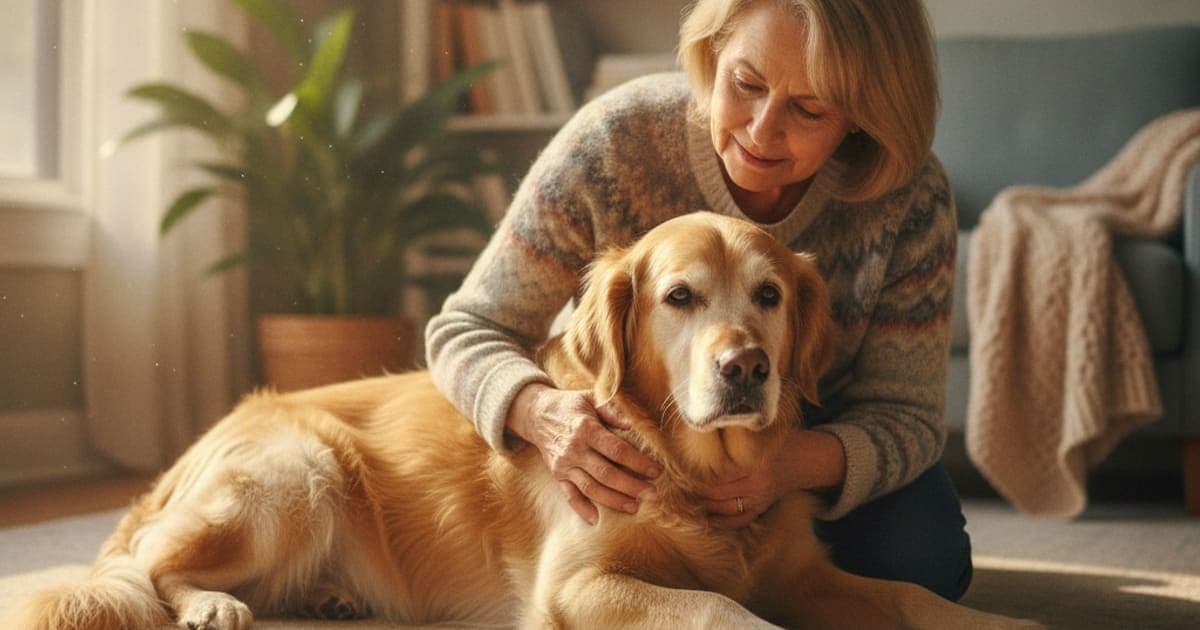
Yes. Older dogs get constipated more often than younger dogs, and the reasons tend to stack up rather than arrive one at a time. The muscular wall of the colon moves stool along less briskly with age. Senior dogs often drink less, eat less consistently and move less. Arthritic hips, knees and spines make the hold-the-squat posture genuinely uncomfortable. And several medications commonly prescribed to older dogs can slow gut motility as a side effect.
An occasional hard, dry stool after a hot day or a change of food is common and usually resolves on its own. What deserves closer attention is a pattern: repeated straining, days without a bowel movement, or constipation arriving alongside vomiting, appetite loss or alternating diarrhoea. In an older dog, those combinations are more likely to reflect something underneath the constipation rather than the constipation itself.
What changes inside an aging dog's gut
Senior status arrives at different ages for different dogs — earlier for giant breeds, later for small ones — but the physiology trends the same way.
Slower motility. Colonic smooth muscle loses some of its coordination and strength with age. Stool sits longer, and the longer it sits, the more water the colon pulls back out of it. Dry stool is harder to move, which keeps it sitting longer still. That loop is the mechanical heart of most senior dog constipation.
Lower water intake. Older dogs sometimes drink less because getting to the bowl is work, because dental pain makes drinking unpleasant, or because they simply feel thirst less reliably. Dogs with kidney disease lose water the other way. Hydration status shows up in stool consistency faster than almost anything else.
Medication effects. Opioid-class pain medications, certain antihistamines, diuretics, sucralfate and some antacids are all known to slow transit or firm stool. This matters, and it is worth raising with your veterinarian — but it is never a reason to stop or reduce a prescription on your own. The fix for a medication side effect is a conversation with the prescriber, not a unilateral change at home.
Structural and disease causes. Prostate enlargement in intact males, perineal hernias, old pelvic fractures that narrowed the canal, anal gland disease, rectal masses, hypothyroidism and reduced colon tone can all present first as a dog who strains. These are precisely the reasons senior dog constipation warrants a hands-on exam rather than a guess.
What normal bowel movements look like in an older dog
There is no single correct number. Most healthy adult dogs pass stool once or twice a day, roughly matching meal frequency; some do it three times, some once. What matters is your dog's own baseline and whether it has shifted.
Normal senior stool is formed, segmented, moist enough to hold shape without crumbling, and passed in under a minute without obvious effort. Age alone should not change that. If your fourteen-year-old now produces dry, pebble-like pieces, or takes two minutes of visible pushing to produce anything, that is a change worth noting — not a normal consequence of getting old.
It also helps to separate two things owners frequently merge. Constipation is stool that is too hard or too slow to pass. Dyschezia is painful defecation, which can happen with perfectly normal stool when the problem is arthritis, anal glands or a rectal lesion. A dog who cries, circles repeatedly or adopts a strange posture may be telling you about pain rather than about stool consistency, and the two are managed differently.
Signs of constipation senior dog owners notice first
The early signals are usually behavioural rather than dramatic:
- Longer time in the squat, often with several attempts in one outing
- Small, hard, dry stools — or nothing produced after real effort
- Hunched posture, tense abdomen, or reluctance to finish a walk
- Scooting, excessive licking under the tail, or flinching when the area is touched
- Reduced appetite, low energy, or a dog who seems generally off
- Stool streaked with fresh blood or coated in mucus from straining
- Restlessness and repeated trips outside with no result
One mildly hard stool is not an emergency. A dog making repeated unproductive attempts is a different situation, because you cannot tell from the outside whether the colon is simply slow or whether something is blocking it.
Senior dog constipation: when to worry
Constipation that arrives with vomiting, a refusal to eat, or repeated unproductive straining is not a wait-and-see problem — it needs a veterinary exam that day.
| What you are seeing | What it may reflect | Reasonable response |
|---|---|---|
| Firm, dry stool passed with mild effort, dog otherwise bright and eating | Mild dehydration, diet change, reduced activity | Monitor water intake; mention it at the next visit |
| No stool for more than two days, dog still comfortable | Slowed transit, possible early impaction | Call your veterinarian for guidance |
| Repeated straining producing nothing | Possible impaction or obstruction | Same-day veterinary assessment |
| Hard stool followed by watery stool, or liquid passing with no formed stool | Liquid moving around a retained mass, or colitis | Prompt veterinary assessment |
| Senior dog constipated and throwing up | Obstruction, systemic illness, kidney disease | Urgent — treat as an emergency |
| Senior dog constipated and not eating | Pain, nausea, or illness beyond the gut | Urgent — same-day exam |
| Crying, swelling beside the anus, or a bulge under the tail | Perineal hernia, anal gland abscess, mass | Veterinary exam promptly |
A few of these deserve expansion because they are searched constantly and misread often.
Senior dog constipation then diarrhoea. When firm stool is retained, liquid stool produced behind it can seep around the mass. The dog looks like they have diarrhoea while they are, in fact, still blocked. Giving an anti-diarrhoeal in that situation can make things worse. If your dog alternates between straining and producing liquid, describe the exact sequence to your vet rather than naming it.
Senior dog constipated after diarrhoea. This sequence is common after a gastrointestinal upset. Fluid losses leave the dog dehydrated, the colon reclaims water aggressively, and the next stool is dry and difficult. A brief rebound can be unremarkable; a dog who has not produced stool for days after a diarrhoea episode, or who is lethargic, needs to be seen.
Vomiting or appetite loss alongside constipation changes the question entirely. Those combinations overlap with intestinal obstruction, kidney disease, pancreatitis and abdominal masses — conditions where hours matter and home measures can do harm.
Mobility, pain and posture: the orthopaedic side of the problem
Ask any older dog to defecate and you are asking for a coordinated effort: hind-limb flexion, a stable pelvis, spinal extension and the ability to hold all of it steady. A dog with hip dysplasia, lumbosacral pain, cruciate disease or advanced osteoarthritis may postpone that posture because holding it hurts. Postponement means longer transit, drier stool, and a dog who is now both sore and constipated.
This is the part owners can influence day to day. Non-slip flooring, a ramp instead of stairs, shorter and more frequent garden trips, trimming the hair around the perineum, and keeping body weight sensible all reduce the physical cost of going. So does a veterinary pain plan — prescribed anti-inflammatories, monoclonal antibody injections, rehabilitation, laser or acupuncture all exist because managing pain well changes how a senior dog uses their body.
Alongside that veterinary foundation, many owners support joint, tendon and connective-tissue recovery with peptides. K9-REPAIR from pawgen combines BPC-157 and TB-500. BPC-157 is a short peptide based on a sequence identified in gastric juice, and laboratory research has focused on its role in angiogenesis — the formation of new blood vessels — and in connective-tissue repair signalling. TB-500 is a synthetic fragment related to thymosin beta-4, a protein involved in actin regulation and cell migration, processes central to how tendon and muscle remodel after load or injury. Research suggests these mechanisms are relevant to soft-tissue recovery, and it is promising enough that a growing number of owners now run the stack through recovery and through the slow decline of an arthritic senior.
To be precise about what that is and is not: BPC-157 and TB-500 are not FDA-approved veterinary drugs, and a mobility formulation does nothing for constipation directly. No supplement belongs in the management of a dog who cannot pass stool — that is a veterinary problem with veterinary answers. What mobility support may contribute to is the comfort of a senior dog's movement generally, and comfort is one of the levers that determines whether an old dog squats willingly or holds it. pawgen batches are third-party tested with certificates of analysis published, dosing is weight-based and should be set with your veterinarian, and orders ship direct to the door under a 60-day money-back guarantee.
Daily habits that support regularity in an older dog
- Water first. Multiple bowls, a fountain if your dog prefers moving water, and wet food or water stirred into kibble if your vet agrees.
- Keep movement regular. Short, frequent walks stimulate colonic activity more reliably than one long outing.
- Give more opportunities. Older dogs sometimes need four or five chances a day rather than two.
- Groom the back end. Matted hair around the anus can physically obstruct passage, particularly in long-coated seniors.
- Change food gradually. Fibre adjustments can help some dogs and worsen others — which type and how much is a conversation to have with your veterinarian, not a guess.
- Keep a simple log. Dates, consistency, effort, appetite. Two weeks of notes is worth more at an appointment than any description from memory.
What not to do: never give human laxatives, enemas or mineral oil at home. Enemas in particular can perforate a compromised colon, and oil can be inhaled. These are clinic procedures for good reason.
Key Takeaways
- Older dogs do get constipated more often, driven by slower colon motility, lower water intake, reduced activity, orthopaedic pain and medication side effects.
- Normal senior bowel movements are formed, moist and passed easily — age alone does not make straining normal.
- Constipation plus vomiting, appetite loss, or repeated unproductive straining is urgent.
- Hard stool followed by liquid stool often means fluid is passing around a retained mass, not ordinary diarrhoea.
- Constipation after a bout of diarrhoea is usually dehydration rebound, but should be checked if it persists.
- Pain management and easier mobility are part of the picture, because a dog who cannot comfortably hold the posture will delay going.
- Never use home enemas, human laxatives or mineral oil, and never alter a prescribed medication because you suspect it is slowing the gut.
pawgen publishes third-party certificates of analysis for its batches, lists current K9-REPAIR formulations in the shop, and sets out shipping and availability details on its location page.
Your veterinarian owns the diagnosis and the treatment plan here. Constipation in an older dog is a symptom, not a diagnosis, and the work of distinguishing a slow colon from a prostate, a hernia, a mass or a metabolic disease requires an exam, and often imaging and bloodwork. Supplements and peptides operate in the space that proper veterinary care creates — supporting comfort and recovery around a plan your vet has built, never standing in for it.
Owners exploring peptide support for their dog can review K9-REPAIR — BPC-157 + TB-500 formulated for dogs — at https://pawgen.com/. BPC-157 and TB-500 are not FDA-approved veterinary drugs. Nothing in this article treats, cures or prevents any condition; every decision about your dog's care belongs with your veterinarian.
Frequently asked questions
- Do older dogs get constipated?
- Yes, more often than younger dogs. Colon motility slows with age, water intake tends to drop, activity decreases, and arthritic pain makes the squatting posture uncomfortable to hold. Some medications also slow the gut. Occasional hard stool is common, but repeated straining or days without a bowel movement needs veterinary assessment.
- Do senior dogs get constipated?
- Senior dogs are among the most likely age group to experience constipation. The usual drivers are reduced colon muscle tone, dehydration, less exercise, orthopaedic pain and medication side effects. Underlying conditions such as prostate enlargement, perineal hernia or kidney disease also appear more often in older dogs, so persistent cases deserve a veterinary exam.
- What are the symptoms of constipation in a senior dog?
- Watch for prolonged squatting, repeated attempts producing little or nothing, small dry pebble-like stools, a hunched or tense posture, scooting, licking under the tail, mucus or fresh blood on stool, and reduced appetite or energy. Changes from your dog's own normal pattern matter more than any fixed number of bowel movements.
- Senior dog constipation: when should I worry?
- Worry when straining produces nothing repeatedly, when more than two days pass with no stool, or when constipation comes with vomiting, appetite loss, lethargy, a painful abdomen or visible swelling near the anus. Those combinations overlap with obstruction and systemic illness, so they warrant same-day veterinary attention rather than home measures.
- Why does my senior dog have constipation then diarrhea?
- Liquid stool can seep around a retained firm mass, so a blocked dog may appear to have diarrhoea while still being constipated. Colitis and dietary upset can also alternate with hard stool. Describe the exact sequence to your veterinarian rather than medicating, because anti-diarrhoeal products can worsen a true impaction.
- My senior dog is constipated and throwing up. What does that mean?
- Treat that combination as urgent. Constipation with vomiting can indicate intestinal obstruction, kidney disease, pancreatitis or an abdominal mass rather than simple slow transit. Withhold home remedies, note when the last stool and last meal occurred, and contact your veterinarian or an emergency clinic straight away.
- My senior dog is constipated and not eating. Is that an emergency?
- It should be handled urgently. Appetite loss alongside constipation suggests pain, nausea or illness beyond the colon, and older dogs decompensate faster than young ones. Your veterinarian will usually want an abdominal exam, a rectal exam and possibly imaging or bloodwork to find what is driving both signs.
- How often should a senior dog have a bowel movement?
- Most dogs pass stool once or twice daily, roughly tracking meal frequency, and age alone should not change that rhythm. Your dog's established baseline is the reference point. A shift to every other day, or stool that suddenly requires visible effort, is worth logging and raising with your veterinarian.
- Can arthritis cause constipation in older dogs?
- Indirectly, yes. Defecating requires hind-limb flexion and a stable, held posture, which hurts for dogs with hip, stifle or lumbosacral pain. Dogs postpone going, stool sits longer, more water is reabsorbed, and it becomes harder to pass. A veterinary pain plan and easier footing often improve the pattern.
- Can I give my senior dog a stool softener or laxative at home?
- Not without veterinary direction. Human laxatives, mineral oil and home enemas can cause serious harm, including colon perforation and aspiration pneumonia, and they are dangerous if an obstruction is present. Ask your veterinarian which approach suits your dog and let them set any product, form and amount.
Educational content. BPC-157 and TB-500 are not FDA-approved veterinary drugs. Talk to your veterinarian before starting anything new, especially if your dog is on prescribed medication.