Do Older Dogs Lose Hearing? (Senior Deafness Explained)
Yes — most dogs lose some hearing as they age, usually gradually and in both ears, as the sound-sensing hair cells of the inner ear wear out and do not regrow. High frequencies fade first. The change is painless, but it needs a veterinary exam to rule out treatable ear problems.
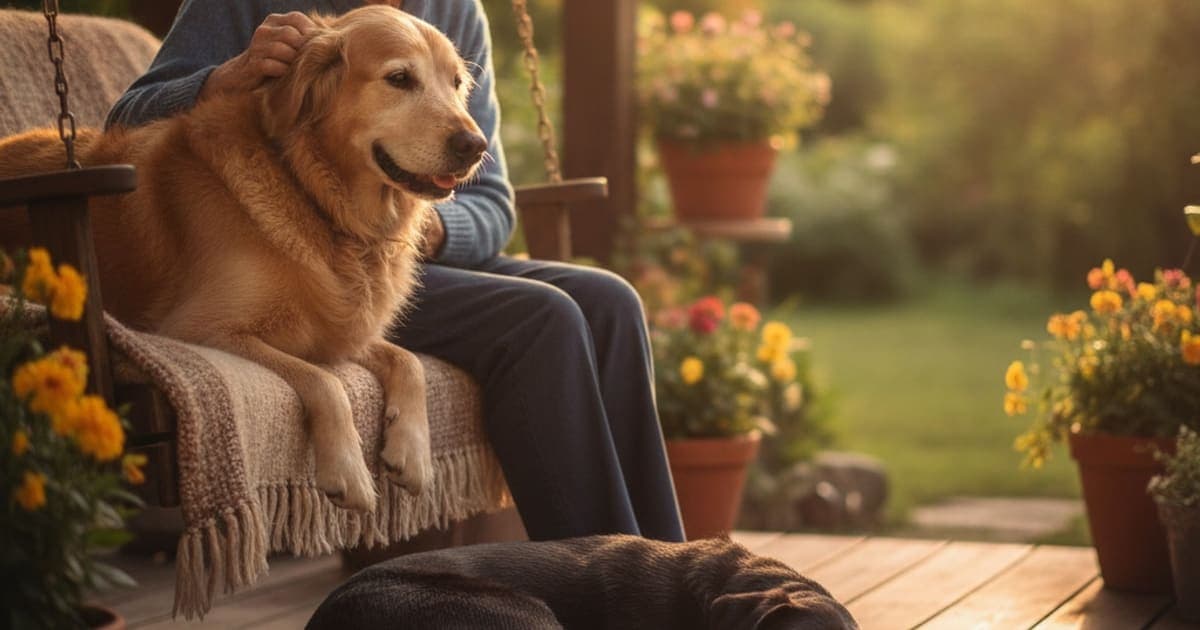
Yes. Hearing loss is one of the most common changes in aging dogs, and in most cases it is gradual, painless and affects both ears at a similar rate. The sound-sensing hair cells inside the cochlea wear out over a lifetime and mammals do not regrow them, so what is lost tends to stay lost. High frequencies usually go first, which is why a senior dog may still react to a slammed door or a heavy footstep on the floor while completely ignoring a called name or a squeaky toy.
That said, not every older dog that stops responding is going deaf from age alone. Ear infections, wax and debris, polyps, masses and certain medications can all reduce hearing, and several of those are things a veterinarian can address. The first job is always to separate age-related change from something treatable.
Why hearing fades with age
Sound travels down the ear canal, vibrates the eardrum, passes through three tiny middle-ear bones, and arrives at the cochlea — a fluid-filled spiral lined with rows of hair cells. Those cells convert mechanical vibration into nerve signals. They are exquisitely sensitive and they are finite.
Over years, several things stack up. The eardrum and middle-ear structures stiffen slightly. The hair cells responsible for high-frequency sound degenerate first, because they sit at the entrance of the cochlea and take the brunt of every sound the dog has ever heard. Nerve fibres carrying signals from the cochlea to the brain thin out. Blood supply to the inner ear changes. None of this hurts, and none of it happens overnight.
This pattern — bilateral, gradual, high-frequency-first loss in an older animal — is the same age-related process described in humans as presbycusis. Lifetime noise exposure, some inherited factors, and chronic untreated ear disease can all push it along faster. Breed and ear shape play a role too: dogs with heavy drop ears and narrow canals accumulate more chronic inflammation over a lifetime, and chronic inflammation changes how well a canal conducts sound.
The signs owners usually notice first
Age-related hearing loss is sneaky because dogs compensate brilliantly. They read body language, air movement, floor vibration and routine. Many owners only realise something has changed when the dog stops doing one specific thing.
The common early signals:
- Sleeping through the doorbell, the post, or a visitor's arrival when they used to be first at the door
- Startling badly when touched while asleep, or snapping in surprise before recognising you
- Not responding to their name from behind or from another room, but responding instantly when they can see you
- Barking louder, longer, or at odd times — dogs regulate volume partly by hearing themselves
- Ignoring recall outdoors in open space while behaving perfectly indoors, where visual and vibration cues are abundant
- Sleeping more deeply and being harder to rouse
- Becoming clingier, or shadowing you from room to room
It is easy to read this as stubbornness, or to lump it in with cognitive decline. Both misreads are common. A dog with canine cognitive dysfunction tends to show disorientation, night pacing, changed social behaviour and house-training lapses — a different cluster entirely, though the two can overlap in the same senior dog. Your veterinarian is the right person to untangle which is which.
Testing hearing at home, and the test only a vet can run
Home checks are crude but useful. The trick is eliminating every cue that is not sound.
Wait until your dog is relaxed and facing away. Stand out of their line of sight and well back, so they cannot feel air movement or floor vibration. Then make a sound and watch for any ear twitch, head turn or blink. Vary the frequency: a hand clap, a set of keys, a squeaky toy, a high whistle, a low whistle. Try from the left and the right separately. Do it over several days rather than drawing a conclusion from one attempt, and never test by creeping up and startling them.
Filming it on your phone is genuinely worthwhile. Plenty of owners go looking for a senior dog hearing loss video to compare against, and general clips can be reassuring — but a thirty-second recording of your own dog not reacting, with the sound source visible in frame, tells your veterinarian far more than any video online. Bring it to the appointment.
The only objective test is the BAER test — brainstem auditory evoked response. Small electrodes record the brain's electrical response to clicks delivered into each ear, which means it measures hearing without needing the dog to cooperate, and it can test each ear independently. It is usually offered through referral practices and veterinary teaching hospitals. For most old dogs the diagnosis is made clinically and BAER is not required, but it exists when the answer matters.
When it is not age: ear problems, head shaking and what treatment can address
Sudden hearing change, one-sided hearing change, head shaking, scratching, odour, discharge or pain are not features of ordinary aging. They are reasons to book a veterinary exam.
| What is going on | What you tend to see | What a vet can do |
|---|---|---|
| Age-related (sensorineural) loss | Gradual, both ears, no pain, no odour, no head shaking | No treatment restores it; focus shifts to safety, communication and quality of life |
| Otitis externa / ear infection | Head shaking, scratching at the ear, smell, discharge, pain, fairly sudden change | Otoscopic exam, cytology, cleaning, prescribed medication for the specific organism |
| Wax, debris or a damaged eardrum | Muffled hearing, head shaking, sometimes one-sided | Examination and, where appropriate, flushing under sedation |
| Polyp, mass or growth in the canal | Usually one ear, persistent discharge, sometimes head tilt or balance change | Imaging, biopsy, surgical options discussed case by case |
| Medication-related hearing change | Onset associated with a drug course | Review with the prescribing vet — never stop a prescription on your own |
| Cognitive decline mimicking deafness | Disorientation, night pacing, changed interaction | Full senior workup to separate the two |
So what does senior dog hearing loss treatment actually look like? For conductive causes — infection, debris, inflammation, a mass — treating the underlying problem is the whole answer, and hearing often improves once the canal is open and healthy again. For true age-related loss of hair cells and nerve fibres, there is nothing currently available in veterinary medicine that restores what is gone. Canine hearing aids have been trialled, but very few dogs tolerate a device in the canal well enough for it to be practical. The real work is adaptation, and dogs are extremely good at it.
Living well with a deaf or hard-of-hearing senior dog
A deaf dog is not a diminished dog — but a deaf dog off-leash near a road is a dog in genuine danger, and that one change to your routine matters more than anything else on this page.
Start hand signals early, while hearing is only partially reduced. Pair every verbal cue with a distinct visual one for a few weeks, and the dog transfers the association almost without noticing. The core set worth building: come, sit, down, stay, a clear thumbs-up as a yes marker, and a flat-palm stop. Keep the signals large, consistent across the household, and always rewarded.
Other adaptations owners rely on:
- A vibration collar — the gentle buzz type, never a shock collar — conditioned as a simple look at me cue, with a reward every single time at first
- Stomping on the floor or tapping furniture so the dog feels the vibration and turns
- Flicking a light on and off to get attention in the evening
- Waking them by touching the shoulder softly and letting them catch your scent first, so they surface gently instead of startling
- Approaching from the front, and teaching children and visitors to do the same
- A collar tag and lead sleeve that says the dog is deaf
- Keeping furniture and bowls in the same places, so a dog relying more on memory and scent can map the house confidently
- Enriching the senses that remain: snuffle mats, scent trails, new walking routes with new smells
Do not let a deaf dog drift into isolation. Touch, routine, food puzzles and shared time matter more now, not less. Most dogs adjust faster than their owners do.
Keeping the rest of the body sharp while the ears fade
When hearing goes, dogs lean harder on sight, scent and movement. A dog that can trot over, check in visually and follow you around the house stays connected. A dog that is stiff, sore and reluctant to get up loses that connection twice over.
That is where pawgen's K9-REPAIR sits in a senior dog's routine — not as anything to do with hearing, which no supplement addresses, but as part of how owners support joint, tendon and soft-tissue comfort through the years when mobility is what keeps an aging dog engaged with the world. K9-REPAIR is a BPC-157 and TB-500 formulation. BPC-157 is a peptide sequence derived from a protein found in gastric juice; research suggests it plays a role in angiogenesis and soft-tissue repair signalling. TB-500 is a synthetic fragment related to thymosin beta-4, studied for its role in actin regulation and cell migration. Neither is an FDA-approved veterinary drug, and nothing here is a claim about what will happen to your dog — this is mechanism and emerging science that a growing number of owners have adopted through recovery and into senior care.
What pawgen can say plainly is the descriptive part: what is in the bottle, weight-based dosing worked out with your veterinarian rather than guessed at, third-party testing with certificates of analysis published for every batch, direct-to-door shipping, and a 60-day money-back guarantee. That is a deliberately different posture from the kitchen-sink senior chew with fourteen ingredients hidden inside a proprietary blend, where nobody — including the company selling it — can tell you how much of anything your dog is actually getting. Point your skepticism at the label tricks, not at the biology.
Key Takeaways
- Most older dogs lose some hearing with age; it is gradual, painless, affects both ears and hits high frequencies first
- Hair cells in the cochlea do not regenerate, which is why age-related loss is permanent
- Head shaking, odour, discharge, pain, or sudden or one-sided change is not aging — it is a reason to see a vet promptly
- Home testing works if you remove every non-sound cue; a BAER test is the only objective measure
- Infections and debris are often treatable; true age-related loss is managed through communication and safety, not reversed
- Hand signals, a vibration cue, consistent routines and a reliable lead or fenced yard do the heavy lifting
- Filming your dog's non-response gives your vet better information than any general video
If you want to read more about what goes into K9-REPAIR, the published batch certificates of analysis are at /coas/, the full range is listed at /shop/, and shipping and availability details are at /location/.
Your veterinarian owns the diagnosis and the treatment plan here — the ear exam, the decision about whether this is presbycusis or otitis or something structural, the medication, and the senior workup that separates hearing loss from cognitive change. Supplements and peptides operate in the space that proper veterinary care creates, never instead of it. Bring your video, bring your observations, and build the plan together.
Owners exploring peptide support for their dog can review K9-REPAIR — BPC-157 + TB-500 formulated for dogs — at https://pawgen.com/. BPC-157 and TB-500 are not FDA-approved veterinary drugs. Nothing in this article treats, cures or prevents any condition; every decision about your dog's care belongs with your veterinarian.
Frequently asked questions
- Do older dogs lose hearing?
- Yes. Most dogs lose some hearing as they age. The loss is typically gradual, painless, affects both ears, and takes high frequencies first — so a dog may still feel a door slam but miss a called name. A veterinary exam should confirm it is age and not a treatable ear problem.
- Why do senior dogs go deaf?
- Because the hair cells in the cochlea that convert sound into nerve signals wear out over a lifetime and mammals cannot regrow them. Middle-ear structures also stiffen and auditory nerve fibres thin. Chronic untreated ear disease and lifetime noise exposure can accelerate the process, but age alone is the usual driver.
- How to help senior dog with hearing loss?
- Start pairing hand signals with verbal cues while some hearing remains, so the transfer happens naturally. Use floor vibration or a light flick for attention, approach from the front, and keep furniture and routines consistent. Have your vet rule out infection or debris first, since those are often treatable.
- How to help a deaf senior dog?
- Keep them on lead or in a secure fenced yard — that is the single biggest safety change. Build a core set of hand signals, condition a gentle vibration collar as a look-at-me cue, wake them by touch rather than noise, add a deaf-dog tag, and enrich scent-based play to keep them engaged.
- What are the earliest symptoms of senior dog hearing loss?
- Sleeping through the doorbell, not meeting you at the door, startling when touched while asleep, barking louder or more often, ignoring their name from behind but responding on sight, and sleeping more deeply. Owners often mistake these for stubbornness or cognitive decline before realising hearing has changed.
- My senior dog is shaking his head — is that hearing loss?
- Head shaking is not a feature of age-related hearing loss. It usually points to otitis, wax or debris, a foreign body, a polyp or a mass — conditions that can reduce hearing and that often respond to veterinary treatment. Book an ear exam rather than assuming it is aging.
- Is there a treatment that restores hearing in old dogs?
- Not for true age-related loss, because the damaged inner-ear hair cells do not regenerate. Hearing reduced by infection, inflammation, wax or a growth often improves once a vet treats the underlying cause. Canine hearing aids exist but very few dogs tolerate them well enough to be practical.
- At what age do dogs usually start losing their hearing?
- It varies widely by individual, breed and ear history rather than following a fixed age. Changes generally appear in the second half of a dog's life and are more noticeable in larger breeds, which age sooner. Ask your vet to check hearing informally at every senior wellness visit.
Educational content. BPC-157 and TB-500 are not FDA-approved veterinary drugs. Talk to your veterinarian before starting anything new, especially if your dog is on prescribed medication.