My Dog Ate Cold Sore Cream: What to Do Now
If your dog ate cold sore cream, call your veterinarian, an emergency clinic or a pet poison helpline right away, even if your dog seems fine. Human cold sore and antiviral creams can be dangerous to dogs. Do not try to treat this at home, and bring the packaging with you.
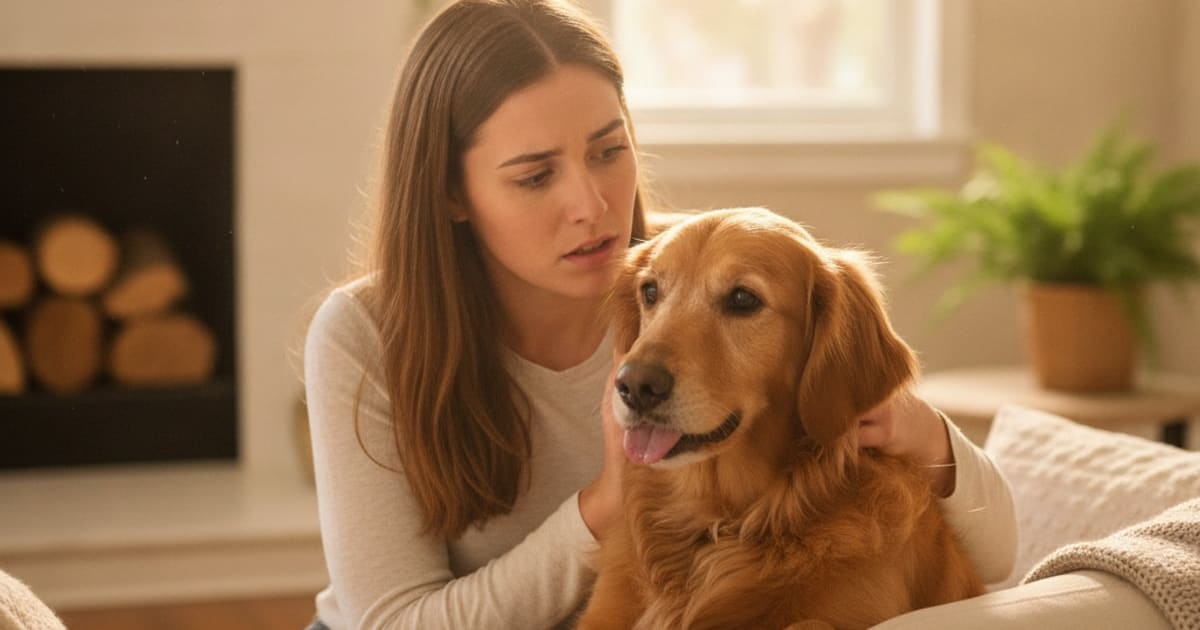
If your dog ate cold sore cream, call your veterinarian, an emergency clinic or a pet poison helpline now, even if your dog seems completely fine. Human cold sore and antiviral creams are made for human skin and human physiology, and they can be dangerous to dogs when swallowed. Never try to make your dog vomit, and do not give any food, liquid or home remedy by mouth while you wait for instructions. Instead, take the tube and the box away from your dog, keep both so you can hand them to the clinic, confine your dog somewhere quiet and safe, and let the person on the phone decide what needs to happen next.
Your first few minutes, step by step
If you have not called anyone yet, do that before you keep reading. Call your veterinarian, an emergency clinic or a pet poison helpline right now, even if your dog looks completely fine, and do not try to treat this at home. The two animal poison control services owners are usually pointed toward are the ASPCA Animal Poison Control Center and the Pet Poison Helpline, and your regular clinic or the nearest emergency hospital can also advise you directly.
While you are dialling, or while someone else is, do these things:
- Move your dog away from the cream and close the door on the room it happened in, so nothing else gets chewed.
- Check any other pets in the house. If more than one animal had access, say so on the phone.
- Pick up the tube, the carton, the foil seal, the leaflet and any chewed plastic. Do not throw anything away.
- Write down the time you found your dog, or the time you last saw the product intact.
- Note what else your dog has eaten today, and every medication or supplement your dog is currently on.
- Keep your dog calm. A dog that is panting from stress and running around the house is harder to assess than one resting in a crate or a closed room.
What you should not do matters just as much. Do not give milk, oil, salt, peroxide or anything else by mouth. Do not try to rinse your dog's mouth out with anything unless the clinic or the poison line tells you to and talks you through it. Do not wait to see whether your dog becomes unwell before you call. Timing is one of the main things that changes what a veterinary team can do, and a call costs you nothing but a few minutes.
Why a human cold sore cream is not a harmless little lick
Cold sore and antiviral creams are designed to sit on a small patch of human skin and stay there. Everything about them, from the carrier base that makes them spread to the way they are preserved, is chosen with human skin and human metabolism in mind. None of that reasoning applies to a dog that swallows the contents of a tube.
There are a few separate problems stacked on top of each other. The medicated portion of the product is intended to be absorbed through skin in a controlled way, not taken into the gut. The non-medicated portion of the base can irritate the mouth, the throat and the digestive tract. Dogs also process many substances differently from people, and a dog's body size relative to the contents of a tube is nothing like the ratio a person deals with. On top of that, the packaging itself is a hazard: chewed plastic, a metal crimp or a foil seal can cause problems entirely separate from anything the cream contains.
There is one more wrinkle that catches owners out. A dog that licks a treated area on your lip, face or hand is also having contact with the product, just more slowly and in a way that is easy to miss. If you use these creams, assume your dog will try to lick your face and plan around it.
How any individual dog responds depends on body size, age, health, what else is in their system and what exactly happened. Results vary from dog to dog, which is precisely why the answer is a phone call to a professional rather than a guess made at the kitchen counter.
What the clinic or poison line will ask you
Having this ready shortens the call and gives the team something concrete to work with. Gather what you can, but do not delay calling in order to assemble a perfect list.
| What they will ask | Why it matters | How to get it fast |
|---|---|---|
| The exact product, including the full name on the carton | Different products have different contents and different handling | Keep the box and the leaflet in your hand during the call |
| How much of the tube is unaccounted for | Helps them judge how urgent this is | Compare what is left against how full it was before |
| When it happened | Timing shapes what options are still available | Use the last moment you saw the product intact |
| Your dog's weight and age | Everything is assessed relative to body size | Use a recent weight from the clinic if you have one |
| Current medications and health conditions | Other treatments and organ function change the picture | Have the labels or a photo of them nearby |
| What your dog is doing right now | Separates watch-at-home from come-in-now | Describe behaviour plainly, without diagnosing it |
Bring the packaging with you if you are told to come in. Handing a vet the actual carton is far better than trying to remember a name from a chemist's shelf, and it saves the team from working blind.
Signs to watch for while you arrange care
Your veterinarian or the poison line will tell you what to monitor for your dog specifically. In general terms, owners are asked to watch for drooling, lip smacking, pawing at the mouth or face, redness or soreness around the lips, refusing food or water, unusual tiredness or dullness, restlessness, unsteadiness on the feet, tremors or twitching, changes in breathing, pale or discoloured gums, changes in drinking and urination, hiding, or any behaviour that is simply not your dog.
Two things are worth being blunt about. First, a dog with no signs at all is not a dog in the clear. Some exposures take time to show themselves, and the absence of symptoms in the first hour tells you very little. Second, a dog that was bright and then becomes quiet, wobbly or withdrawn needs to be seen straight away, not watched for another hour to see whether it settles. If you are reading signs and feeling unsure, that uncertainty is itself a reason to go in.
Anything involving collapse, seizures, laboured breathing, gums that are not a healthy pink or a dog who cannot be roused properly is an immediate emergency. Go now and call the clinic from the car so they are expecting you.
What care at the clinic usually involves
Your veterinarian will start with the history you provide and a physical examination: weight, temperature, heart and lungs, gums, hydration, mouth and throat, and a general neurological check. The product, the timing and your dog's size all feed into what comes next.
From there, the plan is the vet's to make. Depending on the situation, that might mean nothing more than a careful examination and clear instructions for monitoring at home with a recheck if anything changes. It might mean blood work to look at organ function, fluids given through a drip, medication to protect or settle the digestive tract, or a period of hospitalisation so your dog can be observed properly. Whether any decontamination step is appropriate is a clinical decision that depends on what was swallowed and when, and it is never something to attempt yourself at home.
If your dog is already on prescribed medication for something else, say so clearly and do not stop or change anything on your own. Talk to your vet about how an exposure like this interacts with an existing treatment plan, and let them make that call.
Dogs that need a lower threshold for going in
Some dogs should be seen sooner rather than monitored. Small and toy breeds have very little body mass relative to the contents of a tube. Puppies are both more likely to chew packaging and less equipped to handle an insult to the system. Senior dogs, and dogs with known liver, kidney or heart conditions, have less reserve. Pregnant and nursing dogs are a separate situation entirely, and any question about them resolves to a conversation with your veterinarian rather than anything you read online. Dogs already taking daily medication, and dogs who have had recent surgery or illness, also deserve a faster response.
The same urgency applies if your dog ate cold sore medicine in another form: a tablet pressed out of a blister pack, a patch, a medicated lip product from a handbag. Different format, same phone call, and bring the packaging either way.
Stopping a repeat performance
These creams end up in exactly the places dogs investigate: bedside tables, bathroom counters, coat pockets, handbags left on the floor, gym bags, car door pockets. The tubes are small, soft, warm from a pocket and often faintly scented, which is close to a design brief for something a dog will carry off.
Store every human medication, including topical ones, behind a closed door or in a drawer rather than on an open surface. Treat handbags and overnight bags as medicine cabinets, because that is usually what they are. Put used applicators and wrappers in a bin with a lid. And if you are treating a cold sore yourself, keep your dog off your face until the area is covered or fully dry.
Key Takeaways
- Call your veterinarian, an emergency clinic or an animal poison control service immediately, before symptoms appear.
- Human cold sore and antiviral creams can be dangerous to dogs, and the packaging is a hazard in its own right.
- Do not attempt any home treatment, and do not give anything by mouth unless a professional instructs you to.
- Keep the tube, carton and leaflet, and take them with you to the clinic.
- Note the time of the exposure, your dog's weight and every medication your dog is on.
- A dog showing no signs still needs assessment, and results vary from dog to dog.
- Collapse, seizures, breathing difficulty or pale gums mean go now and call from the car.
For a wider overview of the warning signs that mean a dog needs to be seen urgently rather than monitored at home, read Dog Emergency Signs.
Your veterinarian owns the diagnosis and the treatment plan here, and in a potential poisoning there is no useful substitute for that. Your job in the first hour is simple: make the call, protect the packaging, keep your dog quiet and safe, and follow the instructions you are given. Everything else, including what monitoring or follow-up your dog needs afterwards, is a decision to make with the clinic that has examined your dog.
Frequently asked questions
- Is cold sore cream dangerous for dogs?
- Human cold sore and antiviral creams are formulated for human skin and can be dangerous to dogs when swallowed, and chewed packaging adds a separate hazard. Treat any ingestion as a reason to call your veterinarian, an emergency clinic or a pet poison helpline straight away.
- My dog barely touched it. Do I still need to call?
- Yes. Even when the exposure seems minor, a professional should be the one deciding whether your dog needs to be seen. Calling takes a few minutes and gives you an assessment based on your dog's size, age and health rather than guesswork.
- Should I do anything at home first?
- No. Do not attempt any home treatment and do not give food, milk, oil or any remedy by mouth. Move your dog away from the product, keep the tube and box, note the time, and follow the instructions you are given on the phone.
- How quickly would a dog show signs after eating cold sore cream?
- There is no reliable timeline you can plan around, and a dog that looks normal in the first hour may still need assessment. Results vary from dog to dog, so the safe approach is professional advice immediately rather than waiting to see what develops.
- What should I bring to the veterinary clinic?
- Bring the tube, the carton, the leaflet and any chewed packaging, along with your dog's recent weight and a list of current medications. Handing the team the actual product is far more useful than describing it from memory.
- What if my dog ate cold sore medicine rather than a cream?
- The response is the same. A tablet from a blister pack, a patch or a medicated lip product all warrant an immediate call to your veterinarian or a pet poison helpline, and you should keep the packaging to bring with you.
- Is it a problem if my dog licks my face while I am using cold sore cream?
- It counts as contact with the product, and it is easy to miss because it happens gradually. Keep your dog away from your face until the treated area is covered or fully dry, and mention any licking when you talk to your vet.
- My dog is already on prescribed medication. Does that change anything?
- It can, so tell the clinic exactly what your dog takes. Never stop, skip or adjust a prescribed medication on your own after an exposure. Your veterinarian will decide how the two situations fit together.
- When is this an immediate emergency rather than a phone call?
- Collapse, seizures, tremors, laboured breathing, gums that are pale or an unusual colour, or a dog who cannot be roused properly all mean go to an emergency clinic now. Call from the car so the team is ready for you.
Educational content, not veterinary advice. Ask your vet about your dog.