Dog Biting Hands When Excited: Why and What Helps
Dogs bite hands when excited because excitement moves straight into the mouth, which is how dogs grab, hold and play. Lower the arousal first, keep hands still, redirect the teeth onto a toy and reward calm choices. Book a vet exam if the mouthing is new, hardening or breaking skin.
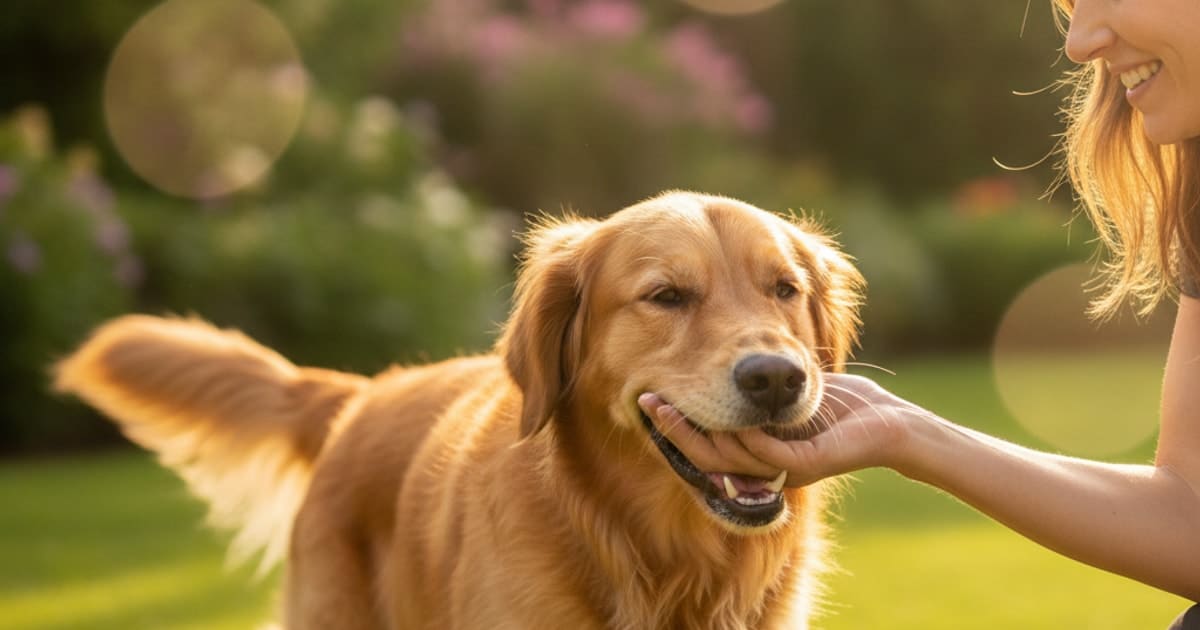
To stop a dog biting hands when excited, lower the excitement before the mouth gets involved: greet quietly, keep your hands slow and boring, put a toy where the teeth want to go, and reward the moments your dog chooses anything other than skin. If the mouthing is new, if it is getting harder, if it breaks skin, or if you see a stiff body, a frozen stare or a growl before the teeth land, book a veterinary exam before you work on training.
That vet step matters because behavior and health sit on top of each other. Pain, itch, dental discomfort, ear trouble and changes in sight or hearing can all shorten a dog's patience and change how a dog handles contact. A vet exam may help find a physical cause, and your vet can tell you whether a referral to a qualified, reward-based behavior professional makes sense.
Why excitement travels straight to your dog's mouth
A dog's mouth is a hand. It carries, grips, explores, tests texture and takes part in almost every social game dogs play with each other. When two dogs play, mouths land on necks, cheeks, legs and shoulders without anyone being alarmed. When your dog gets excited around you, the same hardware comes online, and the nearest moving object is a human hand.
Hands make it worse by accident. They move fast, they appear at face height, they smell like food, they reach over the head, they clip leashes and open doors. Everything that signals something good is about to happen arrives attached to a hand.
There is also learning history. A puppy who got a laugh, a wrestle or a grab-and-tug when teeth touched skin learned that mouthing starts the game. A grown dog repeating that is not forgetting the rules; he is following the ones he was taught.
A dog who puts teeth on your hands when excited is not challenging you for status, he is over-aroused and using the only grabbing tool he has.
That distinction changes everything about the fix. The goal is not to win a confrontation. It is to bring the excitement down, give the mouth a legal target, and make calm behavior the thing that pays.
Telling play mouthing apart from a real warning
This is the judgement call that decides whether you train or whether you phone the clinic. The body tells you more than the teeth do.
Play mouthing comes with a loose, curvy body, bouncy feet, a wide open mouth, exaggerated movement and pauses that invite you back in. A dog biting a hand gently, holding it softly without pressure and then letting go, is using an inhibited mouth, which is a learned skill worth protecting rather than punishing.
A warning looks different. The body goes still. The face hardens. There may be a low growl, a lifted lip, a whale eye with the whites showing, or a sudden freeze just before contact. Mouthing that only shows up when you touch a collar, an ear, a paw or the hindquarters points toward discomfort or a handling association rather than play.
| What you see | What it can point to | First step |
|---|---|---|
| Loose wiggly body, bouncy feet, mouth opening and closing without real pressure | Play mouthing driven by excitement | Lower the excitement, redirect onto a toy, reward calm |
| Soft holding of your hand with no pressure, following you around | Social contact through the mouth | Teach a different greeting such as holding a toy or touching a flat palm with the nose |
| Teeth landing when you reach for the collar, ears, paws or back end | Soreness, sensitivity or a learned association with handling | Book a vet exam before training |
| Stiff body, still face, hard stare, growl, lifted lip | A warning rather than play | Stop, give space, talk to your vet and ask for a qualified behavior professional |
| Contact that breaks skin or leaves bruising | Beyond play mouthing, whatever the intent | Get the wound looked at by a doctor, then arrange a vet exam and professional help |
Never punish a growl. A growl is information, and a dog who learns that growling brings trouble may skip the warning next time.
Reward-based steps that take the teeth off your hands
Start by making your hands uninteresting. Slow movement, no swiping, no pushing the dog away, no wrestling with bare skin. Fast hands are a target; still hands are furniture.
Then give the mouth somewhere to go. Keep a tug toy or a soft toy within reach at the places excitement peaks: the front door, the leash hook, the kitchen. Offer the toy before the greeting, not after the teeth arrive. Handing over a toy once skin has already been grabbed can teach the grab.
Mark and pay the behavior you want. The moment your dog has a closed mouth, four feet on the floor, or a toy in his jaws instead of your fingers, say yes and follow it with food or play. Dogs repeat what works, and a calm greeting has to work better than a mouthy one.
Use a calm pause when teeth touch skin. Stop the game, stand up, fold your arms, step behind a gate or leave the room without drama, then come back and restart at a lower intensity. This is not a correction; it is simply removing the thing the mouthing was buying. Shouting, scruffing, holding the muzzle shut, pinning or any aversive tool pushes arousal higher and can damage the trust you need for handling, grooming and vet visits.
Teach behaviors that cannot happen at the same time as mouthing. A sit for greeting, a nose touch to a flat palm, a hold-the-toy cue, a go-to-mat when the doorbell goes. Each gives your dog a clear job at the exact moment he would otherwise improvise with his mouth.
For dogs who get grabby around food, change the delivery. Hold food on a flat open palm, toss it to the floor, or feed from a lick mat. If a puppy bites a hand when giving treats, the same flat palm applies, plus feeding at a calmer moment rather than at peak excitement. If a puppy bites a hand when petting, shorten the stroking to a few seconds, pet along the shoulder rather than over the head, and pause to let the puppy choose whether to lean back in.
Build an off switch into play. Short bursts with built-in pauses, a cue that ends the game, and a chew or a sniffing task afterward teach a dog how to come down, which is the skill that makes everything else possible.
Managing arousal before it reaches your hands
Training works best when the dog is not already over the top. Several things help lower the baseline.
Rest is one of them. Dogs who are short on sleep handle excitement poorly, so a quiet, undisturbed place to switch off has real value.
The type of exercise matters as much as the amount. Repetitive chase games can wind a dog up and leave him primed to grab. Sniffing walks, scatter feeding, scent games and chewing outlets ask the brain to work and bring the body down.
Set up the pinch points. If arrivals at the door are the problem, use a gate or a leash, hand out a toy before the visitor comes in, and let the greeting happen once the first wave of excitement has passed. If the leash is the trigger, clip it in a boring spot and wait for stillness before the door opens.
Finally, retire bare-hand wrestling. Some dogs can hold their inhibition during rough play and some cannot, and results vary from dog to dog. A tug toy gives you the same contact game with a clear boundary.
Children, visitors and keeping everyone safe
Children's hands are small, quick and unpredictable, and their voices sit in the range that revs dogs up. That combination turns play mouthing into a real risk even when the dog has no intention of causing harm.
Supervise every interaction, and use gates, pens or separate rooms when supervision is not possible. Teach children to stand still with their hands tucked in when a dog gets bouncy, to hand food on a flat palm or drop it into a bowl, and to leave a dog alone when he is eating, chewing or resting. Teach the adults too: no face-level greetings, no reaching over the head, no hands in the dog's face.
If a bite breaks skin, the person needs medical care, and the behavior needs a veterinary exam plus a qualified, reward-based behavior professional. Do not try to manage escalating mouthing around children on your own.
When to call your vet
Book an appointment if any of the following apply: the mouthing is new in a grown dog, the pressure is increasing, teeth land when you touch a specific body part, your dog mouths while stiff or still, there is growling or guarding, or any contact breaks skin. Call your vet if it continues or if you notice limping, flinching when touched, head shaking, scratching, a change in appetite, or any shift in how your dog moves or sleeps.
Your vet can rule out physical causes, check that nothing hurts, and point you toward a behavior professional who uses reward-based methods. Talk to your vet before starting any plan if you are unsure which category your dog's mouthing falls into.
Key Takeaways
- Excited mouthing is social and physical, not a status problem, and it responds to lower arousal rather than confrontation.
- Keep hands slow and still, hand over a toy before the greeting, and pay calm behavior with food or play.
- A calm pause that ends the game teaches more than any correction; punishment, scruffing and aversive tools raise arousal and risk.
- Soft, inhibited holding is a skill worth keeping, while stiffness, freezing, growling or skin damage means stop and get help.
- Children need gates, supervision and flat-palm food delivery around any dog who mouths.
- New, worsening or handling-linked mouthing goes to the vet first, because pain can change behavior.
Your veterinarian owns the medical picture and the referral, and a qualified, reward-based behavior professional owns the training plan; everything in this article is meant to help you describe what you are seeing clearly to both. For a wider view of canine health topics, see the conditions library, and if you are ever unsure whether something needs urgent care, read Dog Emergency Signs.
Frequently asked questions
- how to stop dog biting hands when excited
- Lower the excitement before the mouth engages. Greet quietly, keep hands slow and still, hand over a toy before contact, and reward a sit or a closed mouth with food or play. If teeth touch skin, calmly end the interaction and restart at a lower intensity.
- how to stop dog biting hands when playing
- Swap bare-hand play for a tug toy so the mouth always has a legal target. Play in short bursts with built-in pauses, use a cue that ends the game, and stop immediately if teeth land on skin. Finish with sniffing or chewing to bring arousal down.
- Why does my dog bite my hand gently without hurting me?
- Soft holding with no pressure is inhibited mouthing, the way dogs make social contact with each other. It is contact, not a warning, when the body is loose and wiggly. Redirect it onto a toy or a nose touch to a flat palm rather than correcting it.
- Is it okay to let my dog mouth my hands during play?
- Allowing it teaches that hands start the game, which gets risky around children and visitors. A tug toy gives you the same contact play with a clear boundary. Results vary from dog to dog, and some dogs hold their inhibition poorly once excitement climbs.
- Why does my puppy bite my hand when I pet him?
- Petting is contact, and contact invites a puppy's mouth. Keep sessions brief, stroke along the shoulder instead of over the head, and pause to let the puppy choose whether to lean back in. Have a toy ready so the teeth have somewhere acceptable to go.
- My puppy bites my hand when I give him treats. What helps?
- Change the delivery. Offer food on a flat open palm rather than pinched between fingertips, or toss it to the floor so fingers are never a target. Hand food at calmer moments instead of peak excitement, and use a lick mat for soft food.
- When should a dog biting hands be checked by a vet?
- See your vet if the mouthing is new in a grown dog, if pressure is increasing, if teeth land when you touch a collar, ear, paw or hindquarters, if the body goes stiff or still, or if any contact breaks skin. Pain can change behavior.
- Should I yell or hold my dog's mouth shut when he mouths me?
- No. Shouting, scruffing, muzzle holding, pinning and aversive tools push arousal higher and can damage the trust you need for grooming, handling and vet visits. A calm pause that ends the game teaches more. Talk to your vet about a reward-based behavior professional.
- How do I keep children safe around a dog who mouths hands?
- Supervise every interaction and use gates or separate rooms when you cannot. Teach children to stand still with hands tucked in, to hand food on a flat palm, and to leave a resting or chewing dog alone. Any bite that breaks skin needs medical and veterinary attention.
Educational content, not veterinary advice. Ask your vet about your dog.