Dog Breathing Fast but Not Panting While Sleeping: See a Vet
Fast breathing without panting, meaning quick, shallow breaths with the mouth closed while your dog sleeps or rests, is a reason to see a vet. Go to an emergency vet now for blue or pale gums, hard breathing effort, collapse or gasping.
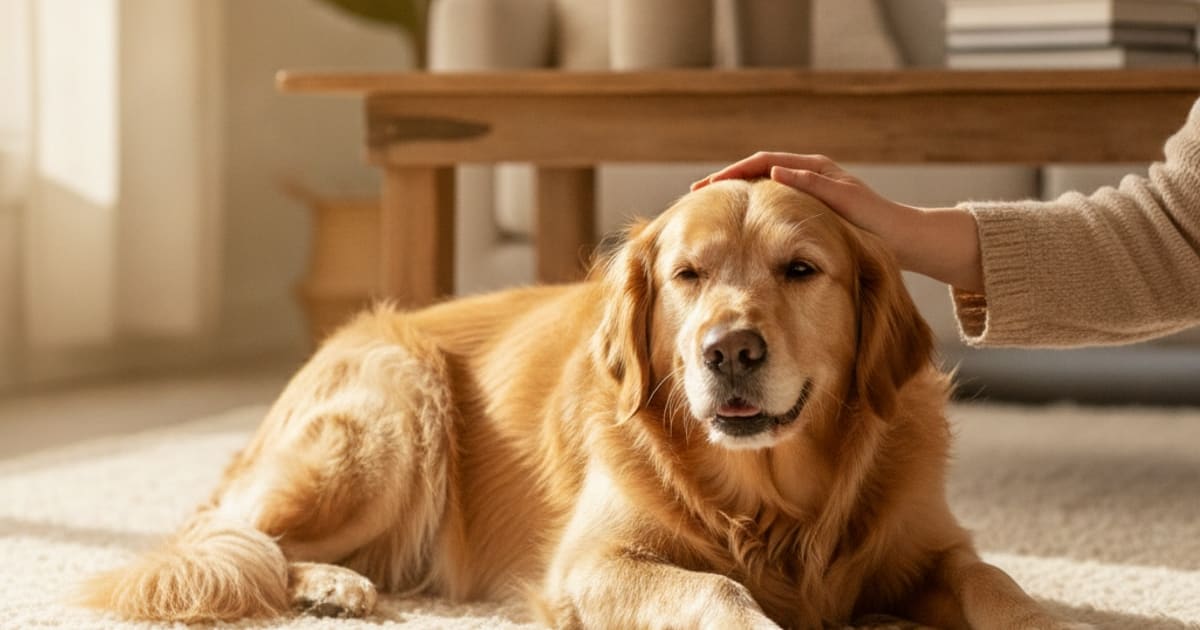
Fast breathing without panting, such as a dog breathing fast but not panting while sleeping, is a reason to see a vet. Go to an emergency vet now if your dog's gums or tongue look blue, grey, pale or white, if your dog is working hard to breathe with the belly heaving or the neck stretched out, if your dog collapses or cannot stand, or if your dog is gasping or making loud, rasping breaths; otherwise book a same-day appointment. Panting is open-mouth breathing, with the tongue out, that a dog uses to shed heat after exercise, warm weather or excitement. Fast breathing without panting is a different sign: the mouth stays closed or nearly closed, the chest moves in quick, shallow breaths, and it can show up while your dog is asleep, lying still or resting on a cool floor. A sleeping or resting dog has no heat or exercise to recover from, so quick, shallow breaths with the mouth closed can mean the body is short of oxygen or has to work harder to move air in and out. Breathing hard or heavy with the mouth closed, where you can see each breath take effort, is more urgent still and is one of the emergency signs below. Only a vet exam can find the cause.
When to go to the vet now
Go to an emergency vet now if your dog has fast breathing without panting together with any of these signs:
- Blue, grey, pale or white gums or tongue
- Breathing that takes visible effort, with the belly pumping, the elbows held out from the chest or the neck stretched forward
- Collapse, fainting, or not being able to stand or settle
- Gasping, choking or loud, rasping breaths
Call the emergency clinic as you set off so the team can have oxygen ready when you arrive. Do not give any medicine, food or drink on the way, and do not try to look into or clear your dog's mouth or throat. If your dog is breathing fast with the mouth closed but has none of the signs above, book a same-day appointment with your vet rather than leaving it until another day. The guide to Dog Emergency Signs covers other problems that need care straight away.
What can cause fast breathing without panting
Fast breathing without panting is a sign rather than a diagnosis. A range of problems in the heart, the lungs, the space around the lungs, the blood and the rest of the body can lead to it, and the vet works through them with an exam and tests. The possibilities below are things your vet may check. None of them can be confirmed or ruled out at home, and the way the breathing looks, sounds or changes does not tell you which one is behind it.
Heart disease is one possibility your vet checks. When the heart does not pump well, pressure builds up in the blood vessels of the lungs, and fluid can leak into the lungs or collect around them. The lungs then have less room to fill, and the body makes up for it with more breaths. Lying still does not lower the body's need for oxygen, so a dog with this problem may breathe fast and shallow even while fast asleep. Some dogs with heart disease also cough, tire quickly on walks, faint or develop a swollen belly, but fast breathing during sleep can appear before any of these. If your dog already has a diagnosed heart condition, your vet can tell you how that condition fits with your dog's breathing, and any new fast breathing at rest is still a reason for a same-day visit.
Problems in the lungs themselves are another group the vet looks at. An infection such as pneumonia, inflammation of the small airways, bruising of the lungs after a fall or a knock from a car, a blood clot lodged in the lung vessels, or a growth in the chest can all leave less working lung for each breath. The body answers by breathing faster, and each breath can be short and shallow. Some lung problems come with a cough, a runny nose or a fever, and some come with no other sign at all.
The airway that leads to the lungs is also checked. A windpipe that narrows or partly flattens, a voice box that does not open fully when your dog breathes in, the narrow nostrils and long soft palate of some flat-faced breeds, or something caught in the throat or airway can all turn breathing into harder work. Do not try to look for or pull anything out of your dog's mouth or throat; tell the vet straight away if you think your dog may have something stuck.
The space around the lungs inside the chest can also fill with fluid, blood or air. When that happens, the lungs cannot spread out fully with each breath, and the result can be quick, shallow breathing with the mouth closed. Fluid in this space can come from heart disease, infection, bleeding or a growth, and air can get in after an injury or from a leak in the lung. The vet looks for this on the exam and on scans, and may need to draw the fluid or air off to help your dog breathe.
Changes in the blood are another possibility. Red blood cells carry oxygen around the body, so when there are too few of them, a condition called anaemia, the body breathes faster to make up the difference. Anaemia can come from bleeding inside the body, from the immune system attacking the red cells, from some infections passed on by ticks, or from some poisons, such as rat and mouse bait, that stop blood from clotting. If you think your dog may have got into any poison, call your vet or an animal poison control service now.
Pain is a cause the vet thinks about when breathing is fast and shallow but the mouth stays closed. A dog in pain from the belly, the back, the neck, a joint or an injury may hold the body tense and take small, quick breaths, because deeper breaths hurt or pull on a sore area. Fever and infection anywhere in the body can also speed up breathing, and so can fear or stress. None of these can be told apart at home from a heart, lung or blood problem, which is why the vet examines the whole body rather than one part.
Some conditions change breathing from outside the chest. An overactive adrenal gland, known as Cushing's disease, diabetes that has led to acid building up in the blood, kidney disease and thyroid problems can all affect how fast a dog breathes. A swollen belly from bloat, fluid or a large organ can press up on the chest and leave the lungs less room, and bloat, where the stomach fills with gas and can twist, needs emergency care. Extra body weight makes each breath harder work, and the side effects of some medicines can speed up breathing too. Your vet weighs all of these alongside the heart and lung causes.
The guide to Dog Breathing Fast covers fast breathing more broadly, and My Dog Breathing Heavy While Sleeping looks at heavy breathing during sleep. For background on the conditions named here, the conditions library has pages on a range of health problems in dogs.
What your vet may do
If your dog is struggling to breathe when you arrive, the team may start with oxygen before any test, using a mask, a small tube near the nose or an oxygen cage. They keep handling to a minimum at this stage, because restraint and stress can make breathing harder for a dog that is already short of air. The vet then decides which tests to run, and in what order, based on how stable your dog is.
The exam starts before the vet touches your dog. The vet watches how your dog breathes from a short distance: how fast, how deep, whether the belly is helping, and whether the effort comes on the breath in or the breath out. Then the vet listens to the heart and lungs with a stethoscope for a murmur, an irregular beat, crackles, wheezes or areas where the lungs sound quiet. The vet also looks at the colour of the gums and tongue, checks the pulse, takes your dog's temperature, feels the belly and looks for signs of pain or injury.
Your vet may measure the oxygen level in the blood with a small clip sensor, check blood pressure, and record the heart rhythm with an ECG, which uses small pads or clips on the skin.
Chest X-rays show the size and shape of the heart, the lungs, and any fluid or air around them. An ultrasound scan of the chest can show fluid quickly, and an ultrasound of the heart, called an echocardiogram, shows how the heart chambers and valves are working. Some dogs need light sedation for a proper look, and the vet decides whether that is wise for a dog with breathing trouble.
Blood tests may include a full blood count to look for anaemia and infection, a chemistry panel to check the organs, clotting tests if bleeding is possible, and a blood marker that can show strain on the heart. A urine test and, in some cases, a test of fluid drawn from the chest help the vet narrow things down further.
Treatment depends on the cause the vet finds. It can include drawing fluid or air off the chest with a needle, medicine to clear extra fluid from the lungs, medicine for infection or pain, a blood transfusion for severe anaemia, or surgery for some airway or chest problems. Some dogs stay in the hospital on oxygen while the first treatment starts. Talk to your veterinarian about what each test showed, what the plan is, and which signs mean you should call again or come straight back.
What to tell your vet
Clear details help the vet. Tell the team:
- When you first noticed the fast breathing, and whether your dog was asleep, resting or had just been active
- Any change since then, such as faster breaths, more effort, or a cough that is new or worse
- Any bleeding, including from the nose or in anything your dog coughed up
- Any licking, chewing or guarding of one part of the body
- Other signs, such as tiring quickly, less interest in food, a swollen belly, restlessness at night, weakness or fainting
- Any medicine your dog takes, and any heart, lung or other condition already diagnosed
- Whether your dog could have got into any poison, such as rat or mouse bait, and if so, call your vet or an animal poison control service now
If you can take a short video of the breathing while your dog sleeps without delaying the trip, bring it, because the breathing can look different once your dog is awake, excited and in a clinic. Bring any medicine packets or notes from past visits as well, so the vet can see the full history, and talk to your vet about anything you are unsure of. If anything changes before the appointment, such as harder breathing, collapse, gasping or blue, grey, pale or white gums, go to an emergency vet now.
Frequently asked questions
- Is fast breathing without panting an emergency in dogs?
- It can be. Go to an emergency vet now if your dog has blue, grey, pale or white gums or tongue, is working hard to breathe, collapses or cannot stand, or is gasping. Fast breathing without panting with none of these signs still needs a same-day vet appointment, because only an exam can find the cause.
- What should I do if my dog has fast breathing without panting?
- Call your vet today and book a same-day appointment, and go to an emergency vet now instead if you see blue, grey, pale or white gums, hard breathing effort, collapse or gasping. Before you go, note when the fast breathing started and whether your dog was asleep or resting, and do not give any medicine.
- Can I treat fast breathing without panting at home?
- No, because fast breathing without panting can come from heart, lung or blood problems that need a vet. Do not give medicine, put anything on your dog or remove anything from the mouth or throat before the vet sees your dog. For bleeding, use gentle pressure with a clean cloth on the way to the vet only.
- What is the difference between panting and fast breathing without panting?
- Panting is open-mouth breathing with the tongue out that a dog uses to shed heat after exercise, warm weather or excitement. Fast breathing without panting means quick, shallow breaths with the mouth closed, including while asleep or resting, when there is no heat to shed. That closed-mouth pattern is a reason to see a vet the same day.
- What does it mean if my dog is breathing hard but not panting?
- Breathing hard with the mouth closed means each breath takes visible effort, such as the belly pumping, the elbows held out or the neck stretched forward. This kind of effort can mean your dog is not getting enough air, so go to an emergency vet now rather than waiting for a routine appointment.
- Why is my dog breathing fast and shallow while resting?
- Fast, shallow breathing at rest can come from heart disease, fluid or air in the chest, lung infection, anaemia, pain, fever or other conditions. The way the breathing looks cannot tell you which one it is. Book a same-day vet visit, and go to an emergency vet now if your dog is struggling, collapses or has blue or pale gums.
- Can heart disease cause fast breathing without panting?
- Yes, heart disease can cause it, because a heart that does not pump well can let fluid build up in or around the lungs. Fast breathing during sleep can be an early sign of this. Your vet may listen to the heart and use chest X-rays, a heart scan and blood tests to check for it.
- Can pain or stress make a dog breathe fast with the mouth closed?
- Yes, pain, fever, fear and stress can all speed up breathing with the mouth closed. Because these cannot be told apart at home from a heart, lung or blood problem, fast breathing without panting still needs a same-day vet visit, where the vet can examine the whole body and look for the cause.
- My dog has a heart condition and is breathing fast while sleeping. What should I do?
- Call your vet today, because fast breathing during sleep in a dog with a heart condition can mean fluid is building up. Go to an emergency vet now if your dog is working hard to breathe, collapses, coughs without stopping or has blue, grey or pale gums. Talk to your vet about your dog's plan at the visit.
- What tests might the vet do for fast breathing without panting?
- Your vet may start with oxygen if your dog is struggling, then listen to the heart and lungs and check gum colour and temperature. Tests can include chest X-rays, an ultrasound of the chest or heart, blood tests for anaemia, infection and organ function, an oxygen reading and a heart rhythm trace.
- Could my dog be breathing fast because it ate something?
- It can be, because some poisons, such as rat and mouse bait, cause bleeding inside the body that can lead to fast breathing. If you think your dog ate or got into anything harmful, call your vet or an animal poison control service now, and go to an emergency vet now if your dog is struggling to breathe.
Educational content, not veterinary advice. Ask your vet about your dog.