Dog Cheek Swollen on One Side: When to See the Vet
A swollen cheek on one side is a reason to see a vet. This page covers the emergency signs, the possible causes your vet checks, what the exam and tests involve, and what to tell the clinic when you call.
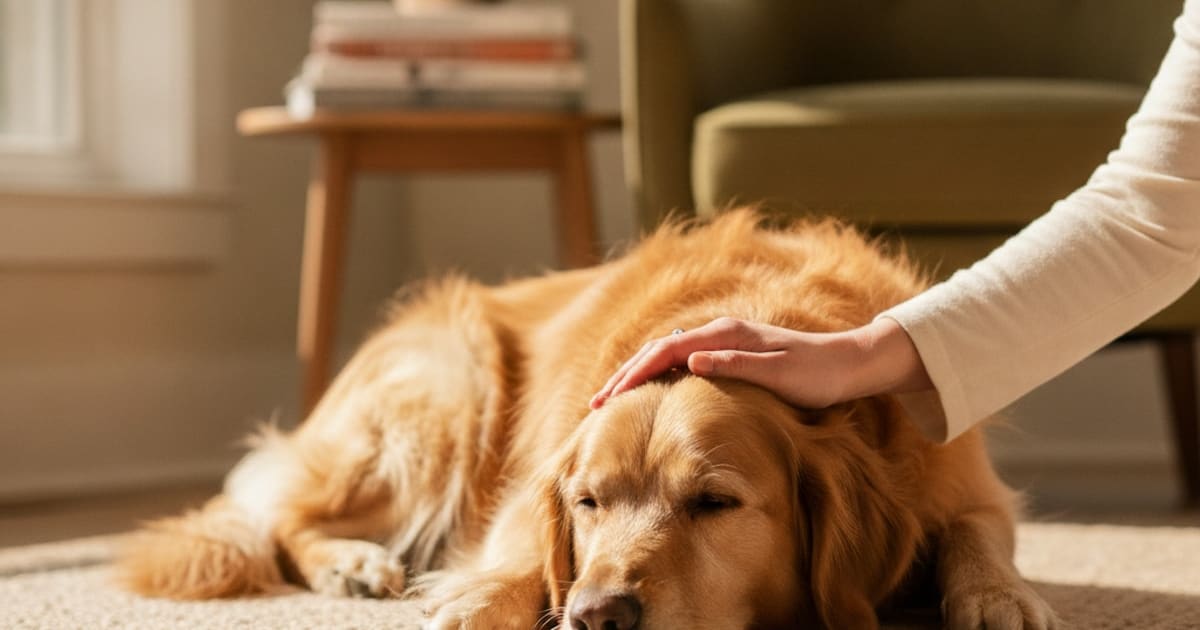
A swollen cheek is a reason to see a vet, because a dog cheek swollen on one side can come from an infected tooth, an abscess, a bite or sting, an injury or a growth. Go to an emergency vet now if your dog is struggling to breathe or swallow, the swelling is spreading fast over the face, throat or neck, your dog is weak, collapsing or vomiting, or the eye on that side is bulging or injured; otherwise book a same-day appointment. Any new lump or swelling should be checked by a vet, who may take a fine needle sample. The cause cannot be found from the outside, so get your dog seen whether the swelling appeared suddenly or you have only just noticed it.
When to go to the vet now
Go to an emergency vet now, and call the clinic on the way, if your dog has a swollen cheek with any of these:
- Trouble breathing, noisy breathing or struggling to swallow
- Swelling that is spreading fast across the face, throat or neck
- Weakness, collapse, vomiting or hives
- A bulging or injured eye, or an eye your dog cannot open, on the swollen side
- Heavy bleeding, or bleeding that will not stop
The face sits close to the airway, and a reaction to a sting or a bite can spread to the throat and affect the whole body, so these signs can get worse quickly. Swelling near the eye can also put pressure on the eye itself, and the eye needs prompt care to protect it. If you think a snake bit your dog, go to an emergency vet now, however small the swelling seems. If you think your dog was stung and the face is swelling, go now as well. Calling ahead lets the emergency team be ready when you arrive. A swollen cheek without these signs still needs a same-day appointment, even when your dog seems bright and is eating. For a wider list of signs that need urgent care, see dog emergency signs.
What can cause a swollen cheek
There is no single answer to why a dog's cheek swells. The cheek covers the upper teeth and their roots, part of the jaw, the chewing muscles, salivary glands and their ducts, lymph nodes, and the bones that hold the eye and the nose. A problem in any of these can push the skin outward, so the vet works through them one by one. The causes below are possibilities the vet checks, not a list to match against your dog at home, because the look, the size, the feel and the side of the swelling do not reveal which one it is.
The teeth are one of the first places the vet looks. An infection at the tip of a tooth root can build up a pocket of pus that presses out through the bone and into the cheek. A tooth can become infected after it breaks and exposes the soft inside, after a knock that damages the tooth from within, or through gum disease that loosens the tooth and lets bacteria travel down beside the root. The roots of the upper back teeth sit close to the eye, which is why the vet checks the teeth when the swelling is high on the face as well as when it is low on the cheek. A dog can have a painful tooth problem and still eat, so eating well does not rule this out.
An abscess is a pocket of pus under the skin or in the deeper tissue. Apart from the teeth, one can form after a bite from another animal, a scratch, or something sharp that pierced the skin or the inside of the mouth, such as a stick, a splinter or a grass seed. The wound that let the infection in can be tiny and hidden by fur or inside the cheek, so the vet looks for an entry point even if you never saw an injury. An abscess can grow, burst and leak pus or blood. A swelling that has burst, is leaking or smells needs the same-day appointment like any other. Do not squeeze, drain or clean it, because that can push infection deeper and spoil the sample the vet may need.
Stings, insect bites and allergic reactions can swell the face, sometimes on the side where the sting landed and sometimes across the muzzle, lips and eyes. A dog that snaps at a bee or wasp can be stung on the lip or inside the mouth. A reaction can spread to the throat or cause hives, vomiting or collapse, which is why those are signs to go to an emergency vet now. A snake bite to the face can also cause fast swelling and needs an emergency vet now. Do not give any medicine from your cupboard for a suspected sting or reaction: call your vet or go straight to the emergency clinic.
Dogs have several salivary glands around the jaw and below the eye. A gland or duct that is blocked, torn or damaged can leak saliva into the nearby tissue, where it collects as swelling. A gland can also become inflamed or infected. These problems can show as swelling on the cheek, under the jaw, under the tongue or around the eye, and the vet may take a sample of the fluid to find out what it is.
Problems behind the eye or inside the nose and sinuses can push the face outward below the eye. An infection behind the eye, something lodged there such as a plant fragment, an infection in the nasal passages, or a growth in the nose or a sinus can all lead to swelling in that area. These can come with sneezing, a runny or bloody nose, pain when the mouth opens, or a change in how the eye sits, and they need a vet's exam and imaging to find.
A knock, a fall or a fight can bruise the cheek or crack a bone of the jaw or face. Bleeding under the skin can build up into a swelling, and a damaged bone can change how the jaw closes or how your dog chews. A dog that has had any accident needs a vet the same day, however small the swelling seems, because injuries inside the mouth and skull cannot be seen from outside.
A growth can also cause a swollen cheek. It can start in the gums, the jaw bone, the skin of the face, a salivary gland or a lymph node. Some growths are cancer and some are not, and there is no way to tell which from how they look or feel. This is why the vet may take a fine needle sample or a small piece of tissue to test. The lymph nodes under the jaw can also swell when the body is fighting an infection or another illness, and the vet checks these too.
Inflammation of the chewing muscles and some immune problems can cause swelling over the face, sometimes with pain when the mouth opens or trouble opening the jaw. The vet keeps these in mind, along with a reaction at a recent injection site, when the first checks do not explain the swelling.
How the swelling behaves does not point to a single cause. A swelling that feels hard and one that feels soft can each come from several of the problems above. A swelling that does not seem to bother your dog still needs a vet, because dogs can hide pain, and a tooth root infection, a salivary gland problem or a growth can be present without obvious discomfort. It makes no difference whether the swelling is on the left or the right side of the face: the advice is the same. For background on the problems mentioned here, see the conditions library, and talk to your vet about any question it raises for your dog.
What your vet may do
The visit starts with questions about when you first saw the swelling, whether it has changed, and how your dog is eating, chewing and behaving. The vet then examines your dog from nose to tail, takes a temperature, and looks closely at the face from the front and from each side. They feel the swelling and the area around it, check the lymph nodes under the jaw, look at the eye and how it moves, and check the nose for discharge or blocked airflow.
Next comes the mouth. The vet looks at the teeth, the gums, the inside of the cheek and the roof of the mouth for a broken or loose tooth, an infected gum, a wound or a foreign object. Some dogs need light sedation for a proper look at a painful area. A full check of every tooth, including the back teeth and the space behind them, is done under general anaesthetic, because a dog cannot hold still with the mouth open for that long while awake.
The vet may suggest tests to find the cause. Dental X-rays, taken under anaesthetic, show the roots and the bone around them, since infection at a root cannot be seen above the gum. A fine needle sample uses a thin needle to draw cells or fluid from the swelling, which the vet looks at under a microscope or sends to a lab. A sample of pus can be tested to find which bacteria are present and which medicine will work against them. Blood tests look at general health and check that anaesthetic is suitable for your dog. When the vet needs to see behind the eye, inside the nose or into the jaw, they may use X-rays of the head, an ultrasound or a CT scan. A biopsy, where a small piece of tissue is removed and sent to a lab, may be needed when a fine needle sample does not give a clear answer.
Treatment for a swollen cheek on one side depends on what the vet finds. It can mean treating or removing an infected or broken tooth, opening and draining an abscess under sedation, removing a splinter, stick or grass seed, a medicine your vet prescribes for infection, pain or swelling, emergency care for an allergic reaction or a snake bite, repair of a fractured jaw, or surgery to remove a growth or a damaged salivary gland. The vet may want to see your dog again to check the area and go over the test results with you.
Do not give any medicine before the visit, including anything from your own cupboard, because some human medicines are toxic to dogs and others can hide signs the vet needs to see. Talk to your veterinarian before giving anything. Call your vet again right away if, after the visit, the swelling grows, spreads, bursts or your dog stops eating.
What to tell your vet
- When you first noticed the swelling and whether it came on suddenly
- Any change in size or shape, or spread toward the eye, jaw or neck
- Any bleeding, pus, discharge or smell from the swelling, the mouth or the nose
- Licking, pawing or rubbing at the face, or chewing on one side
- Other signs, such as drooling, dropping food, sneezing, eye changes, tiredness or not eating
- Any possible sting, bite, fight, fall or chewing on sticks
- Any medicine your dog takes and any existing health condition
Have these details ready when you call to book the same-day appointment, and tell the clinic straight away if your dog has any of the emergency signs above.
Frequently asked questions
- Is a swollen cheek an emergency in dogs?
- It is an emergency if your dog has trouble breathing or swallowing, the swelling spreads fast over the face or throat, your dog is weak, collapsing or vomiting, or the eye on that side is bulging or injured. Go to an emergency vet now for any of these. For any other swollen cheek, book a same-day vet appointment.
- What should I do if my dog has a swollen cheek?
- Call your vet today and book a same-day appointment, or go to an emergency vet now if your dog has trouble breathing or swallowing, fast spreading swelling, weakness or collapse, or a bulging eye. Before the visit, note when you first saw the swelling and any change, and do not give any medicine or put anything on it.
- Can I treat a swollen cheek at home?
- No, because the cause needs a vet's exam and treating it at home can hide signs or make an infection worse. Do not put anything on the swelling, squeeze it, drain it or remove anything from the mouth or skin. If it is bleeding, hold gentle pressure with a clean cloth on the way to the vet only.
- Why is my dog's cheek swollen?
- A dog's cheek can swell from an infected tooth root, an abscess after a bite or a splinter, a sting or allergic reaction, an injury, a salivary gland problem, an infection near the eye or nose, or a growth. The cause cannot be found from the outside, so book a same-day vet appointment for an exam.
- Why is my dog's cheek swollen on one side?
- One-sided swelling can come from a problem in a single spot, such as one infected tooth, a bite wound, a sting, a blocked salivary gland, an injury or a growth. Left or right makes no difference to what to do. Book a same-day vet appointment, or go to an emergency vet now if breathing or swallowing is affected.
- What causes a dog's cheeks to swell?
- Causes the vet checks include dental infection, abscesses, stings, allergic reactions, snake bites, injuries, salivary gland problems, infections behind the eye or in the nose, inflammation of the chewing muscles and growths. Swelling that comes with hives, vomiting or breathing trouble needs an emergency vet now, and any other cheek swelling needs a same-day appointment.
- Does a hard swelling on my dog's cheek need a vet?
- Yes, because a hard swelling and a soft one can each come from several causes, including a tooth problem, an injury to the bone or a growth, and the feel of it does not tell you which. Book a same-day vet appointment. The vet may take X-rays and a fine needle sample to find the cause.
- Does a swollen cheek with no pain still need a vet?
- Yes, because a lack of pain does not rule out an infected tooth root, a salivary gland problem or a growth, and dogs can hide discomfort. Book a same-day vet appointment, and tell the vet whether your dog is eating, chewing on one side or rubbing the face, as these details help the exam.
- Why is my dog's face swollen under the eye?
- For swelling below the eye, the vet checks the roots of the upper back teeth, which sit close to the eye, as well as the eye socket, the nose and sinuses, the salivary glands and any growth. Go to an emergency vet now if the eye is bulging, injured or cannot open; otherwise book a same-day appointment.
- What should I do if the swelling on my dog's face is leaking pus?
- Call your vet today for a same-day appointment, and go to an emergency vet now if your dog is weak, collapsing or vomiting, or has trouble breathing or swallowing. Do not squeeze, drain or clean the area, because that can push infection deeper and damage the sample the vet may need.
- How does the vet treat a swollen cheek?
- Treatment depends on the cause the vet finds. It can include treating or removing an infected tooth, opening and draining an abscess under sedation, removing a splinter or seed, a medicine your vet prescribes for infection, pain or swelling, emergency care for an allergic reaction, or surgery for a growth or damaged gland.
Educational content, not veterinary advice. Ask your vet about your dog.