Dog Coughing After Eating a Foreign Object: See the Vet
A cough after eating can come from food going down the wrong way, a bone or object caught in the throat, or a toxin. Go to an emergency vet now for choking, breathing trouble or collapse. Otherwise book a same-day appointment.
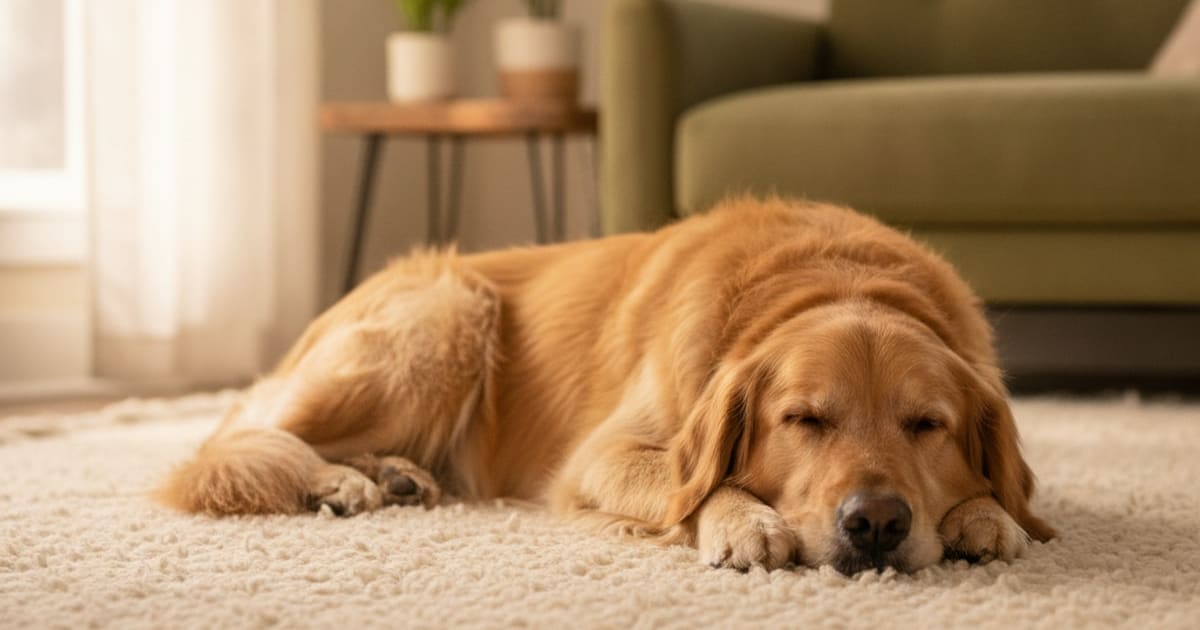
A cough after eating is a reason to see a vet, whether your dog is coughing after eating a foreign object, a bone, a stick or a meal. Go to an emergency vet now if your dog is choking or pawing at the mouth, is struggling to breathe, collapses, or swallowed a bone, a stick or another non-food object; otherwise book a same-day appointment.
When to go to the vet now
- Your dog is choking, gagging without stopping, or pawing at the mouth or throat.
- Your dog is struggling to breathe, or breathing is fast, noisy or open-mouthed at rest.
- Your dog collapses, is very weak or cannot stand.
- Your dog swallowed a bone, a piece of bone, a stick, a toy or any other non-food item: call your vet now.
- Your dog ate something that may contain xylitol, chocolate, raisins, grapes or alcohol, such as some peanut butters or ice creams: call your vet or an animal poison control service now.
- Your dog is coughing and vomiting, retching without bringing anything up, or has a swollen belly.
- There is bleeding from the mouth, heavy drooling, or your dog cannot swallow.
Do not reach into your dog's mouth, try to pull anything out, give food or water to wash something down, or make your dog vomit. For other signs that mean going straight to a clinic, see Dog Emergency Signs.
What can cause a cough after eating
A cough after eating can have several possible causes, and the cause is something your vet works out with an exam and, where needed, tests. Some possibilities involve food, bone or an object caught in the mouth, throat or food pipe. Some involve food or liquid going down the wrong way into the windpipe. Some involve a toxin in what your dog ate. Others involve a problem with the throat, voice box, windpipe, heart or food pipe that shows itself at mealtimes. Each paragraph below names possibilities your vet may check. None of them is a way to work out the cause at home, and each comes with what to do.
When your dog is coughing after eating dry food, or coughing when eating dry food, one possibility your vet checks is crumbs, dust or small pieces of kibble going into the airway as your dog gulps. A dog that eats in a rush can take in air, food and saliva together, and a cough or gag is the body clearing the airway. Your vet may also check for a swallowing problem, a weak or widened food pipe that lets food sit and come back up, a voice box that does not close fully when your dog swallows, a windpipe that partly collapses, or a heart problem that shows up as a cough. Book a same-day appointment for a cough when your dog eats dry food. Your vet can tell you how the texture of the food and the way meals are given fit your dog's health, and your vet sets how much and how often.
When a dog is coughing after eating and vomiting, your vet may check for food coming back up from the food pipe rather than the stomach, a blockage in the food pipe, stomach or bowel, a bone or object lodged in the throat, or food or vomit that has gone down into the lungs. Food in the lungs can lead to a chest infection. Coughing and vomiting together after a meal mean calling your vet now. Go to an emergency vet now if your dog is retching without bringing anything up, has a swollen or tight belly, is struggling to breathe or collapses, because these need care straight away.
If your dog is coughing after eating a bone, your vet may check for a piece of bone wedged across the roof of the mouth, caught at the back of the throat or stuck in the food pipe. Your vet also checks for cuts or tears in the lining of the mouth, throat, food pipe or gut. If your dog swallowed a cooked bone or a piece of one, call your vet now. A dog coughing after eating a chicken bone needs the same call to your vet now, because cooked chicken bones can splinter into sharp pieces that can catch, scrape or pierce. Raw bones, antlers and hard chews can also break into pieces large enough to lodge in the throat or food pipe, so call your vet now for these too. Do not make your dog vomit, do not give bread or other food to push the bone down, and do not reach into the mouth to pull a piece out.
If your dog is coughing after eating a pig ear, your vet may check for a piece that broke off and is lodged in the throat or food pipe, for scratches from hard or sharp edges, and for an upset stomach from the fat in the ear. A dried chew can be swallowed in a large piece before it has softened. Call your vet now, and go to an emergency vet now if your dog is choking, drooling heavily or struggling to breathe.
A dog coughing after eating a stick may have a splinter or piece of wood caught in the mouth, the throat or the food pipe, or a wound from a sharp end. Wood can pierce the soft tissue at the back of the mouth and the throat, and a wound there can be hard to see without sedation. Some pieces of wood do not show on X-rays, so your vet may use other imaging or a camera to look. If your dog chewed or swallowed part of a stick and is coughing, call your vet now. Go to an emergency vet now if there is bleeding from the mouth, heavy drooling, swelling of the face or neck, or any trouble breathing.
When your dog is coughing after eating grass, your vet may check for a blade of grass or a grass seed caught at the back of the throat, in the nose or in the airway, for irritation of the throat, and for an upset stomach. Grass seeds with sharp, barbed tips can move into tissue, and long blades can catch at the back of the throat and set off gagging. Your vet may also ask whether the grass could have been sprayed or treated. If the grass may have had weed killer, fertiliser, slug pellets or another garden product on it, call your vet or an animal poison control service now. Otherwise, call your vet today about the cough.
If your dog is coughing after eating a foreign object, such as part of a toy, a ball, a sock, a stone, a corn cob, plastic, string or food packaging, your vet may check whether anything is in the mouth, throat, airway, food pipe, stomach or bowel. A small object can be breathed into the airway, and a larger one can block the food pipe or the gut. String and thread can catch under the tongue and pull along the bowel. Some objects, such as batteries, magnets and items with a coating or contents, can also burn or poison. Call your vet now after any swallowed object, and do not wait for it to pass. If the object was a battery, a magnet or anything that may contain a toxin, call your vet or an animal poison control service now.
A dog coughing after eating cat litter may have litter dust or grains in the throat or airway. Your vet may check for a blockage in the gut, because clumping litter is made to soak up liquid and can swell and clump inside the stomach or bowel. Some litters also contain scents, crystals or other added ingredients, and used litter carries waste and germs from the cat. Call your vet now, and tell them the type of litter and how much your dog may have eaten. If the litter has any added product or you do not know what is in it, call your vet or an animal poison control service now.
If your dog is coughing after eating cat poop, your vet may check for litter swallowed along with it, for irritation of the throat, for an upset stomach, and for worms, other parasites and germs that can pass from cat faeces to a dog. Gagging on the texture can also bring on a cough. Call your vet today, and tell them whether litter was eaten too and whether your cat has any illness or takes any medicine. If your dog also ate litter, call your vet now.
When a dog is coughing after eating cat food, one possibility your vet looks at is gulping: cat food is rich and strong-smelling, and a dog that eats it fast can breathe in crumbs or choke on pieces. Cat food also carries more fat and protein than dog food, and a sudden rich meal can upset the stomach and the pancreas, which can bring vomiting along with the cough. Call your vet today. Go to an emergency vet now if your dog is choking, struggling to breathe, retching without bringing anything up or collapses.
Peanut butter is thick and sticky, and a dog coughing after eating peanut butter may have a lump of it stuck to the roof of the mouth or in the throat, or may have breathed in a small amount. Some peanut butters contain xylitol, a sweetener that is toxic to dogs, so call your vet or an animal poison control service now. Bring the jar with you so your vet can see the ingredients. If your dog is choking or struggling to breathe, go to an emergency vet now.
A dog coughing after eating ice cream may have breathed in a small amount of cold, melting liquid, or may be gagging on a thick mouthful. The milk, sugar and fat in ice cream can also upset a dog's stomach. Some ice creams contain xylitol, chocolate, raisins, nuts or alcohol, so call your vet or an animal poison control service now. Bring the tub or wrapper with you so your vet can see the ingredients. Go to an emergency vet now if your dog is choking, struggling to breathe, shaking, very weak or collapses.
A cough that comes with meals can also come from a problem that is not about the food itself. Your vet may check for kennel cough or another airway infection, a problem with the voice box, a windpipe that narrows or partly collapses, a heart problem, a growth in the throat or chest, or a problem with the nerves and muscles your dog uses to swallow. A cough at mealtimes can be the first sign your dog shows of any of these. You can read about some of these conditions in the conditions library. Talk to your vet about any cough that comes with eating or drinking, and book a same-day appointment so the cause can be found.
What your vet may do
Your vet starts by asking what your dog ate, when the cough began and what it sounds like, then examines your dog. The exam includes listening to the heart and lungs, checking breathing, temperature and gum colour, feeling the neck, throat and belly, and looking into the mouth as far as your dog allows.
A proper look at the back of the mouth and throat can need sedation or a short anaesthetic, because a dog cannot open wide and hold still for a look at a sore or painful area. With your dog asleep, your vet can check the roof of the mouth, under the tongue, the tonsils and the voice box, and remove a piece of bone, wood or another object that is within reach.
X-rays of the neck, chest and belly can show bones, stones, metal and some other objects, a blocked or widened food pipe, gas patterns that point to a blockage, and changes in the lungs when food has gone down the wrong way. Wood, plastic, fabric and some foods do not show well on plain X-rays, so your vet may also use ultrasound, an X-ray taken after your dog swallows a special liquid, or a video X-ray that shows each swallow.
A camera passed down the throat, called endoscopy, lets your vet look inside the food pipe, stomach or airway, and some objects can be taken out this way under anaesthetic. When an object cannot be reached with the camera, or has damaged the food pipe or gut, surgery may be needed.
Blood tests can check for infection, inflammation, dehydration and how the organs are working, and they help your vet see the effects of a toxin. If your dog ate something toxic, your vet may make your dog vomit under controlled conditions when that is the right step for what was eaten, and may give a medicine your vet prescribes and fluids into a vein. A dog with breathing trouble may need oxygen and a stay in the hospital. Your vet may also refer your dog to a specialist for a swallowing or airway problem.
What to tell your vet
- When you first noticed the cough, and whether it started during the meal, straight after it or later.
- Exactly what your dog ate or may have eaten, and bring any jar, tub, wrapper or packaging.
- Any change in the cough since it started, such as louder, wetter, more frequent, or with gagging or retching.
- Any bleeding from the mouth or nose, or blood in anything your dog brought up.
- Any licking of the lips, pawing at the mouth, drooling or swallowing over and over.
- Other signs, such as vomiting, food coming back up, trouble breathing, a swollen belly, weakness, or not wanting to eat or drink.
- Whether your dog has coughed after meals before, and any existing heart, airway or swallowing problem.
Frequently asked questions
- Is a cough after eating an emergency in dogs?
- It is an emergency when your dog is choking, pawing at the mouth, struggling to breathe or collapses, or when your dog swallowed a bone, a stick or another non-food item: go to an emergency vet now. For any other cough after eating, book a same-day appointment with your vet so the cause can be found.
- What should I do if my dog has a cough after eating?
- Call your vet today and describe the cough, what your dog ate and when it started. If your dog is choking, struggling to breathe, collapses or swallowed a bone or object, go to an emergency vet now. Do not reach into the mouth, give food or water to wash something down, or make your dog vomit.
- Can I treat a cough after eating at home?
- No, because the cause can be something your vet needs to find with an exam. Do not put anything in your dog's mouth, try to remove anything stuck or make your dog vomit before the vet sees your dog. For any bleeding, gentle pressure with a clean cloth on the way to the vet is the only step.
- What should I do if my dog is coughing after eating a chicken bone?
- If your dog swallowed a cooked bone or a piece of one, call your vet now, because cooked chicken bones can splinter into sharp pieces that catch in the throat or food pipe or damage the gut. Do not make your dog vomit. Go to an emergency vet now for choking, breathing trouble, drooling, retching or collapse.
- Why is my dog coughing after eating grass?
- Your vet may check for a blade of grass or a grass seed caught in the throat, nose or airway, an upset stomach, or chemicals on the grass. Call your vet today. If the grass may have been sprayed with weed killer, fertiliser or another product, call your vet or an animal poison control service now.
- What should I do if my dog is coughing after eating peanut butter or ice cream?
- Some peanut butters and ice creams contain xylitol, and some ice creams contain chocolate, raisins or alcohol, so call your vet or an animal poison control service now. Thick, sticky or cold food can also be breathed in or stick in the throat. If your dog is choking or struggling to breathe, go to an emergency vet now.
- What should I do if my dog is coughing after eating cat litter or cat poop?
- Call your vet now if your dog ate cat litter, because some litters clump and swell and can block the gut, and litter dust can irritate the airway. Cat poop can carry parasites and germs, and litter can be eaten with it, so call your vet today. Tell your vet the type of litter.
- Why does my dog cough when eating dry food?
- Your vet may check for crumbs or dust from the kibble going into the airway as your dog gulps, a swallowing problem, a weak food pipe, a voice box or windpipe problem, or a heart problem. A cough when your dog eats dry food is a reason to book a same-day appointment with your vet.
- What should I do if my dog is coughing and vomiting after eating?
- Call your vet now, because coughing and vomiting together can come from a blockage, an object or bone in the throat or food pipe, or food going into the lungs. Go to an emergency vet now if your dog is retching without bringing anything up, has a swollen belly, struggles to breathe or collapses.
- What should I do if my dog is coughing after eating a stick or a pig ear?
- Call your vet now. Sticks can splinter and leave pieces or wounds in the mouth, throat or food pipe, and pieces of a pig ear can break off and lodge. Go to an emergency vet now if there is bleeding from the mouth, heavy drooling, swelling of the face or neck, or trouble breathing.
- What should I do if my dog is coughing after eating cat food?
- Call your vet today. Cat food is rich and strong-smelling, and a dog that gulps it can inhale crumbs or choke on pieces, and the extra fat can upset the stomach. Go to an emergency vet now if your dog is choking, struggling to breathe, retching without bringing anything up or collapses.
Educational content, not veterinary advice. Ask your vet about your dog.