Dog Coughing Up Phlegm at Night: Causes and Vet Signs
A dog coughing up phlegm at night is usually bringing up mucus from the airway, throat or stomach, and the timing often points to the cause. Night and morning phlegm, post-water froth and post-exercise mucus each suggest different problems, so any new or repeated coughing needs a veterinary exam.
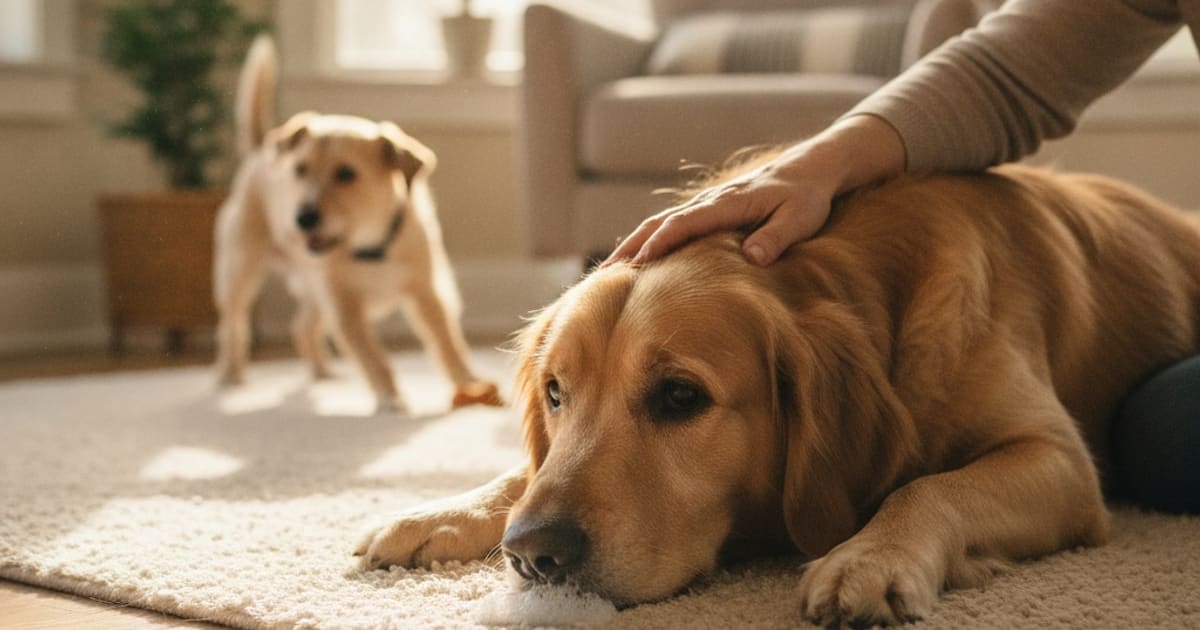
A dog coughing up phlegm is clearing mucus out of the airway, the throat or the upper gut, and because the possible causes run from a mild irritation of the windpipe to a problem in the lungs or heart, any dog doing it more than once should be examined by a veterinarian. If your dog is struggling to breathe, breathing with an open mouth while resting, has blue, grey, white or brick-red gums, is collapsing, or is retching repeatedly without bringing anything up while the belly looks bloated, treat it as an emergency and go to an emergency vet now.
For everything short of that, the single most useful thing you can give your vet is the pattern. When it happens, what the dog was doing just before, what comes up and what it looks like. Phlegm at two in the morning, froth after a long drink and white mucus after a sprint are not the same problem, and the timing is often what separates them.
Coughing it up or bringing it up? Why the two get confused
Owners describe the same event in opposite ways, and it matters, because a cough points toward the airway and vomiting points toward the gut.
A cough usually starts with a harsh, dry, honking or hacking noise. The dog stretches the neck forward, the chest and throat do the work, and the sequence often finishes with a gag and a swallow or with a small puddle of clear or white foam on the floor. That foam is saliva and airway mucus, not stomach contents. Many owners see the puddle and call it vomiting, which can send the whole conversation down the wrong track.
Vomiting looks different. There is usually a warm-up: lip licking, drooling, repeated swallowing, pacing or restlessness. Then the abdomen heaves in waves and fluid or food comes up with real force. What lands may be clear, white, yellow or food-coloured.
Regurgitation is a third thing again. It is quiet and effortless, with no heaving at all. Food or fluid simply appears, sometimes in a tube shape, often soon after eating or drinking. Quiet, effortless bringing up of food is worth flagging specifically, because it points your vet toward the oesophagus rather than the stomach.
If you can film one episode on your phone, do it. A ten second video answers in seconds what ten minutes of description cannot, and your vet can play it back frame by frame.
What the timing and the trigger can tell you
Coughing up phlegm at night
Night coughing is one of the patterns owners notice first, partly because the house is quiet and partly because some causes genuinely get worse lying down. When a dog is flat on its side, fluid and mucus pool differently in the airway, and pressure inside the chest changes.
A dog coughing up thick white mucus at night may be clearing secretions from an irritated windpipe or lower airway. Airway inflammation, a windpipe that flattens as the dog relaxes, reflux of stomach acid into the throat during sleep, and heart disease that makes the lungs wetter at rest can all show up as a cough that is worse after lights out. A soft, moist night cough that was not there a month ago deserves a same-week appointment rather than a wait-and-see.
Dogs that are throwing up mucus at night, with real abdominal heaving, are a separate pattern. A long gap between the last meal and the morning can leave an empty, acidic stomach, and some dogs bring up clear or yellow fluid because of it. That one is worth raising with your vet rather than solving yourself, because the same picture can come from gut inflammation, reflux or something stuck.
Coughing up phlegm in the morning
Morning mucus is common enough that owners assume it is normal, and sometimes it reflects nothing more than overnight secretions collecting and being cleared on the first deep breath of the day. A dog coughing up white phlegm in the morning that then moves normally, eats normally and has a quiet day may simply be clearing the pipes.
What changes the picture is persistence and company. A dog throwing up clear mucus in the morning on more days than not, or a dog throwing up yellow mucus in the morning, should be assessed. Yellow usually means bile, which comes from further down than the airway. Pair any of it with weight loss, reduced appetite, low energy or a change in stools and the appointment becomes more urgent.
Phlegm after drinking water
This one worries owners badly and often turns out to be mechanical. A dog throwing up phlegm after drinking water, or coughing up clear mucus after drinking water, has frequently just drunk too fast. Air and water go down together, the stomach stretches, and some of it comes straight back up mixed with saliva. Flat-faced breeds and fast, excited drinkers do this more.
Still, there are reasons not to shrug it off. Coughing immediately after a drink can mean fluid is touching the larynx or going the wrong way toward the airway, which is how aspiration starts. Dogs with laryngeal problems, oesophageal problems or throat weakness often show it first as a cough or a splutter at the water bowl. If a dog coughing up mucus after drinking water does it consistently, or coughs during the drink rather than after it, that pattern belongs in front of a vet.
Coughing up mucus after running or play
A dog coughing up phlegm after running has usually moved a lot of air through a dry or already irritated airway. A short burst of coughing that settles within a minute or two and does not come back is less concerning than one that keeps going.
A dog coughing up white mucus after exercise repeatedly, or one that has to stop and cough partway through a walk it used to manage easily, is telling you something about airway size, airway inflammation or how well the heart and lungs are keeping up. Exercise intolerance plus a cough is a combination to raise promptly, and so is any noisy, raspy or roaring breathing that appears during exertion or in warm weather.
Mucus after eating
A dog throwing up mucus after eating may be eating too fast, may be reacting to something in the gut, or may be having trouble moving food down the oesophagus. Food that reappears undigested and effortlessly is a different flag from food that comes up with heaving half an hour later. Note which one you are seeing.
Coughing during or just after a meal, or a wet-sounding cough that follows eating, can also suggest that food or fluid is irritating the throat or entering the airway. That combination is worth a call.
Coughing on the lead, when excited, or when the collar pulls
Some dogs cough and bring up a little foam only when the collar tightens, when a visitor arrives or when they get wound up. Pressure on the front of the neck can set off a cough in a dog with a sensitive or narrowed windpipe. If that is your dog's only trigger, mention it at the appointment, because it points your vet toward a specific part of the airway.
Coughing after anaesthetic or a recent hospital stay
A breathing tube is placed for most general anaesthetics, and some dogs have a mild, dry, throat-clearing cough for a short while afterwards. That is worth reporting to the practice that performed the procedure. A cough that is wet, worsening, feverish or accompanied by reduced appetite or lethargy after an anaesthetic needs to be seen rather than monitored, because it can reflect something more than tube irritation. The same goes for a cough that appears after boarding, grooming, daycare or a dog park visit, where contagious airway infection is on the list.
What the colour of the mucus can suggest
Colour narrows the possibilities. It does not make a diagnosis, and no colour chart replaces a physical exam.
| What you see | What it can point toward | What to do |
|---|---|---|
| Clear or white foam | Saliva and airway mucus, fast drinking, airway irritation, reflux | Note the trigger and frequency, book a routine exam if it repeats |
| Thick white or grey mucus | Ongoing airway inflammation or secretions being cleared | Book an exam, especially if it is worse at night |
| Yellow or green | Bile if it comes from the gut, or infected material if it comes from the airway | Book an exam promptly |
| Pink, frothy or blood-tinged | Fluid in the lungs, trauma, or bleeding somewhere in the airway | Emergency, go now |
| Frank blood, clots or coffee-ground material | Bleeding in the airway or gut | Emergency, go now |
| Brown, gritty or foul smelling | Material that may have come from the gut or from the mouth | Urgent same-day call |
Signs that turn this into an emergency
Go straight to an emergency veterinarian, without waiting to see whether it settles, if your dog shows any of the following alongside the phlegm:
- Laboured, fast or open-mouth breathing at rest, or breathing with the elbows pushed out
- Gums that are blue, grey, white, or brick-red
- Collapse, staggering, or sudden weakness
- Repeated retching that brings nothing up, especially with a swollen, tight abdomen
- Blood, or pink frothy fluid, coming from the mouth or nose
- Choking, pawing at the mouth, or sudden frantic distress
- A cough with a high temperature, shivering, or refusal to move
- Any cough in a dog who has recently had access to water that could have been inhaled, or who has been swimming
For a wider rundown of what counts as a true emergency, the warning signs are worth reading before you need them.
What your vet will want to know, and what the visit may involve
Go in prepared. Your vet will want to know when the coughing started, what time of day it happens, what the dog was doing immediately before, how long an episode lasts, what comes up and what colour it is, whether breathing or exercise tolerance has changed, whether there has been recent boarding, grooming, travel, daycare or an anaesthetic, and whether appetite, drinking, weight and energy have shifted.
The exam itself typically starts with listening to the heart and lungs, checking the gums, feeling the throat and windpipe, and watching the dog breathe. Depending on what that turns up, your vet may suggest chest or neck imaging, blood work, a closer look at the throat and upper airway, sampling of airway fluid, or heart-specific testing. Which of those is appropriate is a judgement call that belongs to the veterinarian who has examined your dog, and results vary from dog to dog.
If your dog is on anything prescribed already, do not change or stop it on your own. Bring the details with you and talk to your vet about whether the cough could be connected.
Key takeaways
- Phlegm coming up is a sign, not a diagnosis, and the trigger and timing are the clues that narrow it down.
- Coughing involves the neck and chest and often ends in a gag and a swallow. Vomiting involves abdominal heaving. Regurgitation is silent and effortless. Tell your vet which one you saw.
- Night and early-morning phlegm, mucus after drinking, mucus after exercise and mucus after eating each point in different directions and all deserve an exam if they repeat.
- Clear and white foam is the least specific finding. Yellow, green, pink, frothy or bloody material raises the priority sharply.
- Breathing difficulty, discoloured gums, collapse, unproductive retching with a swollen abdomen, or blood are emergencies.
- A short phone video of one episode is one of the most useful things you can bring to the appointment.
A cough that brings up mucus is the body doing its job, but it only tells you that something is irritating the airway or the gut, never which thing. Only a veterinarian who has listened to your dog's chest, looked at the throat and, where needed, imaged the neck and chest can say what is behind it and what should be done about it. The diagnosis and the plan belong with your vet, and the most valuable role you can play is as the observer who noticed exactly when it happens and what it looks like.
For related reading, see the guide to emergency signs in dogs and the wider conditions library.
Frequently asked questions
- How do I tell whether my dog is coughing up phlegm or vomiting it?
- Watch the body. A cough starts with a harsh hacking or honking noise, the neck stretches forward, the chest and throat do the work, and it often ends in a gag, a swallow or a small puddle of foam. Vomiting involves lip licking and drooling first, then forceful heaving of the abdomen. Filming one episode is the easiest way to show your vet which it is.
- Why does my dog cough up thick white mucus at night but seem fine during the day?
- Lying down changes how mucus and fluid sit in the airway and alters pressure inside the chest, so several airway and heart-related causes genuinely get worse at night. Acid moving up into the throat during sleep can do it too. A moist or rattling night cough that was not there before should be checked by a vet rather than watched for weeks.
- My dog coughs up clear mucus straight after drinking water. Is that normal?
- Drinking too fast is a frequent and fairly harmless explanation, especially in excited or flat-faced dogs, because air and water go down together and some comes back up mixed with saliva. It stops being routine if it happens almost every time, if the dog coughs during the drink rather than after it, or if the cough sounds wet, because fluid may be touching the voice box. Talk to your vet if you see that pattern.
- Is yellow mucus in the morning something to worry about?
- Yellow usually means bile, which comes from the gut rather than the airway, and it can show up when the stomach has been empty for a long stretch. It can also reflect gut inflammation, reflux or an obstruction. Once or twice is worth noting; a repeating pattern, or one paired with reduced appetite, weight loss or low energy, needs a veterinary exam.
- Why does my dog cough up white mucus after running?
- Hard exercise pushes a lot of air through the airway and can dry and irritate it, so a brief burst of coughing that settles quickly is common. What matters is whether it keeps happening, whether your dog has to stop partway through walks that used to be easy, and whether the breathing sounds noisy or raspy during effort. Coughing plus reduced exercise tolerance should be assessed promptly.
- My dog brings up mucus after eating. What does that suggest?
- It depends on how it comes up. Effortless, quiet reappearance of food or fluid with no heaving points toward the oesophagus. Forceful heaving some time after the meal points toward the stomach or gut. A wet cough during or just after eating can mean material is irritating the throat. Describe exactly which one you see when you talk to your vet.
- When is a dog coughing up phlegm an emergency?
- Go to an emergency veterinarian immediately for laboured or open-mouth breathing at rest, blue, grey, white or brick-red gums, collapse, pink frothy or bloody fluid from the mouth or nose, choking, or repeated retching that brings nothing up alongside a swollen, tight abdomen. These do not warrant waiting until morning.
- My dog started coughing after a stay at boarding kennels. Is that connected?
- Contagious airway infection is on the list whenever coughing follows boarding, grooming, daycare, a dog park or a shelter visit, and it can appear days after the exposure. Tell the clinic about the recent contact when you book, because they may want to manage the appointment differently to protect other patients.
- My dog coughs and brings up foam only when the collar pulls. Should I mention it?
- Yes. A cough triggered specifically by neck pressure, excitement or pulling on the lead tells your vet something useful about the windpipe and upper airway, and it is the kind of detail owners often leave out because it seems minor. Note when it happens and how long it lasts, and raise it at the exam.
- Can I treat this at home while I wait for an appointment?
- No. The sensible step is observation, not intervention. Record when episodes happen, what triggered them and what comes up, keep your dog calm and cool, and do not change or stop anything your vet has already prescribed. If any emergency sign appears while you are waiting, go in straight away rather than keeping the original appointment.
Educational content, not veterinary advice. Ask your vet about your dog.