Dog Dislocated Hip Recovery Time Without Surgery
A dislocated hip in a dog is treated by reducing the joint: manually under anaesthesia, then held with an Ehmer sling, or surgically when that fails. Recovery time without surgery usually means weeks of strict confinement while the torn joint capsule and surrounding muscle stabilise.
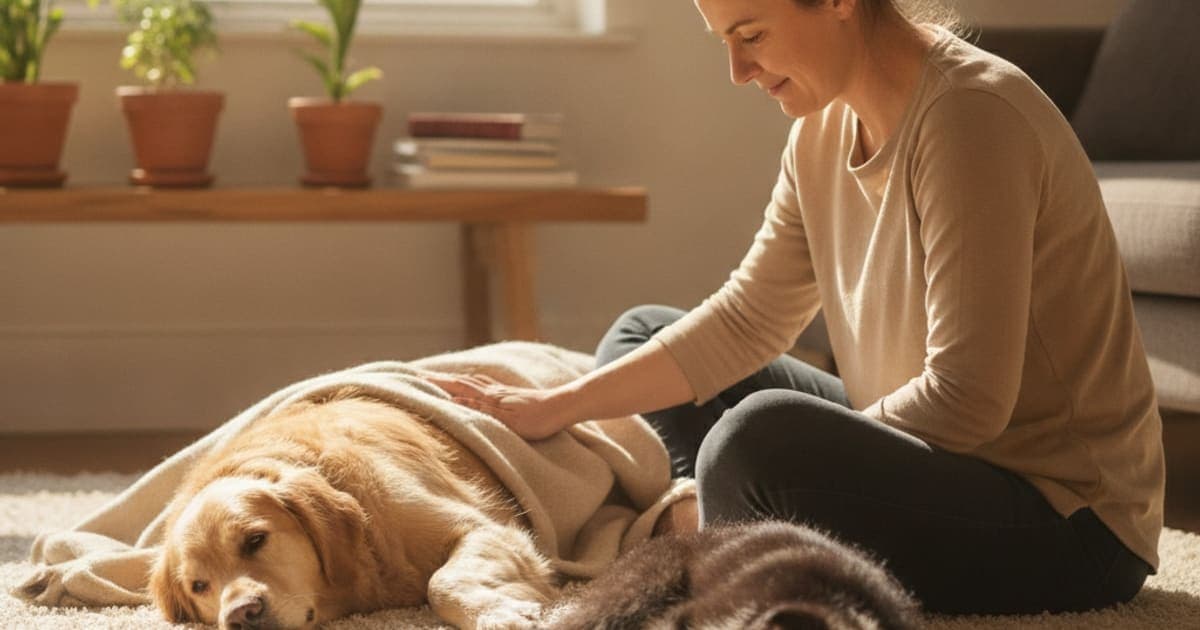
Call a veterinarian straight away if your dog suddenly cannot bear weight on a hind leg after a fall, a car accident or a hard twist. Go to an emergency clinic if the limb looks shorter or rotated, if the hip area looks lumpy or uneven, if your dog cries out when the leg is touched, or if there is a wound, laboured breathing, pale gums, collapse, blood in the urine or an inability to stand. A hip that is out of its socket is time sensitive, so it should be examined the same day rather than watched overnight.
A dislocated hip in a dog is treated by putting the ball of the femur back into the socket. Your veterinarian does this either by hand, with the dog fully anaesthetised, called closed reduction, and then holds the leg in a sling, or surgically, through open reduction, when the closed attempt fails or the joint is too damaged to stay seated. Pain relief and imaging come first, and the whole thing is time-sensitive. A hip luxation is an emergency, not a wait-and-see injury.
The sooner the joint goes back in, the better the odds it stays there without surgery. Every hour the femoral head sits out of the socket, the joint capsule, round ligament and surrounding muscle contract and scar, and a non-surgical fix becomes less likely.
What a dislocated hip looks like in a dog
Most hip luxations in dogs are craniodorsal, meaning the femoral head pops up and forward out of the acetabulum. That direction produces a fairly consistent picture:
- Sudden, severe non-weight-bearing lameness on one hind leg, almost always after trauma: a car, a fall, a hard twist on ice.
- The leg looks shorter than the other hind leg, and the dog carries it up with the hock turned outward and the toes pointed in.
- The hip looks lumpy or asymmetrical over the top of the pelvis when you look down at your dog from above or behind.
- Pain on any hip movement. Dogs will often cry, snap or freeze when the leg is handled, a level of pain they do not normally show.
- Refusal to sit squarely, and an unwillingness to rise, use stairs or jump.
In the less common ventral luxation, the femoral head drops below the socket and the limb may look longer and rotated outward instead.
What you cannot do is tell a luxation from a femoral neck fracture, a pelvic fracture or a slipped capital physis by eye. They look alike from the outside and they are treated completely differently. Radiographs settle it, which is why the first real step in any suspected dislocation is a same-day veterinary exam, not a home assessment.
What to do in the first hours after a suspected luxation
Keep your dog still. Confine them to a small space or carry them if they are small enough to lift safely, supporting the chest and the hindquarters so the pelvis does not swing. Do not try to manipulate, stretch or "pop" the leg yourself. You cannot reduce a hip in a conscious dog, and attempts risk fracturing a femoral neck that may already be cracked.
Do not give human painkillers. Ibuprofen, paracetamol and naproxen are toxic to dogs, and they also complicate the anaesthetic and medication plan your vet is about to build. Any pain medication, and the dose of it, must come from your veterinarian, so ask the clinic rather than giving anything from the cupboard.
Call ahead so the clinic can prepare for sedation and imaging. Because dislocations are usually traumatic, your vet will also check for the injuries that travel with them: pelvic fractures, bladder trauma, chest bruising and bleeding. That trauma screen is part of why this is handled in a clinic, not a kitchen.
How vets put the hip back: closed reduction, slings and surgical repair
Once radiographs confirm a luxation and rule out fractures, your vet chooses a route based on the direction of the dislocation, how long it has been out, and whether the socket itself is healthy. Dogs with underlying hip dysplasia have a shallow socket that struggles to hold the femoral head, and that changes the plan considerably.
| Approach | What happens | When it's chosen | What recovery looks like |
|---|---|---|---|
| Closed reduction + Ehmer sling | Hip is manipulated back into the socket under general anaesthesia; the limb is bandaged in flexion to stop weight-bearing and keep the head seated | Recent craniodorsal luxation, normal socket, no fracture | Sling worn for a period your vet sets, then weeks of strict confinement and gradual, controlled return to activity |
| Closed reduction + hobbles | Reduction followed by hobbles that limit limb abduction | Ventral luxation | Similar confinement protocol, with the hobbles limiting the movement that re-dislocates the joint |
| Open reduction with stabilisation | Surgery to clean the socket and anchor the joint: toggle rod/suture, transarticular pin, capsular or prosthetic capsule repair | Failed or repeated closed reduction, chronic luxation, fracture fragments, dysplastic socket | Longer, staged rehab under surgical supervision; implants sometimes removed later |
| Femoral head and neck excision (FHO) | The femoral head and neck are removed and a fibrous false joint forms | Joints that cannot be salvaged; often chosen for smaller or lighter dogs | Early, deliberate movement is the point, with physiotherapy central to the plan |
| Total hip replacement | The joint is replaced with an implant | Severely damaged or dysplastic hips in suitable candidates | Specialist-led, highly structured rehabilitation |
Surgery is often the standard of care for a luxated hip, particularly when a closed reduction fails or slips, when the luxation is not fresh, or when the socket is abnormal. Which route is taken is a decision for your veterinarian or surgeon, made with the radiographs in front of them and the whole dog in mind.
Two things are worth saying plainly. First, a sling is not a cast: it is a tool that stops weight-bearing while the torn capsule and the muscles around the joint lay down scar tissue strong enough to hold the head in place. Second, re-luxation after a closed reduction is common enough that your vet will usually want to recheck the hip, often with repeat radiographs, before the sling comes off. If it slips back out, that is a mechanical failure, not a sign you did anything wrong.
Recovery time without surgery, when the hip goes back in
When owners search for recovery time without surgery, they almost always mean one of two scenarios: a hip that was reduced manually and held, or a hip that was never reduced at all. They are very different roads.
If the closed reduction holds, recovery runs in phases rather than on a fixed calendar, and your surgeon sets the dates based on how the joint looks on follow-up imaging. Broadly, there is a sling or hobble period, then a strict confinement period measured in weeks where the dog is lead-walked for toileting only, then a progressive return to normal movement over the following months. Muscle lost during immobilisation takes longer to rebuild than the joint capsule takes to scar, so dogs often look sound well before they are actually ready for free running.
The things that genuinely move the timeline are unglamorous: no stairs, no slick floors, no jumping onto furniture, no off-lead running, a body-weight plan if your dog is carrying extra, and the controlled physiotherapy your vet or a certified canine rehab practitioner prescribes. Underwater treadmill work and targeted strengthening are commonly part of a supervised programme, and they are prescribed by the clinic rather than improvised at home.
Living with an unreduced hip, and why it does not heal on its own
A dislocated hip does not go back into its socket by itself. The round ligament is torn and the capsule is ruptured; nothing in the body pulls the femoral head back across the rim of the acetabulum. What can happen, if a luxation is left long enough, is that the body builds a fibrous false joint, a pseudoarthrosis, where the femoral head rests against the pelvis.
Some dogs, particularly lighter ones, do function on a false joint. They walk, they use the leg, and they adapt. But that is not healing. It usually means a shorter limb, reduced range of motion, abnormal loading of the opposite hip and the spine, variable pain, and a joint that is no longer a joint. It is an outcome, not a plan. Where owners are weighing it, because of age, anaesthetic risk, concurrent illness or cost, that conversation belongs with your veterinarian, with radiographs on the screen and a realistic pain-management strategy attached.
What to watch at home during recovery
Recovery after a reduction is mostly observation and restriction, and the details you notice are genuinely useful to the clinic. Check the resting position of the leg every day. A hip that has slipped back out often announces itself the same way the original injury did: the dog stops using the limb, the leg looks shorter or rotated again, and pain on handling returns abruptly.
If your dog is in a sling or hobbles, check the bandage and the exposed toes several times a day. Swelling of the foot, cold or discoloured toes, a bad smell, dampness, rubbing or sores where the bandage ends, or a sudden increase in licking and chewing at it all warrant a same-day call. A slipped sling can do more harm than no sling at all, so do not retape or reposition it yourself.
What to note and tell the vet
Keep a short daily record and bring it to each recheck. Useful notes include whether the toes touch the ground and for how long, how your dog rises from lying down, whether the dog can sit squarely, appetite and thirst, toileting, sleep quality, how settled the dog is overnight, and whether pain relief seems to wear off before the next dose is due. Ask your veterinarian which medication to give and what the dose is, and tell them about any missed doses. Also note falls, slips on hard floors, stair attempts or escapes from confinement, even brief ones, because those are the moments that undo a reduction.
When it becomes an emergency
Seek urgent veterinary care if your dog suddenly refuses to use the limb again, screams or cannot be settled, cannot stand, has a swollen, cold or discoloured foot below a bandage, develops a wound or open swelling over the hip, breathes rapidly or with effort, has pale gums, becomes dull or unresponsive, vomits repeatedly, or cannot pass urine. Trauma severe enough to dislocate a hip can also injure the chest, abdomen, bladder and pelvis, and some of those problems surface in the days after the accident rather than at the moment it happens.
Key Takeaways
- A dislocated hip is a veterinary emergency; reduction is far more likely to hold when it happens quickly.
- Classic signs are sudden non-weight-bearing lameness, a shorter-looking leg rotated inward, and an asymmetrical lump over the hip.
- Treatment is closed reduction with an Ehmer sling or hobbles, or open surgical reduction and stabilisation when that fails. Surgery is often the standard of care, and the choice belongs to your vet or surgeon.
- Without surgery, recovery means a sling period, weeks of strict confinement, then a staged return to activity set by your vet.
- A luxated hip will not relocate itself; a false joint can form, but it is a compromise, not healing.
- Watch for a return of non-weight-bearing lameness, bandage problems or signs of other trauma, and report them the same day.
Your veterinarian owns the diagnosis and the treatment plan here: the radiographs, the reduction, the anaesthetic decisions, the pain protocol and the rehabilitation schedule. Home care supports that plan, it does not replace it. Bring the questions, follow the recheck schedule, and make the recovery plan a joint project with the clinic that knows your dog.
Nothing in this article treats, cures or prevents any condition; every decision about your dog's care belongs with your veterinarian.
Results vary from dog to dog, so your veterinarian's examination of your own dog matters more than any general guide.
Related guides: Dog Hip Surgery Recovery : Timelines by Procedure.
Frequently asked questions
- How do you treat a dislocated hip in a dog?
- Treatment starts with imaging and pain relief, then reduction, putting the femoral head back in the socket. Most vets attempt closed reduction under general anaesthesia and hold the limb in an Ehmer sling or hobbles. If that fails or the joint is too damaged, surgical open reduction and stabilisation follows. Ask your vet about any medication and its dose.
- How do you fix a dislocated hip on a dog?
- Only a veterinarian can fix it. The hip is manipulated back into place under full anaesthesia, or stabilised surgically using a toggle rod, transarticular pin or capsular repair. Severely damaged joints may need femoral head and neck excision or total hip replacement. Never attempt manipulation at home.
- Can a dog live with a dislocated hip?
- Some dogs do, especially lighter ones, by forming a fibrous false joint where the femur rests against the pelvis. They often walk and adapt, but with a shorter limb, reduced range of motion, variable pain and extra strain elsewhere. It is a compromise outcome, not a treatment goal.
- Can a dog recover from a dislocated hip?
- Recovery is possible, and what it looks like varies with the individual dog, the state of the socket and how quickly the hip is put back. The process involves a sling or hobble period, weeks of strict confinement, and a staged return to activity with physiotherapy guided by your veterinarian.
- What does a dog's dislocated hip look like?
- Typically sudden, severe lameness with the dog refusing to put weight on one hind leg. The affected leg often looks shorter, with the hock turned outward and toes pointed inward, and the hip area may appear lumpy or uneven. Pain on handling is pronounced.
- Can a dog's dislocated hip heal on its own?
- No. The torn joint capsule and round ligament cannot pull the femoral head back into the socket, so the joint does not relocate itself. Left untreated, scar tissue builds a false joint instead. Prompt veterinary assessment and reduction are the standard approach.
- Can a dog's dislocated hip be fixed without surgery?
- Sometimes, if the dislocation is recent and the socket is normal. Closed reduction under anaesthesia, followed by an Ehmer sling or hobbles and strict rest, is attempted first in many cases. Dogs with hip dysplasia or chronic luxation are more likely to need surgery, and surgery is often the standard of care. The decision belongs to your veterinarian or surgeon.
- What is recovery like after dog dislocated hip surgery?
- Surgical recovery is staged and supervised. Expect confinement, lead-only toileting walks, scheduled recheck radiographs, and a gradual strengthening programme that may include underwater treadmill work. Timelines are set by your surgeon based on the repair used and how the joint looks at each recheck.
Educational content. BPC-157 and TB-500 are not FDA-approved veterinary drugs. Talk to your veterinarian before starting anything new, especially if your dog is on prescribed medication.