Dog Drooling a Lot: Causes and When to Worry
A dog drooling a lot is producing more saliva than usual or struggling to swallow it, and the triggers range from excitement and car sickness to mouth pain, nausea, heat stress, a swallowed object or a toxin. Sudden drooling needs a same day veterinary exam, and suspected poisoning needs a call right now.
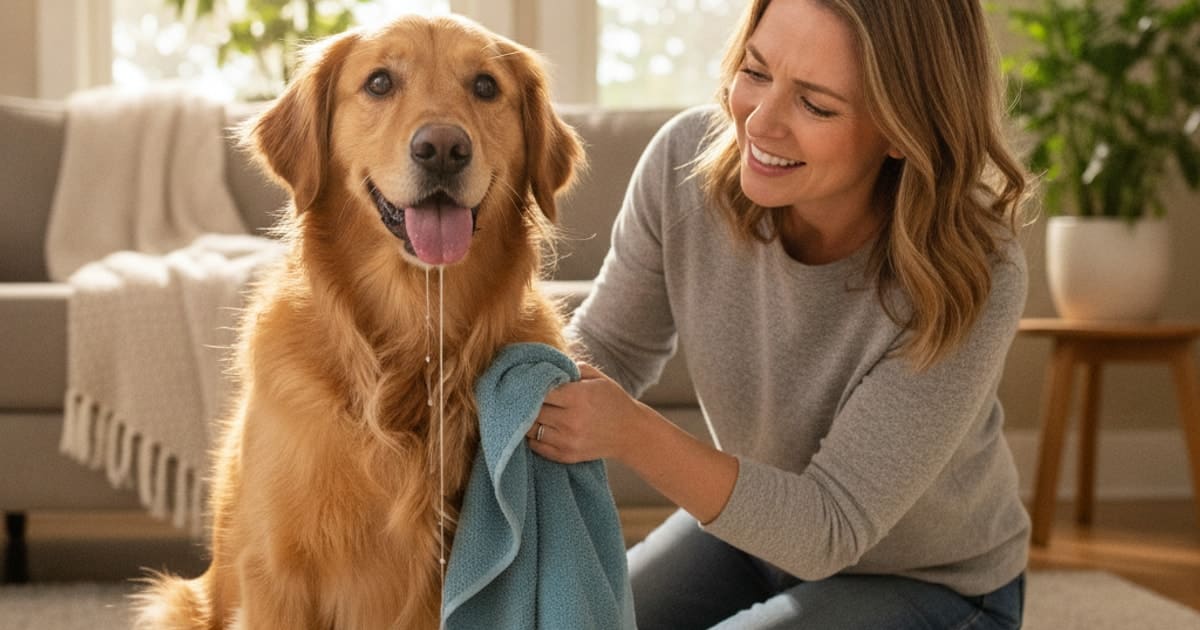
Your dog is drooling a lot because the salivary glands are producing more saliva than usual, or because something is making it hard to swallow the saliva that is already there. Call your veterinarian today if the drooling started suddenly or arrived alongside any other change, and if you think your dog ate, chewed or licked something toxic, phone your vet or an animal poison control service such as the ASPCA Animal Poison Control Center or the Pet Poison Helpline right away.
Drooling, which your vet may call ptyalism or hypersalivation, is a sign rather than a diagnosis. On its own it tells you very little. Its meaning comes almost entirely from the company it keeps: when it started, how fast, what the saliva looks like, and what else your dog is doing. A relaxed dog who strings drool over the kitchen floor at dinner time is telling you something very different from a dog who starts pouring saliva in the garden and then paws at his face.
What normal drool looks like for your dog
There is no universal normal. Dogs with heavy, loose upper lips and deep jowls, including mastiffs, St Bernards, Newfoundlands, bloodhounds, boxers and many bulldogs, hold saliva in folds of skin that simply cannot contain it. Those dogs drool in ribbons at rest and nothing is wrong. Tight lipped breeds such as collies, terriers and many sighthounds usually stay dry outside of mealtimes.
What matters is the change from your own dog's baseline. If a dog who has never needed a drool towel suddenly needs one, that is meaningful. So is drool that has changed character: thicker, ropier, foamy, tinged pink or brown, or carrying a smell that was not there before. Saliva that is suddenly blood streaked, or that hangs from one side of the mouth only, points toward something in or around the mouth and deserves an examination.
Timing is the other half of the picture. Saliva that appears on car journeys, before food, during a thunderstorm, or on the way into a clinic car park is tied to a trigger you can name. Saliva that appears for no reason you can identify is still tied to a trigger, you just cannot see it yet, and that is exactly the situation a veterinary exam is designed for.
Reasons dogs salivate more than usual
Saliva production is controlled by nerves that respond to taste, smell, pain, nausea, temperature and anxiety. Anything that touches one of those pathways can turn the tap on. The groups below cover the ground your vet will be working through.
Mouth, teeth and throat. Dental disease, a fractured or loose tooth, an abscess, inflamed gums, ulcers, a stick fragment or bone splinter wedged across the roof of the mouth, a grass awn in the tonsil area, or a growth on the tongue, gum or lip. Mouth pain is one of the fastest routes to a drooling dog. Any new lump or swelling, inside the mouth or anywhere on the body, should be checked by a vet, and only a needle sample taken by your veterinarian can tell you what that lump actually is.
Nausea and the digestive tract. Dogs salivate heavily when they feel sick. Motion sickness, an upset stomach, something swallowed that should not have been, inflammation anywhere along the gut, and liver or kidney problems that change blood chemistry can all show up first as drool, usually with lip licking, swallowing, grass eating or a hunched posture.
Toxins, plants and wildlife. Bitter or caustic substances cause immediate, dramatic salivation. Cleaning products, antifreeze, slug and rodent baits, certain houseplants and garden plants, some human foods and medicines, and contact with a toad or a stinging insect all belong here. This group is the reason sudden drooling is treated as urgent until proven otherwise.
Heat. An overheating dog pants hard and drools thick, ropey saliva. Heat stress is an emergency, and it escalates quickly in humid weather, in cars, and in flat faced breeds.
Airway and swallowing problems. Anything that makes swallowing painful or mechanically difficult, including throat inflammation, laryngeal problems and conditions affecting the oesophagus, leaves saliva to spill out instead of going down.
Nervous system and nerve function. Facial nerve weakness, jaw problems, seizure activity and other neurological changes can interfere with the muscles that close the mouth and move saliva backwards. Drooling with a head tilt, a drooping lip, wobbliness, tremors or a dazed episode belongs in front of a vet without delay.
Stress, excitement and anticipation. Fear, travel, loud noise and the smell of food all stimulate saliva. This kind of drooling starts with a trigger and fades when the trigger goes.
Medication effects. Some things prescribed by your vet can increase saliva, and a bitter tablet held in the mouth will produce a foamy mess within seconds. Never stop or change anything your vet has prescribed on your own; ask them whether what you are seeing fits the treatment.
| What you are seeing | What it can point toward | How quickly to act |
|---|---|---|
| Drool at mealtimes, in the car, or during storms, settling afterwards | Anticipation, motion sickness, stress | Mention it at the next visit |
| Drool from one side, pawing at the face, dropping food, bad smell | Dental disease, foreign object, mouth injury or growth | Same day exam |
| Sudden heavy drool with lip smacking, retching or vomiting | Nausea, swallowed object, gut problem | Same day, sooner if repeated |
| Sudden drool after chewing or licking something unknown | Toxin or caustic contact | Call your vet or poison control now |
| Thick drool with hard panting, bright gums, weakness in heat | Heat stress | Emergency now |
| Drool with gagging, no swallowing, swollen or hard belly, restlessness | Airway or throat problem, bloat | Emergency now |
| Drool with tremors, collapse, a head tilt or a drooping face | Neurological problem | Emergency now |
Signs that turn drooling into an emergency
Drooling that begins suddenly and comes with retching without producing anything, a hard or swollen belly, laboured breathing, pale or brick red gums, collapse, tremors, a seizure, or an inability to swallow is an emergency and needs a veterinarian immediately.
Other patterns that should move you straight to urgent care include drooling after known or suspected contact with a toxin, drooling in a dog who is overheating, blood in the saliva, a dog who cannot close the mouth, obvious facial swelling, and drooling in a dog who is also disoriented or unsteady. Flat faced breeds and very young or frail dogs have less margin, so err toward being seen.
If you are unsure whether what you are watching is urgent, call the clinic and describe it out loud. Describing the picture to someone trained to hear it is more reliable than waiting to see what happens next. Results vary from dog to dog, and a clinic would far rather triage a false alarm than meet the same dog hours later in worse shape.
Sudden drooling compared with drooling that creeps up
If your dog started drooling a lot today and was fine yesterday, think about the last few hours. Where has the dog been, what was in reach, was there a bin, a plant, a cleaning cupboard, a toad, a bee, a bone, a chewed toy, an unattended bag? Sudden onset points toward something acute: a toxin, a foreign object, pain, nausea, heat or an injury. Take a photo of anything you suspect, keep packaging, and bring it with you.
Drooling that has built slowly over weeks tends to point elsewhere: dental disease that has crossed into pain, a growth developing in the mouth, a swallowing problem, or a metabolic condition that changes how a dog feels. Owners frequently notice the secondary clues before the drool itself, such as food dropped on one side of the bowl, reluctance to chew hard things, weight loss, or breath that has turned sour.
Both patterns are worth an appointment. Slow does not mean minor; it usually means the dog has been quietly tolerating something.
What to do when your dog is drooling a lot
Start by looking without interfering. Note the time it began, which side the saliva comes from, its colour and consistency, and every other sign you can see, including appetite, energy, breathing, gum colour and whether the dog can swallow. Keep the dog cool, quiet and under observation, remove access to whatever you suspect, and avoid putting your fingers into the mouth of a painful dog, which is both unsafe for you and likely to make the exam harder.
Do not attempt treatment at home, and do not give anything by mouth. If a toxin is possible, make the call before you do anything else. Otherwise, book the exam and bring your notes with you. Excessive salivation is a sign that shows up across many different conditions, which is exactly why it needs a physical examination rather than guesswork.
Your vet will look inside the mouth, often with sedation if the dog is sore, feel the jaw, throat and neck, check gum colour and hydration, listen to the chest, press on the abdomen, and may recommend blood work, imaging or dental radiographs depending on what the exam turns up. The goal is to separate a mouth problem from a gut problem from a toxin from a nervous system problem, and that is a diagnosis only a veterinarian can make.
Key Takeaways
- Drooling is a sign, not a diagnosis, and its meaning comes from what else is happening at the same time.
- Compare your dog with your dog. A change from that individual baseline matters more than the volume of drool.
- Sudden heavy drooling with retching, a swollen belly, breathing trouble, tremors, collapse or an inability to swallow is an emergency.
- Suspected toxin contact means calling your vet or an animal poison control service before anything else.
- Slow onset drooling frequently traces back to the mouth, including dental pain and growths, and any new lump needs a vet and a needle sample to identify.
- There is no such thing as drooling for no reason; there is only a reason not yet found.
- Do not treat at home, do not give anything by mouth, and do not stop or change anything your vet prescribed.
Your veterinarian owns the diagnosis and the plan. They are the only person who can look inside your dog's mouth properly, interpret the rest of the exam, and decide what the drooling actually means, so talk to your vet about any change you cannot explain and bring your observations with you to the appointment.
For a wider look at the signs that mean a dog needs to be seen immediately, read Emergency Signs in Dogs.
Frequently asked questions
- Why is my dog having excessive drooling?
- Because something is stimulating saliva production or interfering with swallowing. The usual culprits are mouth pain or dental disease, a foreign object, nausea, motion sickness, heat stress, contact with a toxin, stress, or a nerve or swallowing problem. A veterinary exam separates these, since the signs overlap heavily.
- What does dog drooling a lot mean?
- It means the salivary glands are working harder than normal, or saliva is not being swallowed as it should be. On its own it is a sign rather than a diagnosis. The meaning comes from timing, the look and smell of the saliva, and the other signs appearing alongside it.
- Why did my dog start drooling a lot?
- A sudden start points toward something acute within the last few hours: a swallowed or chewed object, a caustic or toxic substance, a sting or toad contact, mouth injury, nausea or overheating. Retrace where your dog has been, keep any suspect packaging, and arrange a same day veterinary exam.
- Why is my.dog drooling so much?
- Heavy salivation usually traces back to the mouth, the stomach, a toxin, heat, or the nerves controlling swallowing. Loose lipped breeds drool at baseline, so what matters is a change from your own dog's normal. Any change you cannot explain should be examined by your veterinarian.
- Why is my dog drooling more than usual?
- An increase above your dog's normal level suggests a new trigger: dental pain, a growth or object in the mouth, nausea, a swallowing difficulty, heat, anxiety, or something your dog licked or chewed. Note when it began and what else changed, then book a veterinary appointment.
- Why is my dog salivating alot?
- Saliva increases in response to pain, nausea, bitter or caustic tastes, heat and stress, so heavy salivating can come from the mouth, the digestive tract, a toxin or the nervous system. If it started suddenly or comes with retching, weakness or breathing trouble, treat it as an emergency.
- What should I do if my dog is drooling a lot?
- Observe without interfering, note the time it started, the colour and consistency of the saliva, and every other sign. Remove access to anything suspicious, keep your dog cool and quiet, give nothing by mouth, and call your veterinarian. If a toxin is possible, call before doing anything else.
- Can drooling ever be normal for a dog?
- Yes. Dogs with deep jowls and loose lips drool at rest because their anatomy cannot hold saliva in. Many dogs also drool before meals, in the car, or when anxious. Normal drooling is stable over time and settles when the trigger passes, rather than appearing out of nowhere.
Educational content, not veterinary advice. Ask your vet about your dog.