Dog Ear Infection Smells Bad? When to See the Vet
Dog ear infections can smell yeasty, sweet, fishy, sour or rotten. A bad ear smell is a reason to see your vet. Learn the emergency signs, the causes your vet checks for and what to tell your vet at the visit.
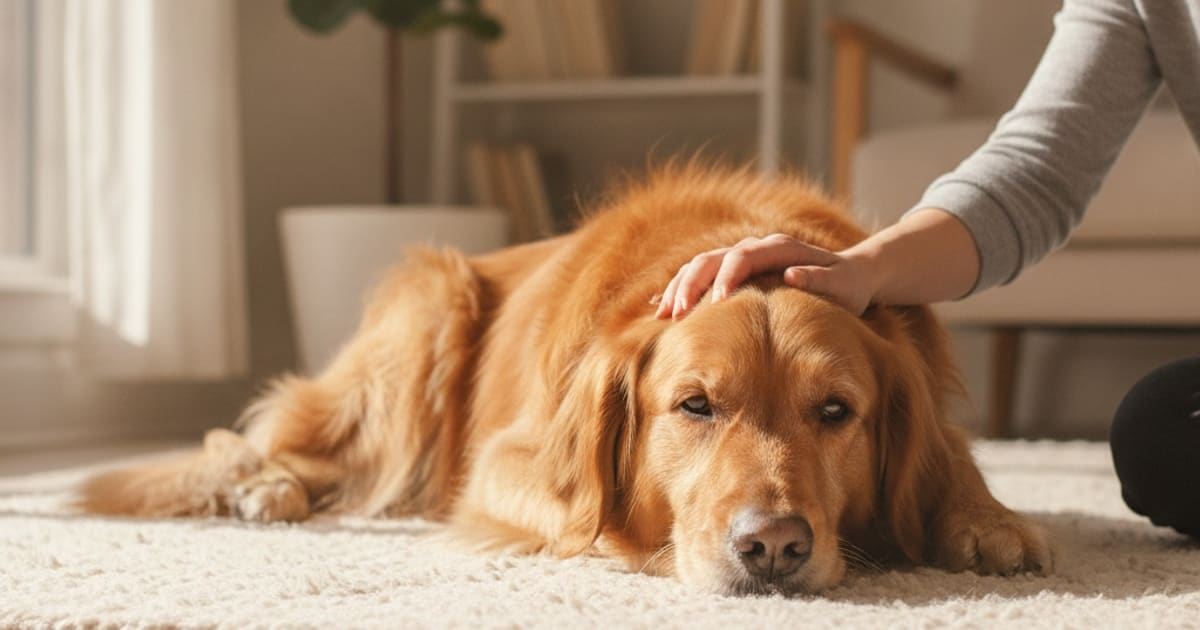
Dog ear infections can smell, and a bad ear smell is a reason to see a vet. Go to an emergency vet now if your dog loses balance or has a new head tilt, has eyes that flick from side to side, has a face that droops on one side, or has bleeding from the ear that will not stop; otherwise book a same-day appointment. When a dog ear infection smells bad, the smell tells you something inside the ear has changed, but it cannot tell you what. An infected ear can smell yeasty, musty, sweet, sour like vinegar, cheesy, fishy, or rotten, like something dead or like poop. Each of these smells is a reason for a vet exam, and none of them on its own points to one cause. Your vet can find out what is behind the smell by looking deep into the ear canal and checking a sample under a microscope. Before the visit, do not clean the ear or put anything in it, because cleaners and drops can hurt an ear with a damaged eardrum and can change the sample your vet needs.
When to go to the vet now
These signs need an emergency vet now:
- Loss of balance, falling, circling or a new head tilt
- Eyes that flick from side to side or up and down
- A face that droops on one side, or an eye that will not close or blink
- Bleeding from the ear that will not stop
These signs can come with problems deeper in the ear or with the nerves that run close to it, and your dog needs to be seen straight away. You can read more about urgent signs in Dog Emergency Signs. For a bad ear smell without these signs, book a same-day appointment with your vet.
What can cause a bad ear smell
A dog's ear canal is long and bends partway down, so wax, moisture and skin debris can collect deep inside where little air reaches. When yeast or bacteria grow in that warm, damp space, they break down wax, discharge and skin cells, and that process gives off the smell. The smell is a sign of what is happening in the canal, not a cause in itself. Your vet looks at several possibilities, and more than one can be present at the same time.
Yeast and bacteria are two of the things your vet checks first. Both can live on the skin in small numbers, and both can grow out of control when the ear canal is inflamed, damp or blocked. Yeast, bacteria or a mix of both can give off yeasty, sweet, sour, cheesy, fishy or rotten smells, and the same smell can come from different germs. That is why your vet looks at a sample under a microscope rather than going by smell. Some bacteria need a lab test called a culture to show which germ is there and which medicine is likely to work against it.
Allergies are another possibility your vet considers. Skin allergies, whether to things in the environment such as pollen or dust, or to something in the food, can inflame the lining of the ear canal. Inflamed skin makes more wax and gives yeast and bacteria room to grow, so an ear infection can be one sign of an allergy that affects the whole body. Tell your vet about any paw licking, scratching or red skin elsewhere, because your vet may look at allergies as part of the picture.
Ear mites are tiny parasites that live in the ear canal. They can cause intense itching and a smell, and they can spread between pets in the same home. Your vet can look for mites with an otoscope or under a microscope. Because other problems can look much the same, mites are something your vet confirms rather than something to assume.
Something stuck in the ear canal is another possibility. Grass seeds and other plant pieces can work their way down the canal after a walk, and they can cause sudden head shaking, pain and later a smell as infection sets in. Do not try to reach into the ear or pull anything out. Your vet has the light and instruments to see deep into the canal and remove what is there, sometimes with your dog sedated.
Moisture can also play a part. Water left in the canal after swimming or a bath keeps the skin damp, which gives yeast and bacteria room to grow. Ear shape matters too: dogs with long, heavy ear flaps, narrow canals or a lot of hair in the canal have less air moving through the ear. Your vet looks at the shape of the canal and the ear flap as part of the exam.
Some smells come from deeper in the ear. An infection can spread past the eardrum into the middle ear, or the eardrum itself can be torn or damaged. A middle ear problem can come with a head tilt, loss of balance, flicking eyes or a drooping face, which is why those signs need an emergency vet now. Your vet checks the eardrum before choosing any treatment, because some ear products can harm the middle and inner ear when the eardrum is not intact.
Growths in the ear canal, such as polyps or tumours, can block the canal and trap wax and discharge behind them, which can lead to infection and smell. Long-standing inflammation can also thicken and narrow the canal. Repeated head shaking and scratching can burst small blood vessels in the ear flap and cause a swelling of the flap called an aural haematoma. Any new lump or swelling should be checked by a vet, who may take a fine needle sample.
Some conditions elsewhere in the body can affect the ears. Hormone problems such as an underactive thyroid gland, and other skin diseases, can change the skin in the ear canal and make infection more likely. If your dog has had ear problems before, your vet may run blood tests or skin tests to look for an underlying condition.
A smell near your dog's head is not always coming from the ear. Dental disease, an infected skin fold on the face, or a skin infection on the ear flap can all smell bad. Your vet can check the mouth, face and skin at the same visit and find where the smell is coming from.
None of these causes can be confirmed by smell, by look or by the way your dog behaves. Your vet may find more than one at once, such as an allergy that led to inflamed skin and then a mixed yeast and bacterial infection. Finding every part of the problem matters for choosing the right treatment.
What your vet may do
Your vet starts by asking about the history: when you first noticed a bad ear smell, whether one or both ears seem affected, and what other signs you have seen. Then comes a full physical exam, because ear problems can be linked to the skin, the hormones or the nervous system. Your vet checks both ears, even when only one smells, along with the skin on the ear flaps, face, paws and body.
Next, your vet looks into the ear canal with an otoscope, a handheld instrument with a light and a small tip that fits into the canal. This lets the vet see how red or swollen the canal is, whether there is discharge or wax, whether anything is stuck inside, and whether the eardrum is intact. A sore, swollen ear can make this hard, and some dogs need light sedation for a proper look at a painful area.
Ear cytology is one of the main tests. Your vet takes a swab of the material from the canal, spreads it on a glass slide, stains it and looks at it under a microscope. This shows whether yeast, bacteria, mites or inflammatory cells are present, and it guides the choice of treatment. It is also why it helps not to clean or put anything in the ear before the visit.
If bacteria are present and the ear has been treated before, or the ear is not responding to treatment, your vet may send a sample to a lab for a culture. A culture grows the bacteria so the lab can name them and test which medicines work against them.
When the canal is full of discharge or the eardrum cannot be seen, your vet may clean and flush the ear in the clinic, sometimes under sedation or general anaesthesia. This lets the vet see the eardrum, remove debris that medicine cannot get through, and take samples from deep in the canal.
If the vet suspects the middle or inner ear is involved, or if your dog has balance problems, a drooping face or flicking eyes, imaging may help. X-rays, a CT scan or an MRI can show the bony part of the ear and the area around it. A neurological exam checks the nerves, reflexes and balance.
For ear problems that keep coming up, your vet may suggest tests for underlying causes. These can include blood tests, skin scrapings, a food trial to look for a food allergy, or allergy testing. If a growth is seen in the canal, your vet may take a fine needle sample or a small biopsy.
Once your vet knows what is in the ear and whether the eardrum is intact, they can choose treatment for your dog. This may include an in-clinic ear clean, ear medicine, medicine by mouth, pain relief, or treatment for an underlying allergy or other condition. Your vet may book a recheck to look in the ear again and repeat the cytology. Follow your vet's instructions for any medicine they prescribe, and talk to your vet before stopping or changing anything.
Call your vet again if the smell returns or changes, or if head shaking or scratching starts again, and go to an emergency vet now if you notice any of the emergency signs above.
What to tell your vet
Before the visit, note down what you have seen so you can share it with your vet:
- When you first noticed a bad ear smell, and whether it seems to be one ear or both
- Any change in the smell, the ear or your dog's behaviour since then
- Any bleeding or discharge from the ear
- Licking, scratching, pawing at the ear, rubbing the head or shaking the head
- Other signs, such as a head tilt, balance problems, pain, paw licking, itchy skin or changes in eating
- Recent swimming, baths or grooming, past ear problems, and anything already put in the ear
If your dog has had ear problems before, bring the names of any past medicines. For more on ear and skin problems, see the conditions library. Talk to your vet about any question you have, and your vet can tell you how an existing condition such as an allergy fits into your dog's ear care.
Frequently asked questions
- Is a bad ear smell an emergency in dogs?
- A bad ear smell on its own needs a same-day vet visit. Go to an emergency vet now if your dog loses balance or has a new head tilt, has eyes that flick from side to side, has a face that droops on one side, or has bleeding from the ear that will not stop.
- What should I do if my dog has a bad ear smell?
- Call your vet today for a same-day appointment. Do not clean the ear or put anything in it before the visit, because your vet needs to see the canal and take a sample as it is. Go to an emergency vet now if your dog has balance problems, flicking eyes, a drooping face or bleeding that will not stop.
- Can I treat a bad ear smell at home?
- No, because anything put in the ear before an exam can hurt an ear with a damaged eardrum and can change the sample your vet needs. Do not put anything on or in the ear, and do not remove anything from it. For bleeding, hold gentle pressure with a clean cloth on the way to the vet only.
- Do dog ear infections smell?
- Yes, dog ear infections can smell, because yeast and bacteria growing in the warm, damp ear canal break down wax, discharge and skin debris. A bad ear smell is a reason to see your vet the same day, or an emergency vet now if it comes with balance problems, flicking eyes, a drooping face or bleeding that will not stop.
- What does a dog ear infection smell like?
- A dog ear infection can smell yeasty, musty, sweet, sour like vinegar, cheesy, fishy, or rotten, like something dead or like poop. The same smell can come from different causes, so the smell alone cannot show what is wrong. Your vet can find the cause by looking into the canal and checking a sample under a microscope.
- What does a dog ear yeast infection smell like?
- Yeast in the ear can give off a musty, sweet, bread-like or cheesy smell. Bacteria, or a mix of yeast and bacteria, can smell the same way, so the smell cannot tell you it is yeast. Your vet confirms yeast by checking a swab from the ear under a microscope, then chooses treatment from what is found.
- Do dog ear infections smell bad?
- Yes, a dog ear infection can smell bad, and the smell can be strong enough to notice across a room or when your dog shakes its head. How strong the smell is does not show how serious the problem is or what is causing it. Call your vet today for a same-day appointment to have the ear checked.
- Why does my dog's ear smell like fish, vinegar or poop?
- Fishy, sour, vinegar-like or poop-like smells can come from yeast, bacteria, or discharge building up in an inflamed or blocked ear canal, and a smell near the head can also come from the mouth or skin. None of these smells points to one cause. Book a same-day vet visit so your vet can find the source.
- Should I clean my dog's ear before the vet visit?
- No, because cleaning can wash away the material your vet needs to sample, and a cleaner can hurt the middle ear if the eardrum is damaged. Leave the ear as it is and tell your vet about anything already put in it. Your vet can clean the ear in the clinic after checking the eardrum.
- Can a smelly ear infection affect my dog's balance?
- Yes, an infection that reaches the middle or inner ear can affect balance, because the inner ear helps control it. Go to an emergency vet now if your dog has a bad ear smell along with a new head tilt, loss of balance, circling, falling, flicking eyes or a face that droops on one side.
- Why does my vet need to take a sample from the ear?
- A sample lets your vet see what is growing in the ear. Looked at under a microscope, it can show yeast, bacteria, mites or inflammatory cells, and a lab culture can name the bacteria. Smell and look cannot show these things, and the right treatment depends on what is found, so the sample guides your vet's plan.
Educational content, not veterinary advice. Ask your vet about your dog.