Dog Eye Allergies Symptoms: What to Look For
Dog eye allergies usually look like red, watery, itchy eyes in both eyes at once, with clear or stringy discharge, puffy lids, squinting and face rubbing. Triggers include pollen, dust mites, mold and contact irritants. Because ulcers and dry eye look similar, have a veterinarian examine the eye.
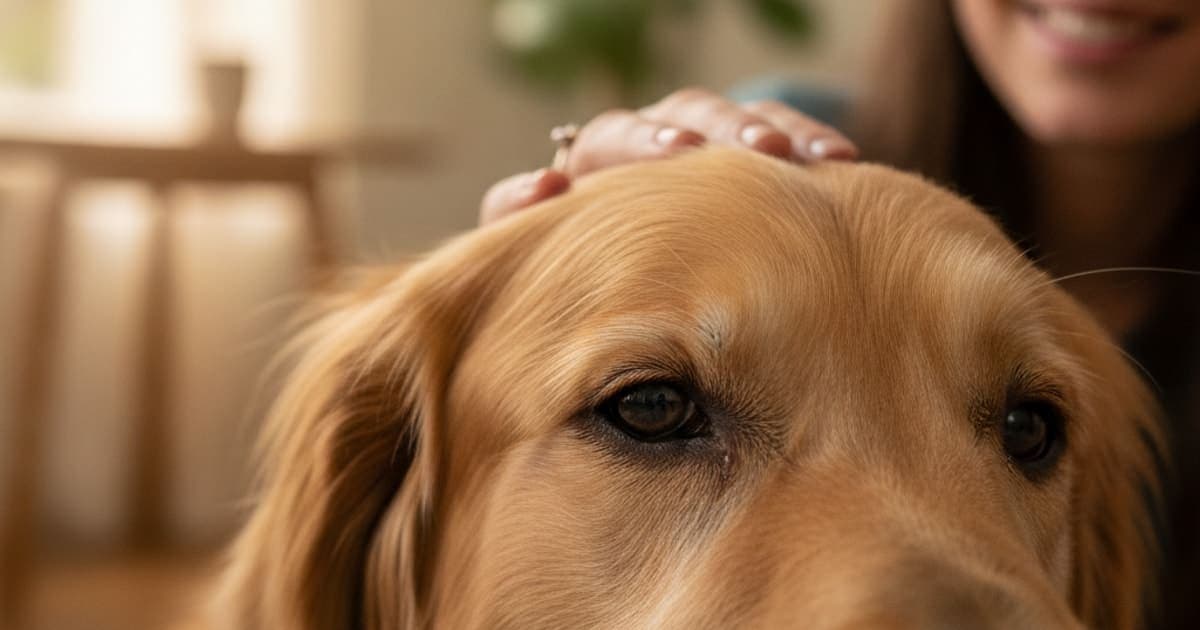
Allergic eyes in a dog typically look pink or red around the whites and the inner lids, wet with clear or slightly stringy discharge, a little puffy, and itchy enough that the dog rubs his face on the carpet, the sofa or his own paw. If the eye is painful, cloudy, held tightly shut, bleeding, or producing thick yellow or green discharge, book a same-day appointment with your veterinarian rather than assuming allergy, because a corneal scratch, dry eye and glaucoma can all start out looking like an irritated allergic eye.
Yes, dogs absolutely can get allergies that affect the eyes. The conjunctiva, the thin pink membrane lining the lids and covering the white of the eye, is wet, exposed mucous membrane sitting right at nose height for a dog who spends his day sniffing grass. It reacts to airborne allergens the same way a human's eyes do during pollen season. Allergies in dogs can and do cause eye problems, and in many dogs the eyes flare at the same time as the paws, the ears and the nose.
The allergic eye, sign by sign
When owners ask what their dog's eyes look like during an allergy flare, these are the features that show up most consistently:
- Redness. The white of the eye looks bloodshot and the inner lid margins, visible when you gently pull the lower lid down, look bright pink or angry red instead of pale salmon.
- Watery, clear discharge. Allergic tearing is usually thin and clear, sometimes thickening into a clear or whitish stringy mucus in the inner corner. It is not thick, opaque, or yellow-green.
- Puffy lids. The lids can look swollen and heavy. In stronger reactions the conjunctiva itself swells and takes on a glassy, jelly-like appearance, which is alarming to see but is a recognised allergic response.
- Itch behaviour. This is the giveaway. Face rubbing along furniture, pawing at the eye, head shaking, and blinking or squinting more than usual.
- Tear staining. Chronic overflow leaves rust-coloured streaks below the inner corner, most visible on light coats.
- Both eyes at once. Airborne allergens reach both eyes, so allergic irritation is usually symmetrical. One red eye on its own points more toward trauma, a foreign body or infection and deserves a prompt exam.
- Darkened, thickened skin around the eyes. With months of rubbing, the skin around the orbit can thicken and lose hair.
What you should not see with uncomplicated allergy: a cloudy or blue-tinged cornea, a visible dent or film on the eye surface, an eye that bulges or looks larger than its partner, obvious pain on touch, or a dog who will not open the eye at all. Any of those changes the conversation entirely and needs a veterinary exam that day.
What sets off eye allergies in dogs
Eye allergies in dogs are triggered by the same categories of allergen that drive itchy skin, because in most dogs the eyes are one more surface of a whole-body atopic response rather than an isolated problem. Research suggests allergic eye signs in dogs commonly appear as part of broader environmental allergy rather than on their own.
The usual triggers fall into three groups.
Inhaled and airborne allergens. Tree, grass and weed pollens, mold spores, house dust mites, storage mites in dry food bins, and animal dander. These drive the classic seasonal pattern: eyes and nose flare in spring or late summer, then quiet down after the first hard frost. Dust mites and indoor molds run year round.
Direct contact irritants and allergens. Shampoos and conditioners rinsed carelessly near the face, flea sprays, perfumes, scented candles, cleaning products, cigarette smoke, fireplace smoke, and dust kicked up during home renovation. Contact reactions often come on fast after a specific event and settle fast once the exposure stops.
Food-related allergy. Food allergy in dogs shows up mainly as itchy skin, recurrent ear infections and digestive upset. Eyes can be involved as part of the overall picture, but eye signs alone are rarely the only clue to a food allergy, and sorting it out requires a properly run elimination diet trial supervised by your veterinarian.
Anatomy makes some dogs more prone to visible eye signs. Breeds with prominent, shallow-set eyes, loose lower lids, or heavy facial folds trap allergens and tears against the eye surface and have less protection from wind and debris. That does not create the allergy, but it makes any given exposure look worse.
Eyes, nose and ears usually flare together
If your dog has watery eyes and a runny nose at the same time, allergy moves up the list. A dog in an environmental flare often shows a clear, thin nasal discharge, bouts of sneezing or reverse sneezing, paw licking and chewing, red skin in the armpits and groin, a yeasty smell, and recurring ear inflammation.
That clustering matters for two reasons. First, it supports the allergy theory, because an infection or a foreign body in one eye does not make the paws itch. Second, it tells you that drops alone will never be the whole answer. The eye is reporting a systemic problem, and the management plan has to address the whole dog.
The pattern to watch for is a clear discharge from the nose rather than a coloured or one-sided one. Thick, discoloured or bloody nasal discharge, especially from a single nostril, is a different problem and needs investigating.
Allergy, infection, or something that threatens vision
This is the comparison that decides what you do next. Allergy is only the right answer once a veterinarian has ruled out the conditions that mimic it and damage the eye: corneal ulcers, dry eye, foreign bodies and glaucoma.
| What it looks like | Allergic conjunctivitis | Bacterial infection | Dry eye (KCS) | Ulcer or foreign body | Glaucoma |
|---|---|---|---|---|---|
| Eyes involved | Usually both | Often one, can spread | Often both, may start in one | Usually one | Usually one at first |
| Discharge | Thin, clear, sometimes stringy | Thick, yellow or green | Thick, sticky, grey-yellow, ropey | Watery then mucky if infected | Watery |
| Comfort | Itchy, rubbing | Mildly sore | Gritty, dull discomfort | Clearly painful, held shut | Very painful, dog may be quiet or off food |
| Cornea | Clear | Usually clear | Dull, lacks shine, can scar | Hazy spot, dent or film | Cloudy or bluish, eye looks enlarged |
| Other clues | Sneezing, itchy paws, seasonal timing | Follows injury, grooming or swimming | Builds slowly, worse without treatment | Sudden onset after play or a walk | Sudden, may have a dilated pupil and vision loss |
A veterinarian separates these with a short set of in-clinic tests: a fluorescein stain that lights up any corneal defect, a tear production test, eye pressure measurement, and a careful look under magnification for a grass seed tucked behind the third eyelid. None of that can be done by eye at home, which is exactly why guesswork on an eye is a poor bet. Glaucoma in particular is time-sensitive, and a delay of a day or two can cost vision. If you are not sure which column your dog is in, assume the more serious one and get the eye examined.
How long a flare lasts and what helps between vet visits
Duration tracks the trigger rather than the eye. A contact reaction to a shampoo or a cloud of dust often eases within a day or two once the exposure ends. A pollen-driven flare tends to run for as long as that pollen is in the air, which can mean weeks or an entire season. Dust mite and indoor mold allergy can simmer year round with no clean break. Allergy is a management problem rather than a one-off event, and results vary from dog to dog.
Sensible, low-risk supportive care between appointments:
- Rinse the face and wipe the paws after walks to physically remove pollen before it is rubbed into the eyes.
- Wash bedding often in hot water and vacuum soft furnishings.
- Run air filtration in the rooms where your dog sleeps, and keep windows shut on high-pollen, windy days.
- Flush visible debris only with sterile saline eye wash made for that purpose, and only if the eye is comfortable and clear.
- Use a protective cone if your dog is rubbing hard. Self-trauma is how an itchy eye becomes a scratched one.
What not to do: never put human medicated eye drops, leftover drops from a previous pet, or anything containing a steroid into your dog's eye without a veterinarian's instruction. Steroid drops in an eye with an undetected corneal ulcer can make it dramatically worse. Antihistamines, prescription eye medications and allergy-specific therapies all have a place, but the choice and the sequence belong to your veterinarian after an exam. If signs recur every year, talk to your vet about allergy testing and a long-term plan before the next season starts rather than during it.
Key takeaways
- Allergic eyes in dogs look red, watery, puffy and itchy, usually in both eyes, with clear or stringy discharge and a lot of face rubbing.
- Common triggers are pollen, mold, dust and storage mites, dander, smoke and scented household products, with food allergy showing up mostly through skin and ears.
- Eye signs rarely travel alone. Sneezing, a clear runny nose, itchy paws and recurrent ear trouble point to environmental allergy.
- One red eye, pain, cloudiness, a squeezed-shut lid or thick coloured discharge is not a wait-and-see situation.
- Flares last as long as the trigger is present, from a couple of days for a contact reaction to a full season for pollen.
- Only in-clinic testing can separate allergy from ulcers, dry eye and glaucoma.
Your veterinarian owns the diagnosis and the treatment plan here. An eye exam takes minutes, costs far less than treating a neglected ulcer, and converts a guess into a plan you can actually follow through the season. Everything you do at home, the rinsing, the filtration, the washing and the avoidance, works best alongside that plan, not instead of it.
For help telling an irritated eye from a genuine emergency, read the warning signs that mean a dog needs emergency care, and browse the wider canine conditions library for related skin, ear and allergy topics.
Frequently asked questions
- what do dog eye allergies look like
- Dog eye allergies look like red or pink eyes with watery, clear or stringy discharge, puffy lids and frequent squinting or blinking. Most dogs rub their face on furniture or paw at the eye. Both eyes are usually affected at once, often alongside sneezing and itchy paws.
- what does dog eye allergies look like
- It looks like irritation rather than injury: bloodshot whites, bright pink inner lid margins, thin clear tearing, mild lid swelling and rust-coloured tear staining on light coats. The cornea stays clear and the dog can open the eye. Pain, cloudiness or thick coloured discharge suggests something else.
- what do dogs eyes look like when they have allergies
- They look wet, pink and slightly swollen, usually on both sides, with clear discharge collecting in the inner corner and the surrounding skin damp or stained. In stronger reactions the conjunctiva swells into a glassy, jelly-like ring. Chronic rubbing thickens and darkens the skin around the eye.
- what causes eye allergies in dogs
- Airborne allergens cause most cases: tree, grass and weed pollen, mold spores, house dust and storage mites, and animal dander. Contact irritants such as shampoos, flea sprays, perfumes, cleaning products and smoke also trigger reactions. Food allergy contributes in some dogs, usually alongside skin and ear signs.
- what causes dog eye allergies
- The immune system overreacts to a harmless substance that lands on the conjunctiva, releasing histamine and other mediators that cause redness, swelling, tearing and itch. Pollen, dust mites and mold are the usual culprits. Breeds with prominent eyes or facial folds tend to show stronger visible signs.
- can dogs get allergies in eyes
- Yes. The conjunctiva is exposed mucous membrane and reacts to allergens much like a human's eyes do. Allergic conjunctivitis is a recognised veterinary diagnosis in dogs. Because ulcers, dry eye and glaucoma can look similar early on, a veterinarian should confirm it before any drops are used.
- can allergies affect dogs eyes and nose at the same time
- Yes, and that pairing is a useful clue. Environmental allergy often produces watery eyes, a thin clear nasal discharge, sneezing or reverse sneezing together. Thick, discoloured or one-sided nasal discharge is a different problem and should be examined rather than treated as allergy.
- how long do dog eye allergies last
- A contact reaction often settles within a day or two once the trigger is removed. Pollen-driven flares persist as long as that pollen is in the air, which can mean weeks or a whole season. Dust mite and indoor mold allergy can run year round.
- does my dog have eye allergies or an infection
- Allergy usually means both eyes, thin clear discharge, intense itching and other allergy signs such as paw licking. Infection more often means one eye, thick yellow or green discharge and soreness rather than itch. Only an in-clinic exam with a fluorescein stain and tear test can confirm which.
Educational content, not veterinary advice. Ask your vet about your dog.