Dog Face Swollen on One Side, No Pain: When to See a Vet
One side of your dog's face can swell from a tooth root infection, an abscess, a bite, an allergic reaction, an injury or a growth. A painless swelling still needs a same-day vet visit, and trouble breathing or a bulging eye means going to an emergency vet now.
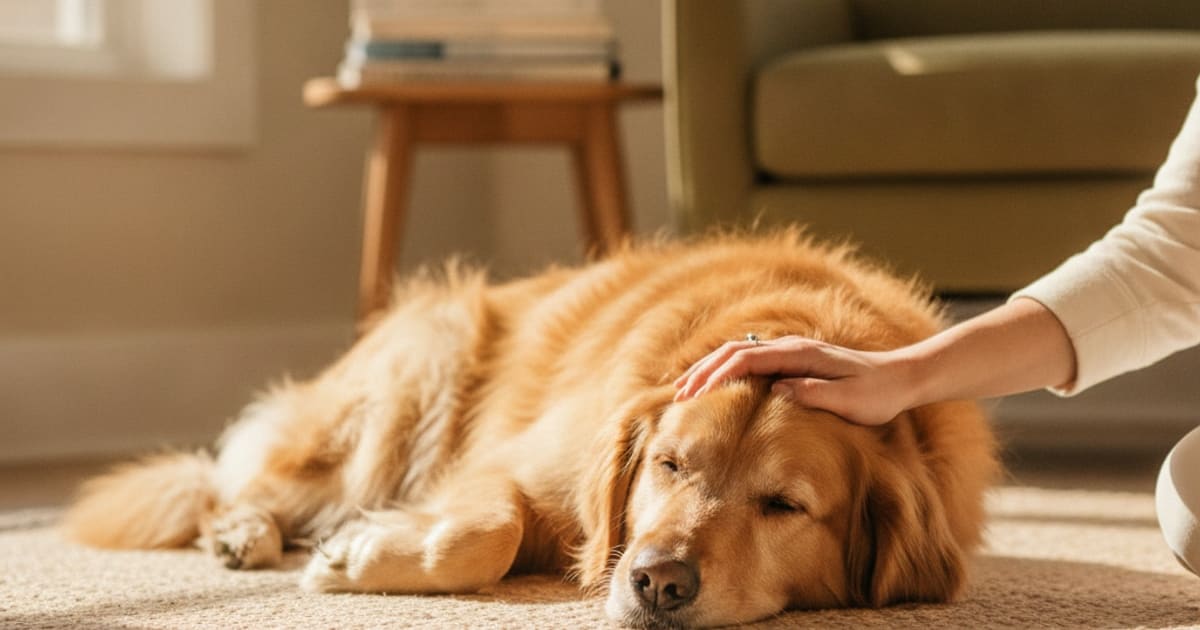
Facial swelling on one side is a reason to see a vet, because it can come from a tooth root infection, an abscess, a bite, an allergic reaction, an injury or a growth. Go to an emergency vet now if your dog has trouble breathing, the swelling is spreading fast or reaching the throat or neck, the eye is bulging or swollen shut, or your dog is weak or collapses; otherwise book a same-day appointment. Any new lump or swelling should be checked by a vet, who may take a fine needle sample. The plain answer to 'dog face swollen on one side no pain' is that a painless swelling still needs that same-day visit, because the presence or absence of pain does not show what is causing it.
When to go to the vet now
Go to an emergency vet now if facial swelling on one side comes with any of these signs:
- Trouble breathing, noisy breathing or breathing with the mouth open
- Swelling that is spreading fast or moving down to the throat or neck
- An eye that is bulging, swollen shut, injured or not able to close
- Swelling after a snake bite, or swelling with hives across the body or vomiting
- Trouble swallowing, or a mouth your dog cannot open or close
- Heavy bleeding or bleeding that will not stop
- Weakness, wobbling or collapse
If there is heavy bleeding, hold gentle pressure with a clean cloth on the way to the vet, and do nothing else to the area. For other signs that need care straight away, see Dog Emergency Signs.
What can cause facial swelling on one side
Facial swelling on one side can have several causes, and a vet exam may help find the cause. The look of the swelling, how it feels, where it sits on the face and how fast it appeared cannot tell you which cause is behind it, and two swellings that seem alike from the outside can come from very different problems. The causes below are possibilities your vet checks, not a list to sort through at home.
Teeth and gums are one area the vet examines closely. An infection at the root of a tooth, a broken tooth with the inner pulp exposed, or gum disease that has spread deep around a tooth can let pus build up in the bone and soft tissue of the jaw. Because the tooth roots sit inside the bones of the face, that pressure can show on the outside as swelling on one side. A tooth problem can be present without any sign of pain, and a dog with a sore tooth can keep eating by chewing on the other side of the mouth, so a good appetite does not rule it out.
Abscesses and wounds are another possibility. A bite from another dog or animal during a fight or rough play can leave a small puncture hidden in the fur. Bacteria carried under the skin by the tooth can form a pocket of pus, and the swelling may show up only after the skin over the wound has closed. A scratch, a stick that pierced the inside of the mouth during play, or a grass seed or other plant material that worked its way under the skin can lead to the same kind of pocket. If your dog has been in a fight, tell your vet even if you cannot see a wound, because the vet checks for punctures that are easy to miss. Do not try to open the swelling or remove anything stuck in the skin or mouth yourself.
Stings, bites and allergic reactions can also cause one-sided swelling. A bee or wasp sting, a spider bite or a reaction to something your dog touched or ate can make the face swell on the side where contact happened. An allergic reaction can spread and affect breathing, which is why swelling after a sting together with any change in breathing, hives across the body or vomiting needs an emergency vet now. A snake bite is always an emergency, whatever the swelling looks like.
Injury is another cause the vet considers. A knock to the face, a fall, a collision during play or being struck by something can cause bruising, swelling of the soft tissue or a pocket of blood under the skin. A crack or break in the jaw or in the bones around the eye can also show as swelling on one side. A pocket of blood can form after an injury, and it can also form when the blood does not clot as it should, so the vet may run tests for clotting when there is no clear injury.
Glands in the head and neck can swell too. Dogs have salivary glands under the jaw, below the ear and near the eye, and a gland or its duct can become blocked, inflamed or damaged. When a duct is damaged, saliva can leak and collect under the skin as a swelling. Lymph nodes under the jaw and in the neck can enlarge when the body is fighting an infection nearby, and they can also enlarge because of cancer affecting the lymph system. When swelling reaches from the face into the neck, the vet examines these glands and nodes closely, and swelling that reaches the throat is an emergency because it can press on the airway.
Problems behind the eye and inside the nose can push outward on the face. An infection, an abscess or a growth in the space behind the eye can make the eye bulge and the face swell on that side, and an eye that bulges or will not close needs an emergency vet now. An infection, a foreign object or a growth inside the nose or sinus can press on the thin bones of the face and cause swelling on one side. Tell your vet about any sneezing, discharge from one nostril or nosebleed, because the vet puts every sign together with the exam.
A growth is a possibility the vet takes seriously at any age. Growths can start in the gums, the jaw bone, the skin, the tissue under the skin, a gland or the nose, and they can be painless. Only cells or tissue examined by the vet or a laboratory can show what a growth is, which is why any new lump or swelling should be checked by a vet, who may take a fine needle sample.
Several details can make a swelling seem less urgent, and none of them changes the advice to book a same-day visit. A swelling with no pain still needs a vet, because tooth root infections, swollen glands and growths can all be painless, and dogs can hide discomfort. A dog who is eating, playing and acting like themselves with a swollen face also needs that same-day visit, because behavior does not show what is under the swelling. A swelling that feels hard can come from a tooth root infection, an abscess, a gland, bone or a growth, and its firmness does not show which. A swelling that appeared overnight or suddenly can come from a sting, an allergic reaction, an abscess, an injury or bleeding under the skin, and a problem that has been building slowly can also seem to appear all at once. A swollen cheek on one side is one form of this sign, and the vet examines the teeth, gums, glands, skin and bone on that side.
In a senior dog, a painless swelling on one side of the face still needs a same-day visit. Age does not explain a new swelling. The vet checks the teeth, the glands, the skin and the tissues of the face and mouth for infection and growths, as for a dog of any age, and may suggest a fine needle sample or imaging.
After a fight, book a same-day visit even if the swelling looks small and your dog seems comfortable. Go to an emergency vet now if there is heavy bleeding, an eye injury, trouble breathing or swelling reaching the neck.
What your vet may do
Your vet starts by asking when you first noticed the swelling, how it has changed and what happened before it, such as a fight, a sting, a fall or chewing on a stick. The vet then examines the whole dog, not only the face, including temperature, heart rate, breathing, weight and the lymph nodes under the jaw, in front of the shoulders and behind the knees.
The face is examined from the outside and from inside the mouth. The vet compares both sides of the head, looks at the eyes and how they move, checks the nose for discharge and airflow, and feels the swelling, the jaw bones and the glands under the jaw and below the ears. Inside the mouth, the vet examines the gums, every tooth that can be seen, the tongue, the roof of the mouth and the area behind the last upper teeth. A full look at every tooth and the back of the mouth may need sedation or anesthesia, particularly when the area is sore or hard to reach.
A fine needle sample is one test the vet may take. A thin needle is passed into the swelling to collect cells or fluid, which are looked at under a microscope in the clinic or sent to a laboratory. The sample can show whether the swelling holds pus, saliva, blood or cells from a growth, and it helps the vet decide on the next step.
Imaging helps the vet see what lies under the skin. Dental x-rays show the tooth roots and the bone around them, and x-rays of the skull can show the jaw, the nose and the bones around the eye. Ultrasound can show whether a swelling is filled with fluid and how deep it goes. For a swelling behind the eye, inside the nose or deep in the jaw, your vet may suggest a CT scan, which may mean a referral to another clinic.
Blood tests can show signs of infection or inflammation and give a picture of your dog's general health before sedation or anesthesia. When there is bleeding under the skin with no clear injury, the vet may run clotting tests.
Treatment depends on what the vet finds. An abscess may be drained and flushed under sedation, with a sample of the fluid sent to a laboratory to find out which bacteria are present. A tooth problem may need dental treatment under anesthesia, with x-rays taken during the procedure. If a fine needle sample does not give a clear answer, the vet may take a biopsy, a small piece of tissue removed under sedation or anesthesia and sent to a laboratory. Your vet will explain the options for your dog, and if you have questions about any test, result or treatment plan, talk to your vet.
What to tell your vet
Note these points before the appointment and tell your vet:
- When you first noticed the swelling and what your dog was doing before it appeared
- Any change in size, shape or spread since you first noticed it
- Any bleeding, pus or other discharge from the swelling, the mouth, the nose or the eye
- Any licking, rubbing or pawing at the face
- Other signs, such as drooling, chewing on one side, eating less, sneezing, bad breath, tiredness or a change in the eye
- Any fight, sting, bite, fall or chewing on sticks
- Any medicine your dog takes and any existing condition
Do not put anything on the swelling, give any medicine or try to drain it before your vet sees your dog. If your dog's breathing changes, the swelling spreads toward the neck or the eye starts to bulge before the appointment, go to an emergency vet now. After the visit, call your vet again if the swelling grows, a new swelling appears or there is new bleeding. To read about specific diagnoses your vet may mention, see the conditions library.
Frequently asked questions
- Is facial swelling on one side an emergency in dogs?
- It is an emergency if your dog has trouble breathing, the swelling is spreading fast or reaching the throat or neck, the eye is bulging or swollen shut, or your dog is weak or collapses. Go to an emergency vet now for any of these. For any other facial swelling on one side, book a same-day vet appointment.
- What should I do if my dog has facial swelling on one side?
- Call your vet today and book a same-day appointment, even if your dog seems comfortable and is eating. Note when you first saw the swelling, whether it has changed, and any bleeding, licking or other signs, and tell your vet. If breathing changes, the swelling spreads fast or the eye bulges, go to an emergency vet now.
- Can I treat facial swelling on one side at home?
- No, because the swelling needs a vet to find its cause, and home care can hide signs or worsen an infection. Do not put anything on it, give any medicine, or squeeze, drain or remove anything before the vet sees it. If there is bleeding, hold gentle pressure with a clean cloth on the way to the vet only.
- Why is only one side of my dog's face swollen?
- One-sided swelling can come from a problem on that side of the head, such as a tooth root infection, a bite or puncture wound, an abscess, an injury, a swollen gland or a growth. Where it sits cannot tell you which one it is. Book a same-day vet visit, and go to an emergency vet now if breathing changes.
- Why is my dog's face swollen on one side?
- Your vet checks for several causes, including dental infection, an abscess under the skin, a bite or sting, an allergic reaction, an injury, a swollen salivary gland or lymph node, a problem behind the eye and a growth. A vet exam may help find the cause, and a fine needle sample or x-rays may be needed. Book a same-day appointment.
- Why is my dog's face swollen on one side overnight?
- A swelling that appears overnight can come from an abscess, a bite or sting, an allergic reaction, an injury or bleeding under the skin, and a growth can also seem to appear suddenly. How fast it appeared does not show the cause. Book a same-day vet visit, or go to an emergency vet now if breathing changes.
- Why is my dog's face swollen on one side suddenly?
- Sudden swelling on one side can follow a bite, a sting, an allergic reaction or an injury, and it can also come from an abscess or bleeding under the skin. Go to an emergency vet now if breathing changes, the swelling spreads to the neck, or your dog vomits or collapses. Otherwise book a same-day appointment.
- Why is my dog's face swollen on one side when there is no pain and my dog is eating and playing?
- A lack of pain does not rule out an infection, a swollen gland or a growth, and dogs can hide discomfort. Eating and playing do not show what is causing the swelling either. Book a same-day vet visit so the area can be examined, and a fine needle sample may be taken.
- What should I do if my dog's face is swollen on one side after a fight?
- Book a same-day vet visit, because a bite can leave a small puncture hidden in the fur that can turn into an abscess under the skin. Go to an emergency vet now if there is heavy bleeding, trouble breathing, an eye injury or swelling reaching the neck. For bleeding, hold gentle pressure with a clean cloth on the way.
- Why is my dog's face swollen on one side and hard?
- A firm swelling can come from a tooth root infection, an abscess, a swollen gland or lymph node, a bone problem or a growth, and how it feels cannot show which. Any new lump or swelling should be checked by a vet, who may take a fine needle sample. Book a same-day appointment.
- Why is my senior dog's face swollen on one side with no pain?
- In an older dog, the vet checks for dental infection, a swollen gland, an abscess and a growth, among other causes, and age alone does not explain a new swelling. A painless swelling still needs a same-day vet visit. Any new lump or swelling should be checked by a vet, who may take a fine needle sample.
Educational content, not veterinary advice. Ask your vet about your dog.