Dog Farting a Lot: Causes and When to See the Vet
Yes, dogs can pass a lot of gas in their sleep: muscles relax, the sphincter relaxes with them, and gas built up through the day escapes quietly. A sudden rise in nighttime gas, or gas with a swollen belly, retching, vomiting or pain, needs a vet exam.
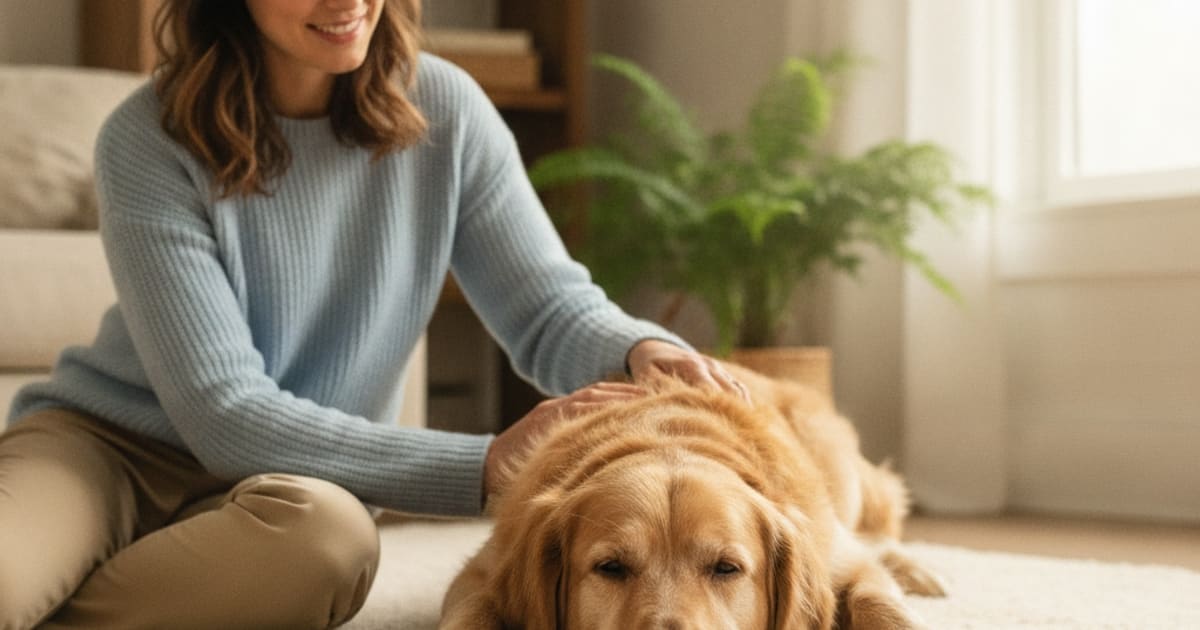
Yes, dogs can pass a lot of gas in their sleep, and night is simply when the body is at its most relaxed. If the gas is new, has climbed sharply, or arrives alongside vomiting, loose stool, weight loss, belly pain or a dog who cannot get comfortable, book a vet exam, and if the belly looks hard or swollen and your dog is retching without bringing anything up, go to an emergency vet now.
Gas by itself is not a diagnosis. It is a sign, and it can mean anything from swallowed air to a gut that is struggling to digest what it is being given. This page explains what nighttime gas can mean, what makes it urgent, and what a vet exam can look at.
Why a sleeping dog passes more gas
The mechanics are straightforward. Gas is produced through the day by bacteria fermenting food in the large intestine, and by air your dog swallows while eating, drinking, panting or excited. During the day, a dog is upright, moving, and the muscles of the pelvic floor and anal sphincter hold tone. Movement also pushes gas along the intestine in a way that spreads its release out over hours.
When a dog falls into deep sleep, skeletal muscle tone drops. The anal sphincter relaxes with everything else, so gas that was being held escapes passively, with no effort and no warning. That is why the sound is loud, the timing is random, and the dog sleeps straight through it.
Position matters too. A dog curled tight, then flopping onto one side, shifts the gas pockets sitting in the loops of intestine, and a shift can be enough to move a pocket toward the exit. Add the fact that the house is quiet and you are lying a few feet away, and a dog who passes the same volume of gas all day long will seem far gassier at night.
There is also a timing effect. Fermentation in the large intestine happens well after a meal is eaten, not during it. Food eaten in the evening is being worked on by gut bacteria in the hours your dog spends asleep.
Diet and eating patterns behind a gassier night
What goes in the mouth sets how much gas comes out the other end. Highly fermentable ingredients give gut bacteria more to work with: beans, peas, lentils, soy, certain fibers, and dairy in dogs who do not handle lactose well. Fatty foods and table scraps can slow stomach emptying and upset the balance further. Scavenging in the yard, on a walk, or out of a bin produces the same effect, and the owner rarely sees it happen.
An abrupt switch in food is another frequent driver. The population of bacteria living in a dog's gut is shaped by what that dog has been eating, and a sudden change gives the existing population a substrate it is not set up for. The result can be more gas, softer stool, or both. Any change to what your dog eats belongs in a conversation with your vet rather than a trial run at home, and your vet can tell you whether a controlled diet trial is worth doing for your dog.
Swallowed air is the other half of the equation. Dogs who eat fast, dogs who compete with another dog at the bowl, dogs who pant heavily before dinner, and flat-faced breeds whose airway anatomy makes them gulp air with every swallow all take in more air than they need. That air has to go somewhere. Some comes back as a burp, and the rest travels the full length of the gut and leaves hours later, which lines up neatly with bedtime.
Health conditions that can drive a rise in gas
A real change in gas, rather than a dog who has always been gassy, is worth an exam. Several conditions can increase gas because they interfere with digestion or with the balance of gut bacteria.
Intestinal parasites, including giardia, can cause gas along with soft, greasy or foul stool. Inflammatory bowel disease can leave the intestinal lining unable to handle food normally. Problems with the pancreas, including a shortage of the enzymes needed to break food down, let undigested nutrients reach the large intestine, where bacteria ferment them and produce a lot of gas. Food intolerance and food allergy can do something similar.
Anything that slows the movement of the gut can let gas sit and build. Dental pain can make a dog gulp food instead of chewing it, taking in extra air. Pancreatitis brings belly pain, vomiting and a hunched posture, and that combination is urgent rather than something to watch.
Gas is a sign, not a diagnosis, and it sits alongside many other canine conditions that affect the digestive tract. A vet exam may help find the cause, and the sooner a changed pattern is looked at, the more there is to work with.
When nighttime gas is an emergency
Gas on its own is a nuisance, but gas paired with a hard or swollen belly, unproductive retching, pacing, drooling or a dog who cannot lie down is a reason to go to an emergency vet now. That combination can mean the stomach has bloated or twisted, which is an emergency and cannot wait until morning.
| What the night looks like | What it can point to | What to do |
|---|---|---|
| Gas while asleep, dog comfortable, eating and stooling as always | Relaxed sphincter tone, swallowed air, fermentable food | Mention it at the next vet visit and note any change |
| New or sharply increased gas with loose stool or mucus | Diet change, gut upset, parasites, inflammation | Book a vet exam and bring a fresh stool sample |
| Gas with weight loss, a dull coat, large pale or greasy stools | Trouble digesting or absorbing food | Book a vet exam and ask about digestive testing |
| Gas with a hard, swollen belly, unproductive retching, pacing, drooling | A bloated or twisted stomach | Go to an emergency vet now |
| Gas with vomiting, a painful belly, a hunched back, refusal to eat | Pancreatitis, an obstruction, another acute problem | Go to an emergency vet now |
| Gas with pale gums, weakness, collapse or labored breathing | A circulatory or respiratory emergency | Go to an emergency vet now |
If your dog has swallowed something they should not have, a toy, a bone, a sock, or anything you suspect is toxic, call your vet or an animal poison control service now rather than waiting to see whether the gas settles.
Older dogs and a rise in gas at night
An older dog who has started passing more gas overnight is a specific pattern worth taking seriously, because several age-related changes stack up at once.
Muscle tone falls with age, including the tone of the anal sphincter, so gas that an younger dog would have held escapes passively during sleep. Gut movement can slow, which gives bacteria longer with the food in front of them. Dental disease is widespread in older dogs and changes how they chew, which means more swallowed air and larger pieces reaching the stomach. Less movement through the day means less of the gentle mechanical help that keeps gas travelling.
Older dogs are also more likely to be carrying a condition that affects digestion, and more likely to be on medication prescribed by a vet, some of which changes how the gut works. Never stop or alter anything your vet has prescribed because of gas. Raise it at the next appointment instead, and talk to your vet about whether the medication and the new gas are connected.
The point to hold onto is that gas in an older dog should not be filed under aging and forgotten. Call your vet if the gas continues, or if you notice weight loss, a change in appetite, a change in stool, a swollen belly or a dog who is slower to get up.
What a vet visit can look at
Bring detail. A vet will want to know what your dog eats, what else your dog gets access to, when the gas is worst, what the stool looks like, whether anything in the household changed, and whether your dog has been scavenging. If you can photograph an unusual stool, do it.
The exam itself can include feeling the abdomen for pain, gas distension or masses, checking the mouth and teeth, and a rectal exam. From there, a vet may suggest a fresh stool sample to look for parasites, blood work to check organ function and look for inflammation, and imaging if the belly feels abnormal or an obstruction is a concern. A diet trial, if one is appropriate, is set up and supervised by the vet rather than improvised at home.
Results vary from dog to dog, and two dogs with identical nighttime gas can have entirely different causes behind it. That is the reason the exam comes first.
Key Takeaways
- Dogs can pass a lot of gas in their sleep because muscle tone, including sphincter tone, drops during deep sleep.
- Gas produced by fermentation peaks hours after eating, which puts the loudest part of the cycle in the middle of the night.
- Swallowed air from fast eating, competition at the bowl, panting or flat-faced anatomy leaves the body as gas hours later.
- A sudden rise in gas, rather than a dog who has always been gassy, is the pattern that warrants a vet exam.
- Gas with a hard or swollen belly, unproductive retching, pacing or drooling means an emergency vet now.
- In an older dog, new nighttime gas can involve lower sphincter tone, slower gut movement, dental pain and other conditions at the same time, so book an exam rather than putting it down to age.
- Call your vet if the gas continues, or if you notice vomiting, loose or greasy stool, blood in the stool, weight loss, a drop in appetite or belly pain.
Your veterinarian owns the diagnosis and the plan. They are the one who can examine the belly, read the stool and blood results, and tell you whether what you are hearing at 2am is relaxed muscle or a gut that needs attention. Everything else, including what your dog eats and how the household is set up around meals, sits downstream of that conversation.
For a plain list of the signs that mean a dog needs to be seen right away, read Dog Emergency Signs.
Frequently asked questions
- do dogs fart a lot in their sleep
- Yes, dogs can pass a lot of gas while asleep. Deep sleep lowers muscle tone throughout the body, including the anal sphincter, so gas that was being held escapes passively. Fermentation also peaks hours after eating, which lands in the overnight window. A sudden rise in gas still warrants a vet exam.
- why does my dog fart a lot in his sleep
- Two things overlap. Gut bacteria ferment food hours after a meal, producing gas overnight, and sleep relaxes the sphincter that normally holds it in. Swallowed air from fast eating or panting adds to the volume. If the gas is new or comes with loose stool, vomiting or pain, talk to your vet.
- My dog farts a lot in his sleep but seems fine. Should I worry?
- A dog who is eating well, passing normal stool, keeping weight on and moving comfortably is a different picture from one who is not. Note when the gas started and whether anything changed in what he eats or scavenges, and raise it at the next vet visit so it can be checked properly.
- Why is my dog farting a lot at night specifically?
- Night is when the evening meal reaches the large intestine, where bacteria ferment it into gas, and it is also when muscle tone drops during sleep. The house is quiet and you are nearby, so you hear what you would miss during the day. Persistent or worsening gas needs a vet exam.
- Is an old dog farting a lot at night something to check?
- Yes. Sphincter tone falls with age, gut movement can slow, and dental pain can make a dog gulp air while eating. Older dogs are also more likely to have a condition affecting digestion. Book a vet exam rather than putting new nighttime gas down to aging alone.
- Can food cause more gas overnight?
- It can. Highly fermentable ingredients such as beans, peas, lentils, soy, some fibers and dairy give gut bacteria more to work with, and fatty foods or scavenged scraps can upset digestion. Any change to what your dog eats should be planned with your vet, who sets what is appropriate.
- When is dog gas an emergency?
- Go to an emergency vet now if the belly is hard or swollen, if your dog retches without bringing anything up, paces, drools heavily or cannot lie down. Gas with vomiting, severe belly pain, pale gums, weakness or labored breathing is also urgent and should not wait until morning.
- Can worms or parasites cause excess gas in dogs?
- Intestinal parasites, including giardia, can increase gas and change the stool, which may become soft, greasy or strong smelling. A vet exam with a fresh stool sample may help find the cause. Call your vet if the gas continues or you notice diarrhea, mucus or blood in the stool.
- Does smellier gas mean something different from louder gas?
- Loudness relates to how quickly gas is released past a relaxed sphincter, while odor relates to sulfur compounds produced during fermentation. A change in odor can accompany a change in diet, scavenging, or trouble digesting food. Either change, if it persists, is a reason to have your dog examined.
Educational content, not veterinary advice. Ask your vet about your dog.