Why Does My Dog Follow Me Everywhere?
Your dog follows you everywhere because you are the center of their social world and the source of nearly everything good in their day. Shadowing is normal for a group-living species, shaped by bonding, learning and breed background. If the clinginess is new or intense, see your vet.
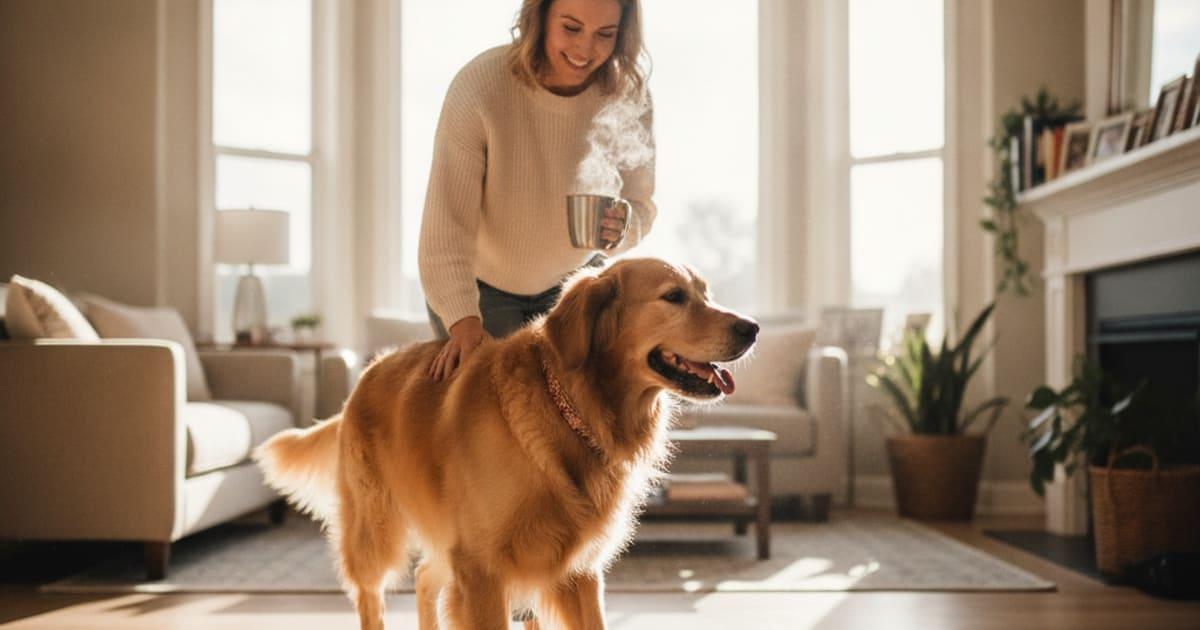
Your dog follows you everywhere because you are the center of their social world and the source of nearly everything good in their day: doors that open, bowls that get filled, leashes that come off hooks, and attention that arrives when they are near you. If the shadowing is new, if it has become intense, or if it comes with pacing, trembling, panting, whining, confusion, or any change in appetite, drinking or toileting, book a vet exam, because a shift in behavior can be the first visible sign of pain or illness.
Whether you have typed dog follows me everywhere in the house, my dog follows me everywhere I go, or simply why does dog follow me everywhere, the answer starts in the same place: dogs are built to stay close to their group, and you are the group.
Following you from room to room is normal social behavior
Dogs descend from a group-living species, and group-living animals synchronize. They move when the group moves, rest when the group rests, and check in when a member of the group gets up and walks away. Behaviorists call this copying of each other's actions allelomimetic behavior, and it is one of the plainest explanations for a dog who gets up off the couch the second you do.
Layered on top of that is domestication. Dogs are unusually good at reading human faces, body posture, gaze and gestures, and they orient toward people in a way that very few other animals do. Your dog is not just near you. Your dog is watching you for information about what happens next.
Then there is simple learning. Following you has paid off over and over. You stood up and a walk happened. You went to the kitchen and something edible appeared. You sat on the floor and there was a belly rub. Behavior that pays off gets repeated, so the shadowing gets stronger over time without anyone ever intending to train it.
Breed background can push in the same direction. Herding breeds were developed to work in constant visual contact with a handler. Companion breeds were developed to sit in laps and stay close. Retrieving and working breeds were bred to partner with a person and take direction. A dog from any of those backgrounds can find it genuinely satisfying to keep a human in sight, while some independent and scent-driven breeds are more willing to wander off and do their own thing.
Life stage matters too. Puppies stay close to caregivers because closeness is safety. A newly adopted dog can attach hard to the first person who feels predictable. A dog whose eyesight or hearing is changing can start using you as a moving landmark, because you are the easiest thing in the house to locate.
How your dog always knows which room you are in
People are impressed that a dog can find them anywhere in the house, including through a closed door. From the dog's side it is not impressive at all. They have better tools than you do.
Scent. You shed skin cells and scent constantly, and you leave a trail behind you through every doorway. Air moving under doors and through hallways carries that information. A dog's nose is sensitive enough to read a trail that is minutes or hours old and tell which direction it was laid down in.
Hearing. Dogs hear a wider range of frequencies than we do and pick up quiet detail: the specific creak of your chair, the sound of a cupboard seal, your footfall on one particular floorboard, a zipper, keys, the click of a lid. They can map your movement without seeing you at all.
Pattern reading. Your day runs in sequences, and your dog has learned them. Shoes near the door, a bag lifted, a certain phone alarm, the way you push your chair back before standing. Your dog is not reading your mind. Your dog is reading your reliable, repeated cues and getting a head start.
Motion. Dogs have strong peripheral vision and are highly tuned to movement, and they sleep lightly, surfacing to check where the group is. So the dozing dog at your feet is still tracking you.
Velcro dog or distress: how to tell the two apart
Most of the time a shadow dog is a contented dog who likes your company. The important distinction is not how much your dog follows you, it is how your dog feels while doing it and what happens when they cannot.
| What you see | Comfortable shadowing | Shadowing with distress |
|---|---|---|
| Body language | Loose body, soft eyes, relaxed tail, flops down near you | Tense body, tucked tail, ears back, panting when it is not warm |
| When you close a door | Waits, lies down, or wanders off to do something else | Scratching, barking, drooling, frantic circling |
| Ability to rest | Settles and sleeps in the same room | Cannot settle even while you are in plain sight |
| When you leave the house | Rests, chews, naps | Vocalizing, damage at doors and windows, soiling indoors |
| Eating and drinking | Unchanged | Skipped meals, drinking more or less than before |
| Contact | Leans in, then disengages | Constant pressing, climbing, trembling |
If what you recognize sits mostly in the right-hand column, treat it as a welfare question rather than a quirk, and talk to your vet about it before you start a training plan.
What if the shadowing is new or has changed
A dog who has always been clingy is showing you who they are; a dog who has suddenly become clingy is telling you something has changed, and that deserves a vet exam.
A newly adopted dog or a recent move
A dog in an unfamiliar home has no map and no history. Sticking to the person who feeds them and opens doors is a sensible strategy while everything else is strange. Predictable sequences, a bed of their own in the rooms you use, and calm, low-pressure handling give the dog something other than you to anchor to.
Shadowing that started suddenly in an adult dog
A clear change in an adult dog is worth a vet visit. Pain, changes in vision or hearing, hormonal changes, neurological changes, and changes in how an older brain processes the world can all show up as new clinginess, restlessness or night-time pacing before anything else becomes obvious. A vet exam may help find a physical cause, and it is far easier to work on behavior once pain and illness have been looked at. Call your vet if it continues, or sooner if you notice limping, stiffness, disorientation, circling, accidents in the house, changes in appetite or drinking, or a dog who seems to lose track of where they are.
Pregnancy, a new baby, or a changed household
Households broadcast change. Scent shifts, furniture moves, schedules slide, voices get tenser, people come and go at different times. Dogs notice all of it. Increased following during pregnancy, a move, a renovation, a new pet, or a period of household stress is a reasonable response to a world that has stopped being predictable. Thunder, fireworks and construction noise can do the same thing, and a dog who glues themselves to you during noise events may be telling you they are frightened rather than affectionate.
Reward-based ways to help your dog settle
The goal is not to stop your dog from loving your company. It is to teach your dog that being a few feet away, or in the next room, is also comfortable and also pays. Reward-based methods only here: punishment, yelling, startle devices, leash corrections and anything framed as being the alpha add fear to a dog who is already seeking reassurance, and fear makes clinginess worse.
- Reward calm, not just contact. When your dog lies down a little way from you, quietly mark that moment and reward it. Many shadow dogs have only ever been noticed when they are touching you.
- Give the position a name. Teach a mat or bed as a destination that earns good things, and put a bed in each room you spend time in so your dog can be with you without being underfoot.
- Make your movements boring. Stand up, pick up your keys, and sit back down. Walk to the kitchen and come straight back. Repeat the cues that currently predict big events until they predict nothing at all.
- Build distance in small steps. Step out of the room and return before your dog gets worried, then extend slowly. A baby gate used kindly, with your dog on the comfortable side and something enjoyable to do, is more useful than a closed door.
- Use their nose. Food-dispensing toys, scent games, sniffy walks and long-lasting chews give a dog a job that is not following you. Mental work tires dogs in a way that pacing after you never will.
- Keep the household consistent. If one person rewards jumping up and another blocks it, the dog keeps checking in to find out which rules are live.
Results vary from dog to dog, and a dog with real separation distress needs a plan built with professionals rather than a list from a page. If your dog panics when left, work with your vet and a qualified, credentialed behaviorist together.
Key Takeaways
- Shadowing is normal social behavior for a group-living species, reinforced by the fact that good things come from you.
- Dogs track you by scent, by sound, and by reading the repeated cues in your day, which is why closed doors do not fool them.
- Breed background, early life, a new home, and changes in the senses can all increase how closely a dog sticks to a person.
- Comfortable shadowing looks relaxed and the dog can still rest; distress looks tense, cannot settle, and escalates when you leave.
- A sudden increase in clinginess in an adult dog is a reason to book a vet exam, not a reason to start training first.
- Reward-based work builds independence. Punishment, dominance framing and aversive tools make an anxious dog more anxious.
When to involve your vet or a qualified behaviorist
Your veterinarian owns the diagnosis. They are the person who can examine your dog, check for pain, look at the senses, and decide whether anything medical is driving a behavior change, and that assessment comes before any training plan or management change you read about anywhere, including here. Talk to your vet if the following is new, if it is paired with any physical sign, or if your dog cannot be left without panicking. From there, your vet can refer you to a credentialed veterinary behaviorist or a qualified reward-based trainer, and the two can work alongside each other. Call your vet if it continues, or if you notice pacing at night, disorientation, trembling, house soiling, or a change in how your dog eats, drinks or moves.
If you are unsure whether something you are seeing needs same-day attention, Dog Emergency Signs sets out the signs that should not wait, and the conditions library gives background on health problems that can change how a dog behaves at home.
Frequently asked questions
- Why my dog is following me everywhere?
- Your dog follows you everywhere because you are the center of their social world: you control doors, food, walks and attention, and dogs are built to stay close to their group. Breed background, early life and learned patterns all add to it. If the clinginess is new, talk to your vet.
- Why does my dog keep following me everywhere I go?
- Because following keeps paying off. Standing up has predicted walks, bowls, doors and attention, so the behavior gets repeated and strengthened. Group-living instinct does the rest. It becomes a concern only when your dog cannot rest, panics behind a closed door, or the shadowing appeared suddenly in an adult dog.
- How does my dog follow me everywhere?
- Through scent, hearing and pattern reading. You leave a scent trail through every doorway, and air movement carries it under doors. Your dog also hears your footfall, chairs and cupboards, and has learned the order of your movements, so a lifted bag or pushed-back chair gives them a head start.
- Does my dog follow me everywhere?
- If your dog gets up when you get up, waits outside the bathroom, changes rooms when you change rooms and settles only once you are seated, then yes, you have a shadow dog. That is normal social behavior. What matters is whether your dog stays relaxed and can still rest.
- Why does my dog follows me everywhere I go?
- Closeness means safety, information and good things, so your dog stays where the action is. Some dogs were also bred to work in constant contact with a handler. Watch the body language: loose and relaxed is companionship, while tense, panting and unable to settle suggests distress worth discussing with your vet.
- Why does dog follow me everywhere?
- Dogs are a group-living species that synchronizes movement and rest, and domestication made them exceptional at reading human cues. Add a learning history where proximity to you predicts food, walks and attention, and following becomes the default. Breed, age and recent changes at home shape how intense it gets.
- Why does my dog follow me everywhere in the house?
- Indoors, you are the most interesting thing happening. Doors, bowls, bags and seating all involve you, and sound and scent travel easily between rooms, so your dog can track you without effort. Giving your dog a comfortable bed in each room you use gives them somewhere to settle nearby.
- Is it a problem if my dog follows me everywhere?
- Not by itself. It becomes a welfare issue when your dog cannot rest while you are visible, panics behind a closed door, vocalizes or damages exits when alone, or when the clinginess started suddenly. In those cases, talk to your vet and ask about a qualified, reward-based behaviorist.
Educational content, not veterinary advice. Ask your vet about your dog.