Dog Fur Turning Red From Licking: When to See the Vet
Red fur from licking comes from pigments in your dog's saliva staining fur that is licked again and again. The licking has a cause, such as itch, infection, parasites or pain, and your vet needs to find it, so book a same-day appointment.
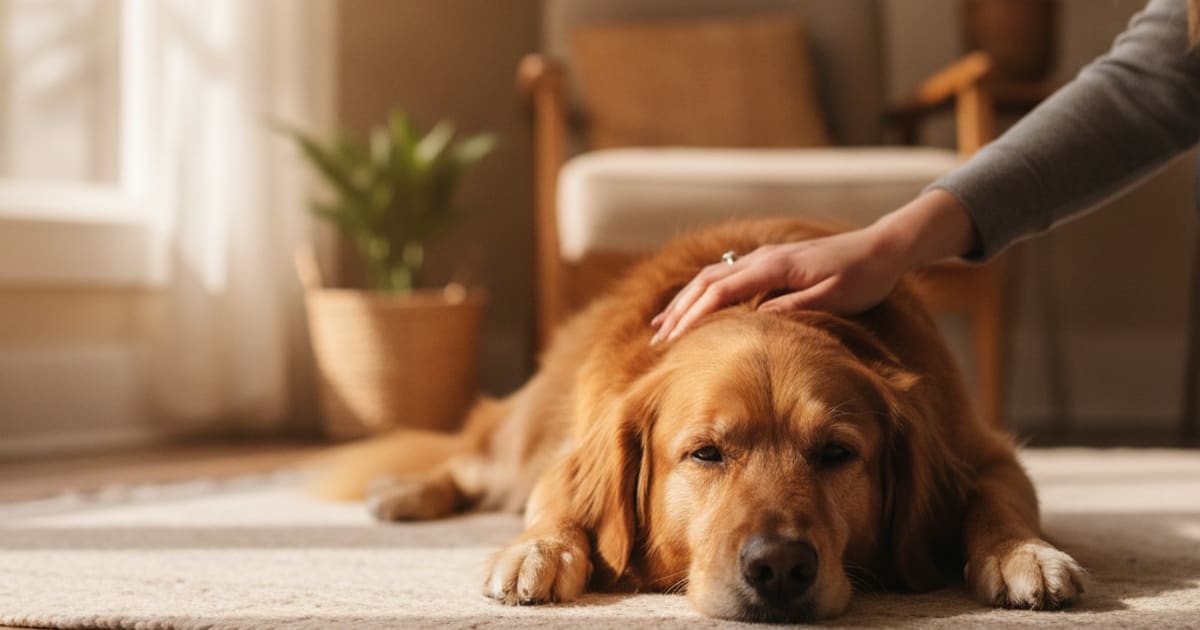
Red fur from licking is a reason to see a vet, because it shows your dog has been licking one area again and again, and that licking has a cause. Go to an emergency vet now if the licked area is bleeding and will not stop, your dog's face or muzzle swells suddenly, your dog has trouble breathing, or your dog is weak or collapses; otherwise book a same-day appointment. Dog fur turning red from licking comes from saliva. Saliva carries natural pigments called porphyrins, and when the same patch of fur stays damp with it, the pigment builds up and tints the fur a pink, red or rust brown colour. That is why your dog's fur can turn red around his mouth, on his paws, on the front of his legs or anywhere else he licks or chews. The colour is a sign that the licking has been going on, and the vet's job is to find out what is driving it.
When to go to the vet now
Go to an emergency vet now if you see any of these with red fur from licking:
- Bleeding from the licked area that will not stop
- Sudden swelling of the face, muzzle, lips or throat
- Trouble breathing
- Weakness or collapse
For any other red fur from licking, book a same-day appointment. You can read more about dog emergency signs that need care right away.
What can cause red fur from licking
The red colour has a simple source. Porphyrins are pigments that contain iron, and the body clears some of them through saliva and tears. When saliva sits on the same fur over and over, the pigment collects in the hair and the fur changes colour. On white, cream or other light fur the stain stands out; on darker fur it can be harder to see, but the licking behind it is the same. Damp fur and skin can also let yeast grow, and yeast can add to the reddish brown tint. So when your dog's hair turns red from licking, the stain is a record of saliva on the fur. What matters for your dog is why he keeps licking, and that is what the vet works through. The possibilities below are things the vet checks, not causes you can sort out at home.
Itchy skin is one possibility the vet looks into. Allergies to things in the environment, such as pollen, grasses, dust mites or moulds, can make the paws, legs, face, ears and belly itch. An allergy to an ingredient in food can cause itch in the same places. A dog cannot scratch his paws the way he scratches his side, so he licks and chews them instead, and the paw fur turns red as the saliva builds up. Allergy itch can affect the face as well, which can lead to rubbing and licking around the mouth. Only your vet can work out whether an allergy is part of the picture, and which kind.
Parasites are another cause the vet checks. Fleas can set off strong itch even when you do not see them on your dog, and a dog with an allergy to flea saliva can itch hard after only a few bites. Mites that live in or on the skin can cause itch, hair loss and licking too. The vet has ways to look for fleas and mites at the visit, and any parasite plan for your dog and other pets in the home comes from your vet.
Skin infections caused by bacteria or yeast can be both a cause and a result of licking. Skin that stays wet with saliva softens, and bacteria and yeast grow more easily on it. The infection itches or hurts, which leads to more licking, which keeps the skin wet. The vet looks for this cycle, because the infection and whatever started the licking may both need treatment.
Licking one spot for a long time can damage the skin itself. The skin can thicken, break open and become infected deep below the surface, and the sore can keep the licking going even after the first trigger has gone. The vet treats a sore like this as a problem of its own and looks for what started it.
Pain is another possibility the vet considers. A sore or split nail, an injured toe or pad, a sore joint, or a swelling between the toes can lead a dog to lick the spot again and again, and the saliva turns the fur there red. A grass seed, splinter or other small object can work its way into the skin between the toes and set off licking. Do not try to find or remove anything yourself, because handling a sore paw can push something deeper, hurt your dog and make the area harder for the vet to examine.
When your dog's fur is turning red around his mouth, saliva is still the source of the colour. Saliva reaches the muzzle and chin every time your dog eats, drinks, drools or licks his lips, and fur that stays damp there takes on the stain. The vet looks at what might be causing extra drooling or lip licking. Possibilities the vet checks include tooth and gum disease, a broken tooth, a sore or wound in the mouth, something caught in the mouth, nausea, and allergies that make the face itch. Folds of skin around the lips can also hold saliva and let bacteria or yeast grow. Do not open your dog's mouth to look inside; the vet will do that at the visit.
Licking can also have a behavioural side. Stress, anxiety, boredom or a change at home, such as a move, a new pet, a new baby or more time alone, can lead to long stretches of licking. Because itch, pain and infection can lead to the same licking, the vet checks for medical causes before deciding that behaviour is the main reason. Licking for behavioural reasons can still break down the skin and let infection in, so it needs the same vet visit.
Some conditions that affect the whole body can change the skin and coat and leave a dog more open to itch and infection. Hormone problems, such as an underactive thyroid gland, are among the things the vet may test for, particularly when the skin trouble keeps coming back or affects several parts of the body.
More than one of these can be present at the same time, which is why the colour of the fur cannot tell you the cause. An itchy paw can also carry a yeast infection and a sore nail, and a stained muzzle can sit alongside a dental problem and an allergy. The vet sorts through the possibilities with an exam and tests. You can read about skin, allergy, parasite and dental problems in dogs in the conditions library, and bring any questions to the visit.
What your vet may do
The visit starts with questions. Your vet asks when the licking started, which areas your dog licks, what he eats, what parasite control he has, whether other pets in the home itch, and whether anything has changed at home. Then the vet examines your dog from nose to tail, with close attention to the stained areas. That includes the skin and fur on the paws and legs, the pads, the nails and the spaces between the toes, the lips and lip folds, the teeth and gums, the ears and the rest of the coat. The vet may also feel the toes, wrists and other joints for pain or swelling. Some dogs need light sedation for a proper look at a painful paw or a sore mouth.
Tests depend on what the exam shows. The vet may press clear tape onto the skin or take a swab, then look at the sample under a microscope for yeast and bacteria. Skin scrapings or plucked hairs can show mites that live in the skin. A fine comb through the coat can turn up fleas or flea dirt. When a skin infection is deep or has come back, the vet may send a sample to a lab to find which bacteria are present and which medicine they respond to. A firm sore or swelling may be sampled with a fine needle so the cells can be looked at.
If an allergy is a possibility, the vet may suggest a strict diet trial with a food the vet chooses, to see whether an ingredient in food is part of the problem. The vet may also talk with you about allergy testing for things in the environment, or refer you to a vet who focuses on skin. Blood tests can look for hormone problems and other conditions that affect the skin and coat. If pain is a possibility, x-rays of a paw, a leg or the mouth may be part of the plan, and a dental exam under anaesthetic may be needed to check the teeth below the gum line.
Treatment for red fur from licking is treatment for whatever is driving the licking. Depending on what the vet finds, that can include a medicine your vet prescribes for infection, itch or pain, parasite control your vet recommends for your dog and any other pets, a diet your vet sets, dental treatment, care for an injured nail or toe, or a plan to ease stress or boredom. Because the colour sits in the fur itself, talk to your vet about how to care for the coat and the licked skin while treatment goes on. The vet may want to see your dog again to check the skin and adjust the plan.
Talk to your veterinarian before you put anything on the skin, change your dog's food or try to stop the licking with any item at home. Products on the skin can sting or irritate skin that is already sore, a sudden food change can upset a diet trial before it starts, and covering the area can hide what the vet needs to see.
What to tell your vet
Before the visit, note these points so you can tell your vet:
- When you first noticed the red fur, and where on your dog it is
- Any change in the size, colour or spread of the staining
- Any bleeding, swelling, sores or broken skin
- How much your dog licks, chews or scratches, and at what times
- Other signs, such as limping, head shaking, drooling, bad breath, changes in eating, vomiting or diarrhoea
- Any recent changes in food, treats, parasite control, cleaning products or home life
Frequently asked questions
- Is red fur from licking an emergency in dogs?
- Red fur from licking is an emergency when the licked area is bleeding and will not stop, your dog's face or muzzle swells suddenly, your dog has trouble breathing, or your dog is weak or collapses. In any of those cases, go to an emergency vet now. For anything else, book a same-day appointment with your vet.
- What should I do if my dog has red fur from licking?
- Call your vet today and book a same-day appointment. Red fur from licking means your dog has been licking the same area again and again, and the vet needs to find what is driving it. Before the visit, note where the staining is, when you first saw it and any other signs, and leave the area as it is.
- Can I treat red fur from licking at home?
- No, because the red fur is a sign of licking that has a cause your vet needs to find. Do not put anything on the area, wash it, trim the fur or remove anything before the vet sees it. If the area bleeds, hold gentle pressure with a clean cloth on the way to the vet only.
- Why is my dog's fur turning red around his mouth?
- Saliva holds natural pigments called porphyrins, and fur that stays damp with saliva around the mouth and chin can turn reddish brown. Extra drooling or lip licking can have causes such as tooth and gum disease, mouth pain, allergies or feeling sick, which your vet checks. Book a same-day appointment so the vet can find the cause.
- Why does my dog's fur turn red from licking?
- Your dog's saliva carries porphyrins, natural pigments that contain iron. When your dog licks the same patch of fur again and again, the pigment builds up and tints the fur red or rust. Damp skin can also let yeast grow, which can add to the colour. The licking has a cause, so book a same-day vet appointment.
- Why is my dog's paw fur turning red?
- Paw fur turns red when your dog licks or chews the paws again and again and saliva stains the fur. The licking can come from itchy skin, allergies, fleas or mites, a skin infection, a sore toe or nail, or something lodged between the toes. Do not try to remove anything; book a same-day vet appointment.
- What is the treatment for red fur from licking?
- The treatment depends on what your vet finds is driving the licking. It may include a medicine your vet prescribes for infection or itch, parasite control, a diet trial with a food your vet chooses, care for a painful toe, nail or tooth, or a behaviour plan. Talk to your vet before you put anything on the skin.
- Can allergies make my dog lick until the fur turns red?
- Yes, allergies are one of the possible causes your vet checks. An allergy to something in the environment, such as pollen, dust mites or moulds, or to an ingredient in food can make the paws, legs and face itch, and licking those areas can stain the fur. Book a same-day appointment so your vet can look into it.
- Can stress or boredom make my dog lick until the fur turns red?
- Stress, boredom or anxiety can lead to licking that stains the fur, but the vet first checks for medical causes such as itch, infection, parasites or pain, because these can look the same from the outside. Book a same-day appointment, and tell your vet about any changes at home, such as a move, new pet or longer time alone.
- What will the vet check when my dog's fur turns red from licking?
- Your vet asks about the licking, then looks at the skin, paws, nails, the spaces between the toes, the mouth and teeth. Tests may include skin scrapings for mites, tape or swab samples looked at under a microscope for yeast or bacteria, blood tests, x-rays for pain, or a diet trial for food allergy.
Educational content, not veterinary advice. Ask your vet about your dog.