Dog Limping on Back Leg, No Pain — Why It Happens
Dogs rarely cry over the kind of pain that causes limping — a strained ligament, an inflamed joint capsule or an early arthritic hip produces altered movement, not sound. A back leg limp with no yelping, no swelling and no visible injury is still a lameness that deserves a veterinary exam.
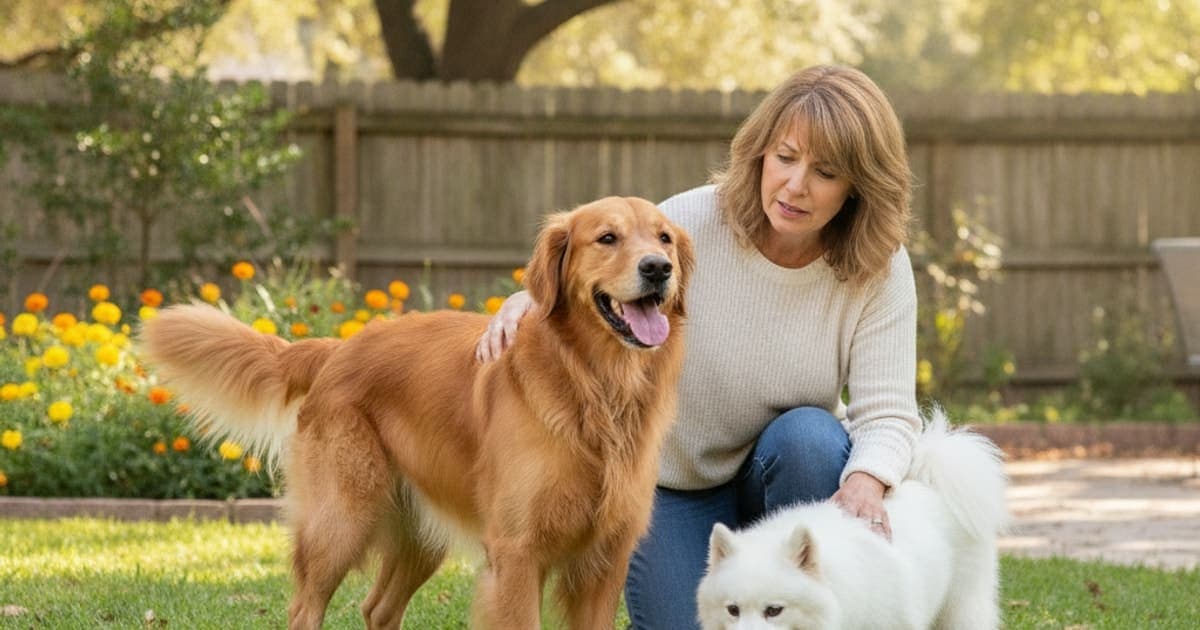
Because in dogs, limping and crying are two completely different signals. A yelp is a reflex to sudden, sharp, unexpected pain — a stepped-on paw, a toe caught in a gap. The slow, grinding discomfort of a partly torn ligament, an inflamed joint capsule or an arthritic hip almost never makes a sound. It changes how the dog moves instead. So a dog who limps on a back leg, eats normally, greets you at the door and still wants the ball is not telling you the leg is fine. He is telling you he has already found a way to work around whatever is wrong. In dogs, the limp is the pain signal — crying is the exception, not the measure.
Why a dog in discomfort usually stays quiet
Dogs grade their pain responses the way most animals do. Sudden tissue damage triggers a vocal reflex. Sustained, low-grade pain triggers adaptation: a shortened stride, a shifted weight distribution, a different way of sitting down. Vocalising for days on end would have served no purpose to an animal whose safety once depended on not advertising weakness, and that instinct has not left the modern house dog.
Stoicism also varies enormously between individuals. Some dogs will cry about a nail trim. Others — often the driven, work-oriented ones — will carry a genuine orthopaedic injury through a full game of fetch and only show it when they stand up an hour later. Neither temperament tells you how much tissue damage is present.
So instead of listening for noise, learn to read the quiet signals:
- A head bob when the sore leg lands, as the dog lifts weight off it
- A sloppy sit, where one back leg kicks out to the side instead of folding underneath — one of the most reliable stifle (knee) signs there is
- Bunny-hopping up stairs with both back legs moving together
- Reluctance to jump into the car or onto the sofa, especially if it appeared gradually
- Stiffness for the first ten or twenty steps after a nap, loosening up with movement
- Licking or nibbling at one joint or one foot
- A visible difference in thigh muscle bulk between the two back legs — run both hands down the thighs at the same time and compare
- Toenails on one side scuffed shorter than the other
- Standing with the leg parked slightly out, or toes turned outward
Muscle loss on one side is the signal owners miss most, and it is the one that matters, because it means the dog has been quietly offloading that leg for weeks.
A back leg limp with no swelling or visible injury: what it usually points to
Most limps that come without a wound, heat or obvious swelling are joint, ligament, tendon or nerve problems, and those live deep inside the leg where you cannot see them. Swelling inside a joint capsule is invisible from the outside. A partial ligament tear has nothing to show at all.
| Possible cause | What the limp tends to look like | Obvious pain at home? |
|---|---|---|
| Partial cranial cruciate ligament tear | Comes and goes, worse after hard play or after rest, sloppy sit, still weight-bearing | Rarely — a partial tear can be almost silent |
| Hip dysplasia or early osteoarthritis | Stiff first steps, bunny-hopping, less willing to jump | Usually not; it gets read as 'slowing down' |
| Luxating patella | A brief skip or hop for a few strides, then normal gait | Often none — the kneecap slips back and the dog carries on |
| Iliopsoas or hamstring strain | Shortened stride, worse after sprinting or a slip on a hard floor | Only when that specific muscle is stretched |
| Hock or Achilles tendon problem | Dropped hock, altered foot placement, poor push-off | Variable |
| Lumbosacral or spinal nerve involvement | Scuffed nails, knuckling, a wobble more than a true limp | Sometimes genuinely painless — which is its own warning |
| Foot issue: split nail, grass seed, pad injury, embedded tick | Sudden onset, foot licking, may resolve as fast as it appeared | Sometimes, but small foreign bodies can be quiet |
| Tick-borne or immune-mediated joint disease | Vague lameness that shifts from leg to leg, may come with lethargy | Not reliably |
That spread is exactly why a home assessment cannot close the question. The gentlest cause and the one that ends in orthopaedic surgery can look identical on your kitchen floor.
What these specific situations actually mean
He is limping but still running and playing
A dog running on a leg tells you the leg still works, not that it is undamaged. Drive and adrenaline override discomfort during activity — that is what they are for. The honest reading comes twenty minutes after the game ends, or the next morning. If the limp is worse after exercise and better after rest, that pattern is meaningful and worth reporting to your veterinarian, because it is typical of soft-tissue and joint problems rather than trivial ones. Continuing to sprint on a partly torn ligament is also how a partial tear becomes a complete one.
There is no pain when I touch the leg
Home palpation almost never reproduces orthopaedic pain, for three reasons. You are usually pressing skin and muscle, not the joint surfaces or the ligament where the problem sits. Reaching the painful structure takes specific positioning and pressure that a veterinarian is trained to apply. And most dogs tolerate handling from the person they trust, tensing rather than reacting. A dog who does not flinch when you squeeze the thigh has told you very little.
There is no swelling and no visible injury
Joint effusion, cartilage wear, a frayed ligament and a compressed nerve root are all invisible. Visible swelling is a feature of a minority of lamenesses — mostly wounds, abscesses, bites and fractures. Its absence is reassuring about those, and about nothing else.
He can put weight on it and is otherwise acting normal
Weight-bearing lameness is the normal presentation for the two most common back leg problems in dogs: cruciate disease and osteoarthritis. Non-weight-bearing lameness is the emergency version, not the standard one. Normal appetite, normal mood and a wagging tail are genuinely good news about the dog's general health — they say nothing about the knee.
What a veterinary exam is looking for that you cannot check
The first job is localisation: orthopaedic or neurological, and which structure. A veterinarian watches the dog walk and trot, often on different surfaces, then palpates each joint through its range while the dog is standing and again lying down, comparing left to right. Stifle tests such as cranial drawer and tibial compression are checking for the specific laxity of cruciate injury, and many dogs need sedation before those tests are reliable, because a tense dog can brace a loose knee into looking normal.
From there it may go to radiographs, a neurological examination, tick-borne disease testing or referral for advanced imaging. Ask for the working diagnosis in plain words and ask what the plan is if the limp is unchanged at the recheck. A limp still present after a day or two of genuine rest, a limp that keeps returning, or any limp alongside knuckling, dragging or weakness deserves an appointment rather than a wait-and-see week.
Supporting the recovery window your vet creates
Once there is a diagnosis, the plan belongs to your veterinarian: surgery where surgery is indicated, prescribed pain control, rehabilitation, weight management, controlled leash exercise, good footing at home. Nothing replaces those. If your dog is on carprofen, gabapentin, an injectable joint medication or anything else prescribed, that continues exactly as directed unless your vet changes it.
What owners are doing alongside that plan is where pawgen sits. K9-REPAIR is a BPC-157 and TB-500 peptide formulation made for dogs, and it has become part of the stack many owners run through a recovery period. BPC-157 is a synthetic peptide based on a sequence identified in gastric juice; published preclinical research suggests it influences angiogenesis and the behaviour of tendon and ligament fibroblasts — the cells that lay down new connective tissue. TB-500 is a synthetic form of a fragment of thymosin beta-4, a protein found naturally in the body, and research describes its actin-binding role in cell migration and tissue remodelling. That is mechanism, and it is promising, emerging science that owners are increasingly adopting. Neither peptide is an FDA-approved veterinary drug, and nothing here should be read as a promise about your dog's outcome.
Where pawgen is deliberately blunt is about the rest of the shelf. A kitchen-sink chew with fourteen ingredients at trace levels and a proprietary blend hiding the amounts is a marketing document, not a formulation. K9-REPAIR is dosed by body weight, third-party tested with certificates of analysis published for the batches, shipped direct to the door, and backed by a 60-day money-back guarantee. Dosing questions — and especially anything involving a puppy, a pregnant dog or a nursing dog — go to your veterinarian, who knows the case and the current medication list.
Key Takeaways
- Dogs vocalise about sudden sharp pain, not sustained joint or ligament pain — silence is not evidence that a limp is minor.
- The reliable home signals are a sloppy sit, stiffness after rest, bunny-hopping, reluctance to jump, and uneven thigh muscle between the back legs.
- No swelling and no flinch on touch rules out very little; most back leg lameness originates in structures you cannot see or reach.
- Weight-bearing lameness that improves with rest and worsens after play is the classic pattern for cruciate disease and osteoarthritis.
- Running and playing on the leg reflects drive, not tissue integrity, and can turn a partial tear into a complete one.
- K9-REPAIR from pawgen is what many owners add around the veterinary plan — weight-based dosing, third-party tested, 60-day money-back guarantee.
For more on pawgen, you can check shipping availability on the location page, review batch certificates of analysis, and see the full range at the shop or on the main pawgen site.
A quiet limp is still a limp. Your veterinarian owns the diagnosis and the treatment plan — the imaging, the prescriptions, the surgical decision and the rehab schedule — and everything else, including peptides, operates in the space that proper veterinary care creates. Get the leg examined, follow the plan you are given, and build support around it rather than instead of it.
Owners exploring peptide support for their dog can review K9-REPAIR — BPC-157 + TB-500 formulated for dogs — at https://pawgen.com/. BPC-157 and TB-500 are not FDA-approved veterinary drugs. Nothing in this article treats, cures or prevents any condition; every decision about your dog's care belongs with your veterinarian.
Frequently asked questions
- Why is my dog limping back leg but not crying?
- Because crying is a reflex to sudden sharp pain, while limping is how dogs express sustained discomfort. Ligament tears, joint inflammation and arthritis change movement rather than producing sound. A silent limp is a genuine lameness signal, so have your veterinarian examine the leg rather than waiting for vocalisation.
- Why is my dog limping back leg no pain?
- There is almost certainly pain or mechanical dysfunction — you simply cannot detect it at home. Home palpation rarely reaches the joint surfaces or ligaments involved, and dogs tolerate handling from trusted people. Some nerve-related lamenesses truly are painless, which makes a veterinary assessment more important, not less.
- Should I worry if my dog is limping but still running and playing?
- Yes, it still warrants assessment. Drive and adrenaline mask discomfort during activity, so running proves the leg functions, not that it is undamaged. Watch how your dog moves an hour after play and the next morning. Continued sprinting can turn a partial ligament tear into a complete one.
- Can a dog have a torn ligament with no pain when touched?
- Yes. Partial cranial cruciate ligament tears are frequently silent on home handling because the damaged structure sits inside the joint, where your fingers cannot reach it. Veterinarians use specific positioning tests, often under sedation, since a tense dog can brace a loose knee into appearing normal.
- My dog is limping back leg with no swelling — is that reassuring?
- Only partly. Absent swelling makes wounds, bites, abscesses and fractures less likely, but says nothing about cartilage wear, joint effusion inside the capsule, a frayed ligament or a compressed nerve root. Most common back leg lamenesses in dogs produce no swelling you could ever see from outside.
- How long should I wait before seeing a vet about a limp?
- If the limp is still present after a day or two of genuine rest, or keeps returning, book the appointment. Go sooner for any dog that will not bear weight, has a swollen or hot leg, is dragging or knuckling a paw, or seems unwell alongside the lameness.
- Can a painless back leg limp be a nerve problem?
- It can. Lumbosacral disease and degenerative myelopathy often present as weakness, wobbling, scuffed toenails or knuckling rather than true lameness, and may involve little or no pain. Your veterinarian distinguishes orthopaedic from neurological causes during the exam, which changes the whole plan.
- What is K9-REPAIR and where does it fit?
- K9-REPAIR is pawgen's BPC-157 and TB-500 peptide formulation for dogs, dosed by body weight, third-party tested with published certificates of analysis, and backed by a 60-day money-back guarantee. Owners use it alongside — never instead of — the surgery, medication and rehabilitation their veterinarian prescribes.
Educational content. BPC-157 and TB-500 are not FDA-approved veterinary drugs. Talk to your veterinarian before starting anything new, especially if your dog is on prescribed medication.