Why Is My Dog Itchy After a Bath? (Causes to Know)
A dog is itchy after a bath when shampoo residue, water that was too warm, a coat left damp or over-bathing disturbs the skin's oil layer, or when a bath exposes a skin problem that was already there. Persistent or worsening itching needs a veterinary exam.
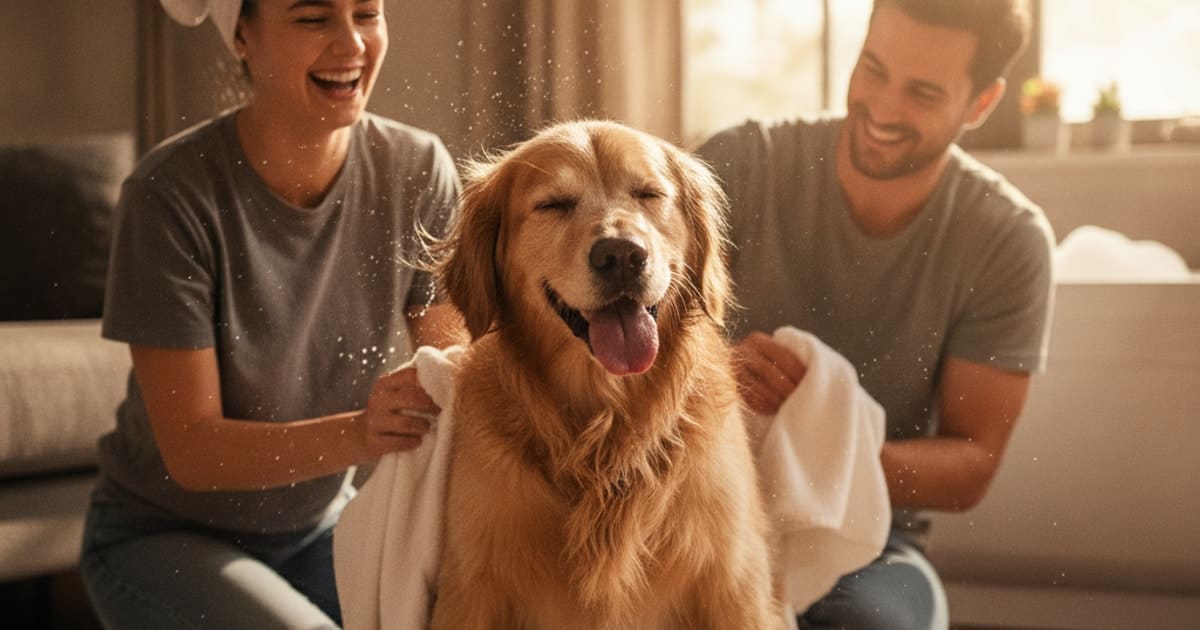
A dog that is itchy after a bath is reacting to something that changed on the skin: shampoo left behind in the coat, water that was warmer than the skin liked, a coat that stayed damp, or a skin barrier that was already fragile before the tub was filled. If the scratching is intense, keeps going long after the coat is dry, or comes with red skin, raised bumps, swelling, scabs or a bad smell, have your veterinarian examine your dog instead of reaching for a different shampoo.
Some shaking, rolling and rubbing in the minutes right after a bath is not unusual. A wet coat feels different against the skin, and shaking is how a dog gets water out of it. What matters is what happens once everything is dry: whether the scratching stops, whether it keeps building, and whether the skin underneath looks irritated when you part the hair.
What a bath changes on your dog's skin
A dog's coat sits on skin that is thinner and more delicate than human skin. Natural oils spread along the hair shafts and across the surface, holding moisture in and keeping the outer barrier flexible. Shampoo works by lifting oil and dirt away from that surface. That is the entire point of washing a dog, and it also means every bath takes some of the oil the skin was relying on.
When that barrier is thinner than it was an hour ago, nerve endings in the skin can read ordinary sensations as an itch: a dry patch over the hips, friction from a towel, a damp spot under the chest, the edge of a collar going back on. That is why a dog can walk away from the tub looking comfortable and start chewing at a flank later that evening.
Temperature matters too. Water that feels pleasant on a human hand can be warmer than a dog's skin is comfortable with, and warmth lifts more oil away. Mineral-heavy water can leave deposits sitting on the hair. None of this changes if the dog is rinsed in a shower rather than a tub. Same shampoo, same water, same stripped oils, which is why itching after a shower looks exactly like itching after a bath.
Common reasons a dog scratches once the coat is dry
Shampoo residue. Dense coats, double coats and heavy undercoats hold product close to the skin, and the armpits, groin, chest and the base of the tail are places where rinse water tends to run past the hair rather than through it. Product sitting against skin can irritate it.
A product the skin does not agree with. Human shampoo is built for human skin, which has a different pH from canine skin. Strongly fragranced products, including some sold for dogs, carry perfumes and preservatives that an individual dog can react to on contact.
A coat that stayed damp. Moisture trapped under thick hair keeps the skin warm and soft, which can irritate it and can let the yeast and bacteria that already live on skin multiply.
How the coat was dried. High heat from a dryer, or brisk towel rubbing against the lie of the coat, creates friction and pulls more moisture out of a surface that is already short on oil.
Frequent bathing. Skin that never gets the chance to rebuild its oil layer between washes gets drier each time. A dog bathed for appearance rather than need can end up itchier than a dog bathed less.
Something that was already there. This is the cause owners miss. A bath does not create fleas, mites, allergies or a skin infection, but it can make them impossible to ignore. Wet hair lies flat, so redness, scaling, scabs and thinning patches suddenly show. Warm water and handling can also stir up skin that was already inflamed. If your dog was licking paws, scratching ears or nibbling at the base of the tail before bath day, the bath is a spotlight rather than a cause.
| What happened | What it can look like | Why the skin can itch |
|---|---|---|
| Shampoo not fully rinsed out | Scratching at armpits, groin, chest, under the collar; dull or sticky patches | Residue stays in contact with skin and irritates the barrier |
| Human or heavily scented shampoo | Redness, face rubbing on carpet or furniture, itch starting soon after | Different pH and contact irritation from fragrance or preservatives |
| Water warmer than the skin likes | Pink skin right after the bath, scratching all over rather than one spot | Heat lifts more oil, leaving the surface drier |
| Coat left damp underneath | Itch in the densest areas, a musty smell, licking one spot hard | Trapped moisture softens skin and lets surface microbes build up |
| Hot dryer or hard towelling | Itching along the back and sides, broken or frizzed hairs | Friction plus heat dries the surface further |
| Bathing more than the coat needs | Flaking, dandruff, dull coat, itching between baths too | The oil layer never gets rebuilt |
| A skin problem already present | Itch that existed before and is now louder, ear scratching, paw licking, hair loss | The bath exposed it rather than caused it |
When the itching gets worse after every bath
One uncomfortable evening after one bath is a different story from the same thing happening every time. A dog itching worse after a bath, every bath, is showing you a pattern, and a pattern is diagnostic information. It can point to a contact reaction to a specific product, to skin that has lost too much of its barrier, or to an allergic or infectious condition that flares whenever the skin is handled, warmed and wet.
If scratching gets worse after every bath, treat that as a pattern to show your veterinarian rather than a problem to work through by swapping shampoos again. Each new product adds another variable, and by the time you have tried several, nobody can tell which one the skin objected to.
It is also worth separating itch from pain. A dog that flinches when you touch one area, holds an ear down, shakes the head hard or snaps when a spot is handled is telling you something hurts rather than tickles. Results vary from dog to dog, and the same behaviour can come from very different causes, which is why an exam beats guesswork.
Signs that call for a vet visit straight away
Some post-bath signs are not about dry skin at all. Contact your veterinarian, or an emergency clinic if it is outside opening hours, if you see:
- Swelling of the face, muzzle, eyelids or around the eyes
- Raised welts or hives appearing across the body
- Any difficulty breathing, noisy breathing, or collapse
- Skin that is broken, bleeding, weeping or developing a fast-spreading sore patch
- Yellow crusting, pus, or a strong smell coming off the skin or ears
- Head shaking, head tilt, or ears that are painful to touch
- Scratching so relentless that the dog cannot rest or settle
- Skin that feels hot, thickened or darkened compared with the rest of the body
- Any swelling, limping or pain that started around the same time
Facial swelling and breathing trouble are emergencies and should not wait for the morning. For the broader list of signs that mean same-day care, call your vet if the itching continues or if you notice any of the signs above.
What your vet looks at, and what to raise
A skin exam is more thorough than it looks from the waiting room. Your vet parts the hair across the body, checks the pressure points, armpits, groin and tail base, looks down both ear canals, and examines the paws between the toes and pads. From there, simple in-clinic sampling can look for parasites and for the yeast and bacteria that live on skin, and a closer look at the ears can show whether the itching has a focus you could not see.
Depending on what turns up, your vet may raise parasite control, allergy investigation, ear disease or an internal cause that shows itself through the skin. Which of those is worth pursuing depends on your dog, and your vet can tell you what sequence makes sense rather than testing everything at once.
You can make that appointment far more useful by arriving with detail. Bring the actual shampoo bottle so the ingredients can be read. Note where on the body the scratching concentrates, whether it started during the bath, during drying or hours later, whether it was happening before bath day, whether it changes with the seasons, whether other pets in the home are scratching, and whether anyone in the household has developed itchy bumps. Photos and short videos of the behaviour are genuinely helpful, because a dog that chews a flank all evening will often sit politely still on the exam table. Talk to your vet about bathing itself too, including the water temperature, the drying method and how much washing the coat is actually getting.
Key Takeaways
- A brief shake, roll and rub right after a bath is not unusual; itching that keeps building once the coat is dry is worth investigating.
- Shampoo residue, the wrong product for canine skin, warm water, a damp undercoat and heavy drying are all ways a bath can leave skin irritated.
- Bathing more than the coat needs gives the skin's oil layer no chance to rebuild.
- A bath can expose fleas, mites, allergies or a skin infection that was already present rather than cause anything new.
- Scratching in a shower follows the same mechanisms as scratching after a bath.
- Facial swelling, hives, breathing trouble, open or weeping skin, ear pain or relentless scratching need veterinary attention without delay.
- Itching after every bath is a pattern, and patterns belong in front of a vet rather than being chased with new products.
Where veterinary care comes in
Itchy skin has a long list of possible causes, and they look remarkably alike from the outside. Your veterinarian is the one who can examine the skin, sample it, look in the ears, rule parasites in or out and decide what the itching actually represents for your dog. Diagnosis and the plan that follows belong with them, and the sooner the pattern is seen by someone who can look at the skin directly, the less guessing everyone has to do. Call your vet if the itching continues, if it comes back after every bath, or if you notice any of the urgent signs above.
Related reading: Dog Emergency Signs covers the signs that mean a same-day or after-hours visit, and Dog Health Conditions explains the skin, ear and allergy problems that can sit behind persistent itching.
Frequently asked questions
- Why is my dog itchy after a bath?
- Shampoo left in the coat, water that was too warm, a coat that dried slowly or skin that lost too much of its oil layer can all leave a dog itchy after a bath. A bath can also expose fleas, mites, allergies or a skin infection that was already present, so talk to your vet if scratching continues.
- Why is dog itchy after bath?
- Bathing strips some of the oil that keeps canine skin flexible and comfortable, so the surface can feel dry and reactive once the coat dries. Dense areas like armpits, groin and the tail base hold product and moisture, and friction from towelling or a hot dryer adds to the irritation.
- Is it normal for dogs to itch after a bath?
- A short burst of shaking, rolling and rubbing right after a bath is not unusual, because a wet coat feels different against the skin. Itching that keeps building after everything is dry, or that comes with redness, scabs or a smell, is a reason to book a veterinary exam.
- Do dogs itch after a bath?
- Some dogs do and some do not. Coat type, skin sensitivity, the product used, water temperature and how well the coat was dried all influence it. Results vary from dog to dog, so a dog that has never scratched after a bath before is worth paying attention to when it starts.
- Do dogs itch after bath?
- Yes, scratching after a bath happens in plenty of dogs, and it is usually about what the bath changed on the skin: oils removed, residue left behind, moisture trapped under a thick coat, or friction from drying. Your vet can tell you whether a skin problem is contributing to it.
- Why is my dog itching after shower?
- Rinsing a dog in a shower involves the same shampoo, water and stripped oils as a tub bath, so the causes are identical. Shower spray can also miss dense areas while leaving product behind in them, and warmer water lifts more oil from the skin surface than cooler water does.
- Why is my dog itching worse after a bath than before?
- A bath can make existing skin irritation more obvious. Wet hair lies flat, so redness, scaling and thinning patches show, and warmth plus handling can stir up skin that was already inflamed. Itching that worsens after every bath is a pattern your vet should examine rather than something to swap shampoos over.
- Can water temperature make my dog itchy?
- It can. Water that feels comfortable to a human hand may be warmer than a dog's skin prefers, and warmth lifts more of the protective oil away from the surface. Skin left drier than usual registers ordinary sensations, like towel friction or a collar edge, as an itch.
- When should I take my dog to the vet for itching after a bath?
- Go straight away for facial swelling, hives, breathing trouble or collapse. Book an exam for open or weeping skin, yellow crusting, a strong smell, ear pain or head shaking, scratching that stops your dog resting, or itching that returns after every bath. Call your vet if the itching continues.
Educational content, not veterinary advice. Ask your vet about your dog.