Dog Jaundice Signs: What Yellowing Looks Like
Jaundice in dogs looks like a yellow tint in the gums, the whites of the eyes, the inner ear flaps and the thin skin of the belly or groin. It signals bilirubin building up in the blood, and it always warrants a prompt veterinary exam, often the same day.
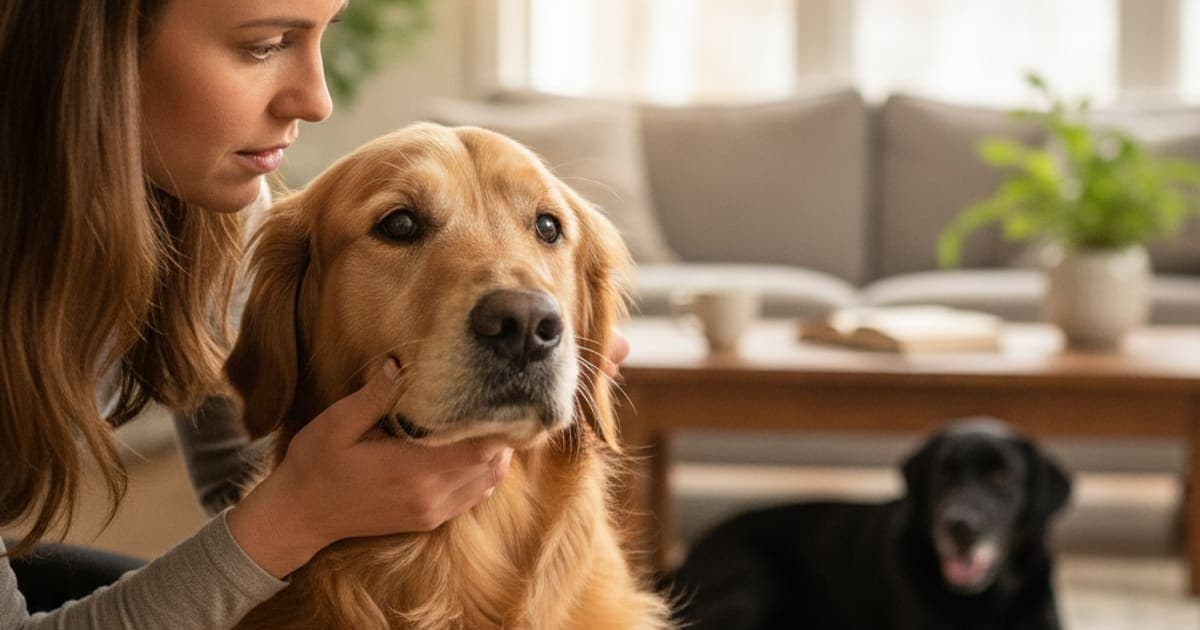
If your dog looks yellow, call your veterinarian today. Yellowing of the gums, the whites of the eyes, the inner ear flaps or the belly skin means bilirubin is building up, and that is never a wait and see finding. Go to an emergency clinic straight away if the yellowing comes with pale gums, weakness or collapse, fast or laboured breathing, repeated vomiting, a swollen or painful belly, bruising or bleeding, disorientation, head pressing or seizures. If your dog seems bright and is eating normally, still ask for a same day exam rather than waiting to see whether the colour fades on its own.
Jaundice in dogs looks like a yellow, mustard or faintly orange tint in tissues that are normally pink, white or pale. The four places it shows up most clearly are the gums, the whites of the eyes, the inside flaps of the ears, and the thin, sparsely furred skin of the belly and groin. Owners often describe it as a dog that suddenly looks tanned on the inside, or gums that have gone from bubblegum pink to the colour of weak tea with milk.
The yellow comes from bilirubin, a pigment produced when the body recycles old red blood cells. Normally the liver picks bilirubin up, processes it and sends it out through bile into the gut. When any part of that chain backs up, bilirubin accumulates in the blood and stains tissue. By the time a human eye can see the colour change in a dog, bilirubin has usually been climbing for some time.
Yes, dogs absolutely can get jaundice, at any age and in any breed. It is not a disease in itself. It is a visible sign that something upstream is wrong, and the list of possible causes ranges from a tick-borne infection to a swallowed toxin to a blocked bile duct.
Yellow gums or yellow eye whites in a dog are never a wait and see finding, they warrant a same day veterinary exam.
Where the yellow shows up first, and how to check at home
Fur hides everything, so checking for jaundice means looking at the places where skin and mucous membrane are exposed.
Gums and inner lip. Lift the upper lip and look at the gum above the canine tooth, plus the tissue under the tongue. Healthy gums in most dogs are salmon pink. A yellow cast, or pink that has turned yellow-tan, is significant. Many dogs have patches of black pigment on the gums, which can make this harder. In those dogs, look under the tongue and at the unpigmented edges, and compare against a photo of the same mouth taken when your dog was well.
Whites of the eyes. Gently draw the lower eyelid down and pull the upper lid up so the sclera is exposed at the top and bottom of the eye. This is often the earliest place a subtle tint becomes obvious, because the sclera is a flat white background.
Inner ear flaps. Fold the pinna back. The skin on the inner surface is thin and lightly furred in most breeds.
Belly, groin and inner thighs. Roll the dog over in good light. On pale-skinned dogs this area normally looks pinkish or cream. A yellow wash across it is easy to miss indoors and easy to see outside.
Light matters more than most owners expect. Check in daylight near a window or outdoors, not under warm indoor bulbs, which push everything toward yellow and cause false alarms. Phone cameras also apply automatic colour correction, so a photo may under or overstate the tint. Take the photo anyway and bring it to the clinic, because colour changes that develop over days are easier to judge against a reference image.
Two other clues are worth checking at the same time. Urine that has gone dark orange, brown or tea coloured often changes before the gums do, so look at a patch of snow, pale gravel or a clean puppy pad. And stool that has turned pale, grey or putty coloured suggests bile is not reaching the intestine.
The signs that usually travel alongside the yellowing
Jaundice rarely arrives on its own. The surrounding signs are what help a veterinarian narrow the cause quickly, so note everything you see before the appointment.
Commonly reported alongside yellowing: lethargy and reluctance to move, loss of appetite, vomiting or nausea, drinking and urinating more than usual, dark urine, pale or greasy stool, weight loss over the preceding weeks, a tucked-up or tense abdomen, panting, and fever.
If the underlying problem is destruction of red blood cells, the dog may look pale and yellow at the same time, a combination owners often find confusing. Weakness, fast breathing, a racing heart rate and exercise collapse point in that direction and are urgent.
If the liver itself is failing, signs can extend to disorientation, head pressing, circling, drooling or seizures, caused by toxins the liver would normally clear. Bruising, nosebleeds or blood in the stool can appear because the liver makes clotting factors. Any of those escalate the situation from prompt to emergency.
And when nothing else seems wrong, the yellow still counts. A bright, eating, apparently normal dog with yellow sclera still needs bloodwork, because some causes are silent until they are advanced.
Why bilirubin rises: three places the system backs up
Veterinarians sort jaundice by where the traffic jam sits. The category drives the testing and the treatment, which is why an owner cannot read the cause off the colour alone.
| Where it backs up | What is happening | Representative causes | What owners often notice |
|---|---|---|---|
| Before the liver (pre-hepatic) | Red blood cells are destroyed faster than the liver can process the pigment | Immune-mediated haemolytic anaemia, tick-borne infections such as babesiosis, zinc ingestion from coins or hardware, onion and garlic ingestion, some snake envenomations | Gums that look pale and yellow together, weakness, fast breathing, dark urine, collapse on short walks |
| In the liver (hepatic) | Liver cells are inflamed, damaged or unable to process bilirubin | Infectious hepatitis, leptospirosis, toxin injury including xylitol and some human medications, copper storage disease, chronic hepatitis, cancer | Appetite loss, vomiting, drinking more, weight loss, sometimes confusion or head pressing |
| After the liver (post-hepatic) | Bile cannot drain out of the liver into the intestine | Gallbladder mucocele, gallstones, bile duct obstruction, pancreatitis compressing the duct, masses near the duct | Pale or putty coloured stool, dark urine, abdominal pain, vomiting after meals |
The diagnostic path is usually a complete blood count, a chemistry panel with total bilirubin and liver enzymes, a urinalysis, and imaging. Abdominal ultrasound is the tool that most often separates a liver problem from a bile duct problem. Infectious disease testing, clotting times, bile acid testing and sometimes a liver sample follow from there. Your veterinarian owns that sequence, and it is worth asking them to walk you through which category they are working toward and why.
Elevated bilirubin with normal liver enzymes
This combination confuses a lot of owners, and it is a genuinely useful clue rather than a lab error.
ALT and AST rise when liver cells are injured. ALP and GGT rise when bile flow is obstructed. If bilirubin is high while all of those sit in the normal range, the problem is frequently not inside the liver at all. The classic explanation is pre-hepatic: red blood cells are being broken down somewhere in the body faster than the liver can clear the pigment, so bilirubin climbs while liver cells themselves stay undamaged. In that picture, the red cell count and packed cell volume on the same panel usually tell the real story.
Other explanations your veterinarian will consider include sepsis or severe systemic inflammation, which can impair bile handling without raising enzymes much, a recent large internal bleed or bruise being reabsorbed, sample issues such as very lipaemic or haemolysed blood, and early or partial bile duct obstruction before enzymes have had time to climb.
The practical point is that a single number means little on its own. Total bilirubin is interpreted against the red cell count, the enzymes, the urine, the clotting profile and the ultrasound. Bring the full printed panel to any second opinion rather than a single flagged value.
Is jaundice dangerous, and what does treatment involve?
Treat it as dangerous until a veterinarian tells you otherwise. Jaundice is a late-ish sign for several conditions that move fast, including immune-mediated haemolytic anaemia, leptospirosis and toxin ingestion. Some causes are highly manageable when caught early and become life threatening when they are not.
There is no single jaundice medicine, and that is the most important thing to understand before searching for one. Treatment follows the cause, which is why diagnosis comes first. Depending on what the testing shows, your vet may prescribe medication, and supportive care often includes intravenous fluids, nutritional support, control of nausea and pain relief given under veterinary supervision. Some dogs need a blood transfusion. For certain problems in the gallbladder or bile duct, surgery is often the standard of care, and that decision belongs to your veterinarian or to a surgeon who has reviewed the imaging. Progress is tracked with repeat bloodwork rather than by eye, and results vary from dog to dog.
Nothing bought over the counter substitutes for that. Human medications are a particular hazard here, because several of them are processed by the liver and some are toxic to dogs outright. Do not give anything from your own cabinet, and tell the clinic about every product your dog has already received, including food toppers and anything bought for joints, skin or digestion.
What to watch at home and what to tell your vet
Once an appointment is booked, the most useful thing you can do is observe carefully and write it down. Colour changes are gradual and memory is unreliable, so a short daily log is worth more than a general impression.
Check the same four places in daylight each day: the gums and under the tongue, the whites of the eyes, the inner surface of an ear flap, and the skin of the belly and groin. Photograph them in the same spot under the same light so the images can be compared. Note urine colour against a pale surface, and note stool colour every time your dog goes, since dark urine and putty coloured stool often shift before the gums do.
Track the basics as well: how much your dog ate and drank, any vomiting or diarrhoea and what it looked like, energy level, willingness to walk, breathing effort at rest, and whether the belly seems tender when touched.
Bring the clinic a clear history. Useful details include when you first noticed the yellowing, any recent change in food, treats or chews, possible access to bins, compost, mouldy food, coins, batteries, onions, garlic or garden chemicals, every medication and supplement given recently, travel, tick exposure and whether any ticks were found, vaccination history, and any previous bloodwork or illness. If your dog has been seen elsewhere, ask for the printed results and take them with you.
Some findings turn a booked appointment into an emergency. Go straight to an emergency clinic if the gums look pale as well as yellow, if your dog is weak, wobbly or collapses, if breathing is fast or laboured at rest, if there is repeated vomiting or your dog cannot keep water down, if the abdomen is swollen, hard or clearly painful, if you see bruising, nosebleeds or blood in stool or vomit, or if your dog becomes disoriented, presses the head into walls, circles or has a seizure. Yellowing in a very young puppy, a pregnant dog, or a dog with known liver disease also deserves an immediate call rather than a wait.
Key Takeaways
- Jaundice in dogs looks like yellowing of the gums, the whites of the eyes, the inner ear flaps and the belly and groin skin, best assessed in daylight.
- Dark orange or brown urine and pale, putty coloured stool often appear before the yellow becomes obvious.
- Yellowing means bilirubin is accumulating, which happens before the liver, inside the liver, or after the liver in the bile drainage system.
- High bilirubin with normal liver enzymes frequently points away from the liver itself, often toward red blood cell destruction, and must be read alongside the red cell count.
- There is no universal jaundice medicine. Treatment follows the cause, your vet may prescribe medication, and the plan is monitored with repeat bloodwork.
- Pale and yellow gums together, confusion, bruising or collapse make the situation an emergency rather than an appointment.
Your veterinarian owns the diagnosis and the treatment plan here, including the bloodwork, the imaging and every prescription. Careful observation at home is valuable only as information that reaches the clinic quickly, so keep notes, keep photographs and keep the appointment. If you have spotted yellowing today, the next call is to a clinic, not to a search bar.
Nothing in this article treats, cures or prevents any condition; every decision about your dog's care belongs with your veterinarian.
Related guides: Dog Liver Function Test : Panel, Normal Values & Cost and What Causes High Liver Enzymes in Dogs? (ALT and ALP).
Frequently asked questions
- What does jaundice look like in dogs?
- Jaundice looks like a yellow, mustard or orange tint in tissues that should be pink or white: the gums and under the tongue, the whites of the eyes, the inner ear flaps, and the thin skin of the belly and groin. Dark urine often appears alongside it.
- How to detect jaundice in dogs?
- Check in natural daylight. Lift the upper lip to see the gums, draw the eyelids open to expose the sclera, fold back an ear flap, and look at the belly skin. Also check urine colour on a pale surface and note whether stool has turned pale or grey.
- Is jaundice dangerous in dogs?
- Yes, treat it as dangerous until a veterinarian says otherwise. Several causes, including immune-mediated red cell destruction, leptospirosis and toxin ingestion, progress quickly and can be life threatening. Even a bright, eating dog with yellow eye whites needs same-day bloodwork to identify what is driving the bilirubin rise.
- Can dogs get jaundice?
- Yes. Dogs of any breed, age or size can develop jaundice. It is a visible sign rather than a diagnosis, caused by bilirubin building up in the blood when red cells break down too fast, the liver is damaged, or bile cannot drain into the intestine.
- What does elevated bilirubin with normal liver enzymes mean in a dog?
- It often points away from the liver itself. The common explanation is red blood cell destruction producing more pigment than the liver can clear, so bilirubin rises while liver cells stay undamaged. Sepsis, reabsorbed internal bleeding, sample handling and early bile duct obstruction are also considered by your veterinarian.
- What are the symptoms of jaundice in dogs besides yellowing?
- Owners commonly report lethargy, appetite loss, vomiting, increased thirst and urination, dark orange or brown urine, pale stool, abdominal tenderness, fever and weight loss. More serious signs include pale gums, fast breathing, bruising, nosebleeds, disorientation, head pressing or seizures, all of which need emergency care.
- What medicine treats jaundice in dogs?
- There is no single jaundice medicine, because treatment follows the cause rather than the colour. Once testing shows what is driving the bilirubin rise, your vet may prescribe medication and add supportive care such as intravenous fluids and nutritional support. Some causes require surgery, and that decision belongs to your veterinarian or surgeon.
- Can jaundice in dogs be mistaken for something else?
- Yes. Warm indoor lighting, yellow-tinted walls and phone camera colour correction can all create a false impression of yellowing. Pigmented gums can also hide it. Always check in daylight, compare against the sclera and belly skin, and let a veterinarian confirm with a bilirubin measurement.
- What should I note down before the vet appointment?
- Write down when you first noticed the yellowing, daily photos of the gums and eye whites taken in daylight, urine and stool colour, appetite and water intake, vomiting or diarrhoea, energy level and breathing effort at rest. Also list recent food changes, possible toxin access, ticks or travel, vaccination history, and every medication or supplement given.
- How quickly does jaundice resolve in dogs once treated?
- It depends entirely on the cause and how much liver or red cell damage occurred, so no fixed timeline applies. Bilirubin usually falls gradually as the underlying problem is controlled. Your veterinarian will track progress with repeat bloodwork rather than by eye, since visible yellow fades slowly.
Educational content, not veterinary advice. Ask your vet about your dog.