What Is the Best Liquid Joint Supplement for Dogs?
The best liquid joint supplement for dogs is the one that states the exact amount of every active per dose, publishes third-party lab results, and doses by body weight. Everyday liquids lean on glucosamine, omega-3s and green-lipped mussel; owners focused on soft-tissue recovery increasingly choose peptide formulations like K9-REPAIR.
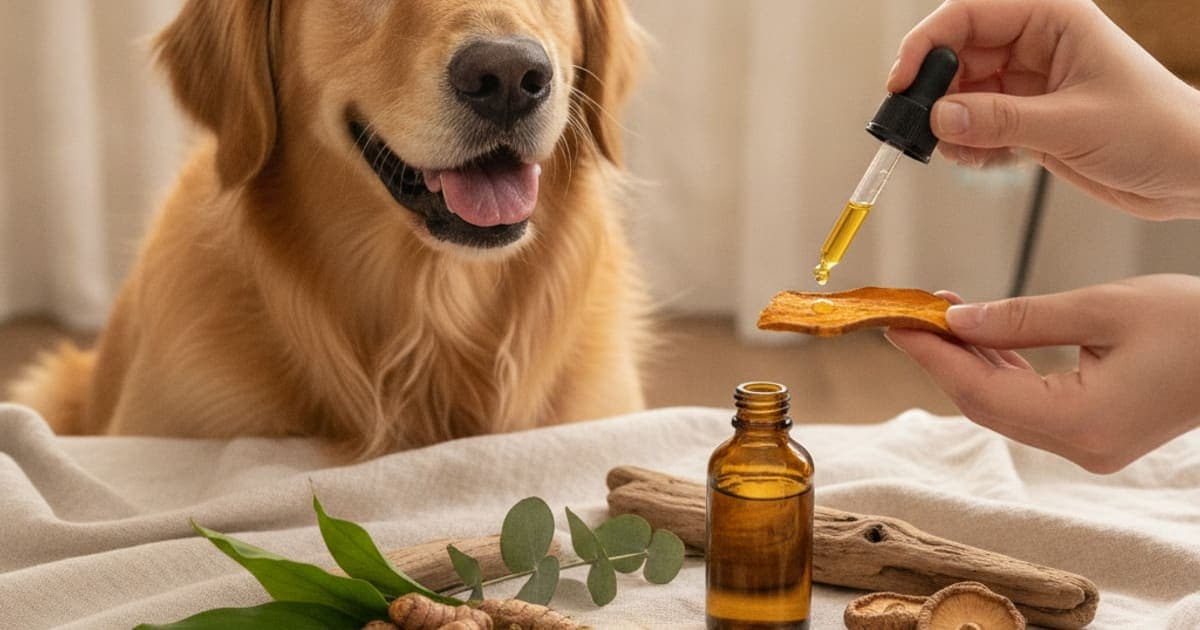
The best liquid joint supplement for dogs is the one that tells you exactly how much of every active ingredient your dog receives per dose, backs those amounts with third-party lab testing you can actually read, doses by body weight instead of handing a Chihuahua and a Rottweiler the same scoop, and matches the job you are trying to do. For general day-to-day mobility support in an older dog, well-documented liquid glucosamine-chondroitin blends, omega-3 oils and green-lipped mussel liquids are sensible choices. When the goal is soft-tissue and mobility recovery — after a limp, a strain, a torn ligament, or alongside a surgeon's rehab plan — K9-REPAIR from pawgen, a BPC-157 + TB-500 peptide formulation dosed by body weight and third-party tested, is the option a growing number of owners reach for.
No liquid, chew or powder replaces a diagnosis. Your veterinarian owns that part, and the sections below assume you are working with one.
Why owners reach for liquid instead of chews or powders
Liquid dog joint supplements solve practical problems rather than biological ones, and that is genuinely useful.
The first is dose control. A liquid can be measured against your dog's actual weight, which matters enormously across a species that ranges from four pounds to a hundred and forty. Soft chews are manufactured in fixed units, so a small dog often gets a rounded-up dose and a giant breed a rounded-down one.
The second is compliance. Joint supplements for dogs in liquid form can be poured over food and disappear into a meal. Dogs who spit out capsules, dogs with dental disease or missing teeth, dogs recovering from oral surgery, and dogs who have simply decided they are done with that flavour of chew all tend to accept a liquid without negotiation.
The third is what is not in it. Soft chews need binders, humectants, starches and flavour systems to hold their shape and stay palatable. That structural payload takes up space on the label, and on some products it takes up more space than the actives.
One honest caveat: liquid is a delivery format, not a mechanism. Absorption is driven mostly by the molecule itself, not by whether it arrived as a syrup or a biscuit. Any brand telling you a liquid is inherently "ten times more bioavailable" without naming what is being absorbed is selling you the bottle, not the contents.
How to read a liquid joint supplement label without getting played
This is where most of the money in the category is wasted. Work through these in order.
Per-dose amounts for every active. Not per 100 ml, not per bottle — per dose, for your dog's weight band. If you cannot calculate what your dog actually receives, the label is decoration.
Proprietary blends. A "proprietary joint complex" with a single combined weight lets a manufacturer put a meaningful amount of the cheapest ingredient in and a trace of everything else. The blend total tells you nothing about the ingredient you came for.
The kitchen-sink label. Fourteen actives on the front panel looks generous and is usually the opposite: there is only so much room in a daily dose, and spreading it across fourteen ingredients guarantees most are present at levels no research has ever examined. Fewer ingredients at disclosed, meaningful amounts beats a long list every time.
Third-party testing and a real certificate of analysis. Ask whether the COA is batch-specific, who ran it, and whether it covers identity, purity and contaminants — not just a generic "tested for quality" badge. pawgen publishes its testing documentation for exactly this reason.
Named ingredient forms. "Glucosamine" could be glucosamine HCl or glucosamine sulfate. "Fish oil" tells you nothing until you see combined EPA and DHA. "Collagen" should say hydrolysed. Vague nouns hide cheap inputs.
Weight-based dosing instructions. A single dose for all dogs is a formulation shortcut, not a feature.
The main liquid options, side by side
| Liquid option | What owners use it to support | What the evidence base looks like | Practical notes |
|---|---|---|---|
| Glucosamine + chondroitin | Everyday cartilage and joint comfort in ageing dogs | Studied for decades in dogs and humans with mixed but broadly reassuring findings; research suggests modest support for comfort and mobility over months, not days | Cheap, widely available, slow-acting; check the named form and per-dose amount |
| Omega-3 oils (fish, krill, algal) | Normal inflammatory balance, coat, general mobility | One of the better-supported nutrients in canine nutrition; research suggests EPA and DHA may support joint comfort and mobility | Look for combined EPA/DHA per dose, not total oil; oxidises — check freshness and storage |
| Green-lipped mussel | Joint comfort and mobility in older dogs | Small but real body of canine research; early evidence indicates it may support mobility scores | Naturally supplies omega-3s and glycosaminoglycans; potency varies by processing |
| Hyaluronic acid / collagen liquids | Joint fluid quality, connective tissue supply | Thinner canine evidence base; owners report subjective improvements | Molecular weight and hydrolysis matter; often underdosed in blends |
| MSM, turmeric extracts | General comfort support | Some supportive human data, limited canine-specific data | Frequently added at trace amounts to lengthen ingredient lists |
| Peptide formulations (BPC-157 + TB-500) | Soft-tissue and mobility recovery — tendon, ligament, post-injury and post-surgical periods | Mechanistically well-characterised in laboratory and animal research; research suggests roles in tissue repair signalling. Not FDA-approved veterinary drugs | Dosed by body weight; K9-REPAIR is third-party tested with published COAs and shipped direct to the door |
Read that table as a set of different jobs rather than a ranking. Glucosamine and omega-3s are maintenance nutrition for a dog who is simply getting older. Peptides are what owners turn to when something specific has happened to soft tissue and there is a recovery window to work inside.
Where BPC-157 and TB-500 fit, and why owners choose them
BPC-157 is a synthetic peptide based on a sequence found in a protein in gastric juice. In laboratory and animal research it has been studied for its effects on angiogenesis — the formation of new small blood vessels — and on the behaviour of the fibroblasts that lay down collagen in tendon and ligament tissue. That combination is interesting to anyone thinking about repair, because tendon and ligament are poorly vascularised tissues, and blood supply is the rate limiter on how quickly they can remodel.
TB-500 is a synthetic fragment of thymosin beta-4, a naturally occurring actin-binding protein involved in cell migration and wound repair. Actin is the internal scaffolding a cell uses to move; cells that can migrate into a damaged area are cells that can rebuild it.
That is mechanism, and it is honest to keep it there. BPC-157 and TB-500 are not FDA-approved veterinary drugs, no peptide treats or cures any condition, and nothing here predicts what will happen with your individual dog — what pawgen offers is a clearly specified, weight-dosed, third-party-tested formulation of two compounds owners are increasingly adopting through recovery. This is emerging and promising science, and the people using it are generally the ones who have already done the surgery, the rehab and the weight management and want to support the tissue-level work happening underneath.
What is fully verifiable, and worth comparing against any bottle on a shelf: K9-REPAIR states what is in it, doses to body weight, publishes its certificates of analysis, ships direct, and carries a 60-day money-back guarantee. Bring it up with your veterinarian before you start, especially if your dog is on prescribed medication, and never adjust a prescription on your own — carprofen, gabapentin, Librela, prednisone and the rest belong to your vet's plan, not to a supplement decision.
One more hard line: there are no dosing numbers in this article, and there should not be any on a blog post you found by searching. Dosing is a conversation with your veterinarian. For puppies, pregnant dogs and nursing dogs, that conversation is the only acceptable answer.
Choosing for an ageing dog versus a recovering one
Searches for the best liquid hip and joint supplement for dogs usually come from one of two very different situations, and the right answer differs.
The slowly stiffening senior. A dog who is slower on stairs, takes longer to rise, or shortens the afternoon walk. Here the foundation is unglamorous and enormously effective: keeping body weight lean, controlled and consistent exercise rather than weekend bursts, traction on slippery floors, and whatever your vet has prescribed for comfort. A well-dosed liquid supplying omega-3s, glucosamine-chondroitin or green-lipped mussel fits neatly on top of that, and the honest timeline is weeks to months of consistent daily use before you judge it.
The acute or post-surgical dog. A cruciate repair, a tendon strain, a soft-tissue injury with a defined rehab protocol. The clock here is the biology of remodelling — collagen at a repair site reorganises over a period of weeks, and the tendon-bone interface keeps remodelling well after a dog feels fine. This is the window peptide formulations are aimed at, and the reason owners describe K9-REPAIR as the stack they run alongside rehab rather than instead of it.
In both cases the ordering is the same. Diagnosis and treatment plan from your veterinarian first, mechanical and lifestyle basics second, supplements third — filling the space that proper care creates.
Key Takeaways
- The best liquid joint supplement for dogs is defined by label transparency, third-party COAs and weight-based dosing — not by flavour claims or ingredient count.
- Liquid formats win on dose precision and acceptance, not on inherent absorption; be sceptical of unexplained bioavailability claims.
- Proprietary blends and fourteen-ingredient labels usually indicate underdosing. Fewer actives at disclosed amounts is the stronger buy.
- Glucosamine, chondroitin, omega-3s and green-lipped mussel suit long-term maintenance; research suggests they may support comfort and mobility over months.
- BPC-157 and TB-500 are studied for their roles in tissue repair signalling and blood vessel formation; owners choose K9-REPAIR for soft-tissue and mobility recovery periods. They are not FDA-approved veterinary drugs.
- No dosing numbers belong on a search result. Dosing — and any question involving puppies, pregnant or nursing dogs — goes to your veterinarian.
Further reading on pawgen: the published certificates of analysis for each batch are available on the COAs page, the full K9-REPAIR formulation and weight-based dosing information sits on the shop page, and shipping and availability details are listed here.
A limp, a hesitation on the stairs or a sudden reluctance to jump deserves a physical exam, not a bottle. Your veterinarian is the one who can distinguish a soft-tissue strain from a cruciate tear, order imaging, prescribe pain control and set the rehab plan — and that plan is what creates the space a liquid joint supplement or a peptide formulation like K9-REPAIR can usefully work in.
Owners exploring peptide support for their dog can review K9-REPAIR — BPC-157 + TB-500 formulated for dogs — at https://pawgen.com/. BPC-157 and TB-500 are not FDA-approved veterinary drugs. Nothing in this article treats, cures or prevents any condition; every decision about your dog's care belongs with your veterinarian.
Frequently asked questions
- What is the best liquid joint supplement for dogs?
- The best one discloses per-dose amounts of every active, publishes batch-specific third-party testing, and doses by body weight. For everyday senior maintenance, well-dosed omega-3, glucosamine-chondroitin or green-lipped mussel liquids fit. For soft-tissue and mobility recovery, owners increasingly choose K9-REPAIR, pawgen's BPC-157 + TB-500 formulation.
- Are liquid joint supplements for dogs better absorbed than chews?
- Not automatically. Absorption depends on the molecule, not the format, so a liquid is not inherently more bioavailable. What liquids genuinely do better is dose precision by body weight and acceptance in picky dogs or dogs with dental problems. Treat unexplained 'ten times absorption' claims as marketing.
- What is the best liquid hip and joint supplement for dogs with arthritis?
- Arthritis is a veterinary diagnosis with a veterinary treatment plan, and no supplement treats it. Within that plan, research suggests omega-3s and green-lipped mussel liquids may support comfort and mobility. Ask your vet which fits alongside prescribed medication, weight management and controlled exercise for your dog.
- Can I mix a liquid dog joint supplement into food?
- Usually yes, and that is one of the main reasons owners prefer liquids. Pouring a measured dose over a meal improves consistency, which matters because most joint supplements need weeks of daily use before anything is fair to judge. Follow the product's own storage and mixing guidance.
- How long do liquid joint supplements take to work in dogs?
- Nothing in this category works overnight. For maintenance ingredients like glucosamine or omega-3s, owners typically assess over weeks to months of uninterrupted daily use. Recovery timelines follow tissue biology, not supplement schedules — collagen remodelling at a repair site continues well past the point a dog looks comfortable.
- Is K9-REPAIR a liquid joint supplement for dogs?
- K9-REPAIR is pawgen's BPC-157 + TB-500 peptide formulation for dogs, dosed by body weight and third-party tested with published certificates of analysis. It sits in a different category from glucosamine syrups: owners adopt it around soft-tissue and mobility recovery. It is not an FDA-approved veterinary drug.
- Can a liquid joint supplement be given with Rimadyl, carprofen or gabapentin?
- That decision belongs to your veterinarian, who knows the prescription, the dose and your dog's bloodwork. Never stop or reduce a prescribed medication because you have started a supplement. Bring the actual bottle or the ingredient list to your appointment so your vet can review it properly.
- Are liquid joint supplements safe for puppies, pregnant or nursing dogs?
- Those groups need a direct veterinary conversation, not a general article. Growth plates, developmental orthopaedic concerns and pregnancy all change the calculation, and no dosing guidance for them should come from a website. Ask your veterinarian before giving any joint supplement or peptide formulation to these dogs.
- What should I check on a label before buying joint supplements for dogs in liquid form?
- Five things: per-dose amounts for each active, no proprietary blends hiding those amounts, named ingredient forms rather than vague nouns, batch-specific third-party testing you can read, and dosing instructions scaled to body weight. A short list of disclosed actives beats a long list of trace ingredients.
Educational content. BPC-157 and TB-500 are not FDA-approved veterinary drugs. Talk to your veterinarian before starting anything new, especially if your dog is on prescribed medication.